Monday, January 30, 2012

Art From Goodland


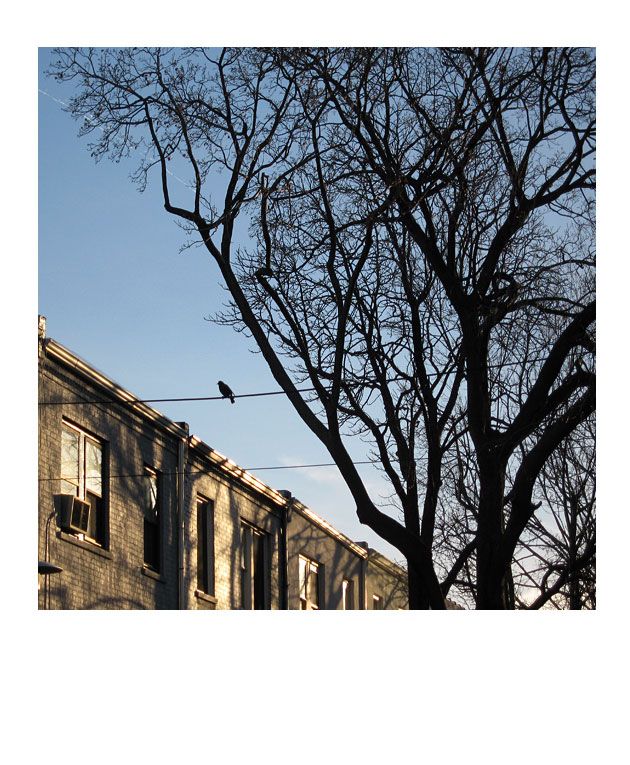
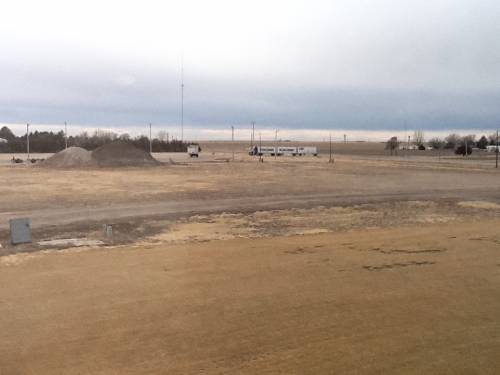
The view from Meredith Trombles' Holiday Inn room; Goodland, Kansas

Yesterday, Bay Area artist and writer Meredith Tromble launched Art & Shadows, a new blog that received the 2011 Creative Capital/Warhol Foundation Arts Writer Grant in advance of its inception.

In her inaugural post, Tromble introduces several of the challenging questions she plans to ruminate on at Art & Shadows.
"As I look out towards the prairie from my hotel room, it seems right that this first Art & Shadows should come from Kansas, and from a small town. The questions I want to explore in this blog, questions about the art world and about what art is, how we know art when we see it, and what it means in our lives, are my questions in part because of where I grew up. I am passionately involved with contemporary art, but I've never gotten comfortable with the disconnect between art now and art here. For example, there's a lot of talk about 'community' in the works I encounter in my everyday life as an artist, writer, and teacher; but the thinking doesn't always seem to encompass the kind of community consciousness shared by the rural people who live here."
Perhaps I respond so positively to Tromble's Kansas hotel room musings because of my own rural upbringing -- I'm similarly uncomfortable with the disconnect she describes -- but I believe that the questions she raises are urgent and universal, and that they must be part of the general art conversation. If we approach them earnestly -- as objectively as our subjective realm permits, and with as little posturing as our egos will allow -- we could shape a sustainable and robust 21st century art world, one that might even incorporate both "art now" and "art here."

Image credit: Meredith Tromble, 2012

Tuesday, January 24, 2012

Oh, Starlings!


A few months ago, a friend shared the above video with me. You might have seen or read about it before; it went "viral" late last year. The two friends who appear in the clip are treated to an intimate encounter with a large murmuration, or flock of European starlings. Murmurations of such substantial size are natural phenomena that, no matter how familiar, retain their capacity to inspire wonder, even awe. As one, the birds sweep and dance in an astonishing and fluid choreography; the rush of their wingbeats and many bodies pushing through the air produces a sound that accounts for the name. Because the audible component of a murmuration is impressive in its own right, I wish a version of the video were available without the hokey music, but the giddy joy that the canoeing friends experience is palpable, especially near the short film's end, when one of the women looks at the camera with marveling, wide eyes, and they both begin to laugh.


Richard Barnes
"Murmur 01 November 15, 2005"

Watching the video, I recalled photographer Richard Barnes' "Murmur" series, which documents vast murmurations over EUR, a suburb of Rome, Italy. Barnes is better known for "Animal Logic," a terrific collection of photographs that document the artifice of natural history museums, and "Unabomber," his contemplative pictures of Ted Kaczynski's cabin, but "Murmur" is his most poetic project.


Richard Barnes
"Murmur 21 November 26, 2006"

Revisiting "Murmur" this week, I was particularly engaged by "Flight Patterns," a short essay by Jonathan Rosen about Barnes' pictures, starlings, and, more generally, birdwatching.
"[...] We project onto the natural world a large measure of ourselves. In ancient Rome, augurs studied the flight patterns of birds to divine the will of the gods; part of the fascination with starlings is the way they seem to be inscribing some sort of language in the air, if only we could read it. [...] Bird-watching thrives on the recognition that the urban and the wild must be understood together. We are, after all, urban and wild ourselves, and still figuring out how to make the multiple aspects of our nature mesh without disaster."
Right on, Mr. Rosen. I'm a birdwatcher who admires starlings' adaptability and beauty, and I'm particularly intrigued by their ability to polarize people. But, when a murmuration swirls around or above you, there are no words; it's "full on, double rainbow all the way across the sky," so to speak.


Christopher Reiger
"further murmuration"
2008
Watercolor, gouache, pen and sumi ink on Arches paper
12 3/8 x 13 1/4 inches


Image credits: "Murmuration" video, Sophie Windsor Clive, 2010; Richard Barnes photographs and Christopher Reiger painting, courtesy the artists

Wednesday, January 18, 2012

Urban Wild #4


Image credit: copyright Christopher Reiger, 2011

Friday, January 13, 2012

Big Sky Country


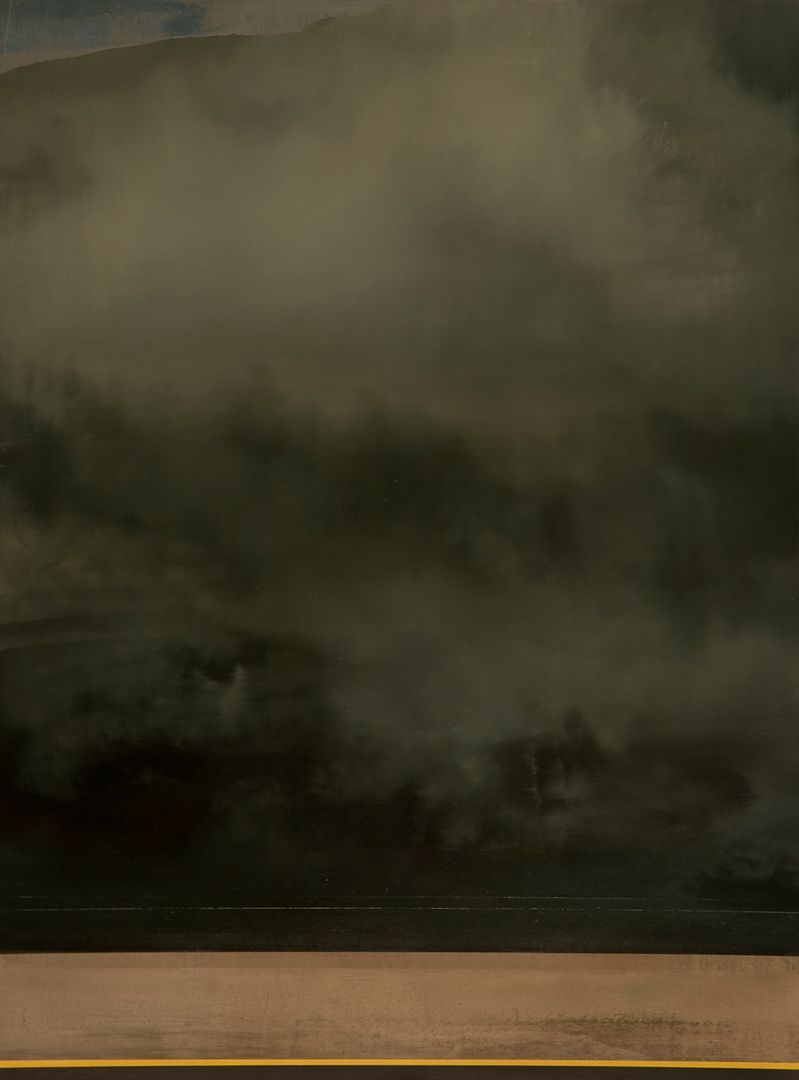
Christopher Saunders
"Whitenoise no. 1"
2008
Oil on linen
24 x 18 inches

In a 2009 post about painter Christopher Saunders' "Whitenoise" series, I recounted philosopher Arthur Schopenhauer's hierarchy of aesthetic experience and connected it to Saunders' work.
"In his volume The World As Will and Representation (1818), Schopenhauer elucidated a scale of aesthetic experience. At one end of this spectrum, he described the 'Feeling of Beauty' as 'Light...reflected off a flower. (Pleasure from a mere perception of an object that cannot hurt [the] observer.)' At the other end of the spectrum, the philosopher positioned the 'Full Feeling of Sublime' and the 'Fullest Feeling of Sublime.' These categories are described, respectively, as 'Overpowering turbulent Nature. (Pleasure from beholding very violent, destructive objects.),' and 'Immensity of Universe's extent or duration. (Pleasure from knowledge of observer's nothingness and oneness with Nature.)'

[...] Most modern humans (especially modern humans in the First World) are insulated from inclement weather. We fret over a rained-out ball game or beach party, but we rarely tremble before dark cloud heads; our appreciation of the elements is principally one of admiration, an aesthetic experience that resides near the middle of Schopenhauer's scale. But Saunders' landscapes provide viewers with a vantage point that repairs the reverent awe that we once felt before the expansive firmament. He does not include the rugged, mountainous imagery familiar to most artistic depictions of the Sublime. Instead he portrays clouds pushing over a featureless land, the violent potential of atmospheric flux readily observable at a distance. The clouds, vast, magnificent, menacing, dominate Saunders' compositions; they are the rough mountains of our inner wilderness."

Camille Seaman
"Each Year We Pray"
2008
Archival Pigment Print, Edition of 5
32 x 48 inches

I thought of Saunders' paintings when I visited Corden/Potts Gallery last week and was introduced to the photography of Camille Seaman. Cloudheads also dominate Seaman's pictures. To produce her "Big Cloud" series (2008), the photographer crisscrossed Texas, Kansas, Nebraska, Oklahoma, and the Dakotas chasing supercells, powerful thunderheads associated with hail, downpours, and strong winds. Her description of the storms -- "In that force is also creation." -- suggests an appreciation of the sublime.


Christopher Saunders
"Whitenoise no. 14"
2011
Oil on linen
24 x 18 inches

The press release for "The Fair and Open Face of Heaven," a concurrent 2-person show in New York City that features new paintings by Saunders, notes that, "though there is the sense of the sublime [in Saunders imagery], there is certainly the portent of doom." The "though" is unnecessary; sublime experience, as our brooding friend Schopenhauer made clear, is nothing if not fearsome. Existential dread is often the foundation of spiritual euphoria. As I observed in the earlier write-up on Saunders, the "surrender of self also opens our field of vision to the infinite variety and scope of being; through negation, liberation."

The modern man/nature dichotomy of the Romantics is best dismissed as naive ideology, but it's not entirely without value. Arcadia, the pastoral Utopia celebrated in so many paintings, poems, and scores, is a fiction, but the Romantics weren't exactly wrong in insisting that bucolic and frontier settings act as a curative to what they viewed as urban and industrial decadence. Although experiences of the sublime like those Schopenhauer categorizes occur in living rooms, houses of worship, and on bustling city streets, they're more easily afforded outdoors, under the sky's great canopy. In a gallery space, we're unlikely to be awe-struck or shaken to the extent that we might be were we, like Seaman, kneeling beneath a roiling supercell. But one of the principal joys of art is its ability to provide us with inklings of the sublime and the ineffable, no matter the setting.


Camille Seaman
"Tracks Through the Field"
2008
Archival Pigment Print, Edition of 9
20 x 30 inches

Christopher Saunders' paintings are on view at Allegra LaViola Gallery (179 East Broadway, NYC) through February 4. Camille Seaman's photographs are on view at Corden/Potts Gallery (49 Geary Street, Ste. 410, San Francisco) through February.

Image credit: courtesy Christopher Saunders and Corden/Potts Gallery

Tuesday, January 10, 2012

Her Colorful Obliteration


Yayoi Kusama
"Obliteration Room"
2011-12

Yayoi Kusama calls herself an "obsessive artist." Indeed, she's obsessed with polka dots; her paintings, sculptures, and constructed environments are almost always speckled with them. But Kusama's singular commitment to circles and pattern isn't her only "outsider artist" qualification. Since the mid-1970s, the artist has voluntarily committed herself to a Tokyo mental hospital, where she continues to create new work.


Yayoi Kusama
"Obliteration Room"
2011-12

I recalled this last fact when I first saw photographs of Kusama's "Obliteration Room," an installation included in her "Look Now, See Forever" solo exhibition at Australia's Queensland Art Gallery of Modern Art. "Obliteration Room" began as a completely whitewashed interior space. The room's couches, bookshelves, kitchen table, cupboards, house plants, and piano were all colorless. When the museum exhibition opened, colorful stickers were distributed to installation visitors, and children were especially encouraged to cover whatever they pleased. Over time, the whitewashed installation has exploded in vibrant color, its once discernible space transformed into a perception-warping experience. The room, as the installation's title predicted, has been obliterated.


Yayoi Kusama
"Obliteration Room"
2011-12

"Obliteration Room" might arouse the ire of Jerry Saltz and other critics weary of Relational Aesthetics. Despite countless curatorial essays complicating its definition, Relational Aesthetics is just a term applied to artwork that incorporates viewer interaction. Most of the artists celebrated for their Relational Aesthetic achievements -- Rirkrit Tiravanija, Carsten Höller, and Pierre Huyghe are the best known representatives -- produce work that, as Saltz wrote in his December New York magazine column, fails to provide "much in terms of form, social commentary, or the willful transformation of materials. It’s arty junk food."

Kusama's "Obliteration Room" distinguishes itself because the "relational" aspect of the project -- the distributed stickers and visitor interactivity -- eventually results in a transformative, "aesthetic" experience. Rarely do works considered part of the Relational Aesthetics camp move beyond the vitality of the act itself; generally speaking, there is little aesthetic, in the traditional sense of the word, about Relational Aesthetics. Refreshingly, Kusama's simple installation places equal emphasis on both the interactive role of the viewer and the visual result.


Yayoi Kusama
"Obliteration Room"
2011-12


Yayoi Kusama
"Obliteration Room"
2011-12

Thanks to Colossal for drawing Kusama's installation to my attention.

Image credit: top three images, courtesy Queensland Art Gallery and Mark Sherwood; bottom two images, Stuart Addelsee

Sunday, January 08, 2012

Ernest Jolly's Unfinished Labors


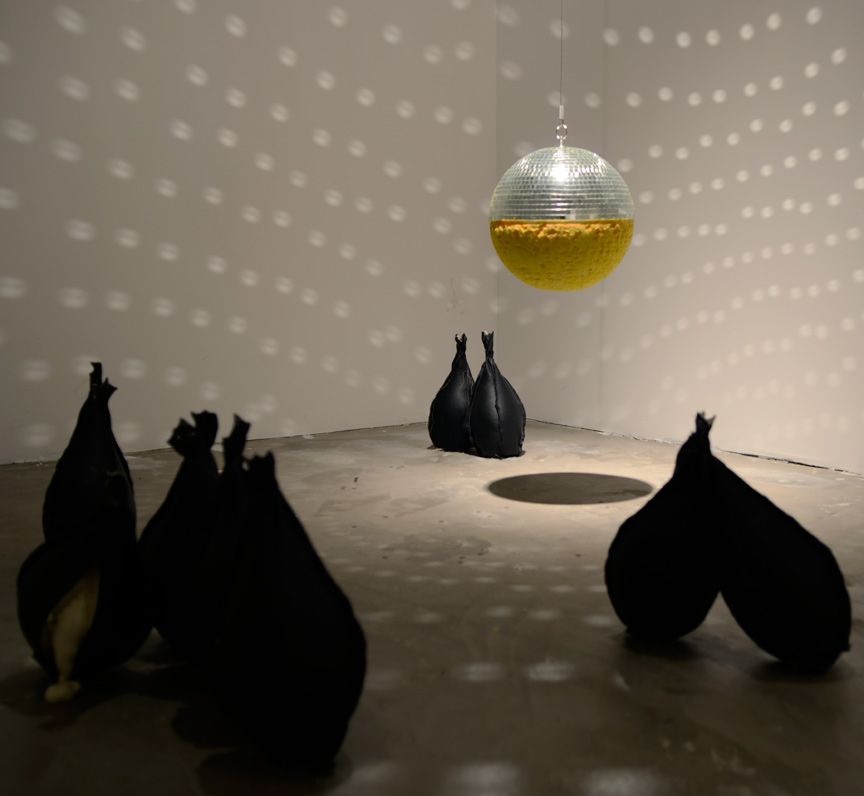
Ernest Jolly
"Limbo"
2012
Disco ball, flocking, wire, leather thread, and foam
Dimensions variable

One has to marvel at the inscrutability of the sculptures and installation Ernest Jolly includes in "The Labor Party," his current solo exhibition at Patricia Sweetow Gallery. "Carry Me Home," a wheelbarrow fashioned of frosted Plexiglas and metal, and "Limbo," an installation featuring a half-flocked disco ball spinning above leather punching bags, are compelling and surreal creations. Yet I connected neither to the plight "of the black agricultural worker in the Southern United States before the First World War," their conceptual substance according to the gallery's press release, which almost reads as if it describes a piece of choreography or theater.
"The punching bags represent the hero of the field laborer, a Black Prize Fighter, whose strength was respected in a world where the laborer was powerless. If only for a brief moment, and with great cathartic justice, The Prize Fighter could break the color barrier, by competing with, and potentially beating the white fighter. [...] The globe, while being a ubiquitous object at dance halls, also gives voice to the specific dance 'Limbo' - dancers move under a pole that is gradually lowered from chest level, and when cleared is considered the triumph of life over death. In Jolly's 'Limbo' the transformation of hope, life, and place are revolving in his disco sun, casting an eclipse in a profound struggle for life."
None of those rich details come across in the work, but if Jolly's wheelbarrow were used as a theatrical prop or his installation as a setting, the objects would acquire their conceptual significance in the context of a performed narrative. As is, displayed in the vitrine-like white cube, they're merely esoteric curiosities, wholly dependent on the words of the artist, curator, or critic to provide a particular meaning. Jolly is a musician as well as an artist; I'd like to see him create a more fully realized production: a video with an original score, or even a collaboration with a choreographer on a live performance.


Ernest Jolly
"Carry Me Home"
2011
Acrylic, wood, metal and rayon
Dimensions variable

Ernest Jolly's work is on view at Patricia Sweetow Gallery (77 Geary Street, San Francisco) through February 11.

Image credit: courtesy Patricia Sweetow Gallery website

Thursday, January 05, 2012

Zeke Cube


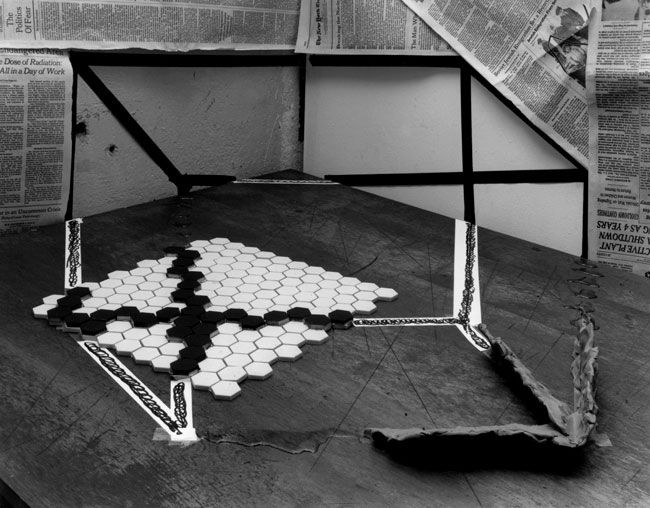
Zeke Berman
"Still Life With Necker Cube"
1979
16 x 20 inches

I've long celebrated -- even, in my idolatrous way, revered -- the Necker Cube, the familiar optical illusion created by Swiss crystallographer, Louis Necker. I regard the impossible cube as a symbol of life's push-pull ambivalence and contradiction.


Zeke Berman
"Measuring Cup"
1979
16 x 20 inches

As I wrote here, in 2006,
"I'm preoccupied by...ambivalence. Most people think of the word, ambivalent, as a pejorative. Without question, it can be used in a disparaging way, especially when interpreted only to mean indecision, but what of the word's other meaning, 'the coexistence of opposing attitudes or feelings'? This latter usage accurately describes the balance sought by yogis, the Chinese yin-yang symbol, and the quantitative and qualitative possibilities figured in E=MC2. Contradiction, in this sense, is an altogether natural, even positive phenomenon."


Zeke Berman
"Domestic Still Life - Art and Entropy"
1979
16 x 20 inches

As a Necker Cube fetishist, then, I was especially excited to discover photographer Zeke Berman's "Still Life With Necker Cube" on a recent visit to SFMOMA. This evening, I paid a visit to Berman's website, and discovered several other pictures from the same time period that either feature my right-angled mandala or play with the ideas it provokes. Clever stuff....and handsome, too!


Zeke Berman
"Cubes"
1979
16 x 20 inches

Image credits: all photographs from the artist's website

Monday, January 02, 2012

Keep the Flame Alive In 2012


2011 will be best remembered as a year of popular dissatisfaction and uprisings. Lacking a crystal ball, such instability -- especially the prospective political transitions from despotism to democracy in Egypt and Libya -- can cause acute anxiety.

As we enter 2012, it's useful to keep in mind that democracy is a pendulum that forever swings from equilibrium to imbalance and back. The uncertainty and tensions associated with the political and ideological landscape of today's Middle East are also endemic to established democracies. Lewis Lapham described the workings of a democratic government in "Democracy 101," an essay published in the April 2011 issue of Harper's Magazine.
"Democracy is a dangerous business; it allies itself with change, which engenders movement, which induces friction, which implies unhappiness, which assumes conflict not only as the normal but also as the necessary condition of its existence. The idea collapses unless countervailing stresses oppose one another with competing weight - unless enough people stand willing to sustain the argument between the governing and the governed, between city and town, capital and labor, men and women, matter and mind. [...It] is the freedoms of thought that rescue a democracy from its stupidities and crimes, the courage of its dissenting citizens that protects it against the despotism of wealth and power backed up with platitudes and billy clubs and subprime loans."
This description should ignite fire in the belly of all United States citizens, wherever they place themselves on the political spectrum.

In late January 2009, I wrote an essay titled "Eudamonia." The piece explored the possible causes of a "bout of optimism [that] seemed remarkable in both duration and degree." That optimism is tempered today, but it still burns, despite the growth of "triumphant pessimism" among our populace. I remain optimistic because I believe in long term improvement, in two steps forward for one step back.

Let us all be devoted, active citizens in 2012, realistic, but not cynical, hopeful, but not naive, critical, but not destructive.

Image credit: uncredited photograph ripped from Care2 Make A Difference website

Sunday, January 01, 2012

Happy New Year!


Ampitheatre; Armstrong Redwoods State Reserve; Guerneville, CA; December 2011

Happy new year, HH readers! I hope that you all had joyous, healthy, and memorable holiday seasons and that 2012 will bring good things.

The photo-collage above is best viewed at a larger scale; click through to my Flickr account to enlarge it.

Image credit: Christopher Reiger, 2011