
Tuesday, July 31, 2012

Wednesday, July 25, 2012
Platte Clove Residency: Some Remove
 |
| Plattekill Falls; Platte Clove Nature Preserve; Catskills; NY; July 2012 |
On the first afternoon of my residency at Platte Clove, after settling into the cabin and familiarizing myself with local trail maps, I decided to explore a short path that begins a few steps from the cabin's porch and winds its way down one of the valley's uppermost gorges to Plattekill Falls. It was a lovely reintroduction to the Catskills. Late afternoon sunlight filtered through the mixed forest's overstory, unevenly illuminating a floor decorated with eastern hemlock cones. Hidden from view in the canopy above, red-eyed vireos ceaselessly repeated their lilting questions.
Monday, July 23, 2012
Platte Clove Residency: Report
 |
| Platte Clove cabin; Platte Clove Nature Preserve; Catskills; NY; July 2012 |
It was much too short a stay, but my residency at the Catskill Center for Conservation and Development's Platte Clove cabin was otherwise terrific. In the coming weeks, I'll post photographs and a number of short essays about my time there. Some of the experiences I'll share with readers provided quality grist for the art mill, and I expect to begin work on new pictures soon.
As a side note, I'm grateful for the generosity of Jeremiah Teipen and Eun Young Choi, artist friends of mine who graciously lent me their car for the drive from New York City to Platte Clove (and back), and for the thoughtfulness of Katie Palm, CCCD Education Director, who went above and beyond in her role as the coordinator of the residency program. Thank you!
 |
| View from Sherman's Point; Devil's Path Trail; Catskills; NY; July 2012 |
Sunday, July 15, 2012
Platte Clove Residency: Prologue
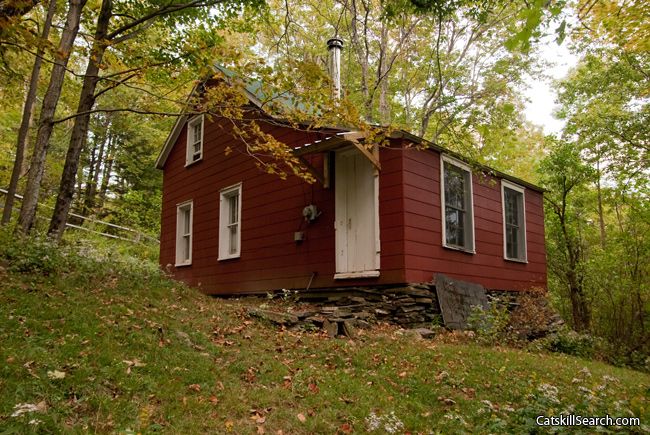 |
| Platte Clove residency cabin, Catskills Mountains |
Early this coming Wednesday morning, I'll land at New York City's JFK airport, borrow a car from friends, and drive north to an attractive cabin located in Platte Clove, a valley at the eastern edge of the Catskill Mountains that was etched by glacial meltwater at the end of the last Ice Age. Each summer, the mountain side cabin is home to a revolving door of visual artists, writers, composers, and ecologists selected by the Catskill Center for Conservation and Development's Platte Clove Residency team. I'm honored to be one of the Platte Clove 2012 Artists-In-Residence.
Wednesday, July 11, 2012
Denise Bibro "Summer Show"
 |
| Christopher Reiger "Cost Benefit Analysis" 2008 Pen and sumi ink, gouache, watercolor and marker on Arches paper 12 x 12 inches |
Several of my 2008 and 2009 works are included in Denise Bibro Fine Art's "Summer Show," a group exhibition featuring paintings, mixed media works, photographs, and sculptures by 12 artists.
"Summer Show" runs from July 10-August 25, 2012. More information can be found here.
Subscribe to:
Posts (Atom)