 |
| "Marsh near Chesconessex Creek; Eastern Shore of Virginia; December 2013" |

Sunday, February 23, 2014
Striped Bass Fishing On the Chesapeake Bay
This past December, when Elizabeth and I visited my parents on the Eastern Shore of Virginia, I got out on the Chesapeake Bay for some striped bass fishing and sight seeing with Elizabeth, my friend, Edward, and my father. We didn't catch any stripers we could keep -- all were under the minimum regulation size -- so it was a catch-and-release trip, but being on the water was a treat, as it almost always is.

Thursday, January 30, 2014
"Dancing By the Marsh," an excerpt from "Presidio Sites"
 |
| Christopher Reiger "View of Crissy Field from near "Presidio Sites" Site #4; The Presidio, San Francisco, CA; November 2013" |
An adapted excerpt from my "Presidio Sites" project is featured at The Center For Humans & Nature blog, City Creatures. Click here to read it.
Photo credit: © Christopher Reiger, 2013
Tuesday, January 14, 2014
Announcing BAASICS.4: Watershed
The next evening program produced by BAASICS, the non-profit I co-founded in 2010, is just under two weeks away. Please save the date and reserve your tickets (sliding scale, $0-20) soon; they're going fast!
Those of you who are not in the San Francisco Bay Area can still view most BAASICS content in our online archive.
+++++
 BAASICS (Bay Area Art & Science Interdisciplinary Collaborative Sessions) PRESENTS:
BAASICS.4: Watershed
Saturday, January 18, 7:00 – 9:00 pm (doors @ 6:30pm)
ODC Theater | 3153 17th Street, SF CA 94110
(Reception to follow @ Root Division | 3175 17th Street, SF CA 94110)
This event is FREE/SLIDING SCALE, but seating is limited, so reserve your tickets early.
Event website: http://www.baasics.com/baasics-4-watershed/
Tickets available at http://www.odcdance.org/performance.php?param=176
Those of you who are not in the San Francisco Bay Area can still view most BAASICS content in our online archive.
+++++

BAASICS.4: Watershed
Saturday, January 18, 7:00 – 9:00 pm (doors @ 6:30pm)
ODC Theater | 3153 17th Street, SF CA 94110
(Reception to follow @ Root Division | 3175 17th Street, SF CA 94110)
This event is FREE/SLIDING SCALE, but seating is limited, so reserve your tickets early.
Event website: http://www.baasics.com/baasics-4-watershed/
Tickets available at http://www.odcdance.org/performance.php?param=176
Sunday, January 05, 2014
"Presidio Sites"
 |
| Laurie Halsey Brown (senseofplaceLAB) "Christopher Reiger at Quadrat Site #1; Presidio, San Francisco, CA; October 2013" |
See photos from the December outing and read about the “Presidio Sites” project here.
Saturday, January 04, 2014
"Project George"
 |
| Christopher Reiger "Chelonoidis nigra abingdonii (memento mori)" Archival inkjet print on bamboo paper8" x 10"2013 |
I'm honored to have a recent photograph featured as one of the two prints kicking off the tribute, and it's a treat to be in the good company of Jonathan Woodward.
Monday, October 28, 2013
"Touch Me"
Last night, BAASICS had the pleasure of supporting our friends at The Berkeley Science Review with "Touch Me," their terrific Bay Area Science Festival program at the David Brower Center. I posted a summary of the event over at the BAASICS blog. Check it out here.
 |
| Original "Touch Me" promotional poster |
Monday, October 14, 2013
Rock Dove On A Rock
 |
| Christopher Reiger "Pigeon (Rock dove); Mountain Lake; Presidio, San Francisco, CA; August 2013" |
Photo credit: © Christopher Reiger, 2013
Thursday, October 10, 2013
A Different Kind Of Tree
 |
| Christopher Reiger "Telephone Pole; 'Presidio Sites' Quadrat Project Site #1; Presidio of San Francisco, San Francisco, CA; August 2013" |
Photo credit: © Christopher Reiger, 2013
Sunday, October 06, 2013
Sign Fail
During my August trip to Arizona's Tonto National Forest, I encountered the sign pictured below near a trailhead. I found it notable for two reasons.
First, while Tonto visitors should certainly be informed of the simple precautions they can take to avoid antagonistic American black bear encounters, the sign seems to play up the threat posed, an approach better reserved for regions that are home to grizzly or brown bears.
I also tripped over the sign's closing quip, "A Fed bear is a dead bear." Is the Forest Service threatening stout, hirsute homosexual men employed by the federal government? Careless copyediting strikes again!
Image credit: sign snapshot, Christopher Reiger, 2013
First, while Tonto visitors should certainly be informed of the simple precautions they can take to avoid antagonistic American black bear encounters, the sign seems to play up the threat posed, an approach better reserved for regions that are home to grizzly or brown bears.
I also tripped over the sign's closing quip, "A Fed bear is a dead bear." Is the Forest Service threatening stout, hirsute homosexual men employed by the federal government? Careless copyediting strikes again!
 |
| Forest Service sign; East Verde River; Tonto National Forest; Arizona August 2013 |
Image credit: sign snapshot, Christopher Reiger, 2013
Friday, October 04, 2013
Grounded Golden
 |
|
Christopher Reiger
"Golden Eagle mount; Lucy Evans Baylands Nature Interpretive Center; Palo Alto, CA; September 2013"
|
Photo credit: © Christopher Reiger, 2013
Thursday, October 03, 2013
Knowing the Way To Your Heart
 |
| Elizabeth Alexander "Song Sparrow" 2012 |
Silly Love Songs: Singing longer doesn't always mean you get the girl.Maybe I was cheered by the report because I a) have a terrible singing voice, b) struggle to remember song lyrics (even simple tunes), c) am fond of poring over maps, and d) have an innately good sense of direction? Like the song sparrow test subjects, it seems I was afforded one ability and not the other.
Among song sparrows, the most tuneful males often win over the females -- but their vocal expertise may come at a cost. Biologists at Duke University counted up songs in male song sparrows' repertoires and then tested the birds' memories. Every day for eight days the researchers hid a mealworm in one of several shallow wells, some of which had lids. The mealworms' location remained the same, so the scientists could observe how deftly the sparrows remembered where to find their treat. Over time all of the birds improved, but the males that sang the fewest songs learned the quickest, while the birds with more expansive repertoires struggled. Kendra Sewall, now at Virginia Polytechnic Institute and State University, explains that the difference could reflect a trade-off during mental development -- the birds develop one ability or the other. The finding also suggests that females may be able to detect a potential mate's weaknesses in his songs. Although many pick males that sing lots of songs, Sewall notes that every male in their study found a mate. It's possible, she says, that certain females are aware of the trade-off and prefer a partner with spatial smarts to pass on to their young. -- Daisy Yuhas
Image credit: Elizabeth Alexander's mixed media song sparrow artwork found online at the Scholastic Alliance for Young Artists & Writers Blog
Wednesday, September 25, 2013
Antennae #26 Feature
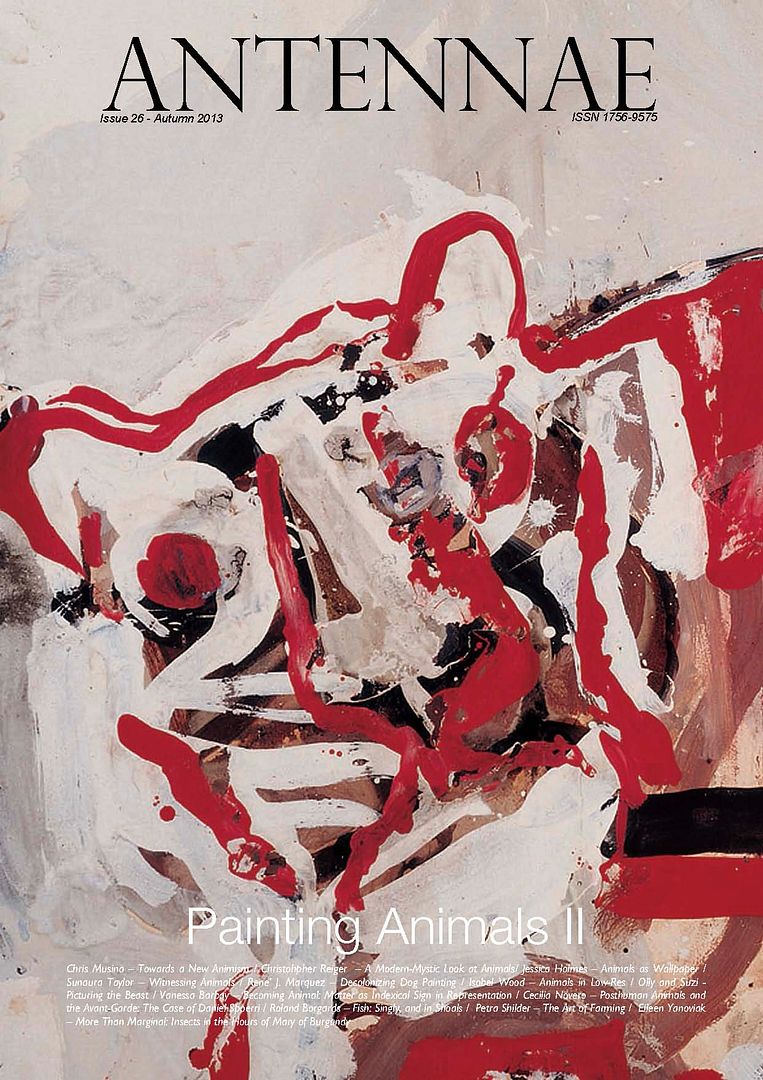
While I'm not currently working on that series -- my attention is more focused on the hybrid project I described in April -- I'm delighted to have my work appear in Antennae, a journal that, as an artist and writer preoccupied by all things "nature," I've long been a fan of.
Image credits:: Antennae, copyright 2013
Tuesday, September 24, 2013
Photographs From Tonto National Forest, AZ
As promised, I'm posting a sampling of the many photographs I took during my August trip to Tonto National Forest. If you'd like to read more about the various animal species encountered on the trip, click here.
 |
Christopher Reiger
"Barrel cactus species; Fire Road 1170; Tonto National Forest; Arizona; August 2013"
|
Monday, September 23, 2013
Stop That Train, I Wanna Get Off
On the heels of yesterday's post about the staggering number of images we wade through...this.
Photography credit: Christopher Reiger, 2013
 |
| Civic Center Muni Station advertising September 2013 |
Photography credit: Christopher Reiger, 2013
Sunday, September 22, 2013
Navigating the Flood (Of Images)
I recently visited "A Sense of Place," Pier 24's current exhibition. It's a strong show with a broad purview that, typical of Pier 24 productions, is elegantly and thoughtfully installed. Long after I left the space, I found myself reflecting on the relationship between two of the "A Sense of Place" galleries.
Erik Kessels' installation, "24 HRS in Photos," a "room filled - floor to ceiling - with printed versions of every picture uploaded to Flickr during a 24-hour period," has generated some online buzz. The Pier 24 press release states that Kessels' provides the viewer with an opportunity "to both visually and physically experience the overwhelming number of photographs shared online." Indeed, he does.
I entered "24 HRS in Photos" a few minutes after leaving another room of the exhibition, one devoted to Stephen Shore's "Uncommon Places." The contrast between the spaces was jarring. The simple framing of Shore's work -- broad mats provide ample quiet space around the prints -- isolates each picture and draws the viewer in. Accordingly, I spent long minutes with each of Shore's photographs, pouring over details and "reading" the pictures like a short story. Every Main Street, bowling alley, parking lot, and road sign in Shore's photographs has a rich tale to tell.
My "read" of "24 HRS in Photos" couldn't have been more different. Upon entering Kessels' installation, I didn't know where to begin. I knew I was looking at an accumulation of individual photographs, but I could take in the work only as a whole, as a swell of blues, whites, and blacks with occasional bursts of yellow or red. As Ariel Rosen writes over at SFAQ, Kessels' "mountain of photos" is "antithetical to any careful choosing." The installation reminds us that the vast majority of images being produced today are neither intended nor received as pictures to be pondered; they are snapped, uploaded, shared, consumed, and forgotten.
Erik Kessels' installation, "24 HRS in Photos," a "room filled - floor to ceiling - with printed versions of every picture uploaded to Flickr during a 24-hour period," has generated some online buzz. The Pier 24 press release states that Kessels' provides the viewer with an opportunity "to both visually and physically experience the overwhelming number of photographs shared online." Indeed, he does.
 |
Erik Kessels
"24 HRS in Photos"
Installation view at Pier 24
2013
|
I entered "24 HRS in Photos" a few minutes after leaving another room of the exhibition, one devoted to Stephen Shore's "Uncommon Places." The contrast between the spaces was jarring. The simple framing of Shore's work -- broad mats provide ample quiet space around the prints -- isolates each picture and draws the viewer in. Accordingly, I spent long minutes with each of Shore's photographs, pouring over details and "reading" the pictures like a short story. Every Main Street, bowling alley, parking lot, and road sign in Shore's photographs has a rich tale to tell.
My "read" of "24 HRS in Photos" couldn't have been more different. Upon entering Kessels' installation, I didn't know where to begin. I knew I was looking at an accumulation of individual photographs, but I could take in the work only as a whole, as a swell of blues, whites, and blacks with occasional bursts of yellow or red. As Ariel Rosen writes over at SFAQ, Kessels' "mountain of photos" is "antithetical to any careful choosing." The installation reminds us that the vast majority of images being produced today are neither intended nor received as pictures to be pondered; they are snapped, uploaded, shared, consumed, and forgotten.
Wednesday, September 18, 2013
Snapshots From Home Ground Chapbook
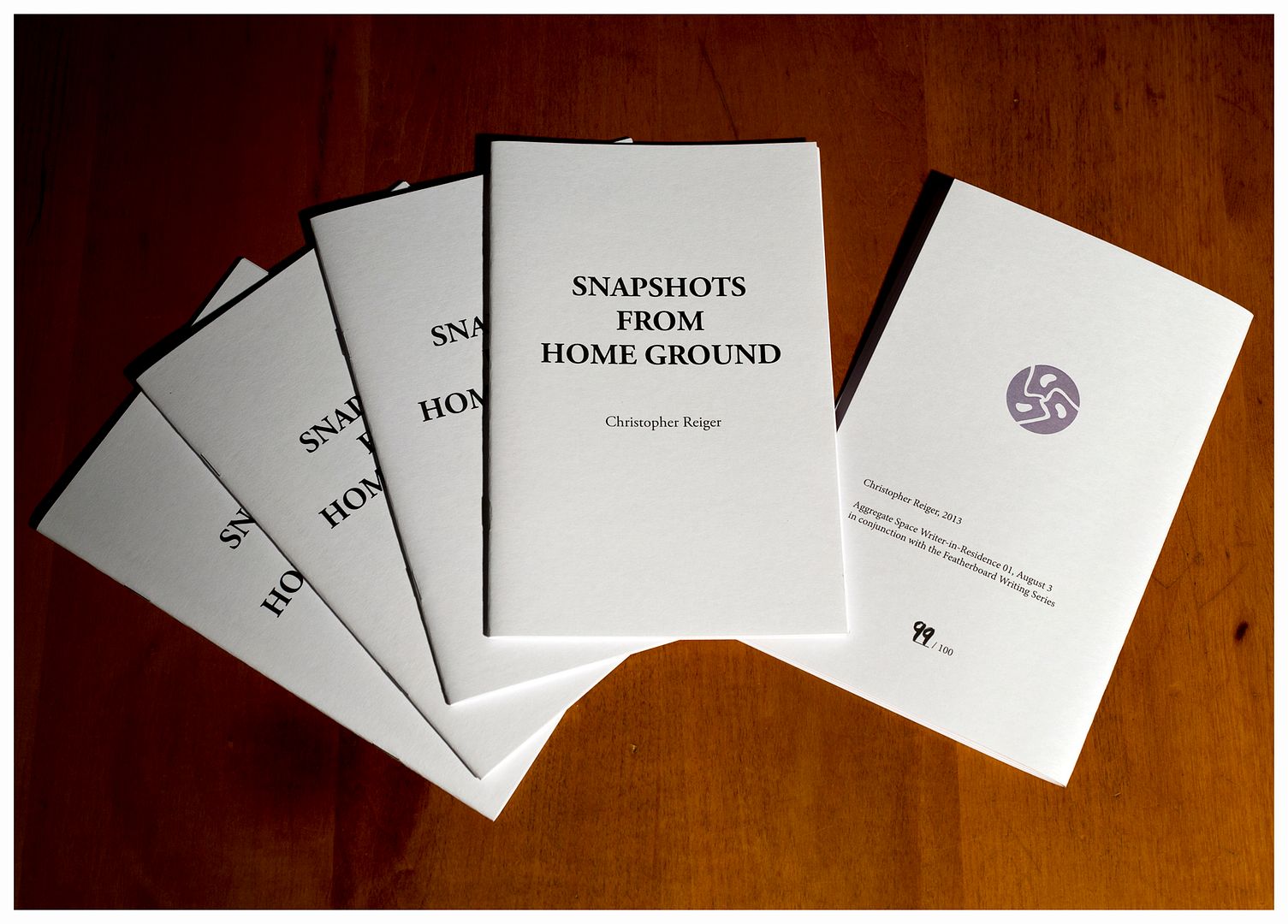 |
| Snapshots From Home Ground Chapbook, 2013 |
Snapshots From Home Ground, the limited edition chapbook I produced in conjunction with the Aggregate Space Writer-in-Residence and Featherboard Writing Series, was released in early August 2013. A meditation on my rural upbringing on the Eastern Shore of Virginia, the book is comprised of eight vignettes and a selection of photographs taken by either me or my father.
Copies are available through both Aggregate Space and Featherboard. (I also plan to release a free e-chapbook version later this year.)
Below, I've published "Good Boy," the chapbook's opening sketch, and also include a number of "snapshots" of book spreads.
Thursday, September 12, 2013
The Sin of Being Realistic
In conjunction with the Jewish new year, I read a litany of "sins" we Jews must repent for on Yom Kippur. One of them had special resonance, both personally and universally.
Whatever religion, philosophy, or ethic you subscribe to (or react against), our collective human aspiration calls on us to improve the lot of the whole. Here's to our keeping on keeping on, together.
Photo credit: Christopher Reiger, 2013
"For the sin of being 'realistic' when our tradition calls upon us to transform reality."I like the formulation, even if the "realist" in me balks at what remains unaddressed. After all, while it's certainly true that realism too often begets apathy and the maintenance of the status quo, it's also true that idealism sometimes begets rigid ideology and violence. Perhaps, then, tempered idealism is the best proposition, a virtue that will allow us to continue to struggle toward the horizon (and beyond)?
Whatever religion, philosophy, or ethic you subscribe to (or react against), our collective human aspiration calls on us to improve the lot of the whole. Here's to our keeping on keeping on, together.
 |
| View of Little Diamond Rim; Tonto National Forest; Arizona; August 2013 |
Photo credit: Christopher Reiger, 2013
Sunday, September 08, 2013
Bad Ideas For "America's Best Idea"
"In a soul-searching, head-scratching journey of its own, the agency that manages some of the most awe-inspiring public places is scrambling to rethink and redefine itself to the growing number of Americans who do not use the parks in the way that previous — mostly white — generations did. Only about one in five visitors to a national park site is nonwhite, according to a 2011 University of Wyoming report commissioned by the Park Service, and only about 1 in 10 is Hispanic — a particularly lackluster embrace by the nation’s fastest-growing demographic group.
View of Ruby Beach, Olympic National Park
April 2008[…] But the new effort goes further, to the question of how, and how much, the parks themselves must change to attract a fundamentally different audience. Wireless access, for example — still nonexistent in much of the Park Service universe — could divide older park visitors from minorities and young people, the so-called millennial generation, who want to share the experience live in social media with their peers.'Boomers maybe want to get away, and millennials want to be connected; that changes how you use the space,' said Laura Swapp, REI’s director of diversity and inclusion. Music events could be another potential generational dividing line — peace and quiet versus entertainment — but would also draw the demographic the Park Service is after, Ms. Swapp said."
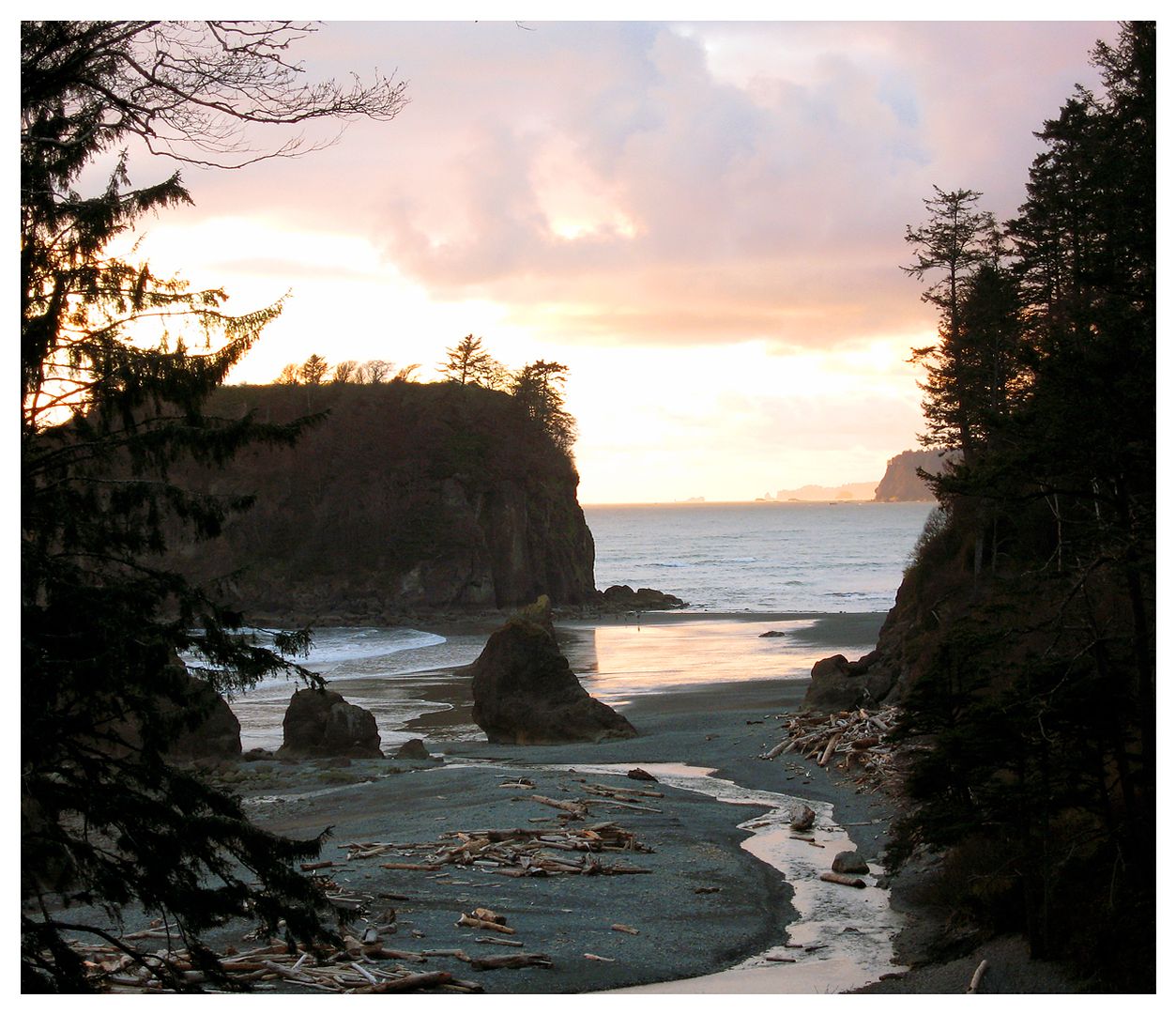
Although I, too, would like to see more cultural and racial variety on our parks' trails, further developing the parks with WiFi towers and concert venues would be a myopic and ultimately fruitless move. Few areas of the American landscape afford us with the opportunity to "tune in" by tuning out, and the National Park Service should not fundamentally alter its mission in an effort to appeal to younger and more diverse demographics.
Instead, the NPS needs to celebrate the conservation heroes of color -- Majora Carter and Van Jones, for example, as well as the growing number of African American and Latino NPS rangers -- thereby providing role models for today's youth. Most importantly, we need more programs that get urban kids into our parks, encouraging them to recognize that these tracts belong to them. It's possible that their time afield without phone calls, Facebook, and Reddit will stay with them, appreciated, even if they're less than enthusiastic about the mosquito bites.
Photo credit: Christopher Reiger, 2008
Monday, August 19, 2013
A Tonto Inventory
During the summer of 2003, I spent a week rafting on the Colorado River. Our flotilla bounced, rolled, and cheered its way down the river's major rapids, but there was also ample time for floating on the current and letting the Grand Canyon's magnificence wash over us. At night, we cooked and camped on the river's beaches. A few memories of the trip are especially clear: I recall encouraging the youngest members of our party to avoid harming the spiny lizards they chased around camp; rejoicing when I encountered rattlesnakes and scorpions during side hikes; and, on the last night of the trip, listening to a passionate talk by one of our guides about the Colorado's dwindling water flow. Above all, though, I remember the sublime beauty of the landscape.
Until this summer, ten years after that unforgettable trip, the river week was my only experience of the American Southwest, and I've wanted to return to the region for some time. When a good friend (and fellow natural history nerd) called me earlier this year and suggested we carve out some time to visit Arizona's Tonto National Forest, I was easily persuaded.
We spent most of our weeklong visit exploring the high desert trails and fire roads of Tonto's north central tract, but we also had an opportunity to spend a little time in the National Forest's southern reach, at the edge of the Sonoran Desert. It was a treat to meet so many species new to me and to have intimate encounters with other animals, like elk, that I'd previously seen in habitats very different from that of the high desert.
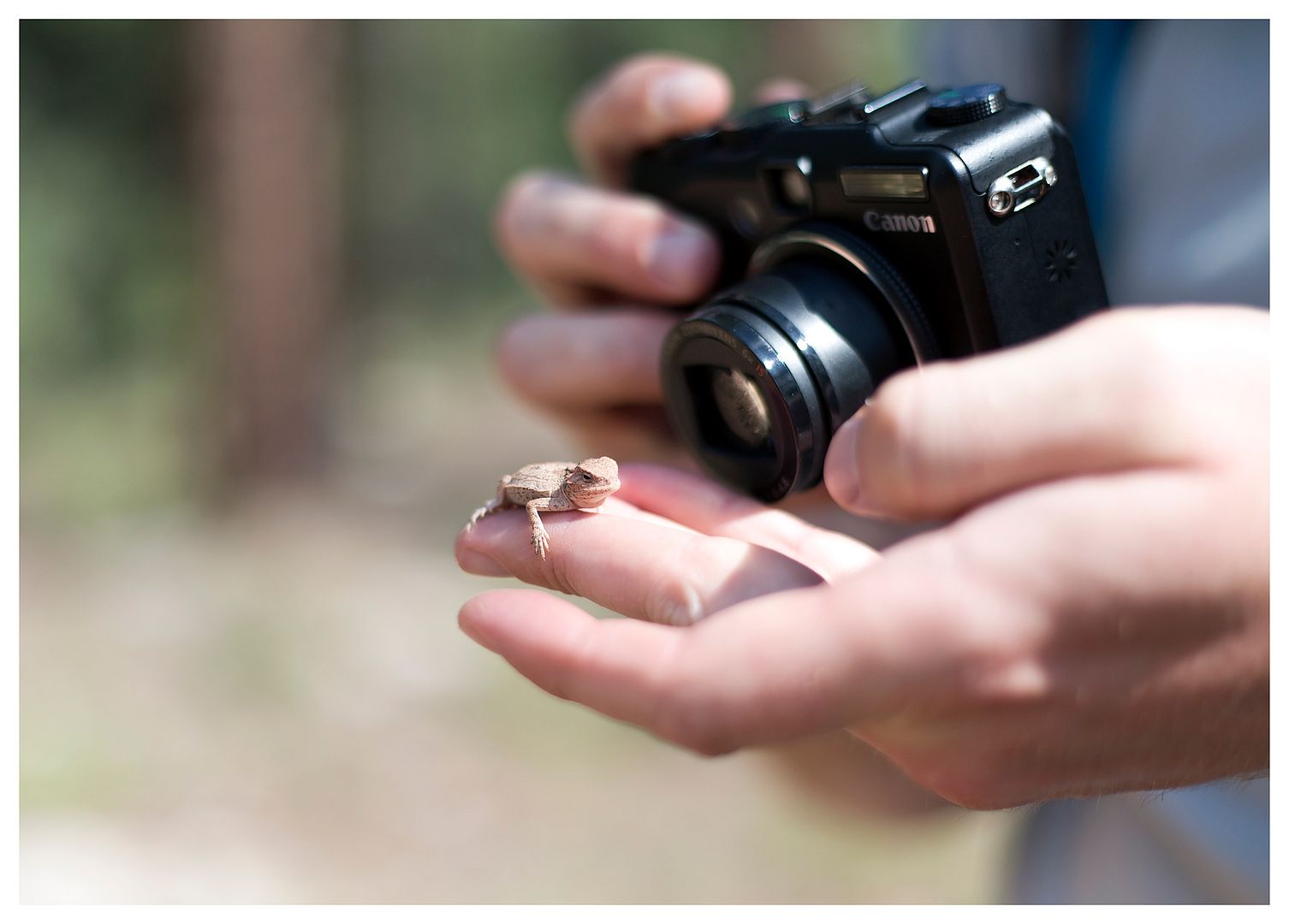 |
| Christopher Reiger "Greater short-horned lizard; Fire Road 1170; Tonto National Forest, AZ; August 2013" |
Until this summer, ten years after that unforgettable trip, the river week was my only experience of the American Southwest, and I've wanted to return to the region for some time. When a good friend (and fellow natural history nerd) called me earlier this year and suggested we carve out some time to visit Arizona's Tonto National Forest, I was easily persuaded.
We spent most of our weeklong visit exploring the high desert trails and fire roads of Tonto's north central tract, but we also had an opportunity to spend a little time in the National Forest's southern reach, at the edge of the Sonoran Desert. It was a treat to meet so many species new to me and to have intimate encounters with other animals, like elk, that I'd previously seen in habitats very different from that of the high desert.
Sunday, July 28, 2013
Interview with Jaime Lakatos
I had the pleasure of meeting artist Jaime Lakatos in Aggregate Space last week to chat with her about "Cinderscape," her solo show there. I encourage readers to visit Aggregate Space while "Cinderscape" is still on view (through Saturday, August 3). It's a very strong show by an artist I expect to see a lot more from in the coming years.
Christopher Reiger: Are you from the Bay Area originally?
Jaime Lakatos: I grew up in New York, about an hour from the city, on Long Island.
Where on Long Island?
Port Jefferson, right where the ferry goes to Bridgeport.
So, you’re obviously interested in natural history. Where did that interest come from?
Well, you know, going to the Natural History Museum in New York. That was home base. I had an internship there before I started working in museums thirteen years ago, just making all the architectural models for the new Hall of Ocean Life. Also, when I was in school at RISD, I did a 6-month stint with Kiki Smith. My work was a lot more human body based at the time, and its gradually evolved. It was about parasites in the human body, then animals and humans, and now it’s just animals!
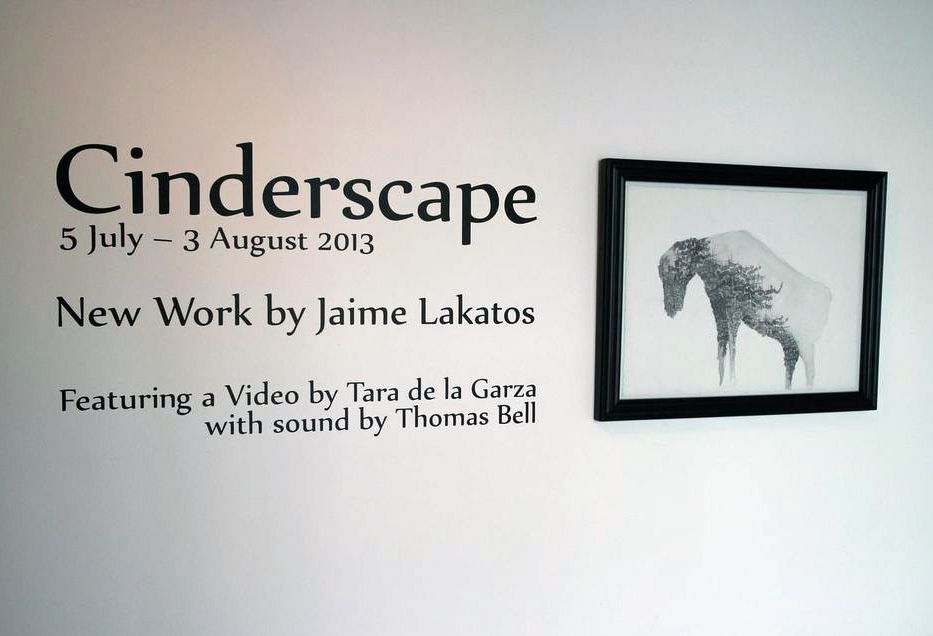 |
| Jaime Lakatos Installation view of "Chronic Remorse" Watercolor and graphite on paper 14 x 18 inches 2013 |
Jaime Lakatos: I grew up in New York, about an hour from the city, on Long Island.
Where on Long Island?
Port Jefferson, right where the ferry goes to Bridgeport.
So, you’re obviously interested in natural history. Where did that interest come from?
Well, you know, going to the Natural History Museum in New York. That was home base. I had an internship there before I started working in museums thirteen years ago, just making all the architectural models for the new Hall of Ocean Life. Also, when I was in school at RISD, I did a 6-month stint with Kiki Smith. My work was a lot more human body based at the time, and its gradually evolved. It was about parasites in the human body, then animals and humans, and now it’s just animals!
Subscribe to:
Posts (Atom)