Showing posts with label RiB. Show all posts

Wednesday, December 07, 2011

Review In Brief: Cordy Ryman at Eli Ridgway Gallery


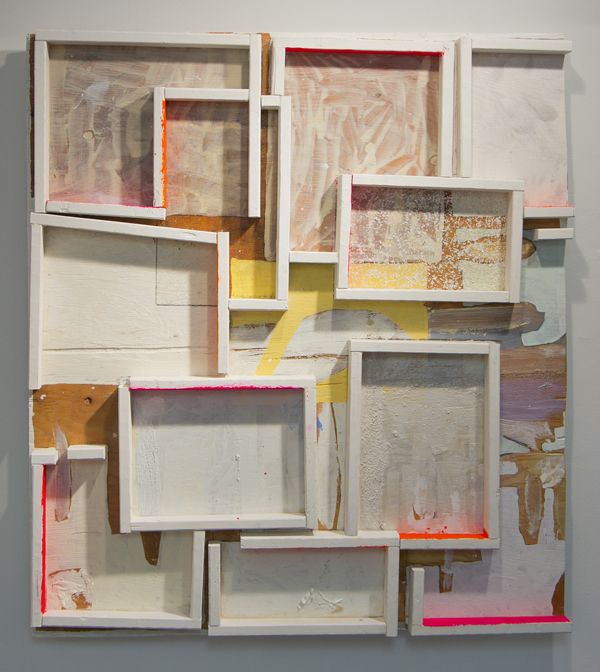
Cordy Ryman
"Shadow Boxed"
2011
Acrylic, enamel, and graphite on wood
38 x 33 1/2 x 3 1/2 inches

Using staples, tape, crudely cut blocks of wood, and other modest materials, Cordy Ryman creates painting-sculptures that explore the interaction of color, light, and line. The DIY appearance of Ryman's artwork belies the sophistication of his enterprise. He's taken a page from the Light and Space playbook (note Ryman's attentiveness to light refraction), but his primary preoccupation is graphic and compositional.

Kin to the painter Thomas Nozkowski, who last year told the New York Times that “a painting is finished when I finally understand why I wanted to do it in the first place,” Ryman engages his materials as if they were collaborators, allowing compositions and designs to reveal themselves over time. In his words, "the process dictates its own direction and evolution." We can't know if this approach is arduous or easy (it's likely both), but Ryman's works almost always appear playful.
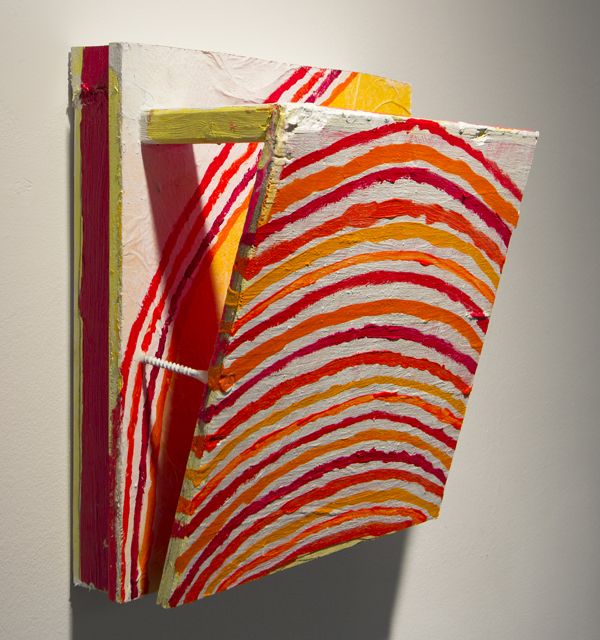

Cordy Ryman
"Tangerine 75"
2011
Acrylic and enamel on wood, screws
11 3/4 x 10 1/2 x 5 3/4 inches

The best of Ryman's creations radiate an electric -- almost manic -- energy. A number of these successes are on view in the artist's current solo show at Eli Ridgway Gallery. "Luca," "Shadow Boxed," "Bumble," and "Rose Meridian" are standout works. No less interesting, however, are the middling pieces included in the exhibition. Consider "Tangerine 75." The artwork isn't, on the whole, a star, but the sum of its parts is intriguing; I returned to it several times during my gallery visit, always finding something new to admire or react against.

Ryman's willingness to fail -- and to share his failures with us -- is refreshing and important. Seen alongside their stronger relatives, apparent missteps like "Can Bottom Redline" and "Sun Staple" inform viewers' understanding and appreciation of Ryman's greater project.

Cordy Ryman's work is on view at Eli Ridgway Gallery (172 Minna Street, San Francisco) through December 22.
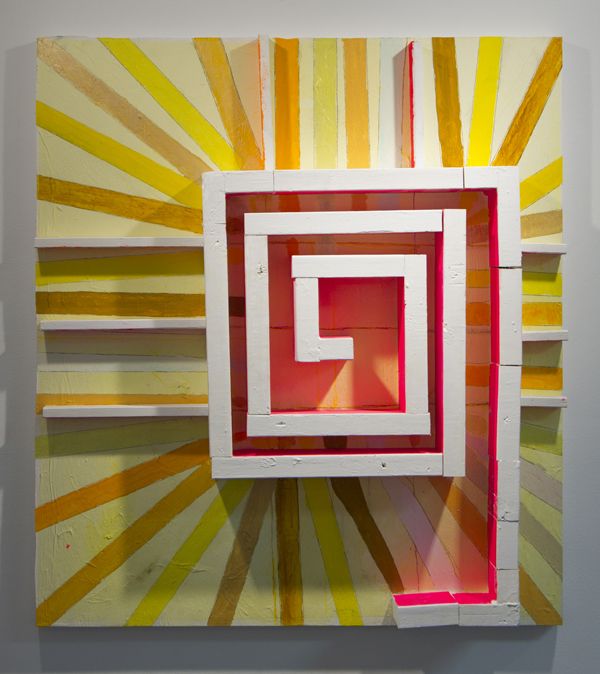

Cordy Ryman
"Luca"
2011
Acrylic, enamel, and graphite on wood
40 3/4 x 35 1/2 x 5 inches

Image credits: Cordy Ryman images, courtesy Eli Ridgway Gallery

Tuesday, November 29, 2011

Review In Brief: Lionel Bawden's "World of Surface"


Lionel Bawden
"Flipside (II)"
2011
Colored Staedtler pencils, epoxy, and incralac on black Perspex shelves
12.25 x 5.25 x 3.5 inches

All of the sculptures exhibited in "The World of Surface," Australian artist Lionel Bawden's recent solo show at Frey Norris Gallery, are constructed using colored pencils. Bawden painstakingly epoxies the pencils together and carves them into a variety of colorful forms. Some of the resulting artworks pour off their wall-mounted shelves like melting candles. Others are small totems with geometric, mandala-like patterns that evoke Georgia O'Keefe's sensual flower paintings as well as the indigenous art forms of Bawden's native country.

"Flipside (II)" and "Gatekeeper (II)," the strongest works in the exhibition, belong to this latter type, and their kinship to Australian Aboriginal art forms like basket weaving and bark painting is manifest not only in their patterns and Bawden's consummate craftsmanship, but also in the sculptures' earnest desire to function as sacred objects, vehicles of meditation and trance.


Lionel Bawden
"jewel linking (dense field)"
2011
Colored pencil & ink on paper
30 x 22 inches

Even viewers who dislike Bawden's work must acknowledge his skill, but the pencil sculptures' material novelty (their "neato" factor) risks their dismissal as schtick. Wisely, Bawden included 5 works on paper in "World of Surface." Although his drawings aren't as peculiar and interesting as his sculptures, Bawden's decision to enlist different materials in his exploration of repetitive processes is a good one. Each of these drawings features a honeycomb array of carefully rendered, multicolored hexagons. They're almost garish, and the imagery isn't particularly compelling, but Bawden is most concerned with creating a record of his patient handiwork, and the "World of Surface" pictures can be seen as a design-conscious riff on jail wall hash marks.

Lionel Bawden's "The World of Surface" was on view October 1 - November 26, 2011, at Frey Norris Gallery (161 Jessie Street, San Francisco).


Lionel Bawden
"Gatekeeper (II)"
2011
Colored Staedtler pencils, epoxy, and incralac on black Perspex shelves
11.5 x 9.25 x 4.25 inches

Image credits: Lionel Bawden images, courtesy Frey Norris Gallery

Saturday, November 19, 2011

Review In Brief: Jan Tiura's "Hulls"


Jan Tiura
"sea song"
2011
Archival pigment print
36 x 30 inches

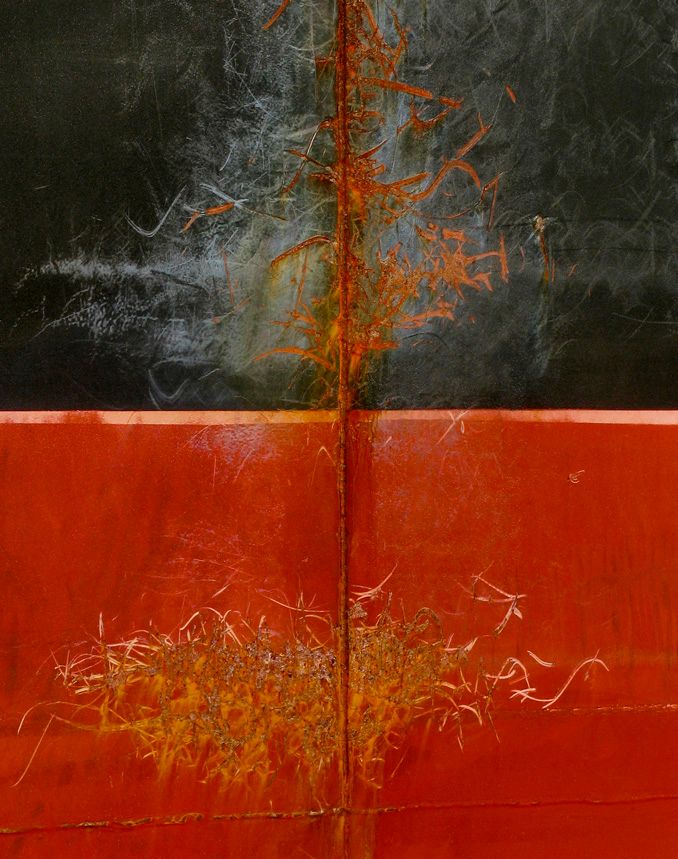
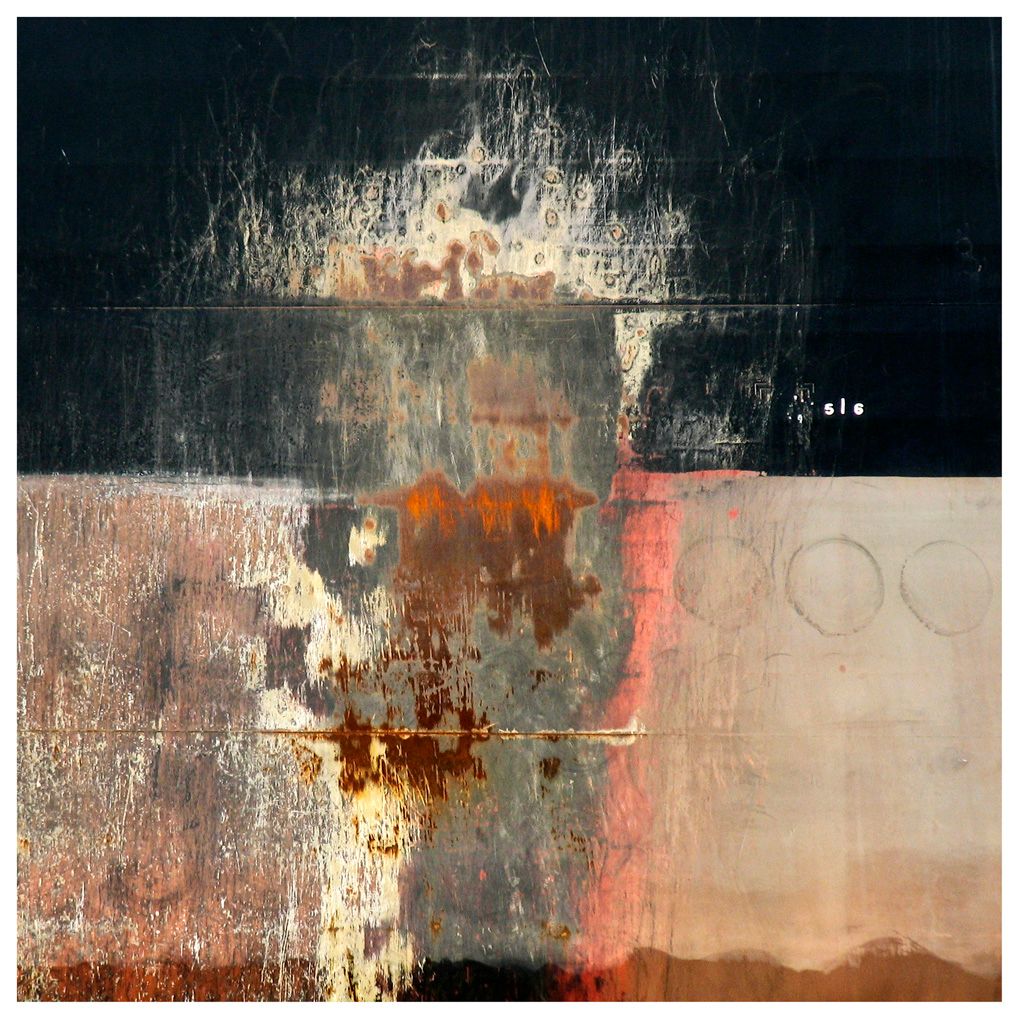
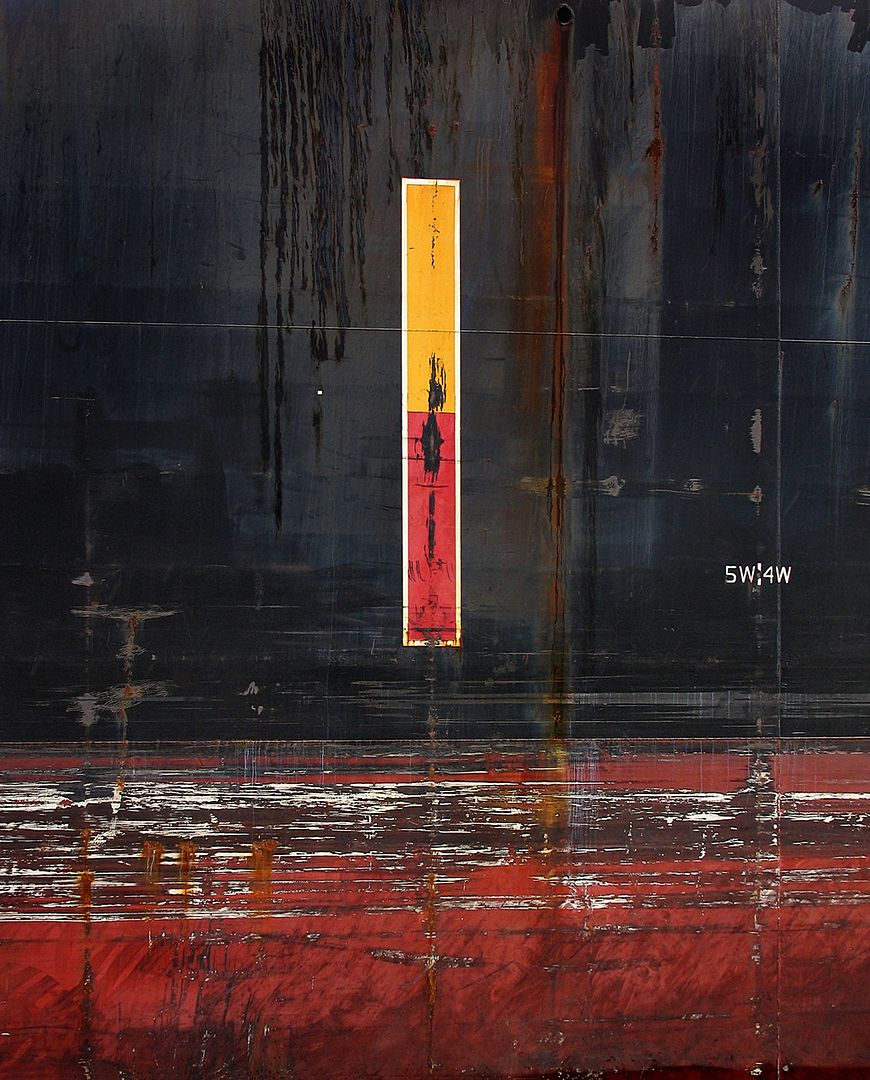
Bay Area native Jan Tiura half-jokes that a high school sailing trip from San Francisco to the Galapagos Islands and back, a voyage of some 6,600 miles, "ruined her for indoor work." Fortunately, Tiura eventually found maritime employment on San Francisco Bay's tugboat fleets, and, not long thereafter, became the first woman to captain a Bay tugboat, a position she held for over 30 years, until her retirement in 2010. During the decades she spent at tugboats' helms, Tiura regularly photographed the container ships and oil tankers that she helped guide into and out of port. The weathered hulls of the vessels were a favorite subject; 14 of Tiura's "Hulls" pictures are currently on view at Dickerman Prints.

Tiura has a keen eye, and she frames for us the remarkable beauty that she observed on the job. In "pirate II," the discoloration of the ship's paint by the action of salt water and sunlight over time creates captivating alchemical abstractions. In "Oslo II" and "sea song," the scratches, gouges, and furrows into the ships' steel skin call to mind the best of Cy Twombly's gestural mark-making. The "Hulls" photographs are enriched by the knowledge that the beauty Tiura documents is the effect of a working boat's full, hard life.


Jan Tiura
"pirate II"
2011
Archival pigment print
30 x 30 inches

The prints were produced in collaboration with Seth Dickerman, and the exhibition's press release celebrates the results as "a testament to modern photographic technology's ability to create high-quality, large-format works of art from incredibly small and low-resolution digital files." The prints on display average about 30 x 30 inches, and they look terrific from 3 feet away; on very close inspection, however, the details are pixelated and slightly blurred. Unfortunately, no matter how talented the printer, a small digital file can only be pushed so far. In future editions, I hope Tiura and Dickerman will scale down the print size; the pictures would still sing at 20 x 20 inches.

Jan Tiura's "Hulls" is on view through December 11, 2011, at Dickerman Prints (3180 17th St, San Francisco).


Jan Tiura
"5W/4W II"
2011
Archival pigment print
36 x 30 inches

Image credits: Jan Tiura photographs, courtesy Dickerman Prints

Monday, October 03, 2011

Review In Brief: Mary Ellen Bartley's "Books"


Mary Ellen Bartley
"Untitled 49," from "Paperbacks"
2010
Archival pigment print
12 x 18 inches

San Francisco's resident bibliophiles will have a hard time resisting photographer Mary Ellen Bartley's subject matter. The two most successful pictures in "Books," Bartley's solo outing at Corden/Potts Gallery, are part of the artist's "Paperbacks" series. "Untitled 44" and "Untitled 49" are particularly elegant tributes to the book as formal object; in both, paperback books are photographed against a light grey background, their fore edges or tails facing the camera. The book tails in "Untitled 49" resemble impasto strokes of oil paint, and the simple composition and subdued palette call to mind the still lifes of Giorgio Morandi.


Mary Ellen Bartley
"All The More Real," from "Standing Open"
2011
Archival pigment print
18 x 27 inches

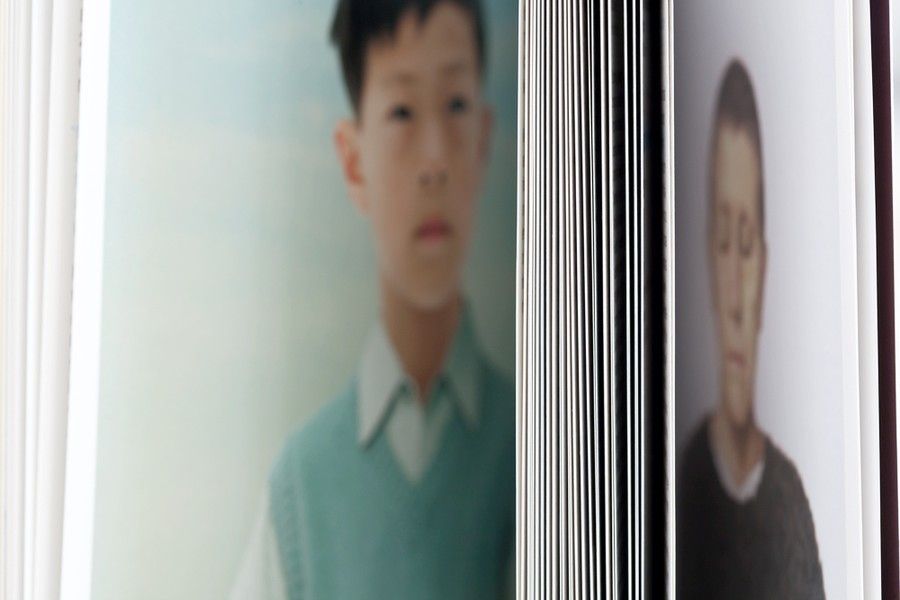
In the company of "Paperbacks," Bartley's "Standing Open" and "Blue Books" series are relatively weak. "Blue Books" is too contrived; the artist arranges blue-covered hardbacks in Rothko-like compositions that are attractive, but bland. For "Standing Open," Bartley photographs the fore edges of partially open books in close-up, so that the pages create stripes and, in the artist's words, "shadowy voids [...] that read like burns or stains." The fine concept is diminished by Bartley's decision to shoot artist monographs; the imagery printed on the pages of these collections too often dominates our attention, distracting from the series' formal impetus.

Mary Ellen Bartley's "Books" is on view through October 29, 2011, at Cordon/Potts Gallery (49 Geary St., Ste. 410, San Francisco, CA).

Image credits: Mary Ellen Bartley photographs, courtesy Cordon/Potts Gallery