Showing posts with label art. Show all posts

Thursday, January 30, 2014

"Dancing By the Marsh," an excerpt from "Presidio Sites"

Christopher Reiger
"View of Crissy Field from near "Presidio Sites" Site #4; The Presidio, San Francisco, CA; November 2013"

An adapted excerpt from my "Presidio Sites" project is featured at The Center For Humans & Nature blog, City Creatures. Click here to read it.

Photo credit: © Christopher Reiger, 2013

Tuesday, January 14, 2014

Announcing BAASICS.4: Watershed

The next evening program produced by BAASICS, the non-profit I co-founded in 2010, is just under two weeks away. Please save the date and reserve your tickets (sliding scale, $0-20) soon; they're going fast!

Those of you who are not in the San Francisco Bay Area can still view most BAASICS content in our online archive.

+++++
BAASICS (Bay Area Art & Science Interdisciplinary Collaborative Sessions) PRESENTS:
BAASICS.4: Watershed

Saturday, January 18, 7:00 – 9:00 pm (doors @ 6:30pm)
ODC Theater | 3153 17th Street, SF CA 94110
(Reception to follow @ Root Division | 3175 17th Street, SF CA 94110)
This event is FREE/SLIDING SCALE, but seating is limited, so reserve your tickets early.
Event website: http://www.baasics.com/baasics-4-watershed/
Tickets available at http://www.odcdance.org/performance.php?param=176

Sunday, January 05, 2014

"Presidio Sites"

Laurie Halsey Brown (senseofplaceLAB)
"Christopher Reiger at Quadrat Site #1;  Presidio, San Francisco, CA; October 2013"
In December 2013, I led a walking tour to three of the four sites in the Presidio that were the focus of Nomadic Nature In Situ, a collaborative art project curated by senseofplaceLAB. At each stop, I read a short reflection on some aspect of the site, and the walking tour concluded with a reception where recent photographs of mine were on view. In the course of 2014, I'll lead more of these walks as part of my “Presidio Sites” project.

See photos from the December outing and read about the “Presidio Sites” project here.

Saturday, January 04, 2014

"Project George"

Christopher Reiger
"Chelonoidis nigra abingdonii (memento mori)"
Archival inkjet print on bamboo paper8" x 10"2013
I've been swamped with various projects these last few months, and I'm very belatedly announcing the terrific project below. It officially launched in November 2013.

I'm honored to have a recent photograph featured as one of the two prints kicking off the tribute, and it's a treat to be in the good company of Jonathan Woodward.

Monday, October 28, 2013

"Touch Me"

Last night, BAASICS had the pleasure of supporting our friends at The Berkeley Science Review with "Touch Me," their terrific Bay Area Science Festival program at the David Brower Center. I posted a summary of the event over at the BAASICS blog. Check it out here.

Original "Touch Me" promotional poster

Wednesday, September 25, 2013

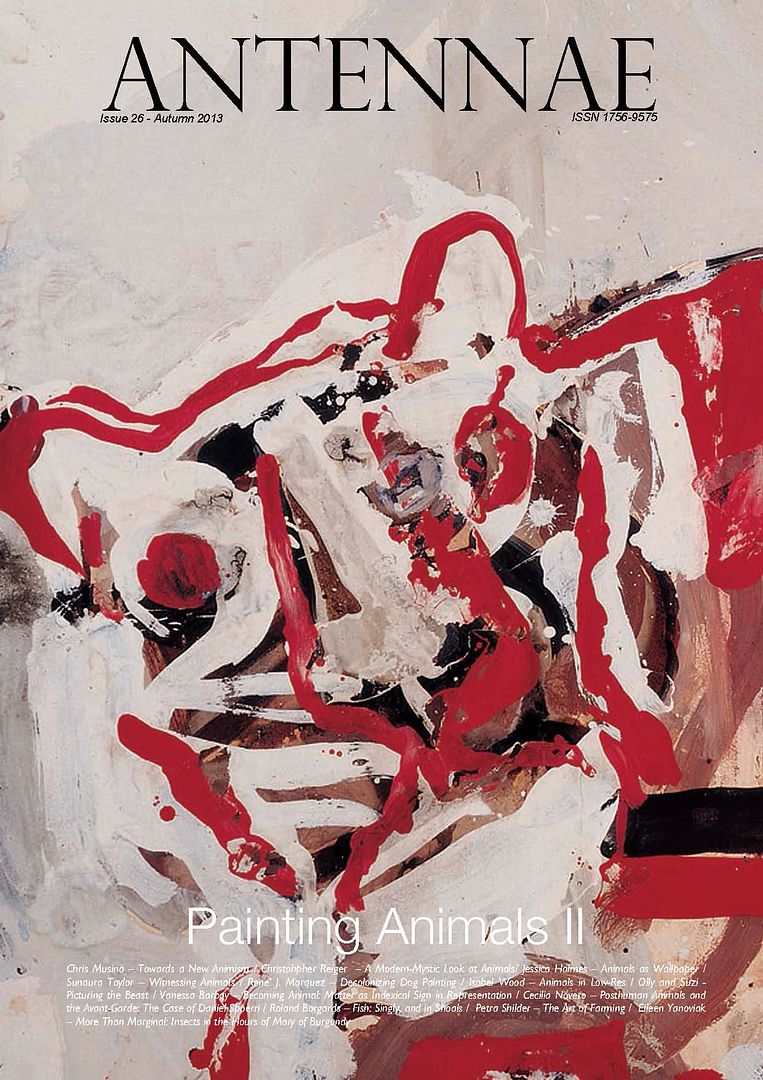
Antennae #26 Feature

I'm pleased to announce that several of my paintings and drawings are featured in Issue #26 (Autumn 2013) of Antennae: The Journal of Nature In Visual Culture. Accompanying the images, the editors printed a statement I wrote about the featured body of work.

While I'm not currently working on that series -- my attention is more focused on the hybrid project I described in April -- I'm delighted to have my work appear in Antennae, a journal that, as an artist and writer preoccupied by all things "nature," I've long been a fan of.

Image credits:: Antennae, copyright 2013

Sunday, September 22, 2013

Navigating the Flood (Of Images)

I recently visited "A Sense of Place," Pier 24's current exhibition. It's a strong show with a broad purview that, typical of Pier 24 productions, is elegantly and thoughtfully installed. Long after I left the space, I found myself reflecting on the relationship between two of the "A Sense of Place" galleries.

Erik Kessels' installation, "24 HRS in Photos," a "room filled - floor to ceiling - with printed versions of every picture uploaded to Flickr during a 24-hour period," has generated some online buzz. The Pier 24 press release states that Kessels' provides the viewer with an opportunity "to both visually and physically experience the overwhelming number of photographs shared online." Indeed, he does.
Erik Kessels
"24 HRS in Photos"
Installation view at Pier 24
2013

I entered "24 HRS in Photos" a few minutes after leaving another room of the exhibition, one devoted to Stephen Shore's "Uncommon Places." The contrast between the spaces was jarring. The simple framing of Shore's work -- broad mats provide ample quiet space around the prints -- isolates each picture and draws the viewer in. Accordingly, I spent long minutes with each of Shore's photographs, pouring over details and "reading" the pictures like a short story. Every Main Street, bowling alley, parking lot, and road sign in Shore's photographs has a rich tale to tell.

My "read" of "24 HRS in Photos" couldn't have been more different. Upon entering Kessels' installation, I didn't know where to begin. I knew I was looking at an accumulation of individual photographs, but I could take in the work only as a whole, as a swell of blues, whites, and blacks with occasional bursts of yellow or red. As Ariel Rosen writes over at SFAQ, Kessels' "mountain of photos" is "antithetical to any careful choosing." The installation reminds us that the vast majority of images being produced today are neither intended nor received as pictures to be pondered; they are snapped, uploaded, shared, consumed, and forgotten.

Sunday, July 28, 2013

Interview with Jaime Lakatos

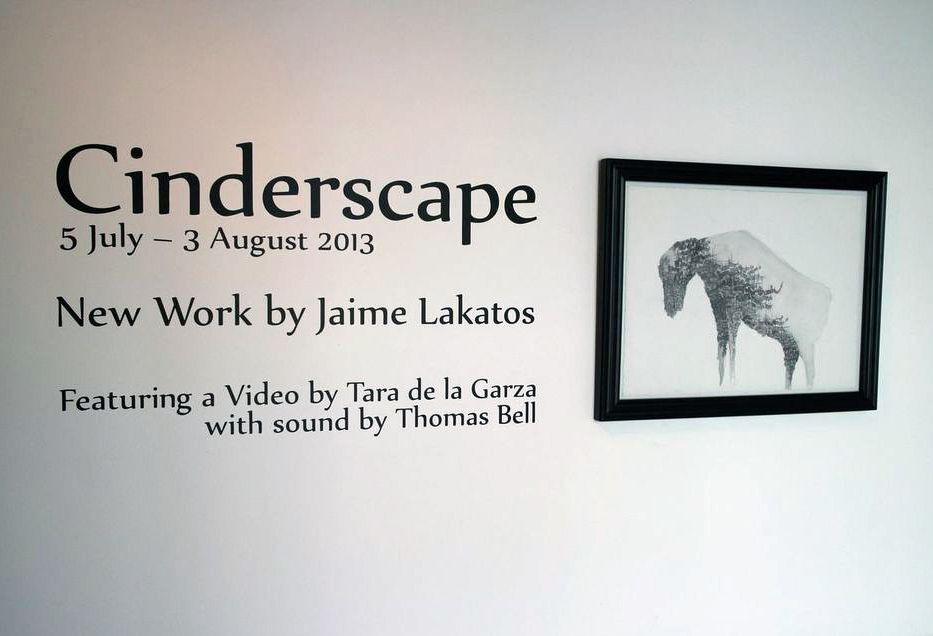
I had the pleasure of meeting artist Jaime Lakatos in Aggregate Space last week to chat with her about "Cinderscape," her solo show there. I encourage readers to visit Aggregate Space while "Cinderscape" is still on view (through Saturday, August 3). It's a very strong show by an artist I expect to see a lot more from in the coming years.

Jaime Lakatos
Installation view of "Chronic Remorse"
Watercolor and graphite on paper
14 x 18 inches
2013
Christopher Reiger: Are you from the Bay Area originally?

Jaime Lakatos: I grew up in New York, about an hour from the city, on Long Island.

Where on Long Island?

Port Jefferson, right where the ferry goes to Bridgeport.

So, you’re obviously interested in natural history. Where did that interest come from?

Well, you know, going to the Natural History Museum in New York. That was home base. I had an internship there before I started working in museums thirteen years ago, just making all the architectural models for the new Hall of Ocean Life. Also, when I was in school at RISD, I did a 6-month stint with Kiki Smith. My work was a lot more human body based at the time, and its gradually evolved. It was about parasites in the human body, then animals and humans, and now it’s just animals!

Tuesday, July 16, 2013

Commonplace Book Time Machine #1:
Novus Ordo Seclorum


One of the two chapbooks I initially proposed creating in conjunction with my Aggregate Space & Featherboard Writing Series writing residency will not be produced. Because the residency is only five weeks long, I've decided I must devote the lion's share of the period to the more substantial of the two projects, a meditation on my childhood comprehension of death and killing. Still, rather than let the preliminary work I'd done for the commonplace book chapbook go to waste, I thought I'd share a few of the scanned pages here, on Hungry Hyaena, along with some editorializing. The first of these posts follows.

+++++
2-page spread from one of my commonplace books, 2000

Just after my twenty-second birthday, I began a new commonplace book. At the time, I was living in the basement bedroom of an Alphabet City apartment in Manhattan, laboring five days a week at a Soho art gallery and, nights and weekends, drawing and painting in my bedroom or working on a solipsistic vampire novel titled, appropriately, Me. My income was meagre; I'd grown used to dinners of white rice (generously seasoned with soy sauce) and I socialized just one night a week (not counting too many hours spent watching recorded episodes of Mr. Show with my roommates). Necessarily thrifty, then, I elected not to purchase a new journal to use for the commonplace book; instead, I picked up a journal that I'd cast aside a couple of years prior after filling its early pages with adolescent agitation.

Sunday, June 30, 2013

In Harness at Aggregate Space

An Aggregate Space "Selfie"; West Oakland, CA; June 2013
I'm grateful to both Aggregate Space and The Featherboard Writing Series for granting me time (and a desk away from my home office/studio) to focus on new writing and photograph projects. Having begun work on my two e-chapbooks (described in more detail here), I'm even more enthusiastic about the possibilities. I spent most of today in Aggregate Space's second floor office and editing area, where I wiled away the hours ruminating on some of my early hunting experiences in dove fields.

Disappointingly, it seems unlikely that the e-chapbooks will be available by the time the residency ends in early August, but the kind folks at The People's E-book have agreed to let me be a part of the second wave of Beta testers for the platform. Currently, I plan to produce two limited edition print (i.e., non-digital) chapbooks in partnership with Aggregate Space and The Featherboard Writing Series, and then I'll turn those limited editions into freely distributed e-books after the residency's end.


Image credit: copyright, Christopher Reiger, 2013

Wednesday, June 26, 2013

Sci Foo On My Mind

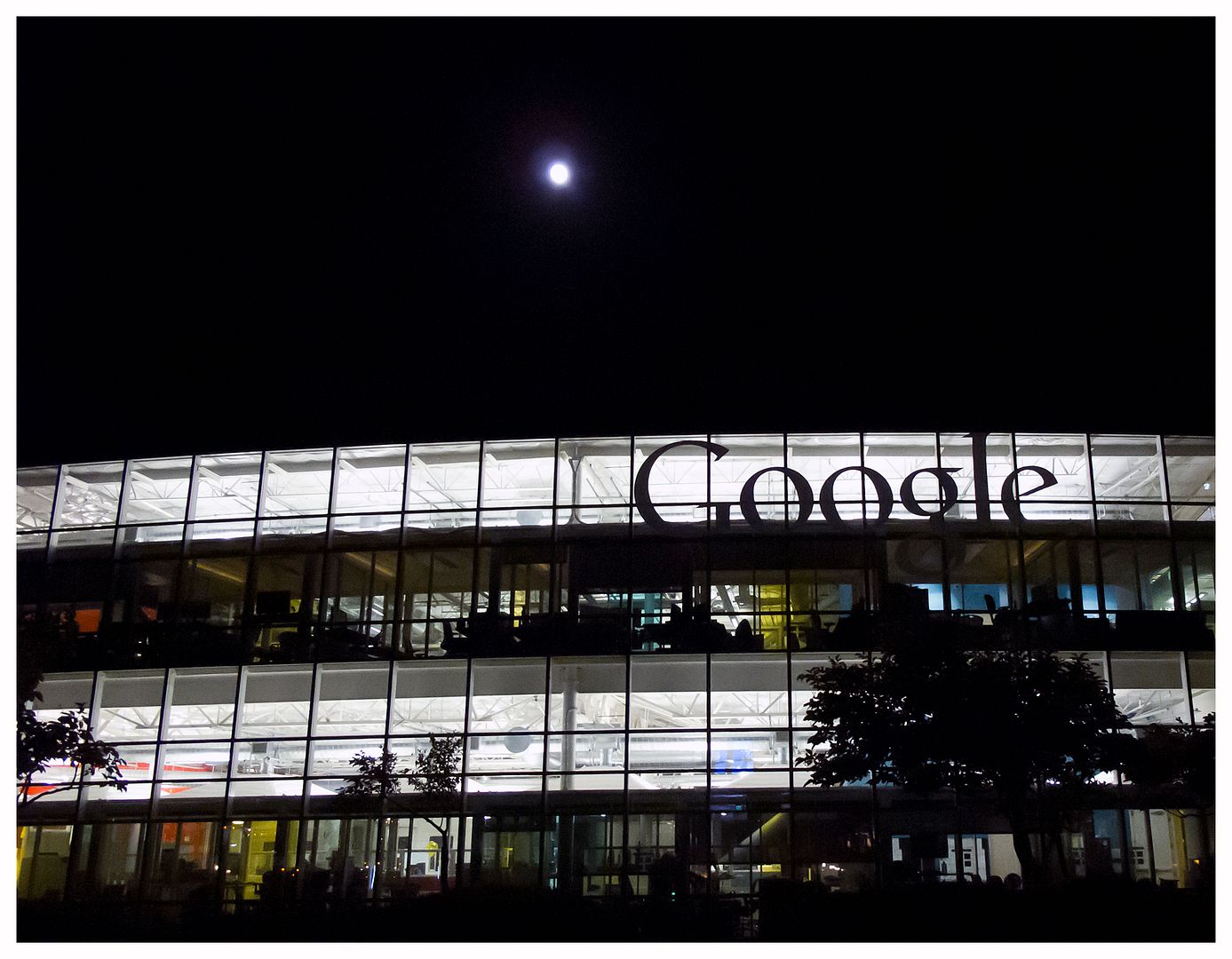
Summer solstice moon over the Googleplex; Mountain View, CA; June 2013

My father-in-law is a glass-half-full kinda guy. In the midst of any conversation about science, medicine, or technology, it's not uncommon for him to proclaim, "This is an exciting time to be alive." Indeed, it is. But when I fell into bed early on Sunday morning, my head giddy with ideas from the first full day of Sci Foo Camp, my father-in-law's optimism seemed understated. Spend 48 hours with -- to list just a few of the approximately 250 participants -- a computer scientist studying machine learning and music, a theoretical physicist turning the idea of gravity on its head, a marine biologist eager to solve the mysteries of whale sharks, a genomic epidemiologist intent on elucidating outbreak transmission dynamics, and a national security strategist currently implementing the White House's terrorism-related information sharing priorities and...well, you come away with much to ruminate on and a lot of notes to parse. In short, Sci Foo Camp made for an extraordinary weekend!

Monday, June 17, 2013

Off to Sci Foo this weekend!

I'm excited to head to the Googleplex this coming weekend for Science Foo Camp! Usually referred to as Sci Foo, the eight-year-old invitation-only "unconference" is organized by Google, the science journal, Nature, Digital Science, and O'Reilly Media. Sci Foo brings together "between 200 and 300 leading scientists, technologists, writers, and other thought-leaders at the Googleplex for a weekend of unbridled discussion, demonstration, and debate." (You can learn more about SciFoo here.)

Selene and I were invited because of the BAASICS mission, and I'm pleased to see that one of the proposed SciFoo sessions is titled "Building Better Art-Science Partnerships." Naturally, we're looking forward to engaging in lively, informative conversations with other participants about the art-science interface and to explaining what it is we aim to do with BAASICS and why we feel it's so important. That said, while BAASICS got me invited, I'm super jazzed about attending (and perhaps participating in) many of the other sessions that have been proposed. A few of my favorites:
- Using Emerging Technologies to Advance Conservation
- Science Advocacy
- Rethinking National Security
- Defragging Government (How Can Scientists and Engineers Help?)
- Science and Popular Skepticism
To my way of thinking, Sci Foo's interdisciplinary angle and relaxed format are outgrowths of Bay Area culture, a place where idealism, art, science, and technology commingle, often with exciting results. I'm encouraged to see sessions like "DeFragging Government" on the list, and I have the impression that many of the Sci Foo participants recognize our responsibility -- both that of the individual and the group -- to be active beyond our more particular spheres.

BAASICS will be live tweeting from the event and I'll provide a short update -- with photographs -- after my return.

Image credit: ripped from the Sci Foo Camp website

Tuesday, June 11, 2013

Aggregate Space Summer Writer-In-Residence

Miscellaneous chapbooks

I'm delighted to announce that I'll be the Aggregate Space Writer-In-Residence this summer. I'm honored to be the first participant in the artist-run space's new program and I'm looking forward to my time in West Oakland! (For readers unfamiliar with Aggregate Space, I recommend reading Kelly Inouye's interview with Conrad Meyers II and SD Willis in SFAQ. As Inoyue writes, Meyers and Willis "basically created a gallery, artist studios, metal and wood fabrication shop, small theater, and office space out of an empty warehouse.")

Thursday, April 25, 2013

Hannah Addario-Berry: Brain Food/Music

Hannah Addario-Berry


Cello Bazaar, the cello-centric monthly music series founded and directed by BAASICS.3: The Deep End performer and presenter Hannah Addario-Berry, is named after its principal venue, Bazaar Cafe. The Richmond District coffee shop and event space is not far from Hannah's home, and Selene and I met her there on a particularly warm San Francisco morning to discuss her contribution to The Deep End program.

Hannah describes herself as "a fierce advocate of the music of today," and, like Selene and me, she is passionate about exposing a wide audience to that which she cares about; in her case, that's music and food. Along with Cello Bazaar, Hannah founded and runs Locaphonic, an organization dedicated to "connect[ing] Bay Area residents with our local musicians, food, and culinary artists, promoting sustainable livelihoods for artists and farmers and uniting our community through food and music."

Tuesday, April 23, 2013

When It All Comes Together

Christopher Reiger
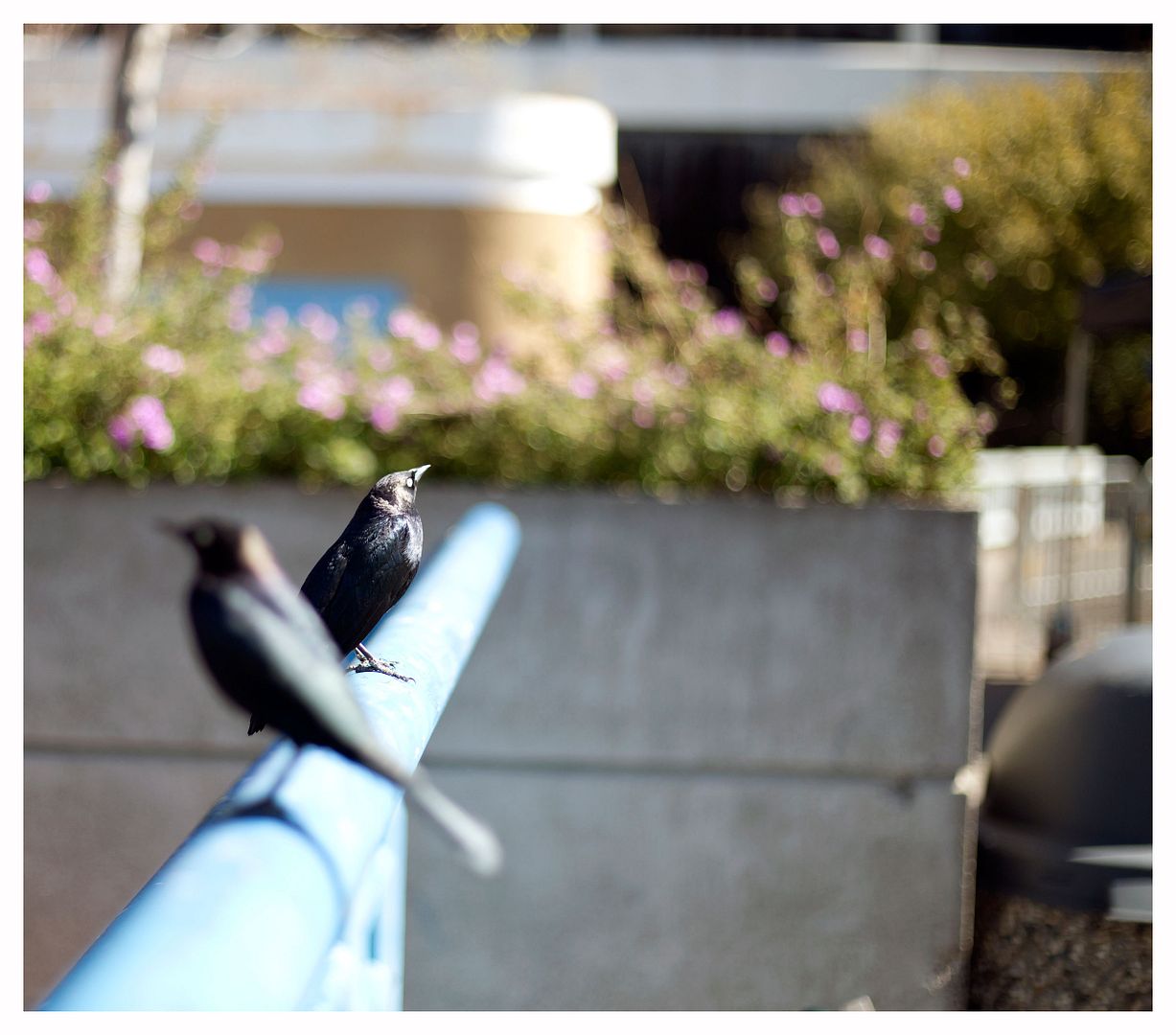
"Brewer's blackbirds"
2013
I recently promised this blog's monthly email digest subscribers that I would begin sharing updates about BAASICS (Bay Area Art & Science Interdisciplinary Collaborative Sessions), the non-profit organization that I co-founded and co-direct. Indeed, most of April's Hungry Hyaena posts are synopses of conversations had with some of the artists and scientists participating in BAASICS.3: The Deep End, our upcoming program on neurodiversities, mental illness, and creativity. (Readers can expect more of these vignettes in advance of the Monday, May 6 event.)

I've come to regard BAASICS as an important arm of my creative endeavor; it's a long-term project that provides me with a platform to help make contemporary art and science relevant and exciting to a broad audience. In many respects, BAASICS is a descendant of Synoddity, the cross-disciplinary organization I co-founded with my friend Michael McDevitt during our undergraduate years at The College of William & Mary. Synoddity made a case for conversation and interaction across professional boundaries and was, like BAASICS, animated by curiosity and wonder, something both Michael and Selene Foster, my BAASICS collaborator and co-founder, have in spades. Working on a project you're passionate about is invariably a good thing, but it's a particular pleasure when you team up with fantastic people.

Wednesday, April 17, 2013

Leeza Doreian & Creativity Explored

Leeza Doreian at work in her West Oakland studio
A few weeks ago, Selene and I met BAASICS.3: The Deep End presenter Leeza Doreian at her home in West Oakland. She and her partner, John, an artist, furniture maker, and contractor, have lived in the house for three years, and are remodeling it in their limited spare time. Shortly after moving to the Bay Area from Brooklyn five years ago, Leeza began working at Creativity Explored, a Mission-based non-profit organization dedicated to "provid[ing] artists with developmental disabilities the means to create, exhibit, and sell their art."

We sat around Leeza's dining room table, chatting, admiring reproductions of artwork, and sipping coffee in a brightly lit room that opens to her backyard; the liquid warble of a House finch punctuated our conversation. Leeza suggested that Creativity Explored and similar organizations -- Creativity Explored, Creative Growth, and NIAD Art Center are all Bay Area organizations dedicated to working with artists with developmental and/or physical disabilities, and all three were founded by Florence and Elias Katz -- aim to help people "access their own abilities."

Thursday, April 11, 2013

Dr. Walter Freeman III's chaos and creativity

Dr. Walter J. Freeman
"One profound advantage chaos may confer on the brain is that chaotic systems continually produce novel activity patterns. We propose that such patterns are crucial to the development of nerve cell assemblies that differ from established assemblies. More generally, the ability to create activity patterns may underlie the brain's ability to generate insight and the 'trials' of trial-and-error problem solving."

- Walter J. Freeman

On a sunny Tuesday morning when most of the University of California, Berkeley student body was away from campus for Spring Break, Selene and I had the pleasure of visiting Dr. Walter Freeman in his Donner Lab office. He provided us with a simple introduction to neurodynamics -- brain waves are a "special kind of noise," he explained -- before expounding on the theoretical outgrowth of his neuroscience research. Many of Walter's conclusions about the workings of the brain have an unexpected antecedent, the philosophy of the 13th century theologian, St. Thomas of Aquinas (Walter prefers the Italian formulation, Tommaso, so I will use it here).

Sunday, April 07, 2013

Dr. Indre Viskontas and the reshuffled brain

Dr. Indre Viskontas with the the "Painted Ladies"
A couple of weeks ago, Selene and I met Dr. Indre Viskontas for coffee in the Fillmore District. Although Indre's BAASICS.3: The Deep End presentation, "Release from Inhibition: The creative impulse in patients with dementia," draws primarily on her neuroscience research experience, she is a scientist and an artist. She earned a PhD from UCLA as well as a Master of Music degree from the San Francisco Conservatory of Music, where she now serves on the faculty.

In the course of our conversation, we learned how Indre's experiences as co-host of OWN's Miracle Detectives buttressed her commitment to secular humanism, and about several exciting art and music projects she's currently working on. Mostly, though, we learned about the research Indre did into the workings of creativity in patients with frontotemporal dementia.

Friday, April 05, 2013

Seeing Through the Story

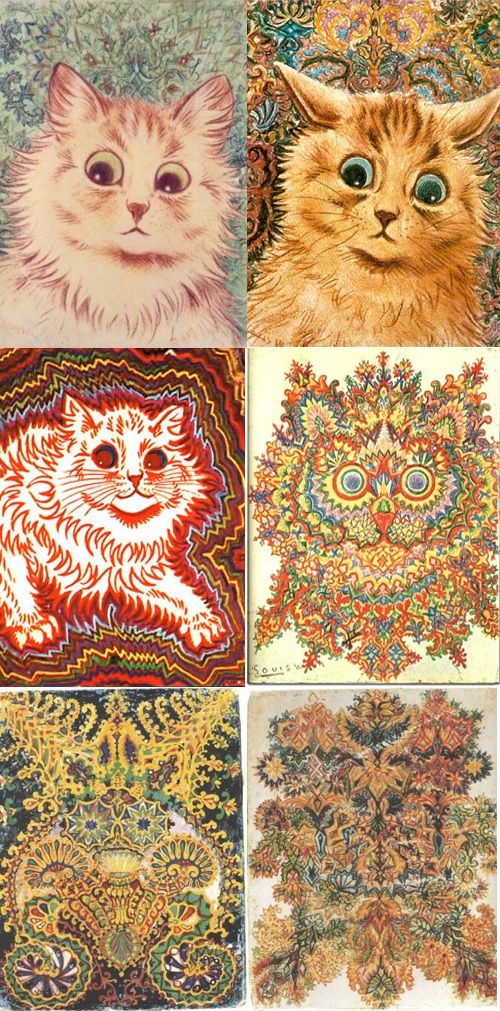
Six paintings of cats by Louis Wain, shown as a group to illustrate their increasingly abstract and electric nature, attributed to his suffering from schizophrenia

When I was eighteen, I had a passionate argument with my father about my life's priorities. I insisted that producing good art mattered above all else. Because I was a teenager who still boiled down everything to causative choices, I declared that I would happily die destitute if doing so meant I'd produce a few revelatory works in my lifetime. My father angrily dismissed my stance as romantic and foolish, but I held my ground (as is the wont of eighteen-year-old ideologues), and proclaimed that I'd sooner kill myself than create artwork for money or popular acclaim.

Tuesday, March 05, 2013

Help Make BAASICS.3: The Deep End Possible


In 2011, I co-founded BAASICS (Bay Area Art & Science Interdisciplinary Collaborative Sessions), a series of San Francisco-based evening programs that brings together artists, scientists, and interdisciplinary thinkers to present engaging multi-media lectures and performances. Each BAASICS program is built around a particular theme, with participants given the green light to express their brilliance and share their passions in ways that don't always involve a Powerpoint presentation and a microphone. All BAASICS programs are free and open to the public on a first-come, first-served basis. We aim to make the contemporary arts and sciences more accessible and less esoteric, thereby inspiring guests to think about how the two spheres relate to one another and to society at large. To date, we've put on two successful programs, BAASICS.1: A Live Animal (July 2011) and BAASICS.2: The Future (June 2012). Our third program, BAASICS.3: The Deep End, will take place at the ODC Theater on May 6, 2013.