Showing posts with label humanity. Show all posts

Thursday, September 12, 2013

The Sin of Being Realistic

In conjunction with the Jewish new year, I read a litany of "sins" we Jews must repent for on Yom Kippur. One of them had special resonance, both personally and universally.
"For the sin of being 'realistic' when our tradition calls upon us to transform reality."
I like the formulation, even if the "realist" in me balks at what remains unaddressed. After all, while it's certainly true that realism too often begets apathy and the maintenance of the status quo, it's also true that idealism sometimes begets rigid ideology and violence. Perhaps, then, tempered idealism is the best proposition, a virtue that will allow us to continue to struggle toward the horizon (and beyond)?

Whatever religion, philosophy, or ethic you subscribe to (or react against), our collective human aspiration calls on us to improve the lot of the whole. Here's to our keeping on keeping on, together.
View of Little Diamond Rim; Tonto National Forest; Arizona; August 2013

Photo credit: Christopher Reiger, 2013

Wednesday, June 26, 2013

Sci Foo On My Mind

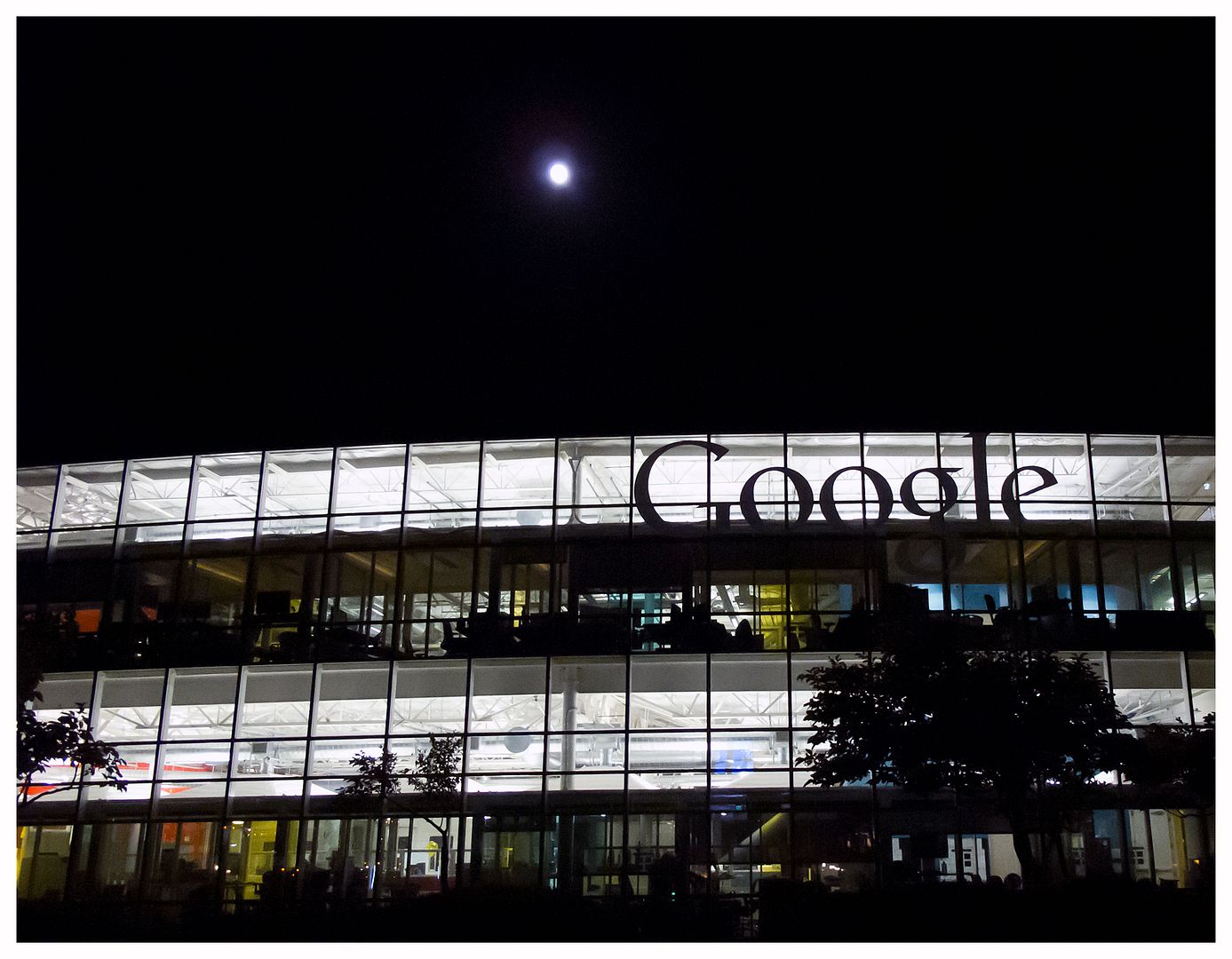
Summer solstice moon over the Googleplex; Mountain View, CA; June 2013

My father-in-law is a glass-half-full kinda guy. In the midst of any conversation about science, medicine, or technology, it's not uncommon for him to proclaim, "This is an exciting time to be alive." Indeed, it is. But when I fell into bed early on Sunday morning, my head giddy with ideas from the first full day of Sci Foo Camp, my father-in-law's optimism seemed understated. Spend 48 hours with -- to list just a few of the approximately 250 participants -- a computer scientist studying machine learning and music, a theoretical physicist turning the idea of gravity on its head, a marine biologist eager to solve the mysteries of whale sharks, a genomic epidemiologist intent on elucidating outbreak transmission dynamics, and a national security strategist currently implementing the White House's terrorism-related information sharing priorities and...well, you come away with much to ruminate on and a lot of notes to parse. In short, Sci Foo Camp made for an extraordinary weekend!

Sunday, January 20, 2013

"Private Frontiers" at Hosfelt Gallery

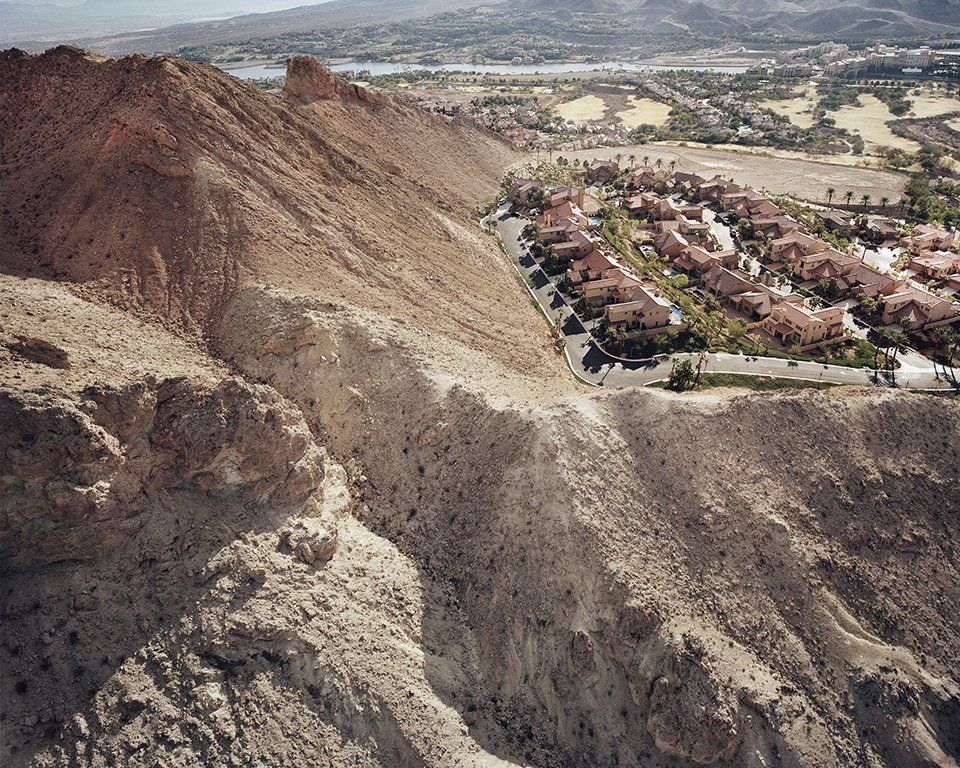
Michael Light
"Lake Las Vegas 2010-2012 20. 'Casa Palermo' Lake Las Vegas Homes Looking Southwest, Henderson, Nevada"
2010
Pigment print mounted on aluminum
40 x 50 inches
Edition of 5
I recently visited Hosfelt Gallery's impressive new space, currently home to "Private Frontiers," a two person show featuring works by Brooklyn-based painter Chris Ballantyne and San Francisco-based photographer Michael Light. According to the press release, the two artists "have been in dialogue for the past year to develop work that examines the human urge to stake territory and its more absurd manifestations on the American landscape." Whatever the specifics of the artists' conversation, Ballantyne's paintings are a terrific compliment to Light's large-format aerial photographs. Exhibited on their own in the expansive Hosfelt loft, Ballantyne's colorful and occasionally whimsical works would risk being swallowed up as bittersweet morsels. Hanging alongside Light's grand photographs, though, Ballantyne's modestly-sized pictures comport themselves especially well; their affability and humor endure, but undercurrents of earnestness and melancholy, too easily missed if exhibited on their own in so airy a space, are amply felt.

Friday, February 10, 2012

Chris McCaw: Drawing Time

Chris McCaw
"Sunburned GSP#420 (Arctic Circle, Alaska)"
2010
Unique gelatin silver paper negative
12 x 20 inches
Chris McCaw created the arresting pictures on view in "Ride Into the Sun," the artist's winter 2011 solo show at Stephen Wirtz Gallery (San Francisco, CA), using an unconventional technique. The artist loads handcrafted view cameras as large as 30 x 40 inches with expired silver gelatin photographic paper, tilts the camera lenses skyward, and opens the shutters for hours. Even on cloudy days, the photo paper is soon overexposed. As time wears on, however, the light-sensitive chemicals that coat the paper are solarized, and the prints' tones are transmuted in curious ways. In many of McCaw's works, the sun appears as a dark, arcing streak and the landscape and sky as shades of grey. During some of McCaw's longer exposures, the sun's brilliance, laser-like, burns through the paper, tracing its progress as a charred tear.

Tuesday, January 24, 2012

Oh, Starlings!


A few months ago, a friend shared the above video with me. You might have seen or read about it before; it went "viral" late last year. The two friends who appear in the clip are treated to an intimate encounter with a large murmuration, or flock of European starlings. Murmurations of such substantial size are natural phenomena that, no matter how familiar, retain their capacity to inspire wonder, even awe. As one, the birds sweep and dance in an astonishing and fluid choreography; the rush of their wingbeats and many bodies pushing through the air produces a sound that accounts for the name. Because the audible component of a murmuration is impressive in its own right, I wish a version of the video were available without the hokey music, but the giddy joy that the canoeing friends experience is palpable, especially near the short film's end, when one of the women looks at the camera with marveling, wide eyes, and they both begin to laugh.

Saturday, September 24, 2011

Acknowledging Exceptionality

"As glass office and condominium towers have proliferated in the last decade, so, too, have calls to make them less deadly to birds. The San Francisco Planning Commission adopted bird-safety standards for new buildings in July, and this month that city’s Board of Supervisors will vote on making it law. Legislation is pending in Washington that would require many federal buildings to incorporate bird-friendly designs. The United States Green Building Council, a nonprofit industry group that encourages the creation of environmentally conscious buildings, will introduce a bird-safety credit this fall as part of its environmental certification process, called LEED."
- "A City of Glass Towers, and a Hazard for Migratory Birds," New York Times, September 14, 2011
I enjoyed reading "A City of Glass Towers, and a Hazard for Migratory Birds," a recent New York Times article about bird-building collision mortality. Lisa Foderaro's piece is a hopeful account of how a confluence of activism, technology, and regulation can improve the lot of animals, especially in cases where a particular species has been adversely affected by human development.

The comments that follow the article, however, are predominated by doom-and-gloom attitudes. A representative survey follows:
All that matters are people and every little whim. We're a doomed species.
-Karma Every Moment, NY, NY

The people who tell us that evolution and climate change are just unproved theories have no idea how life formed this planet since its inception and no understanding whatsoever of the role of extinction in maintaining the climate within habitable bounds when any one plant or animal breaks the equilibrium. They convinced me long ago that there is no future for my own children.
-Steve Bolger, NY, NY

Yet another example of the consequences of man's selfish and destructive behavior. So sad.
-agetibi, Carrboro, NC
No wonder over 50% of Americans polled by The Nature Conservancy caricatured environmentalists as preachy reactionaries. In the words of the Conservancy's Chief Scientist, Peter Kareiva, most people see members of the environmental movement as "misanthropic, anti-technology, anti-growth, dogmatic, purist, zealous, exclusive pastoralists." Unsurprisingly, this negative stereotype has led to a dwindling of the movement's ranks.

I consider myself an environmentalist, but I distinguish between preservation and conservation (placing myself in the latter camp) and, more critically, I believe that environmentalism needs to embrace a "can do" attitude. If the majority of my fellow Times readers identify as environmentalists, their comments suggest that they're a well-intentioned pox. Wholesale condemnation of our species is as wrongheaded and malignant as exclusive glorification. In order to decry humanity as a "selfish and destructive" brute, one must stubbornly overlook all the evidence to the contrary. I wrote about such oversight in an essay included in the catalog for "A Live Animal," a group show that Selene Foster and I co-curated at Root Division.
"Although 'deep ecologists' and animal rights activists bemoan conservation approaches that prioritize human interests, the fact remains that human beings are exceptional animals. Skeptics and naysayers need only consider our species' biological and imaginative success to find evidence of our unprecedented faculty. But of all our remarkable features and feats, among the most notable examples of humanity's anomalous nature is our interest in and empathy for other species. Although there is growing scientific agreement that some other species possess self-awareness and even a capacity for empathy -- whales, dolphins, elephants, and our ape relatives are especially interesting in this regard -- humans are the only animal striving to learn about and better the lot of other creatures and environments. It's true that we often prioritize short-term, anthropocentric interests and it's also clear that reckless human activity has contributed to dramatic climate change and the ongoing Holocene extinction (our geological epoch's staggering loss of biodiversity), but conservation efforts and legislation, as well as our burgeoning interest in sustainability, speak to another, more hopeful human impulse; we possess an innate ability to see ourselves in other animals and, in turn, to recognize our capability as their stewards and representatives."
In short, we're not all bad. If you believe that we are, then you're guilty of sapping our species' potential. Christopher Cokinos is excellent on this point. I've quoted his terrific "Consolations of Extinction" essay before; I'll do it again.
"Too much grief for the world means less energy to help it along. [When] you find yourself free of the poisons that too much angst can cultivate, then something marvelous happens. You can sense how very old the planet is, how very old life and death are, and you can keep going on, you can keep doing the work you do in this universe, feeling despair when you feel despair, feeling - amazing - joy when you feel joy."

Thursday, September 22, 2011

Kija Lucas' Stars & Pillows


NASA and the European Space Agency
"Hubble Ultra-Deep Field"
2004

Glow-in-the-dark star stickers dotted the ceiling of my childhood bedroom. Every night, before sleep, I marveled at the phosphorescent firmament. Over time, however, the stickers' charge diminished and the ceiling's constellations grew dim. Likewise, the burgeoning egocentrism of adolescence dulled my capacity for wonder; for years, I gave little consideration to the night sky. By the time I'd matured enough to be awed anew, adult life had carried me from rural locales to the electric glow of New York City, where all but the brightest celestial bodies were swallowed by our species' illumination.

Today, whenever I find myself in sparsely populated areas at night, I'm startled and humbled by the brilliance of the stars and my relative insignificance. The famous Hubble Ultra-Deep Field (HUDF) image evokes a similar awe. The HUDF was produced by compositing visual data from the Hubble Space Telescope, and the colorful result provided astronomers with a 13.2 billion-year-old picture of our universe. The orange, yellow, blue, and purple marks that spot the HUDF are primordial galaxies that formed shortly after the Big Bang. The photograph is attractive, but it appeals more to our imagination; it's capable of elating a viewer as much as the heavens can an enthusiastic amateur astronomer or glow-in-the-dark star stickers can a child. The incomprehensible grandeur of the cosmos is intoxicating.


Kija Lucas
"Origin Story No. 4"
2011
Silver gelatin prints, tape
30 x 40 inches

The HUDF came to mind as I admired Kija Lucas' "Origin Story No. 4," a photogram collage included in Root Division's "Introductions 2011" exhibition, the non-profit's annual survey of a dozen Bay Area emerging artists. Although the abstract imagery of "Origin Story" appears cosmic, the galaxies and gases of Lucas' picture are more earthly. The artist gathered dust from her studio floor, placed it on light-sensitive photo paper, and then exposed the paper. Afterward, she cut the resulting photograms into 2x2 inch squares and rearranged them; the seams of the collage create an unsteady grid, adding to the impression of an extraterrestrial survey. But the white-specks and smears might also be construed as microscopic lifeforms near the deep-sea floor, the products of a particle accelerator's "God-particle" collision, or documentation of activity in another sphere invisible to the human eye. The photogram's easy transition between the unfathomably vast (i.e., the universe) and the subatomic speaks to the mystical notion that scale is Ouroboros-like, that infinite travel "inward" (i.e., moving ever smaller) eventually leads to the infinitely large.


Kija Lucas
"Pillow No. 4"
2011
Archival pigment print
23 x 30 inches

Does Lucas intend "Origin Story No. 4" as a rumination on such matters? I don't know. But the artist also includes another body of work in "Introductions 2011" that invites a complimentary interpretation: a series of photographs of old pillows, presented specimen-like on black backgrounds. The pillows' patterned fabric, stained with mold and sweat, is testimony to their years of service. In the context of "Origin Story," it's hard not to think of these well-used pillows cradling the craniums of people transitioning between waking life and dream, a liminal state conducive to contemplative insight into the incomprehensible. Yet the beautiful photographs are also anthropological documents; Lucas treats mundane pillows as artifacts worthy of sustained consideration. What do they tell us about ourselves? What do the patterns mean: the fleur-de-lis, the crop of diamonds? Specific answers will be provided by viewers, but Lucas' overarching project attests to the human inclination to collect and interpret, to grope for understanding.


Kija Lucas
"Pillow No. 6"
2011
Archival pigment print
23 x 30 inches

Image credits: HUDF, courtesy of NASA; Kija Lucas images, courtesy the artist

Wednesday, April 20, 2011

Navigating the Flood

"By [Claude] Shannon's definition, the world now produces more information in 48 hours than it did throughout all human history to 2003. [...But] if the universe is information, it has always been producing a deluge of data, and humans have always found patterns of meaning in the waters visible to us."

-uncredited writer in The Week

Wednesday, February 09, 2011

"Scavenged Image (Remixed)"

"The price which man had to pay for his culture and civilization was the severing of this bond which had to be torn to give him his specific freedom of will. But our infinite longing for paradise lost is nothing else than a half-conscious yearning for our ruptured ties.”

-Konrad Lorenz, King Solomon’s Ring
I enjoy using Adobe Photoshop's basic tools to tweak JPEGs that I've collected online. Occasionally, my tinkering provides inspiration for a drawing. More often, the crude experiments are saved to my hard-drive on the off chance that I might later find some happy use for them.

A couple of weeks ago, while pondering a quick collage of a young man wearing a howling-wolf-with-moon t-shirt, I realized that my Photoshop amusements more plainly evidence the humor implicit in the ideas and questions that preoccupy me. Very few people comment on this aspect of my drawings and paintings; if they do, they assume the humor is unintended.

I believe this is partly a function of the artist's character informing the viewer's read of his or her art; people who don't know me well usually describe me as earnest, pensive, and not a kidder. Compounding matters, the pictures' principal mediums, watercolor and gouache, are considered the province of the Sunday painter. For many viewers, then, the drawings and paintings are either too heady or too precious.

By contrast, the Photoshop works are unpretentious "one-noters" that demand little from the viewer, yet still speak to some of the same existential questions that my works on paper do. What is our relationship to the rest of the animal kingdom and to nature, at large? How does our cataloging impulse inform those relationships? How do we reconcile imaginative myth with science, or our base animal with our spiritual aspirations?

But the Photoshop works also ask questions that my drawings and paintings do not. In what ways have we turned other species into commodities? What are the contemporary totem animals for an increasingly urban humanity? More profoundly, is the contemporary human condition one of contradiction? Although self-consciousness, advanced socialization, and technology make us exceptional and allow for the creation of culture and civilization, is it not those very developments that our inner animal rages against? Might many of our contemporary behaviors be analogues of the displacement exhibited by animals living in zoo enclosures?

Because these are related, but different questions and because the Photoshop works are more playful and wry, I've decided to present them on Hungry Hyaena. The first picture in my "Scavenged Image (Remixed)" series will follow this post. I will add more regularly.

Note: A thank you to Joy Garnett; her ongoing "Found Art/Unmonumental" series, posted on her long-running and consistently excellent blog, NEWSGrist, is, in some respects, cousin to this project.

Thursday, February 03, 2011

Enter the Rabbit


A red rabbit for the Chinese New Year

Although New York City has a larger Chinese American population than does San Francisco, the Chinese New Year is a much bigger deal in Fog City than it is in the Big Apple. The Chinese American population in New York accounts for approximately 4.5% of the total population; in San Francisco, it constitutes close to 20%.

Like New York, San Francisco has ethnic enclaves that exaggerate these demographics. I live in a part of the city known as the Inner Sunset, located at the eastern edge of the expansive Sunset District. About half of the Sunset's population is Asian American, mostly of Chinese extraction. In an interview published in the current issue of San Francisco Arts Quarterly (SFAQ), celebrated Bay Area artist Barry McGee remarks that he dislikes the Sunset District because "it's foggy, and there's a big Asian population." The interviewer asks, "You don't like Asians?," and McGee replies, "[...]well it's not that I don't like Asians, but I don't like that many Asians, you know?" I presume that the half-Chinese McGee is joking, but his tongue-in-cheek comment speaks to our species' inborn, tribal orientation.

Curiously, while I'm acutely aware of how "out of place" I am in some ethnic neighborhoods, I've never felt incongruous or unwelcome in predominantly Chinese American communities. There are, of course, significant cultural differences - I'd almost certainly feel homesick and alien were I to live in Beijing or Shanghai for a time - but, unlike McGee, I think the substantial Asian American population is a feather in the Sunset's cap, and I was pleased to see a number of red lanterns and celebratory banners hanging from Sunset awnings yesterday morning.

Maybe, though, there is a more novel reason why I appreciate the Chinese New Year? As a would-be ger (or convert to Judaism), I also observe a new year that's not dictated by the Gregorian calendar. I made my New Year resolutions in early September, during the days preceding Rosh Hashanah, a period that saw no spike in gym memberships.

What is to be made of this hybrid identity of mine, especially in light of our increasingly universalistic aspirations? I'm a straight, white male, and my family tree has a preponderance of English and Scottish Protestants; in other words, like it or not, I was born "the man." Yet I am also, by means of the mystical and psychological process of conversion, a Jew (technically speaking, I'm almost one, mikveh pending). Although most of us associate ethnic identity with skin color or bloodline, ethnicity is by definition a stew of heritage, language, culture, and religion; it is compound. Thus, though I'm only 1/8 Jewish by blood (i.e., genetically or physiologically), I'm able to identify as wholly so (i.e., psychologically).

Because of this rewiring of my identity, I'm ever more appreciative and proud of the diverse makeup of the United States. Many Americans nurture a composite identity (e.g., Italian American, Japanese American, or, less specifically, African American). Although it's crucial that we must prioritize the shared aspect of these respective identities, we should also celebrate the differences. In other words, just as our membership in the family of humankind does not preclude our identifying as part of nations, clubs, or families, American peoplehood does not prohibit membership in particularistic communities, subsets of the greater national identity. Contrary to the well-intentioned, "all you need is love" promises of misguided ideologues, our nation's principal virtue may be it's appreciation for both the universal and the particular.

So, to my many Chinese American neighbors, and to the rest of our experimental nation, cheers to yet another Happy New Year!

Image credit: ripped from Sweety Petey Eco-friendly Baby Toys

Friday, January 14, 2011

Artifacts


Butt Johnson
"Various Video Game Controllers, Maps, and a Robotic Accessory"
2007
Ballpoint pen on paper
15 X 19 inches

It's been five years since I owned a video game console. It's been even longer since I abandoned myself to a game, a happy pastime (read: addiction) of my teens and early twenties. Just as I made a teenaged vow that I would always be knowledgeable about new music -- Damn it, I wouldn't be the adult who plays the same John Denver tape on the car stereo, day after day! -- I also promised myself that I'd always own a technologically sophisticated gaming system. Although I accepted the cruel fact that my body would age and degrade, I believed that I'd remain young at heart if I remained a serious gamer. In retrospect, this latter, already broken vow seems laughably naive. If I were still gaming (even casually), I'd be hard-pressed to juggle my art-making with my writing, my volunteer commitments with earning a living, my solitary "thinking time" with my relationship; where would gaming fit!?

In any case, artist Butt Johnson's drawing "Various Video Game Controllers, Maps, and a Robotic Accessory" strikes a nostalgic chord. Over the years, I've owned or used all of the controllers depicted (with the exception of the unfamiliar robot). Today, a little more than twenty-five years after the release of the tremendously popular Nintendo Entertainment System (NES) console, we consider the system's controller (top row, third from the right) an artifact of a bygone gaming era. And the Atari joystick? A fossil! It's curious to feel wistful about technology so recently outmoded.

On a tangentially related note, I recommend Nick Paumgarten's New Yorker profile of Shigero Miyamoto, one of the creative minds behind Nintendo's success and the creator of revolutionary games like Super Mario Bros., The Legend of Zelda, and Star Fox. He's also one of the idea men behind the industry-dominating Wii console. Like Paumgarten, I find it revealing that Miyamoto cites his active imagination and the outdoors as the foundation of his creative success.
"When Shigeru Miyamoto was a child, he didn’t really have any toys, so he made his own, out of wood and string. He put on performances with homemade puppets and made cartoon flip-books. He pretended that there were magical realms hidden behind the sliding shoji screens in his family’s little house. There was no television. His parents were of modest means but hardly poor. This was in the late nineteen-fifties and early nineteen-sixties, in the rural village of Sonobe, about thirty miles northwest of Kyoto, in a river valley surrounded by wooded mountains. As he got older, he wandered farther afield, on foot or by bike. He explored a bamboo forest behind the town’s ancient Shinto shrine and bushwhacked through the cedars and pines on a small mountain near the junior high school. One day, when he was seven or eight, he came across a hole in the ground. He peered inside and saw nothing but darkness. He came back the next day with a lantern and shimmied through the hole and found himself in a small cavern. He could see that passageways led to other chambers. Over the summer, he kept returning to the cave to marvel at the dance of the shadows on the walls.

Miyamoto has told variations on the cave story a few times over the years, in order to emphasize the extent to which he was surrounded by nature, as a child, and also to claim his youthful explorations as a source of his aptitude and enthusiasm for inventing and designing video games. The cave has become a misty but indispensable part of his legend, to Miyamoto what the cherry tree was to George Washington, or what LSD is to Steve Jobs. It is also a prototype, an analogue, and an apology -- an illuminating and propitious way to consider his games, or, for that matter, anyone else’s. It flatters a vacant-eyed kid with a joystick (to say nothing of the grownups who have bought it for him or sold it to him) to think of himself, spiritually, as an intrepid spelunker. The cave, certainly, is an occasion for easy irony: the man who has perhaps done more than any other person to entice generations of children to spend their playtime indoors, in front of a video screen, happened to develop his peculiar talent while playing outdoors, at whatever amusements or mischief he could muster. Of course, no one in the first wave of video-game designers could have learned the craft by playing video games, since video games didn’t exist until people like Miyamoto invented them. Still, there may be no starker example of the conversion of primitive improvisations into structured, commodified, and stationary technological simulation than that of Miyamoto, the rural explorer turned ludic mastermind."
My solitary, television-deprived childhood was akin to Miyamoto's, an enchanted, wondrous world of books and nature. That changed during my sixth grade year, when my parents purchased a television. A few years later, they presented me with a Nintendo console. For years after that purchase, I spent more time with a console controller in my hand than I did exploring or contemplating the world around me.

It's misguided to dismiss video games as artless or to condemn them as escapism, but I wonder whether my connection to natural history and my investment in ecology would be so concrete had my early, formative years included television and gaming. What if I'd been born eight years later, after the introduction of the NES and home computers?

I have a positive view
of humanity; an overview of our species' short history reveals a social animal that takes two steps forward for every step back. Technology is an essential part of this gradual and steady improvement. Psychologically, however, we're growing ever more distant from our fellow species; our contemporary songlines resonate more in the virtual world than in natural history. Technology is no less a part of that unfortunate development.

Image credit: ripped from Butt Johnson's website

Wednesday, September 22, 2010

The RSA's "21st Century Enlightenment"


Sure, the video is 11 minutes long, well over the too-long-to-watch mark for readers casually trolling the blogosphere, but it's worth bookmarking and saving for later. (In fact, I encourage you to watch it on YouTube or the RSA website, as the resolution is better than that of the above embed.)

The ideas articulated are vital and might provide some solace for those of you who, like so many of my friends, suffer from political apocalypse syndrome! Moreover, the animation is terrific and the narrator, like the Royal Society for the Encouragement of the Arts (RSA), is British, satisfying the Anglophile in all of us.

Enjoy.

(Thanks to Michael McDevitt for turning me on to this RSA video.)

Friday, June 11, 2010

Rescuing Hokget and Everybody Else


Several months ago, I read "The Problem With Human Compassion," an excerpt from Shankar Vedantam's book The Hidden Brain, printed in the February 19th issue of The Week. I include a lengthy selection here.
"On March 13, 2002, a fire broke out in the engine room of an oil tanker about 800 miles south of Hawaii. The fire moved so fast that the Taiwanese crew did not have time to radio for help. Eleven survivors and the captain’s dog, a terrier named Hokget, retreated to the tanker’s forward quarters with supplies of food and water.

[...] Drawn by wind and currents, the Insiko got within 220 miles of Hawaii. It was spotted by a cruise ship, which rescued the crew. But as the cruise ship pulled away, a few passengers heard the sound of barking.

The captain’s dog had been left behind on the tanker. A passenger who heard the barking dog called the Hawaiian Humane Society in Honolulu. [...] The Society alerted fishing boats about the lost tanker and soon media reports began appearing about Hokget.

[...] Money poured in to fund a rescue. Donations eventually arrived from 39 states and four foreign countries. One check was for $5,000. 'It was just about a dog,' Pamela Burns, president of the Hawaiian Humane Society, told me. 'This was an opportunity for people to feel good about rescuing a dog. People poured out their support. A handful of people were incensed. These people said, ‘You should be giving money to the homeless.’' But Burns thought the great thing about America was that people were free to give money to whatever cause they cared about, and people cared about Hokget.

The problem with a rescue was that no one knew where the Insiko was. The U.S. Coast Guard estimated it could be anywhere in an area measuring 360,000 square miles. Two Humane Society officers set off into the Pacific on a tugboat. The Society paid $48,000 to a private company called American Marine to look for the ship.

[...] The U.S. Coast Guard had said it could not use taxpayer money to save the dog, but under the guise of training exercises, the called the U.S. Navy began quietly hunting for the Insiko.

[...] Human beings from around the world came together to try to save a dog. The vast majority of people who sent in money would never personally see Hokget. It was, as Pamela Burns suggested to me, an act of pure altruism and a marker of the remarkable capacity human beings have to empathize with the plight of others.

There are a series of disturbing questions, however: Eight years before the Hokget saga began, the same world that showed extraordinary compassion for a dog sat on its hands as hundreds of thousands of human beings were killed in the Rwandan genocide.

The philosopher Peter Singer once devised a dilemma that highlights a central contradiction in our moral reasoning. If you see a child drowning in a pond—and you would ruin a fine pair of shoes worth $200 if you jumped into the water—would you save the child or save your shoes? Most people react incredulously to the question; obviously, a child’s life is worth more than a pair of shoes. But if this is the case, Singer asked, why do large numbers of people hesitate to write checks for $200 to a reputable charity that could save the life of a child halfway around the world—when there are millions of children who need our help?

The answer is that our moral responsibilities feel different in these situations; one situation feels visceral, the other abstract. We feel personally responsible for one child, whereas the other is one of millions who need help - there are many people who could write that check.

[...] The brain is simply not very good at grasping the implications of mass suffering. Americans would be far more likely to step forward if only a few people were suffering or a single person were in pain. Hokget did not draw our sympathies because we care more about dogs than people; she drew our sympathies because she was a single dog lost on the biggest ocean in the world. [...] We are best able to respond when we are focused on a single victim."
Vedantam and Singer are correct; we humans act more compassionately when we are able to put a face to a cause, yet too many faces dull our response.

I've noticed such a benumbing in myself recently, an unexpected consequence of my transitioning from New York City to San Francisco. Both cities have substantial homeless populations, but panhandling in San Francisco is far more common. My street charity policy, modeled on the approach of a rabbi I heard lecture, is simple enough: I give change to any panhandler who says that he or she will use the money for food (or cites hunger as their reason for begging). I don't give change to those individuals requesting money for any other reason. In New York City, confronted with a few beggars each day, I typically gave change two or three times every week. In San Francisco, however, beggars ask for handouts on every other block, and a good number of them say that they're hungry. If I hold to my standard, I'll give change two or three times a day, if not more often! Shamefully, I've noticed that I've almost ceased giving during my visits to San Francisco.

This is a personal failure that I must address. Each of those many faces is an individual, a single person in need, despite the fact that their larger numbers and concentration counter-intuitively make them relatively anonymous or invisible. The rabbi's rule should be no less applicable in San Francisco than it is in New York. I'm confronted, then, with more need, and I must respond in kind; a hungry person is a hungry person.

But what about a hungry dog? Is Vedantam right to suggest that the thousands of people who contributed money to the Hokget search did not "care more about dogs than people"? Not exactly.

Our species' evolved, inborn behaviors haven't made our adaptation to the globalized world easy. In fact, it seems that contemporary humans are increasingly suspicious of other humans, especially of those outside our respective tribe, whereas animals (and perhaps especially dogs) are seen as uncomprehending innocents. I don't mean to suggest that no one cares about miners trapped in a coal mine, but it's clear that the little girl trapped in a well sells more newspapers, and that the little dog trapped on an abandoned tanker not only sells newpapers, but also inspires a flood of unsolicited donations and generates public outcry.
"Facing intense public pressure to save Hokget, government officials concluded that asking the Navy to sink the tanker—750 miles from Hawaii and drifting away from the distant U.S. mainland—posed unacceptable environmental risks. The Coast Guard finally agreed to access $250,000 in U.S. taxpayer funds to recover the Insiko. It wasn’t officially called an animal-rescue effort. Instead it was authorized under the Oil Spill Liability Trust Fund, based on the argument that if the aimless Insiko managed to drift westward for 250 straight miles, it might run aground on Johnston Atoll and harm marine life.

[...] On April 26, nearly a month and a half after the dog’s ordeal began, the tugboat’s crew found the Insiko and boarded the tanker. Hokget was still alive, hiding in a pile of tires. [...] Hokget arrived in Honolulu on May 2 and was greeted by crowds of spectators, a news conference, banners welcoming her to America, and a red Hawaiian lei."
What a marvelously strange species we are!? I applaud our ability to extend compassion to other animals (we're one of handful of species that have demonstrated such empathic ability), but I wonder at our brains' curious moral calculus.

I suppose all I can do is begin with myself, and humbly pledge to keep my pockets filled with coins.

Image credit: ripped from Corbis Images

Friday, May 21, 2010

Changes


View of Empire State Building; Manhattan, NYC; May 2009

As I prepare to move from New York City, my home for over a decade, to San Francisco, my home for at least a few years, I find myself viewing NYC through the eyes of a man in limbo. I'm still living in Queens, but my attention is already on the road.


Vacant lot; East Village, Manhattan; May 2008

A decade of NYC living makes me, by at least one standard, an official "New Yorker." How does that define me? New York, like all conurbations, is ever in flux. On my watch, it's changed in remarkable ways. What changes will come after I'm no longer a resident? Likewise, what changes are yet in store for me, a similarly adaptable organism?


Samuel Cohen Son graffiti; East Village, NYC; April 2010

I moved to New York City in October 1999, not long after I graduated from The College of William & Mary. I was then an ambitious twenty-one year old with a deeply cynical streak and an abiding love of beer and partying. My paintings and drawings featured naked people interacting in various ways with other animals, medical instruments, fossils, and, on occasion, Teletubbies. (If a reader knows what became of the big Tinky Winky sex painting, I'd love to see a photo of it!) Despite my apparent enthusiasm, I was steeped in melancholy. I spent hours each week brooding over "I," my pet novel project, a 1990s East Village vampire update of Hermann Hesse's Steppenwolf. I viewed humanity as a noxious species, religion as the most noxious of human inventions, and I not so secretly looked forward to our inevitable extinction.

Today, I'm an ambitious thirty-two year old who reacts against cynicism, drinks much less, and generally dislikes partying. Naked people sometimes appear in my paintings, but there aren't any Teletubbies. I'm a stubborn optimist. Each morning, I take twenty minutes to humbly celebrate a new day; if I wake in a funk, I fight through the fog to see anew just how marvelous life is. I recall my earlier character with some embarrassment. What was wrong with the arrogant kid who labored on a novel that painted such an ugly picture of humanity and religion? Perhaps he just needed to be more intellectually rigorous, and to open his eyes to the awesome fact of being? Or maybe that twenty-one year old also needed a good hug, which is no small thing?


Greenpoint, Brooklyn; May 2009

My time in New York City has seen me metamorphize from a hardened and cynical adolescent into an optimistic, joyful adult. The direction of this evolution runs counter to the standard assumption made about the effect of NYC living. As the columnist Mary Schmich warned (and director Baz Luhrmann popularized with his song "Everybody's Free (To Wear Sunscreen)"),
"Live in New York City once, but leave before it makes you hard; live in Northern California once, but leave before it makes you soft."
In my experience, however, NYC living sanded smooth the hard edges.


Wollman Rink; Central Park; Manhattan; June 2008

Perhaps, too, the mournful and nostalgic wails of NYC residents (myself included) are misguided? We should accept that "what will come, will come" without falling victim to fatalistic impotence. New York City (and Manhattan, in particular) is one of the most sustainable, environmentally responsible cities in the world, and its educated, informed residents should work with New York State and City representatives to make sure the city continues apace on that front. They should also do all they can to ensure that it remains a mecca for tolerance, the arts, and cultural pluralism. In what ways I can, I'll do the same from the Left coast; New York City is a part of me, and I will always feel a part of New York City.

Love and peace to all of my friends here. Thank you for everything. I'll be in touch. I'll visit. I hope that you'll visit me.


Upper New York Bay from Staten Island; May 2008

Image credits: all photography, Hungry Hyaena

Sunday, May 16, 2010

Susan Silas' Heroic Living


Susan Silas
"found birds; 2000 - the present"
(Image 17 of 23 from the portfolio "eyes wide shut")
2010
Archival ink jet prints on Hahnemühle photo rag paper
22 x 17 inches

Until recently, I was unfamiliar with Susan Silas' artwork. She is perhaps best known for projects memorializing the Shoah, but it wasn't an awareness of her Holocaust work that led me to "Helmbrecht's Walk, 1998-2003." Instead, it was a photograph of a dead American kestrel that Silas emailed me in March.

I have only an inkling of what essay or artwork of mine inspired the artist to send me the image, but I'm grateful that she did. I shamelessly admit to being the sort who finds soulful beauty in images of death, and I was touched by the striking and contemplative photograph. A month after I received the picture, I visited Silas in her Brooklyn home, to look at prints from her "found birds" series. Still pondering her work a week after that visit, I headed to Hebrew Union College's Jewish Institute of Religion Museum, eager to compare what I saw and sensed in "found birds" to Susan's more easily classifiable (though by no means "easy") Shoah work.


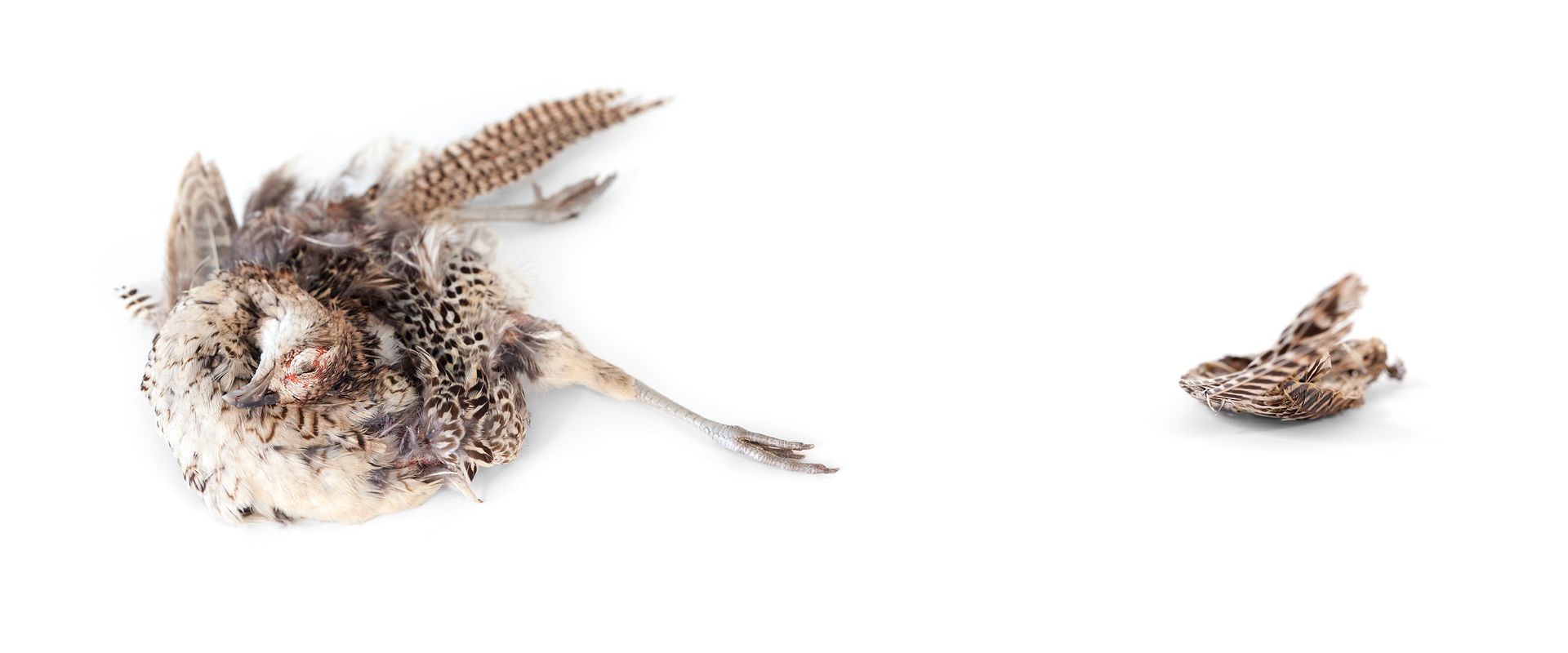
Susan Silas
"found birds; 2000 - the present"
(Image 3 of 11 from the portfolio "what remains")
2010
Archival ink jet prints on Hahnemühle photo rag paper
20 x 48 inches

The HUC press release for "Helmbrecht's Walk" describes the project succinctly.
"On April 13, 1945, more than 700 women were forced to march 225 miles in 22 days from the Helmbrecht's Labor Camp, a small satellite unit of the Flossenburg Concentration Camp in Germany, to the Czech city of Volary. [...] During the course of this forced march the women were ill fed, inadequately clothed, denied shelter, and capriciously beaten. On the sixth day of the march, the non-Jewish prisoners were separated from the group, leaving the remaining 580 Jewish women to continue until May of 1945.

With determination and sensitivity, Silas traced the march in 1998 on the 53rd anniversary of the event by walking along the same path as the Helmbrecht's women for 22 days in Germany and the Czech Republic. She documented her journey in Helmbrecht's Walk, a collection of 48 archival color prints presented as an unbound book. [...] The images contextualized by Silas' daily commentary of her own experiences are coupled with news reports of event occurring elsewhere in the world on that same day in 1998. This juxtaposition, she says, functions 'to heighten our awareness of the fact that we are all presently witnesses to unspeakable events and extreme suffering for which we take no more responsibility than did many witnesses to the Holocaust.'"
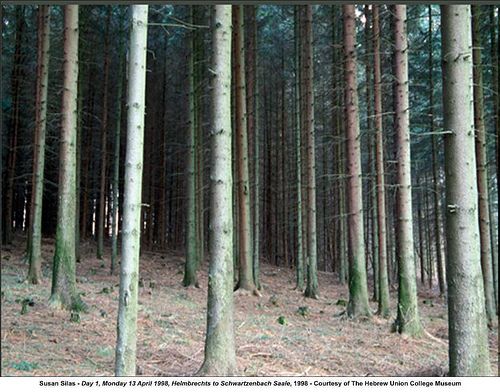
Silas' project addresses the complicated relationship between place and time or, as cultural critic and historian Simon Schama's consideration of the topic framed it, "landscape and memory." When Silas conceived of the Helmbrecht's project, she believed (or maybe hoped) that walking the same path that the Helmbrecht's women had would allow her some intimate experience of or insight into the terrible march. In fact, this didn't prove so. Silas describes her walk as "relatively mundane and unexceptional." She continues, "My feet hurt. I get tired. [...] I found it more, rather than less difficult to understand how these women made this journey once I was out on the road."


Susan Silas
"Helmbrecht's Walk, 1998 - 2003"
(Day 1, Monday 13 April 1998, Helmbrechts to Schwartzenbach Saale, 1998)
Archival ink jet prints on Hahnemühle photo rag paper

Yet many of the captions she includes with the photographs reference artists and thinkers such as Werner Herzog, who understand "walking as a sacrament." Such language calls to mind the Australian Aborigines' songlines, mnemonic stories that are spoken or sung as the Aborigine walks over the referenced terrain. In his marvelous book Spell of the Sensuous, David Abram relates a striking, relevant anecdote.
"A similar tale is told by [Bruce] Chatwin. He was traveling in a Land Cruiser with several friends, including an Aboriginal man nicknamed Limpy whom they were driving to a particular place on his songline. Limpy, whose clan Ancestor was the Native Cat, or tjipla (a small marsupial with a long, banded tail), had never been to this place along the Native Cat songline, yet he now wished to go there in order to see some distant relatives who were dying there. During the course of seven hours driving through the back country, bumping across shallow rivers and under gum trees, the Aboriginal man sat motionless in the front seat, squeezed between the driver, Arkady, and another passenger, except for a short burst of action when the truck crossed part of his songline. Later,
'[w]e came to the confluence of two streams: that is, we met the stream we had crossed higher up on the main road. This lesser stream was the route of Tjilpa Men, and we were joining it at right angles. As Arkady turned the wheel to the left, Limpy bounced into action. Again he shoved his head through both windows. His eyes rolled wildly over the rocks, the cliffs, the palms, the water. His lips moved at the speed of a ventriloquist's and, though them, came a rustle: the sound of wind through branches.

Arkady knew at once what was happening. Limpy had learnt his Native Cat couplets for walking pace, at four miles an hour, and we were traveling at twenty-five. Arkady shifted into bottom gear, and we crawled along no faster than a walker. Instantly, Limpy matched his tempo to the new speed. He was smiling. His head swayed to and fro. The sound became a lovely melodious swishing; and you knew that, as far as he was concerned, he was the Native Cat.'"
I believe that what was missing for Silas was a story line, the narrative informed by the landscape (and vice versa) that, among indigenous groups such as the dwindling Aboriginal population of Australia, is traditionally passed from generation to generation. In some respects, "Helmbrecht's Walk" is an attempt to locate such a story, an earnest effort to discover in the landscape the marks of what happened decades before. In our postmodern, peripatetic culture, nations and traditions do not generally fare well. In some respects, this is a positive development, as our tribal perspectives and prejudices erode into some variety of tentative, liberal pluralism. On the other hand, it's ever more difficult to feel confident about one's identity and how it relates to landscape, vocation, and nation.

My time with "Helmbrecht's Walk" confirmed my supposition, however, that Susan's art is not primarily interested in cultural identity or particular histories. Instead, she is most concerned with "the big questions." To one degree or another, all art wrestles with or reacts to these existential imponderables, but Susan's exploration is more focused and urgent than most. Fortunately, even though her work is preoccupied with mortality and meaning, she manages to avoid the pitfalls of such terrain; her work is neither macabre nor aestheticized to the point of anesthetization.


Susan Silas
"found birds; 2000 - the present"
(Image 1 of 21 from the portfolio "blackbird")
2010
Archival ink jet prints on Hahnemühle photo rag paper
22 x 17 inches

Two days after I visited "Helmbrecht's Walk," I read "Eudaimonia, existentialism, and the practice of medicine," an essay by Dr. Andrew Radu included in the Spring 2010 issue of The Pharos of Alpha Omega Alpha Honor Medical Society. In his essay, Dr. Radu describes the existentialist ideal of tragic optimism. He writes of it, "even in the face of imminent death, we have the ability to reevaluate life." He goes on:
"A crucial concept held by many existentialist philosophers is that of heroic living. All humans have the ultimate freedom to live boldly in the face of tragedy. Living with this concept makes attaining a goal of eudaimonia less important than simply striving to do so. [...] The concept of tragic optimism proposes that in a life that can be circumscribed by pain, guilt, and death, one should say 'yes to life in spite of everything.'"
Indeed, as I wrote in "Eudaimonia," a January 2009 essay that explored my then nascent optimism,
"Acknowledging our species' precarious position is not defeatist; on the contrary, accepting the inevitable nourishes the individual's desire to contribute. Faced with an impossibly difficult prospect, only individual effort can sustain us. As Albert Camus concluded in The Myth of Sisyphus, 'The struggle itself is enough to fill a man's heart. One must imagine Sisyphus happy.'"
The Shoah is bleak history, a subject watered by the blood of millions, and it is fertile soil for such "big questions." Silas' "found birds" remind us that so, too, is the striving and passing of a blackbird. The artist's reckoning with death is her own form of "heroic living."

Image credits: all artwork, courtesy Susan Silas

Friday, May 14, 2010

"What Makes Art Prophetic?"

"Prophetic artists ask, 'What stories need telling now?' They see that to survive the crisis in democracy, to achieve humane and sustainable community, we need the capacity to put ourselves in the other's place and make choices driven by more than crude self-interest; and the social imagination to envisage new solutions to stubborn social problems. We need stories that draw the connections between public choices and actual human lives, stories that cultivate awareness and compassion.

Empathy and social imagination cannot be learned through intellect alone. Through film, theater, dance, music, literature, and visual art, through sharing our stories of resourcefulness and resilience, through sharing our own creativity, human beings have always learned to know and care for each other, to strengthen our communities and to face down challenges.

[...] No one can guarantee that we will get what we want. All we can do is discover what ignites our passion, offer up our best efforts in its service, and surrender to the processes that have produced so many astounding surprises in the course of human history. As every artist knows, the pleasure is in the doing, at least as much as the result."
-Arlene Goldbard

Friday, April 23, 2010

My Favorite Things


While I agree that "raindrops on roses and whiskers on kittens" are wondrous, it is the "bright copper" Voyager 1 disc and Antikythera mechanism that I count among my favorite things, each a hopeful and beautiful item that manifests our species' exceptional capacity.

In January 2009, I wrote here that I'd been possessed of a curious "bout of optimism [that] seemed remarkable in both duration and degree." Over a year later, that eudaimonia hasn't let up. I'm beginning to believe that I've simply grown into an incredibly upbeat man. That, too, is a wondrous, happy thing, worthy of making my short list.

So here's hoping that, even in this era of relentless, up-to-the-minute news from around the globe (much of it depressing), we can keep our eye on the ball, so to speak. The possibilities are beyond reckoning. It isn't naive to think so; rather, it's naive to think otherwise.

Image credit: Antikythera mechanism image ripped from the New York Times, but was produced by the School of Physics and Astronomy, Cardiff University

Saturday, April 03, 2010

"Ouroboros" at ISE Cultural Foundation


I'm intrigued by the many positive reviews of "Ouroborus: The History of the Universe," a six-screen, 3-D video installation by biochemist, philosopher, and video artist Ali Hossaini and the collaborative duo of Blake Shaw and Bruno Levy, aka SWEATSHOPPE, currently on view at the ISE Cultural Foundation. Many write-ups of the exhibition describe the installation as meditative, and excitedly relate the artists' intent to "[tell] the history of cosmic evolution - from the Big Bang to Lady Gaga - by animating over 30,000 images."

In fact, although "historical spiritual illustrations of the cosmos, from vedic yantras, buddhist mandalas, and sacred geometry," are prominently featured on three of the installation's six screens, the effect is less mindful (and certainly not meditative) than it is visually assaultive and superficial. And, though the triptypch "cosmic evolution" might incorporate over 30,000 images, it is best described as a pastiche of generally significant forms rendered insignificant in presentation. As a gallery companion remarked to me, "This isn't communicating anything; it's just a 'Clockwork Orange' brainwashing machine." It's a shame that's true, as Hossaini's accompanying artist statement is insightful and important. I include the full text of his statement below.
"Nowhere is the fragmentation of the human psyche more evident than in how we treat the environment. We know we're pillaging our habitat, but we can't make the leap from knowledge to right action. I attribute this disconnect, and many others, to the factionalizing of culture that began with modern science, industry and art.
I'm not saying we should turn our backs on the Enlightenment. But neither should we take it as dogma - we need to rethink its foundation, integrating our psyche into the cosmos in a way that builds on premodern wisdoms as well as modern science. The Enlightenment freed physics, astronomy and eventually art - think 'art for art's sake' - from tradition, spawning remarkable advances along with deep alienation.

It's time to produce culture in a more holistic, organic way. For now science, art and religion - and I use 'religion' here to mean a generalized psychology - lie in private tracks, each requiring extensive knowledge for appreciation let alone practice. How can these disciplines work together more effectively?

The answer doesn't lie in the rejecting, merging or reconciling science and spirit. Instead we need to create a framework for integrating our experiences of these different realms, and this is precisely what artists can do. Art needs to step out of its self-referential confines, the safe house of galleries, museums and markets. It needs to be Saturday night and Sunday morning, be the new church, and it needs to invade pop culture. Mass appeal is critical.

Most of all art needs to rejoin itself to science. Both embody urges to explore, understand and create, and both have become specialized, mechanized and self-absorbed, given to destructive irony. Art cannot be science, but it can convey the sense of wonder that drives scientists. It can visualize the worlds of science while honoring our sense of self as beings that transcend the mundane.

Our experiences of spirit and matter cannot be reconciled, but they can be represented. And they can be represented in a way that sheds light on the complexities and responsibilities of being self-aware. Artists can rise above the dilemmas of modern life: they can comprehend the contradictions, integrating them into new levels of experience where knowledge, desire and energy meet the limits of human freedom."
I agree completely, but Hossaini's collaboration with SWEATSHOPPE has neither shed "light on the complexities and responsibilities of being self-aware" nor integrated contradictions into new levels of experience. Their intent is laudable, but their effort lacking.

Yet Hossaini's statement resonates and, as I left the ISE Cultural Foundation, I recalled Ron Fricke's tremendous film "Baraka." Hossaini and SWEATSHOPPE have inspired me to revisit Fricke's beautiful, moving tribute to transcendent oneness, and to eagerly await the long-awaited sequel, "Samsara." It's hopeful to recognize that sometimes art does step outside "its self-referential confines."

Tuesday, February 16, 2010

Endangered Species Condom Project


I'm happy to help spread word about The Center for Biological Diversity's terrific Endangered Species Condom Project. The organization is addressing human overpopulation in a novel, fun way.

Such approaches are vital to opening a floor for further discussion. Even though our species' population is a clear-and-present threat to hundreds of thousands of other species (as well as to the Earth's limited natural resources), population control remains a fiercely debated and sensitive subject.

From the CBD's press release:
"At 6.8 billion people, the human race is not only the most populous large mammal on Earth but the most populous large mammal that has ever existed. Providing for the needs and wants of this many people — especially those in high-consumption, first-world nations — has pushed Homo sapiens to absorb 50 percent of the planet’s freshwater and develop 50 percent of its landmass. As a result, other species are running out of places to live.

To help people understand the impact of overpopulation on other species, and to give them a chance to take action in their own life, the Center is distributing free packets of Endangered Species Condoms depicting six separate species: the polar bear, snail darter, spotted owl, American burying beetle, jaguar, and coquí guajón rock frog.

The beautifully designed packages, featuring clever slogans, are being distributed by a network of 3,000 volunteers ranging from ministers to grandmothers to healthcare providers to college students and biologists. The condoms will be handed out at concerts, bars, universities, spiritual groups, local events, and farmer’s markets. Along with two condoms, each package contains original artwork and information on the species, facts about overpopulation and the extinction crisis, and suggestions on how the human population can be stabilized."
I'm certainly no fan of the tribalistic and despicable practices of groups like Quiverfull, but the general population needs to be better educated about the dangers of overpopulation, too. I'll be distributing the condoms around New York City during the next two weeks.

If you know me, be sure to ask for one of the handsome packages, each of which is adorned with artwork by Molly Schafer or Jenny Kendler, of Endangered Species Print Project renown.

For more information on the Endangered Species Condom Project, please visit the website.

Monday, February 08, 2010

Nathan Abels' "Natural Causes"

I wrote the following short essay for the exhibition catalog that accompanies Nathan Abels' "Natural Causes," currently on display at Rule Gallery, in Denver, Colorado.

+++++


Nathan Abels
"Sullen Roar"
Acrylic on panel
36 x 48 inches
2009

At the extent of the campfire's reach, we glimpse a shadowed form. Then it is gone. What is it that we saw there, at the light's limit? In that instant of vague apprehension, before our mind has had time to interpret the stimulus, we are John Dewey's "live animal," a creature "fully present, all there, in all of its actions: in its wary glances, its sharp sniffings, its abrupt cocking of ears." The "live animal" mode is often awakened by an alarming sight or sound, but it can also be brought on by a rush of emotion or any substantial sensual experience. If we remain attuned, "fully present," our nurtured sense of self may be blurred, even surrendered, and the scrim of conventional, acculturated understanding is ruptured. We recognize that transcendental mysteries and primordial presences are located in ordinary experience, and that our mundane perception of the material world is incomplete. We see the world anew, boundless and beautiful.

Nathan Abels' artwork is concerned with such transformative breakthroughs. Many of his works juxtapose the primeval with the temporal. "Wildfire" pictures the moon, our planet's celestial companion, serene above a raging forest fire, a violent agent of ecological transformation, both destructive and renewing. In "Sullen Roar," the lights of human infrastructure glow like our aforementioned campfire, but the riverside outpost is surrounded by an opaque darkness. Abels reminds us that the hum and pulse of human civilization amounts only to a footnote when considered within a more holistic context. Other works, such as "Passage" or "Half-Seeing," picture moments of potential rupture, opportunities for personal transfiguration. In "Passage," a spelunker slides on his back through a narrow section of cave. His headlamp illuminates the low ceiling. The confined space would make even the least claustrophobic among us uncomfortable, and the viewer senses the spelunker's powerlessness. Such an experience, like the wildfire, can be at once annihilative and regenerative. It is a subjugation of the self, a recognition of the infinitesimal reach of our individual vision, yet also an expansion of our vision to include the infinite variety and scope of being.


Nathan Abels
"Half-Seeing"
Acrylic on panel
36 x 48 inches
2010

Abels refers to his paintings and drawings as "visual pauses" in an otherwise "persistent turbulence." To be sure, our contemporary landscape is a turbulent one: industrialized, globalized, and digitized for maximal efficiency and consumption. We are so burdened by stimulation as to be deadened to the underlying reality of each moment and every place. Abels' "visual pauses" are a response to our routine mindlessness; the artist provides the viewer with opportunities to regain focus, to intuit the unfathomable in the worldly. His drawings and paintings are pictures of transitional experiences at the edge of known and unknown.


Nathan Abels
"Denouement"
Acrylic on panel
36 x 48 inches
2009

Image credits: courtesy the artist