Showing posts with label apathy. Show all posts

Friday, June 11, 2010

Rescuing Hokget and Everybody Else


Several months ago, I read "The Problem With Human Compassion," an excerpt from Shankar Vedantam's book The Hidden Brain, printed in the February 19th issue of The Week. I include a lengthy selection here.
"On March 13, 2002, a fire broke out in the engine room of an oil tanker about 800 miles south of Hawaii. The fire moved so fast that the Taiwanese crew did not have time to radio for help. Eleven survivors and the captain’s dog, a terrier named Hokget, retreated to the tanker’s forward quarters with supplies of food and water.

[...] Drawn by wind and currents, the Insiko got within 220 miles of Hawaii. It was spotted by a cruise ship, which rescued the crew. But as the cruise ship pulled away, a few passengers heard the sound of barking.

The captain’s dog had been left behind on the tanker. A passenger who heard the barking dog called the Hawaiian Humane Society in Honolulu. [...] The Society alerted fishing boats about the lost tanker and soon media reports began appearing about Hokget.

[...] Money poured in to fund a rescue. Donations eventually arrived from 39 states and four foreign countries. One check was for $5,000. 'It was just about a dog,' Pamela Burns, president of the Hawaiian Humane Society, told me. 'This was an opportunity for people to feel good about rescuing a dog. People poured out their support. A handful of people were incensed. These people said, ‘You should be giving money to the homeless.’' But Burns thought the great thing about America was that people were free to give money to whatever cause they cared about, and people cared about Hokget.

The problem with a rescue was that no one knew where the Insiko was. The U.S. Coast Guard estimated it could be anywhere in an area measuring 360,000 square miles. Two Humane Society officers set off into the Pacific on a tugboat. The Society paid $48,000 to a private company called American Marine to look for the ship.

[...] The U.S. Coast Guard had said it could not use taxpayer money to save the dog, but under the guise of training exercises, the called the U.S. Navy began quietly hunting for the Insiko.

[...] Human beings from around the world came together to try to save a dog. The vast majority of people who sent in money would never personally see Hokget. It was, as Pamela Burns suggested to me, an act of pure altruism and a marker of the remarkable capacity human beings have to empathize with the plight of others.

There are a series of disturbing questions, however: Eight years before the Hokget saga began, the same world that showed extraordinary compassion for a dog sat on its hands as hundreds of thousands of human beings were killed in the Rwandan genocide.

The philosopher Peter Singer once devised a dilemma that highlights a central contradiction in our moral reasoning. If you see a child drowning in a pond—and you would ruin a fine pair of shoes worth $200 if you jumped into the water—would you save the child or save your shoes? Most people react incredulously to the question; obviously, a child’s life is worth more than a pair of shoes. But if this is the case, Singer asked, why do large numbers of people hesitate to write checks for $200 to a reputable charity that could save the life of a child halfway around the world—when there are millions of children who need our help?

The answer is that our moral responsibilities feel different in these situations; one situation feels visceral, the other abstract. We feel personally responsible for one child, whereas the other is one of millions who need help - there are many people who could write that check.

[...] The brain is simply not very good at grasping the implications of mass suffering. Americans would be far more likely to step forward if only a few people were suffering or a single person were in pain. Hokget did not draw our sympathies because we care more about dogs than people; she drew our sympathies because she was a single dog lost on the biggest ocean in the world. [...] We are best able to respond when we are focused on a single victim."
Vedantam and Singer are correct; we humans act more compassionately when we are able to put a face to a cause, yet too many faces dull our response.

I've noticed such a benumbing in myself recently, an unexpected consequence of my transitioning from New York City to San Francisco. Both cities have substantial homeless populations, but panhandling in San Francisco is far more common. My street charity policy, modeled on the approach of a rabbi I heard lecture, is simple enough: I give change to any panhandler who says that he or she will use the money for food (or cites hunger as their reason for begging). I don't give change to those individuals requesting money for any other reason. In New York City, confronted with a few beggars each day, I typically gave change two or three times every week. In San Francisco, however, beggars ask for handouts on every other block, and a good number of them say that they're hungry. If I hold to my standard, I'll give change two or three times a day, if not more often! Shamefully, I've noticed that I've almost ceased giving during my visits to San Francisco.

This is a personal failure that I must address. Each of those many faces is an individual, a single person in need, despite the fact that their larger numbers and concentration counter-intuitively make them relatively anonymous or invisible. The rabbi's rule should be no less applicable in San Francisco than it is in New York. I'm confronted, then, with more need, and I must respond in kind; a hungry person is a hungry person.

But what about a hungry dog? Is Vedantam right to suggest that the thousands of people who contributed money to the Hokget search did not "care more about dogs than people"? Not exactly.

Our species' evolved, inborn behaviors haven't made our adaptation to the globalized world easy. In fact, it seems that contemporary humans are increasingly suspicious of other humans, especially of those outside our respective tribe, whereas animals (and perhaps especially dogs) are seen as uncomprehending innocents. I don't mean to suggest that no one cares about miners trapped in a coal mine, but it's clear that the little girl trapped in a well sells more newspapers, and that the little dog trapped on an abandoned tanker not only sells newpapers, but also inspires a flood of unsolicited donations and generates public outcry.
"Facing intense public pressure to save Hokget, government officials concluded that asking the Navy to sink the tanker—750 miles from Hawaii and drifting away from the distant U.S. mainland—posed unacceptable environmental risks. The Coast Guard finally agreed to access $250,000 in U.S. taxpayer funds to recover the Insiko. It wasn’t officially called an animal-rescue effort. Instead it was authorized under the Oil Spill Liability Trust Fund, based on the argument that if the aimless Insiko managed to drift westward for 250 straight miles, it might run aground on Johnston Atoll and harm marine life.

[...] On April 26, nearly a month and a half after the dog’s ordeal began, the tugboat’s crew found the Insiko and boarded the tanker. Hokget was still alive, hiding in a pile of tires. [...] Hokget arrived in Honolulu on May 2 and was greeted by crowds of spectators, a news conference, banners welcoming her to America, and a red Hawaiian lei."
What a marvelously strange species we are!? I applaud our ability to extend compassion to other animals (we're one of handful of species that have demonstrated such empathic ability), but I wonder at our brains' curious moral calculus.

I suppose all I can do is begin with myself, and humbly pledge to keep my pockets filled with coins.

Image credit: ripped from Corbis Images

Wednesday, December 16, 2009

Global Climate Justice Fast


350 Candle Vigil; Washington Square Park, NYC; December 2009

"How well we control our numbers, our appetites, and the efficiency with which we satisfy those appetites will ordain just how desperate the situation becomes. They are the battles for our time, as morally compulsory as the battles for civil rights or against totalitarianism."

- Bill McKibben, The End of Nature

The group gathered at the northern entrance of Washington Square Park last Friday evening was smaller than I'd anticipated. We were assembled for a candle vigil in conjunction with the United Nations Climate Change Conference in Copenhagen, Denmark, and 350.org, environmental activist Bill McKibben's project to increase global awareness of the environmental (and status quo) threats posed by the exacerbation of climate change due to anthropogenic influence.

The New York City vigil was one of hundreds of similar events happening around the world on December 11th. Given the date, the vigil was also a satisfying way to bring in Hanukkah, a holiday that, despite its complicated history, is essentially about standing up for the causes that you feel most strongly about, even in the face of overwhelming odds. Small though our Washington Square Park group may have been, then, I was upbeat and hopeful.

Tomorrow (Thursday, December 17th), there is more cause for hope. I'll be one of thousands (hopefully one of many thousands) of true cosmopolitans forgoing food as part of the Global Climate Justice Fast. Bill McKibben's organization is trying to spread the word from Copenhagen, but the easiest place to sign up is at the Climate Justice Fast website. The official statement of the fast participants reads:
"We will fast voluntarily, for one day on Thursday, in solidarity with the millions who have and could lose their lives to preventable and involuntary hunger, disease and conflict resulting from climate change.

We call on world leaders for a real climate deal now--a deal grounded in science and strong enough to get us back to 350 [parts per million]."
I urge HH readers to take action this season. The specifics of your engagement matters less than its spirit. As I wrote not long ago,
"If global warming isn't appealing to your still, small voice, get involved with political activism, volunteer at your local homeless shelter, pledge financial support to non-profit activist organizations working for causes that you feel strongly about; it doesn't matter what you do, but it does matter that you do something. Turn off the television, put down the tabloid. I beg this of you."
If you have the energy and spirit to take action in multiple ways, so much the better, but every little bit helps. We're all in this marvelous mess together.

Thursday, October 22, 2009

Acting Out (Peacefully) Against the Culture of Competition


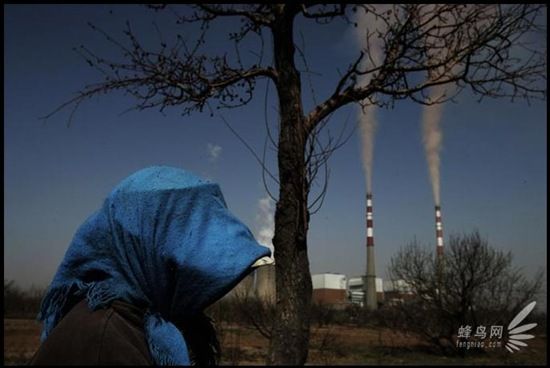
Shizuishan Industrial district in Ningxia. Residents cover themselves against the falling dust when going outside.
April 22, 2006

This Saturday, October 24th, I'll join a mob of peaceful activists and march across the Brooklyn Bridge, from Manhattan to Brooklyn, in hopes of further raising public awareness about the reality of climate change and the need for a comprehensive international climate treaty. The march is associated with 350.org's Day of Action.
"350.org is an international campaign dedicated to building a movement to unite the world around solutions to the climate crisis--the solutions that science and justice demand. Our mission is to inspire the world to rise to the challenge of the climate crisis—to create a new sense of urgency and of possibility for our planet. Our focus is on the number 350--as in parts per million, the level scientists have identified as the safe upper limit for CO2 in our atmosphere. But 350 is more than a number--it's a symbol of where we need to head as a planet. [...] This December, world leaders will meet in Copenhagen, Denmark to craft a new global treaty on cutting emissions. The problem is, the treaty currently on the table doesn't meet the severity of the climate crisis—it doesn't pass the 350 test. In order to unite the public, media, and our political leaders behind the 350 goal, we're harnessing the power of the internet to coordinate a planetary day of action on October 24, 2009. We hope to have actions at hundreds of iconic places around the world - from the Taj Mahal to the Great Barrier Reef to your community - and clear message to world leaders: the solutions to climate change must be equitable, they must be grounded in science, and they must meet the scale of the crisis."
350.org was founded by author and environmentalist Bill McKibben and, although some legitimate philosophical criticisms of the project have been raised, I feel strongly that the organization's mission is vital.


Due to long-term consumption of water contaminated by industrial waste, 50 people have cancer and cerebral thrombosis in Kang village of Linfen City, Shanxi Province..
64-year-old Wang Baosheng has fester wounds all over his body, and must sleep sitting, face down on the edge of the bed each day.
July 10, 2005

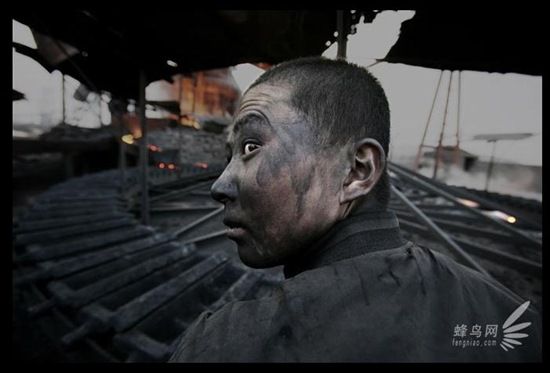
Should you doubt the urgent need for an international climate treaty that demands accountability and systemic change, or should you remain skeptical of the human influence on atmospheric carbon levels, I encourage you to take a look at the distressing pictures that ChinaHush recently published. Photographer Lu Guang's series "Pollution in China" is a testament to the cruel realities of the international, industrial market.

In his book-length essay Life Is A Miracle, the author, poet, essayist, and critic Wendell Berry describes the global, capitalist world view as,
"one culture of division and dislocation, opposition and competition, which is to say the culture of colonialism and industrialism. This culture has steadily increased the dependence of individuals, regions, and nations upon larger and larger collective economies at the same time that is has thrown individuals, regions, and nations into a competitiveness with one another that is limitlessly destructive and demeaning."
The "collateral damage" caused by this monstrous steam engine is not limited to elevated carbon levels, and its poisons don't just affect the dispossessed or the politically and economically powerless.

Nicholas Kristoff reminds us, in a recent New York Times OpEd piece, that the staggering number of "deformed frogs and intersex fish [found in or near United States' waters] — not to mention the growing number of deformities in newborn boys — should jolt us."
"In the Potomac watershed near Washington, male smallmouth bass have rapidly transformed into 'intersex fish' that display female characteristics. This was discovered only in 2003, but the latest survey found that more than 80 percent of the male smallmouth bass in the Potomac are producing eggs. Now scientists are connecting the dots with evidence of increasing abnormalities among humans, particularly large increases in numbers of genital deformities among newborn boys. [...] Apprehension is growing among many scientists that the cause of all this may be a class of chemicals called endocrine disruptors. They are very widely used in agriculture, industry and consumer products. Some also enter the water supply when estrogens in human urine — compounded when a woman is on the pill — pass through sewage systems and then through water treatment plants."
Herpetologists have been sounding the alarm for years, but the policy makers are warm in the pockets of the immoral corporations and the populace, by and large, prefers to escape in celebrity pregnancy updates and corporate-owned sporting events. Amphibians were the ignored canary in the coal mine. Now many animal families (ours included) are paying a terrible price, one that we can not yet fully appreciate.


Henan Anyang iron and steel plant’s sewage flowed into Anyang River. March 25, 2008

Still, it's not too late to stand up to the "culture of colonialism and industrialism." Visit 350.org. Find out how to get involved in the effort. If global warming isn't appealing to your still, small voice, get involved with political activism, volunteer at your local homeless shelter, pledge financial support to non-profit activist organizations working for causes that you feel strongly about; it doesn't matter what you do, but it does matter that you do something. Turn off the television, put down the tabloid. I beg this of you.


Breathing large amounts of dust into their lungs, people become sick after working here for 1-2 years. Most of these migrant workers come from area of poverty.
April 10, 2005

Photo credits: all photographs, Lu Guang; ripped from ChinaHush

Wednesday, October 17, 2007

$$$ and Sense


The Colorado Rockies have secured a spot in the 2007 World Series and the Cleveland Indians are their likely opponents (barring an incredible turnaround by the Boston Redsox). I'm not a fan of either team but I root for underdogs and so am pleased to see these two clubs experiencing success.

My pleasure is dampened, however, by the constant fretting of so many sports commentators and journalists about the "problems" with "small market teams" vying for the championship. Sure, Major League Baseball's executives (and those at the invested television networks) are more worried about "the numbers" than they are a good sports story, but those men and women are the suited vultures, the "money men," a tribe I hold in low regard. Why should the commentators echo their concerns?

I'm not usually one to romanticize sports history - nostalgia is a refuge of the deluded or the defeated - but it wasn't long ago that popular sports mythology was built around icons and iconic achievement at the individual and team level. Frustratingly, our contemporary culture celebrates the sports investors almost as much the records, players, and managers. The much caricatured, beer-gutted fan sprawled in his recliner is today as concerned with salary caps, free agency moves, and team revenue as he is batting average and stolen bases. Off season dealings are as much a subject of water cooler conversation as the break-out rookies or outstanding team efforts. Indeed, contemporary sports talk might be confused for a stock portfolio review.

These are the times we live in, and our mercenary understanding of sports just one more tell, but for a more poignant take on contemporary apathy (and what it represents or portends) link over to James Wagner to read his "Good Germans" post, a response to Frank Rich's op-ed in the October 14th Sunday New York Times.

Wednesday, October 05, 2005

Selling Atheism and Myth

Image hosted by Photobucket.com
When transferring from the A/C/E subway line to the N/R/W at 42nd Street in Manhattan, passengers must walk down a long, underground tunnel. If they happen to look up at the tunnel's low ceiling, they'll notice three or four word excerpts on signs mounted to the ceiling reinforcements. If one reads the signs as he walks the length of the tunnel, he'll realize that each sign is a "piece" of a poem. The subject matter is mundane, literally, and the poem rather bleak. In short, the uncredited writer asks why we wake and go to work, day after day, our lives spiritually empty and dull. In the context of the smelly, humid subway tunnel, crowded with commuters, the poem resonates.

This past Saturday afternoon, as I made the E to W transfer, a group of teenage girls walked just behind me. Half listening to their conversation, I realized they were discussing the poem. They mocked it. "It's so stupid," one of them giggled. "What the fuck? I mean...," another girl trailed off. To some extent, I can sympathize with their reaction; the poem doesn't convey the most original sentiment. "You know what I don't get?," said a third girl. "What's it even advertising?"

Oh...my...God.

What is it advertising?! What is this MTA commissioned public poetry advertising?! Burma Shave, this ain't, babe.

I should know better than to be surprised. These girls, roughly seventeen years of age, are plugged into consumer culture. Theirs is the generation of the spectacle and the billboard. They were thirteen when the World Trade Center fell (on television, again and again and again) and they represented America's youngest consumer demographic, parental parasites, during the economic bubble of the late nineties. The third girl's question is, from their perspective, a fair one. Why isn't this poem an advertisement?

I didn't know whether to laugh or shudder. I slipped into a brooding mood. These are dark times, I thought.

But it's not enough to criticize, break down, and dismiss. Even constructive criticism, that much celebrated will-o-the-wisp, which can be invaluable to the artist, politician, and athlete, provides little reward for the critic himself. He may be able to pinpoint a conceptual contradiction, a fatal weakness in policy, or an unfortunate quirk in form, but how useful is his ability to notice the negative? Is the critic able to turn his judgment inward to correct his own failings?

I enjoy reading good criticism, be it social, literary, or aesthetic, but even the most capable wordsmiths can't make criticism complete unless they prescribe some balm. A batter who has fallen into a slump will not be helped by a coach who only cites what the batter does wrong. The good coach - the complete coach - recognizes the failing and attempts to correct it, explaining to his player not just what is wrong, but also what might work.

Incomplete though most criticism may be, negative noise must be made before there exists any serious striving for improvement. I regularly talk with people who share my sense of disillusionment and betrayal. I see folks shake their heads when reading the day's newspaper headlines and I often hear folks complaining about the administration or about the passing of a particular bill, but our overall complacency is noteworthy. There is some noise being made, of course, but the majority of protests lack focus - people shout 'No blood for oil!' while wearing PETA sweatshirts - and the political plays made by those brave politicians - republicans, in the traditional sense of the word - resisting the red tide are far too esoteric for most of America to rally behind. (Thoughtful, politically savvy bloggers may seem ubiquitous, but they remain a tiny fraction of the general populace.)

Why are we so quiet? Has the barrage of bad news made toadies of us all? When I do get worked up about the "general state of things," I feel as though my outrage is excessive. Perhaps vehement rants about the current administration are considered passe, but does this make them any less vital? Is resistance possible in the current culture of distraction and fear? What does it take to reach "every man" in the era of spectacle?

Ronald Aronson has a good review in the most recent Bookforum, entitled, "Faith No More? Against the Rising Tide of Rejuvenated Religion, A Number of Writers Make the Case for Disbelief." In it, he suggests our contemporary apathy results from the unrealized promises of a better future.
"It's safe to say that the future didn't turn out as anyone expected. Scientific and technological progress has been relentless, but its promises of liberation have gone flat. Few still believe that their children's world will be better than theirs. We live after Marxism, after progress, after the Holocaust - and few imaginations are stirred, few hopes raised by our world's long-range tendencies. Indeed, the opposite is happening as terrorism becomes the West's main preoccupation. In countries like the United States, Britain, and France, there has been a turning away from improving societies and toward improving the self."
Aronson, reviewing seven recent books dealing with the decline of atheism, convincingly argues that the return to God and otherworldly authority figures increases the power of those who already hold the reins, and therefore represents a weakening of The Republic, a collapse of democratic ideals. Near the end of his piece, he writes,
"The rational and constantly self-questioning and self-correcting world view is essential to democracy and its ongoing public discussion about everything under the sun. Those disasters of history not explicitly tied to religion in fact still reflect starting points of authority and unquestionable dogma. Democracy, after all, is congruent with freedom, which is in turn congruent with the world view that presupposes little and questions everything. 'Democracy proceeds by one set of principles. Religion by the opposite.' Atheism is 'one of the natural allies' of democratic societies."
As an atheist, I agree with Aronson and the writers of most of the books he reviews. (To feel as I do, you must believe that moral living is better served by non-believers who recognize that an ethical core is "part of the furniture of the universe," as Plato put it. Moral acts or laws - the Ten Commandments, for example - designed to ingratiate a believer to their respective God or gods are necessarily less virtuous and, above all, self-serving.) However, Aronson needs to ask himself why so many atheists are content to revile religion without offering a thoughtful alternative. Such alternatives do exist, but atheists have a hard time making them attractive to the majority because the absence of an afterlife is too troubling for most people to accept. Unhappy in their own narrative, disappointed by the once promising future, they place their trust in a different sort of "future," an altogether supernatural one.

The recent surge in popular interest in aliens, ghosts, supernatural storms, elementals, and any number of other vaguely mystical beings - check the local TV listings if you don't know what I'm referring to - is proof enough that we are a culture living in fear of ourselves. As Pogo, Walt Kelly's philosophical cartoon opossum, said decades ago, "We have met the enemy and he is us." Aronson, trying to salvage some sense of hope, concludes his review with a recipe for a happy, secular society.
"A new atheism must absorb the experience of the twentieth century and the issues of the twenty-first. It must answer questions about living without God, face issues concerning forces beyond our control as well as our own responsibility, find a satisfying way of thinking about what we may know and what we cannot know, affirm a secular basis for morality, point to ways of coming to terms with death, and explore what hope might mean today."
Given the current climate, accomplishment of the goals set forth by Aronson seems highly unlikely at the societal level, though it remains possible for individuals. More importantly, listing what must be done without addressing how it can be done is, like negative criticism, altogether easy and almost pointless.

Underlying the fear and the increasingly fascist feel of the United States is an absence of myth. This is not new. Mark Rothko, the twentieth century painter, wrote extensively on our search for a "master narrative." He was convinced that the loss of myth, so much a part of the Middle Ages and the Renaissance, was responsible for the violence and break-down that led to both World Wars. Though Rothko glossed over some of the more repugnant realities of both these eras - and ugly they could be - the loss of myth, of a central story and purpose - did contribute to what so many have deemed the "decline of Western civilization." Religious fundamentalists argue that this decline occurred as a result of loosening morals and a "turning away" from god worship, but the corruption and violence of the first half of the twentieth century is more accurately moored to the industrial revolution and the myriad temptations of free-market capitalism, both of which forced societies to become more focused on the individual good. I agree with Rothko; a myth is needed where a god is not. Star Wars is a myth - this is only true of the first trilogy, before Lucas introduced the idea of genetic superiority via metachlorion count - and so is The Lord of the Rings. Both sagas weave together the universal myths, those elements that can be found in all theology and everyday life, to create timeless narratives of self-worth and social obligation, reminding us that the little man can make a difference and that good can and will triumph over evil, but not without a lot of heart and courage. The philosophical problems with the concept of "good" and "evil" aside - postmodernism and relativism must take a back seat here - myths rarely grant power to a very few and, when this does occur, the powerful are inevitably overthrown and made examples of.

Without livable myths, most of us turn to the Abrahamic God, abandoning mythical narrative to the realms of science fiction and fantasy. But that god, at least as it is usually conceived of, is a pale shadow of myth for "He" is without practice, only ritual and faith. Faith is a virtue, but it is too easily coopted and dubbed loyalty. Scared by the world we inhabit, we turn to television in the hopes of being frightened further by spectres, aliens, and possessed girls. Dissatisfied with our "little" lives, we celebrate garish displays of wealth, influence, and sexuality, turning all three into absurd caricatures of themselves - reducing them in the process, which ultimately makes them that much more easily abused. But wait! There exists a narrative we can all identify with, a truth all contemporary Americans can rally behind.

"Overworked
So Tired.
If Late
Get Fired.
Why Bother?
Why the Pain?
Just Go Home
Do It Again."

But I don't get it. What's it selling?

Photo credit: 1971, Walt Kelly, "Pogo"

Monday, August 08, 2005

Live 8 and Surowiecki


In late July, several bloggers critiqued Bob Geldof's most recent humanitarian circus, Live 8. Blogging buddy Devo, at Vitriolic Monkey, wrote,
"If, twenty years hence, we still see Malaria, AIDS and Tuberculosis running rampant [in Africa], and if at that point we still see photos of hunger-fattened youths with flies around their eyes, and we still see Sally Struthers waddling through the dirt-paved streets urging all of us to send her and her little poverty stricken urchins more Chocolate Yum Yum Bars, I will turn to Bob Geldof and friends, who will undoubtedly be lying on their death beds, from the look of him, and tell them 'I told you so.'"
Such Live 8 disillusionment was common, though there were also plenty of starry eyed youths eager to explain how Geldof's concert series had opened their eyes to the world's ills. One can only hope.

That said, I was troubled by the posts or comments that moved beyond a dismissal of Live 8 to attack international aid at large. Hector Vex, commenting at Vitriolic Monkey, wrote,
"I'm not saying fu*k the world completely, but it's time we realize that Africa is FU*KED. It's a backwards continent that hasn't gotten out of the tribal age. Let's pack up and get out of there and let them evolve on their own. Let's feed the children here before those distended little fly bags over there."
In late June, James Surowiecki wrote the following in an issue of The New Yorker.
"...many critics of foreign aid...mounted a lively backlash against both Live 8 and the G-8 summit. For them, continuing to give money to Africa is simply 'pouring billions more down the same old ratholes,' as columnist Max Boot put it. At best, these critics say, it's money wasted; at worst, it turns countries into aid junkies, clinging to the World Bank for their next fix."
This rhetoric is familiar stuff; we read it in the pages of the Wall Street Journal and hear it on Fox News broadcasts. It would be unfair, though, to suggest that such feelings are endemic to neo-conservatism; people from across the political spectrum are guilty of it.

To some extent, it's only natural. If you give a dollar bill to the same homeless man every morning for ten years and, all those years later, he's still spending your money on malt liquor, you'll likely feel cheated or frustrated. This is true of everyone, no matter how generous.

But what if you'd opted to give your money to a different person? Two blocks west is a teenage girl who fled an abusive household. You couldn't have known that she only spent her charitable handouts on food and the occasional shelter fee. Nor could you have known that giving her one dollar each morning for just ten months would have helped her find a part-time job. The point is, to let one discouraging situation cause you to write off charity at large is unfortunate and, frankly, immoral.

Again, I turn to Surowiecki,
"Skepticism about the usefulness of alms to the Third World is certainly in order. Billions of dollars have ended up in the pockets of kleptocratic rulers - in Zaire alone, Mobutu Sese Soko stole at least four billion - and still more has been misspent on massive infrastructure boondoggles, like the twelve-billion-dollar Yacyreta Dam...which Argentina's former President called 'a monument to corruption.' And historically there has been little correlation between aid and economic growth.

This checkered record notwithstanding, it's a myth that aid is doomed to failure."
Sure, that particular "bum" drank your generosity, but perhaps you should have chosen more wisely. Botswana, Mozambique and Uganda, for example, have all been using their aid to jump start their economies (though AIDS continues to ravage the populations). Costa Rica, now the gem of Central America, was once an aid recipient as were Ireland, South Korea and Taiwan, now wealthy countries on the move.

Surowiecki analyzes the aid situation further. He writes,
"during the Cold War aid was more often a geopolitical tool than a well-considered economic strategy, so it's not surprising that much of the money was wasted. And we now understand that the kind of aid you give, and the policies of the countries you give it to, makes a real difference."
Surowiecki is not a Utopian dreamer. He notes the many problems with post-Cold War aid programs, citing the unknown variables as the biggest concern. In other words, even an educated guess can turn out poorly. You could pick the homeless teenage girl as the beneficiary of your generosity...but she might become a heroin addict with no desire to get sober. The bad result can (and often does) happen. Sho'nuff, that stinks.

Every year, I donate hundreds of dollars to conservation groups from around the country. Some years they accomplish little of note. Does this mean that I should stop supporting them? Absolutely not, and neither should the First World abandon its commitment to the rest of the globe.

Geldof's Live 8 is a drop in the bucket; I've no doubt that most concert goers have already forgotten about the "dark continent" and are thinking ahead to Fall clothing sales and the latest album releases. Fortunately, the apathy and ignorance of the American populace doesn't determine our international aid policy. Unfortunately, this administration appears to approach aid with the same "What? Me worry?" attitude.
"In 2002, President Bush created the Millennium Challenge Account, which is designed to target assistance to countries that adopt smart policies, and said that the U.S. would give five billion dollars in aid by 2006. Three years later, a grand total of $117,500 has been handed out. [Note: That's just over 2%.] By all means, let's be tough-minded about aid. But let's not be hardheaded about it."

Tuesday, June 28, 2005

Absolutely Relative


“In his homily to his fellow-cardinals, on the first morning of their conclave, Cardinal Ratzinger had warned that modern society was threatened by a 'dictatorship of relativism.' But it might have been more accurate to say that it is threatened by a dictatorship of absolutisms, including his own. This is a world in the tightening grip of orthodoxy, of literal ‘truths’ and crusading certainties…”
-Jane Kramer, “Holy Orders” (The New Yorker, May 2, 2005
Though Kramer turns a nice phrase in her Talk of the Town piece, her conclusions are too neat. While it's true that the Bush administration is comprised of a veritable Who’s Who of moral absolutists and that the conservative evangelical crusade embraces relative absolutism (i.e., the execution of criminals is morally sanctioned, whereas the abortion of unwanted babies is not), the western world at large is dominated by relativism, not absolutism.

Post-modern thought, the dominant intellectual force in our time, is grounded in relativism. Relativism, of course, can be a very positive thing, allowing for empathy and more complex analysis. As Jean-Paul Sartre argued, relativism grants an individual the moral perspective needed to pass judgment fairly.

Unfortunately, relativism has a dark side, too. Although it's good that a majority of today's youth is more willing than their parents to acknowledge complexity, their doing so often results in feelings of insignificance, even irrelevancy. These feelings engender apathy. How much easier is it to play video games than to design them? Moreover, how much easier is it to design video games than to face the challenging questions of the day? Celebrity and wealth are considered prerequisites for relevance; both are hard to come by, so why should we give a shit? Why shouldn’t we put all our stock into American Idol tryouts and the spread of corporate capital? Such questions are ultimately unanswerable if examined through a post-modern lens.

Apathy outfits the populace with blinders. A woeful lack of popular engagement in politics means that politicians have an easier time passing suspect legislation, legislation that drains the disenfranchised of their funds, opportunities and real estate. Compounding matters, the marketing machine has an easier time selling snake oil, stripping bare the already shallow pockets of the majority. It's a familiar scenario; our political and financial systems continue to bleed those who don’t care to involve themselves. Of late, the bleeding has become a hemorrhage.

I’m simplifying the equation; there are a great many variables that should be considered. Yet I can not disagree with Pope Benedict XVI. Modern society is in danger of becoming feudal and “the dictatorship of relativism” has much blood on its hands. So what is to be done? Can we marry some degree of absolutism with relativism?

Photo credit: uncredited

Friday, May 20, 2005

The Chesapeake's Swan Song?


Tom Horton’s “Why Can’t We Save The Bay?,” an article in the June 2005 issue of National Geographic, is essentially a regional piece, focusing on the watershed of the Chesapeake Bay. This bay, however, is the largest estuary in the United States; as such, it is a litmus test for environmental degradation everywhere.

I grew up on the Atlantic side of the Delmarva Peninsula, the thin slice of land extending south from Pennsylvania. Three states share the territory, with Maryland and Delaware claiming the wider span of the peninsula in the north and Virginia holding title to the narrow, southern tail. Connected to mainland Virginia only by the Chesapeake Bay Bridge-Tunnel, a 23-mile long engineering feat, the Eastern Shore of Virginia was my home for the first thirteen years of my life. My parents still live there. Like most towns on “the Shore,” as we natives call it, my hometown was almost exclusively populated by fisherman and farmers in the late 1970s. Today, however, as with so many towns on the Delmarva Peninsula, these jobs are vanishing. Instead, most folks work in the “service industry,” meaning they hold jobs at McDonald's, 7-Eleven, or Food Lion (Wal-mart has yet to arrive on the southern peninsula), but a significant portion also find employment at the chicken factories of Perdue Farms, Holly Farms, and Tyson. As those that still remember when a charter boat captain was a wealthy man and a crabber could support a family die and the younger people become more disconnected from the ecosystem, the bay suffers.

Tom Horton blames population and pollution for the Chesapeake's ails. As he points out, two times as many people now live here as in 1950 (8 million has become 16 million). Unfortunately, many of these new settlers view the bay as a “major playground.” Living in New York City, I take a certain pride in being a southern boy, but a trip home (or a look at the spread on pages 24-25 of the magazine, which features a group of beer-guzzling speed boat enthusiasts who call themselves the Battle Creek Gang) too often reminds me of what the Shore’s populace has become. As with all environmental concerns, everything comes back to population and pressure. One can only hope that the writers addressing the issue, whether popular or outdoor journalists, communicate the urgency. For the Chesapeake Bay, the situation is dire; as Horton points out, “The latest ecological report card gave the bay a failing grade of 27 out of 100.” Worse yet, a dry year means the grade would have been even lower had more excess nitrogen been washed into the bay from farmers' fields upriver.

While increasing pollution is directly connected to the burgeoning population, pollution legislation seems more practical than population control measures, which raise the ire of most citizens. But apathy is endemic on the Delmarva Peninsula; the western shore, with our nation’s capital sitting alongside one of the bay’s major tributaries, offers the most hope. Some conservationists worry that, barring drastic and immediate action, we've already reached the “tipping point."
“A lack of both political will and enforcement has slowed progress in tackling the other big pollution sources – agriculture, cars, power plants, and urban storm water. We’ve been similarly lax in containing the sprawl consuming forests and wetlands – vegetation that absorbs millions of pounds of nutrients from polluted air and run-off – at the rate of more than 100 acres a day. And the demise of oysters, which once filtered and cleansed huge volumes of bay water as they fed on algae, has been an ecological disaster. ‘It’s like someone removed 99 percent of the filter in your aquarium,’ said Bill Goldsborough, a fisheries scientist with the Chesapeake Bay Foundation.”
As Scott Phillips, Chesapeake Bay coordinator for the U.S. Geological Survey states, “You’re going to have to change people’s values to improve this ecosystem.” Tom Horton seems discouraged. “Public support often seems like the estuary itself, impressively broad but deceptively shallow,” he writes. Perhaps part of the problem is the cultural divide which separates the two shores, west and east. As my father wrote in his 1982 book Wanderer On My Native Shore,
“Because the bay is divided between two state governments that rarely see eye to eye on any issue, and because the bay is further divided culturally between its city-based white-collar populations and its rural-based farmers and fishermen, the Chesapeake offers special problems in resource management quite unlike those found in other sections of the nation.”
Sadly, such challenges are no longer isolated to the Chesapeake watershed.

In May of 1607, Captain John Smith landed on the banks of the James River on the western shore, just downstream from my alma mater in Williamsburg, Virginia. Smith and his companions found an ecosystem exploding with abundance. Despite their battles with illness and sporadic attacks from the region’s Native American tribes, food was plentiful for those settlers willing to fish, hunt, and trade. Almost four hundred years later, we have nearly exhausted the supply of blue crabs (Callinectes sapidus: the translation is “savory beautiful swimmer”), American oysters (Crassostrea virginica), ducks, and most game fish species. Those species still thriving today are, not surprisingly, those which adapt well to human settlement, including the white-tailed deer (Odocoileus virginianus), snow goose (Chen caerulescens), Canada goose (Branta canadensis) and the invasive mute swan (Cygnus olor). The large predators – the black bear (Ursus americanus), red wolf (Canis rufus), and grey wolf (Canis lupis) - have long since been exterminated. In the National Geographic article, Walter Boynton, a scientist working on the Patuxent River points out that, just 40 years ago, oysters were “an essential food, part of the culture – and now they’re an hors d’oeuvre.” But Boynton continues, “I wonder if the bay has become like that for many people, from being essential to an hors d’oeuvre.”

Reading Horton’s article, I thought of the closing comments my father made in his chapter on the Chesapeake watershed. He wrote them in the early 1980s, but the language is similarly eulogistic.
“A philosopher might take the long view. This benign-weather interlude we have been enjoying since the first colonists came to the New World may be coming to an end. Perhaps, in another thousand years, climate patterns will be so altered, the Susquehanna will have reverted to its primeval course and surge into the Atlantic many miles east of the present Virginia capes; or, contrariwise, there may be no Virginia capes when a rising sea drowns the coastal plain.

Will our descendants have the diversity of life that inspired such great variety in Algonquian culture? What will recreation be like on a less salubrious and species-poor planet? Will the requirements of survival be so compelling that most people will work with their heads down, oblivious to the world around them, like oyster cullers [in the Chesapeake] today?”
Dad, let's hope not.

Photo credit: Peter Essick, 2004

Tuesday, April 26, 2005

The End Is Here?


Living in New York City, one quickly grows accustomed to "architectural advertising." Advertisements for gyms, perfumes, record labels, clothing, books, radio stations, television programs, and movies are plastered on subway station walls, phone kiosks, city buses, taxi cabs, and many building facades. In the course of my five years here, I've come to view this colorful assault as a less offensive version of the billboarding of America's highways. The integration of product placement into the urban landscape not only makes more sense, it is also more easily ignored.

With so much visual competition, an ad agency has to come up with a good pitch to standout. For the past month, the new NBC series "Revelations" has been heavily promoted via architectural advertising. Most noticeable are the Metropolitan Transit Authority buses covered (excepting the windows) in an apocalyptic sunset. "The End Is Here," the text proclaims as an evening flight of ravens lifts above a stoic Bill Pullman and Natasha McElhone. The first time I saw one of the "Revelations" buses, I stared after it as it groaned north up Third Avenue. Several times, over the course of the next week, I caught myself involuntarily shaking my head as I passed a "Revelations" poster in a subway station or audibly "tsk-tsking" when I opened a newspaper and was confronted by an advertising spread heralding the mini-series.

What was it that so unsettled me? As a science fiction fan who, for the most part, has a deep respect for thoughtful religiosity, I was surprised by my negative reaction. Upon watching the (disappointing) first episode of "Revelations," though, I realized that it wasn't so much the program's concept that bothered me as it was the advertising itself. After all, a growing number of evangelical Christians believe that the Rapture is imminent. Visit RaptureReady.com and you'll learn that increases in drug abuse, unemployment, environmental degradation, inflation, natural disasters, starvation, and sloth are all desired, even promoted, by Rapturists! The more of these terrible abuses and tragic events, the more the stage is set for Christ's triumphant return. This may be good for the blindly religious Christians among us, but it is not a good thing for a secular democracy, especially the one in which Thomas Jefferson's "wall of separation" protects those of us who are atheistic, agnostic, or members of a religious minority from the tyranny of theocratic nationalism. So why is NBC promoting the tribal apathy associated with Rapturist belief? The bottom line.

Folks who troll the "eco-blogosphere" have likely read a transcript of Bill Moyers' remarks upon accepting the Harvard Medical School's Global Environmental Citizen Award. It makes for troubling reading and, though I do my best to concentrate on environmental success stories, the doom and gloom is difficult to ignore, no matter what "The Death of Environmentalism" authors prescribe.

From Moyers' address:
"Google it and you will find that the best-selling books in America today are the twelve volumes of the "Left-Behind" series written by the Christian fundamentalist and religious right warrior, Timothy LaHaye. These true believers subscribe to a fantastical theology concocted in the 19th century by a couple of immigrant preachers who took disparate passages from the Bible and wove them into a narrative that has captivated the imagination of millions of Americans.

[...] I've reported on these people, following some of them from Texas to the West Bank. They are sincere, serious, and polite as they tell you they feel called to help bring the rapture on as fulfillment of biblical prophecy. [...] Go to Grist to read a remarkable work of reporting by the journalist, Glenn Scherer - the road to environmental apocalypse. Read it and you will see how millions of Christian fundamentalists may believe that environmental destruction is not only to be disregarded but actually welcomed - even hastened - as a sign of the coming apocalypse.

[...] As Grist makes clear, we're not talking about a handful of fringe lawmakers who hold or are beholden to these beliefs. Nearly half the U.S. Congress before the recent election - 231 legislators in total - more since the election - are backed by the religious right. Forty-five senators and 186 members of the 108th congress earned 80 to 100 percent approval ratings from the three most influential Christian right advocacy groups."
Moyers feels strongly about what he is witnessing and his tone is reactionary and not without hyperbole. As a result, some readers, particularly those predisposed to disagree, will write off his statement as the rant of a now impotent journalist. This is unfortunate. Although I think the political influence of evangelical Rapture-types may be slightly exaggerated in Moyers's address, it should not be ignored. More critically, what of the popular element? With the box office success of Mel Gibson's "Passion of the Christ," some media critics have begun to call this the "religious entertainment era." Religious entertainment? Upon first hearing this label I immediately thought of the Middle Ages, when religious entertainment was at its pinnacle. It is difficult to imagine 21st century America regressing to such a degree. Or is it?

Jonathan Storm writes in The Philadelphia Inquirer, "lavish and well-made, 'Revelations' sadly seems little more than a cynical grab for the zeitgeist, exploiting the popularity of 'The Passion of the Christ' and 'The Da Vinci Code.' It may attract a big initial audience, curious to see a TV blockbuster pushing the idea that the end is near."

That there exists a "big initial audience" for books, films or television programs "pushing the idea that the end is near" is frightening! It highlights the importance of Moyers's question, "What has happened to our moral imagination?" Are we truly a nation content to be force-fed apathy while participating in an orgy of narcotic consumption? Is there really, as Moyers suggests, an absence of "hocma - the science of the heart?" (The hocma Moyers references is one of Kabbalah's ten Sephirot; it is more often spelled chokhmah, or chochmah, and the best translation is "wisdom.")

I'm presently rereading my father's 1983 Pulitzer Prize nominee, Wanderer on My Native Shore. At the end of the first chapter, which focuses on coastal Maine, he writes,
"...as I contemplate the purple majesty of Cadillac Mountain, I feel an awe for its origins mingled with wonder for human optimism. On one hand, our capacity for hope has created marvelous machinery for drilling through the sea floor. On the other hand, this same optimism has generated laws to protect the eagles soaring over Cadillac Mountain.

Life may, indeed, be a dream, and the best efforts of all mankind may be nothing more than brief shadows on a granite dome. Yet isn't our persistent stretching for perfection in the face of inevitable death what touches humanity with divinity?

Our greatness lies not in our sense of humor or intelligence, for other creatures besides man exhibit humor and intelligence. Our greatness lies in our knowing that, although we are doomed, we still want to fashion a better arrowhead or drill bit, and that men may devote themselves to preserving a hard, but productive, way of life as well as eagles drifting on the winds of time."
Well said, Dad. What worries me, though, is the sense that we seem to care less and less about that stretching. Overwhelmed by consumer choices and our slavish routines, apathy has become pandemic. Rather than try to shake the blues, we proclaim the sickness a sign of the apocalypse and, content to wait, pop pills and watch the TV...'cuz Jesus gonna be here, gonna be here soon.

Photo credit: image ripped from inetours.com