 |
| "Marsh near Chesconessex Creek; Eastern Shore of Virginia; December 2013" |

Showing posts with label Eastern Shore of Virginia. Show all posts
Showing posts with label Eastern Shore of Virginia. Show all posts
Sunday, February 23, 2014
Striped Bass Fishing On the Chesapeake Bay
This past December, when Elizabeth and I visited my parents on the Eastern Shore of Virginia, I got out on the Chesapeake Bay for some striped bass fishing and sight seeing with Elizabeth, my friend, Edward, and my father. We didn't catch any stripers we could keep -- all were under the minimum regulation size -- so it was a catch-and-release trip, but being on the water was a treat, as it almost always is.

Wednesday, September 18, 2013
Snapshots From Home Ground Chapbook
 |
| Snapshots From Home Ground Chapbook, 2013 |
Snapshots From Home Ground, the limited edition chapbook I produced in conjunction with the Aggregate Space Writer-in-Residence and Featherboard Writing Series, was released in early August 2013. A meditation on my rural upbringing on the Eastern Shore of Virginia, the book is comprised of eight vignettes and a selection of photographs taken by either me or my father.
Copies are available through both Aggregate Space and Featherboard. (I also plan to release a free e-chapbook version later this year.)
Below, I've published "Good Boy," the chapbook's opening sketch, and also include a number of "snapshots" of book spreads.
Sunday, July 28, 2013
Featherboard Writing Series Reading
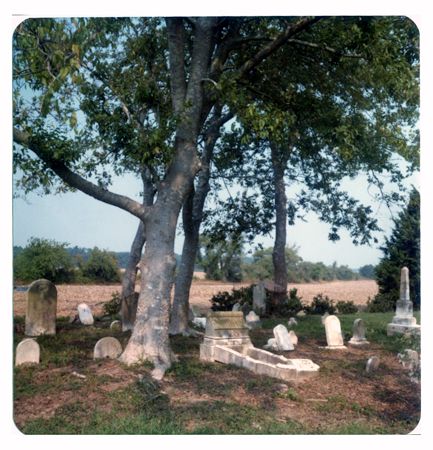 |
| George Reiger Heron Hill cemetery, Locustville, Virginia Circa 1975 |
If you're in the Bay Area, please consider coming to Aggregate Space for the event.
FEATHERBOARD WRITING SERIES
Saturday, August 3rd @ 5pm
Aggregate Space Gallery
801 W. Grand Ave. (enter on West St) in Oakland
Exhibition on view: CINDERSCAPE: New Work by Jaime Lakatos
ABOUT THE READERS:
FARNOOSH FATHI was born in 1981 and raised in the suburbs of Los Angeles. Her first book of poems, Great Guns, was just published by Canarium Books.
CHRISTINE CHOI passes time lollygagging in matters of the heart, navigating human-animal-machine relationships, considering video games, and dreaming in sounds. She holds an MFA from the California College of the Arts, and her writing has appeared in Paul Revere’s Horse, In Posse Review, BANG OUT, or was performed with Soundwave, NOMA GALLERY, POW!POW!POW! Action Art Festival, Small Press Traffic’s Poet’s Theater Extravaganza, and Bay Area Poetry Marathon at The Lab.
CHRISTOPHER REIGER is a writer and artist originally from Virginia's rural Delmarva Peninsula. Before moving to the Bay Area, he lived and worked in New York City for a decade, where he graduated from the MFA program at the School of Visual Arts (NYC) in 2002. He has exhibited his artwork in the United States and abroad and has contributed art criticism to a number of print and online journals. Additionally, essays and short-form pieces about art, natural history, and miscellany have been published in various books and magazines as well as on his long-running blog, Hungry Hyaena. In 2011, he and artist-curator Selene Foster co-founded the non-profit organization BAASICS (Bay Area Art & Science Interdisciplinary Collaborative Sessions).
Image credit: copyright, George Reiger
Tuesday, April 23, 2013
When It All Comes Together
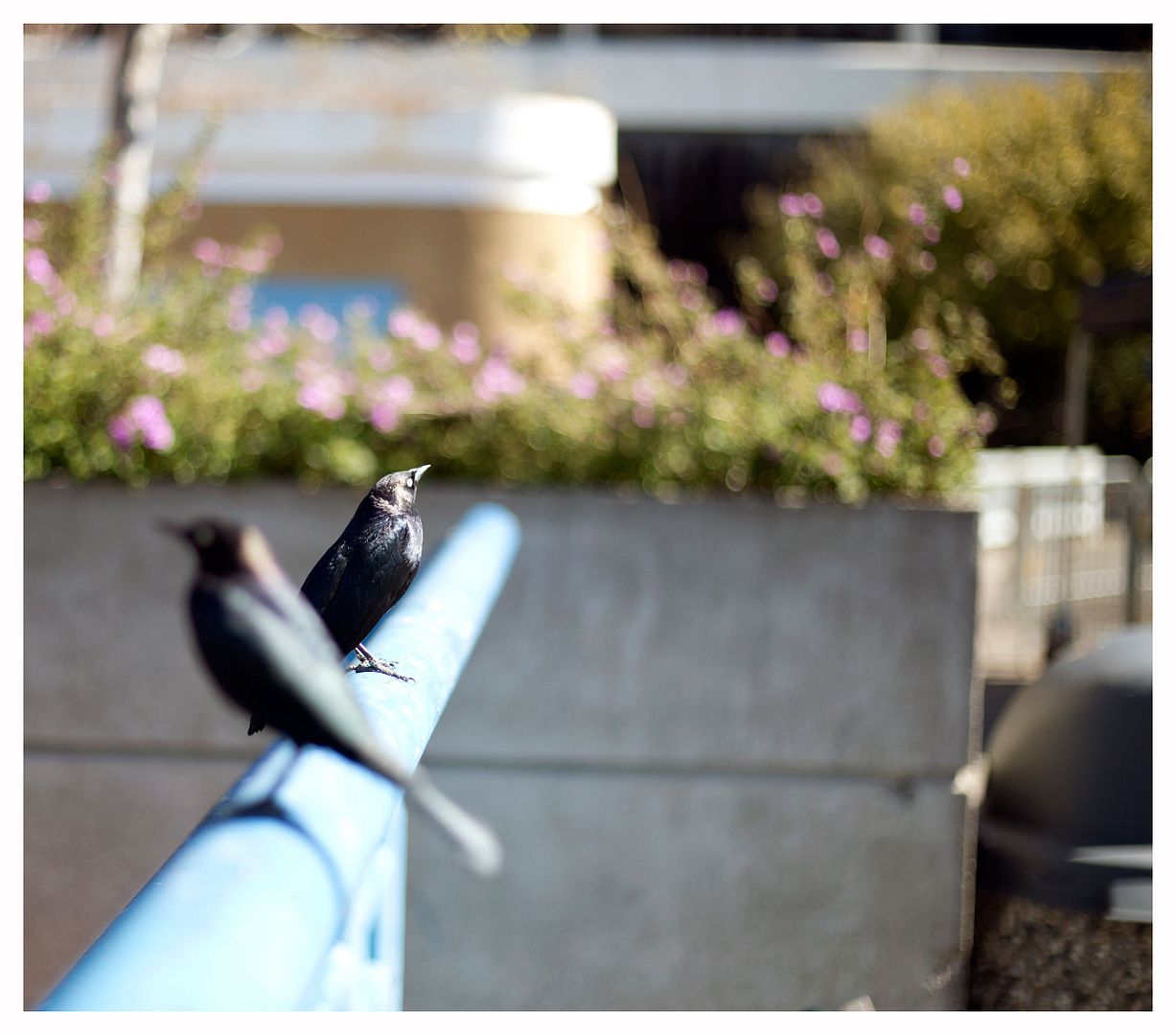 |
| Christopher Reiger "Brewer's blackbirds" 2013 |
I've come to regard BAASICS as an important arm of my creative endeavor; it's a long-term project that provides me with a platform to help make contemporary art and science relevant and exciting to a broad audience. In many respects, BAASICS is a descendant of Synoddity, the cross-disciplinary organization I co-founded with my friend Michael McDevitt during our undergraduate years at The College of William & Mary. Synoddity made a case for conversation and interaction across professional boundaries and was, like BAASICS, animated by curiosity and wonder, something both Michael and Selene Foster, my BAASICS collaborator and co-founder, have in spades. Working on a project you're passionate about is invariably a good thing, but it's a particular pleasure when you team up with fantastic people.
Wednesday, December 29, 2010
Relative Birthday Abundance

As an enthusiastic amateur naturalist living in New York City, I grew fond of the hearty, adaptive species that populated the boroughs' streets, parks, and waterfronts: pigeons and gulls, rats and red-tailed hawks, starlings and squirrels. When I felt out of step with my urban friends and neighbors, as I occasionally did, I found that watching the animals helped. Chittering around the base of a corner garbage can, the sparrows and starlings chastised me for moping. The herring gull's shrill shout over the East River exhorted me to shake off my self-conscious alienation. All of these species were part of my urban wildlife support network. Watching them reminded me to get on with the business of grateful L-I-V-I-N', no matter where I might be. Now that I live in San Francisco, a town with greater biodiversity than NYC, I'm happy to have Steller's jays, Brewer's blackbirds, and ravens keeping me company, too.
Today, however, my girlfriend and I are visiting my parents on the Eastern Shore of Virginia. Dumped on by the latest "snowpocalypse," we've been locked in for most of our visit. Not that I mind. Yesterday morning, I trudged through the snow drifts around my home ground, eyes squinted in the dazzling winter light. In the space of an hour, I saw thousands of snow geese rise noisily from a partially exposed barley field; turkey vultures sweep across the sky, scenting for an unfortunate victim of the biting weather; a woodcock flush from a hedge; coyote tracks that skirted a small cemetery; mouse tracks that emerged from under a snow-covered plow and lightly skipped across the snowfall's surface to a patch of open grass; a yellow-rumped warbler and a Carolina wren vying for position atop a perch; two tundra (or whistling) swans flying low overhead; Canada geese and green-winged teal gathered in the open water of the estuary; a cottontail peer from a tangle of grasses. It occurred to me, as I contemplated such abundance and diversity, that my urban wildlife support network, whatever its personal value, is but a shadow of what I witnessed this December morning.

Last year, at this time, I wrote, "32 years on this Earth, and still I feel like I am opening my eyes for the first time." Now 33, that statement is no less true. Given my stubborn optimism, I presume that it will be true at 43, 53, or 83 (should I survive so long). Still, I wish that I could open my eyes to greater species diversity in the cities that I call home. We humans are an increasingly urban species, and we must take care not to forget about the world's collapsing biodiversity. It isn't just the country folks that benefit from it; we all do, whether we appreciate that fact or not.
All the same, I'm looking forward to hearing the belated birthday croaks from the ravens above the Inner Sunset.
Happy 2011, friends. May it be a rich, sweet, and happy year!

Photo credit: Hungry Hyaena, 2010
Saturday, December 12, 2009
Sunset, Sunrise

"Our destiny, our being's heart and home,
Is with infinitude, and only there;
With hope it is, hope that can never die,
Effort and expectation, and desire,
And something evermore about to be."
- William Wordsworth, The Prelude
"Indeed, from within the murkiness of human knowledge and experience, we rightly wonder, is there any room for theology as such - or has it gone the way of all heavenly things? Perhaps all that remains is some mode of natural piety, such as the shudder before the mortal mysteries (with Goethe), or the felt ecstasies of springtime (with Wordsworth). Surely this is a lot, and unsettles the mind from its human habitudes. But is there more?
[...] Like all matters human, theology must be grounded in earthly experience and understood from within its forms. The phenomenal world is all that we have. This is the sphere that lies before us in our everyday existence; it conditions the products of aesthetic perception; and it provides the sphere for theological experience and reflection.
[...] As natural beings we are, in the most elemental sense, coextensive with this realm: our bodies are composed of it, our stomachs take in and digest its matter, and we traffic with this world all our days until we die and are decomposed into its elements. [...] To more properly sense [the] unfolding of the Godhead into world-being, so to speak, or to perceive or intuit its penetrations therein, we must first return to our ordinary experiences."
- Michael Fishbane, Sacred Attunement: A Jewish Theology

Happy Hanukkah, folks.
Photo credits: Hungry Hyaena, 2009
Sunday, July 12, 2009
Barry Bruce, waterman
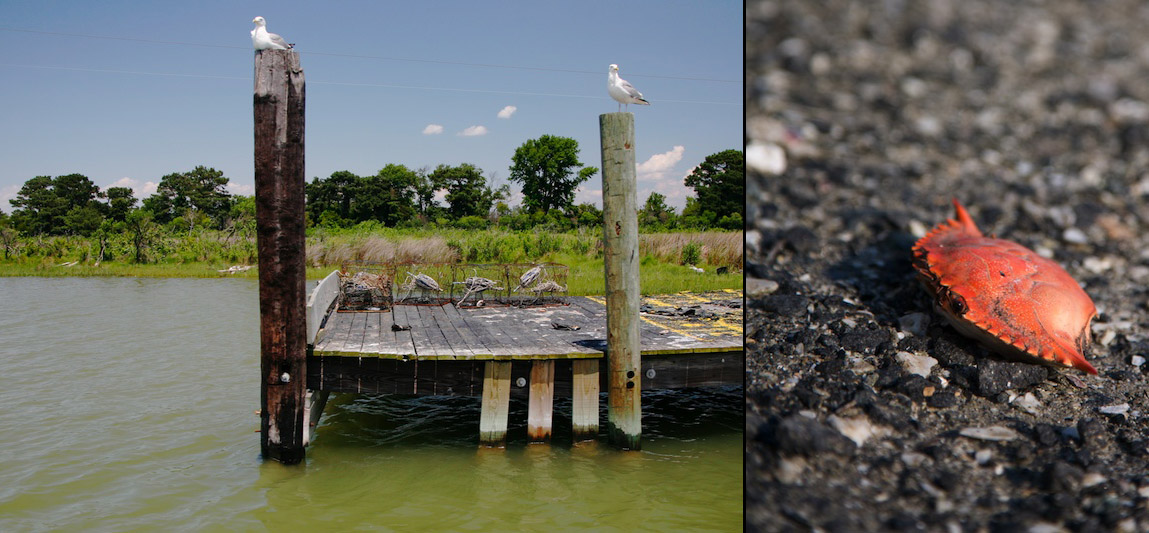
This short New York Times Audio Slideshow with Chesapeake Bay waterman Barry Bruce offers a lovely portrait of a man and a place.
Although I don't know Bruce personally, I recognize him as the hardworking, "salt of the earth" type that crowds the interior of Wachapreague's bait and tackle shop. Around and in Bruce, I also recognize my home ground: the salt marsh and bay landscapes, the docks and crabshacks, the marbles-in-your-mouth accent, the unquestioned appreciation of a providing God tethered to an overarching melancholy of things irrevocably changed.
It's easy to romanticize the sun-baked, hard life of a waterman, but I harbor no illusions. Crabbing is exhausting and painful work. The slideshow provides a sweet aural backdrop of lapping water and muted laughing gulls, but, in life, those pleasant sounds are marred by the irritating whine of the motor, just as the rich smell of the marsh is cut with the stench of gasoline. I don't intend, then, to sentimentalize Bruce's position, but having grown up around folks like him, the farmers and fishermen of the mid-Atlantic, it saddens me to recognize that their kind is nearing extinction. The Shore that shaped me goes with them.
Note: The Bruce slideshow is associated with a New York Times travel piece, "The Crab Houses of Maryland's Eastern Shore." This article is fine, but the slideshow, produced by Miki Meek with photographs by Karen Kasmauski, is the real gem. Watch it here.
Photo credit: Smith Island image ripped from texterella's Flickr photostream
Friday, June 12, 2009
An Ocean Ethic
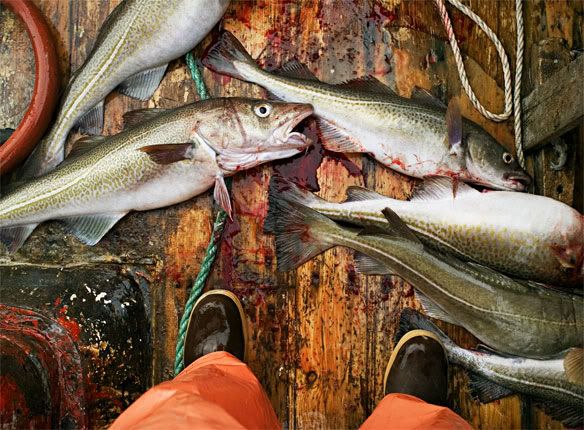
"Torsken"
2007
Chromira C-print
The son of an avid saltwater fisherman, many of my summer days were spent offshore. Departing the Wachapreague, Virginia, docks at 5 AM, the sky broke pink as my father carefully piloted his Boston Whaler through the salt marsh channels. Upon reaching the ocean inlet, we'd begin a thirty or forty mile run toward the sun-soaked eastern horizon. By 8 AM, we'd be trolling for yellowfin and bluefin tuna, dolphin ("mahimahi"), amberjack, or various mackerel species. If that technique proved unsuccessful (or if my father's fishy hunches proved wrongheaded), we'd move west, closer to shore, so that we could bottom-fish for black sea bass, spot, and weakfish over scuttled World War II ships and defeated German U-boats.
Compared to my father, I was unenthusiastic about salt-water fishing. I much preferred fishing on a pond, fly or spin casting into "honey holes," those storied pockets where the giant largemouth bass, perch and bluegill dwell. The relative solitude and meditative character of freshwater fishing appeals to my temperament. I associate the leisurely activity with the soft-spoken stroke of the canoe paddle; the rhythmic, almost ritualized casting of a fly or lure; the temperate spring breezes that lick my bare forearms as they do the banks' willow and maple trunks; the ecstatic chatter of a kingfisher. Above all, I associate it with a sense of universal benevolence. This, in stark contrast to fishing offshore, where Nature's benevolence is tempered by ambivalent and awesome forces.
Still, I enjoyed being on the open ocean. I loved the bounce and glide of my father's Whaler as it motored over the Atlantic chop, and I was delighted by the otherworldliness of ocean life: shadowy hammerheads passing through depth-piercing sun rays; dolphins propelling themselves skyward to get a better look at us; the surprising company of terns and gulls so far from land; loggerhead sea turtles basking on the ocean's surface; hundreds of cownose rays flying just beneath the water's surface. These images, and many others, stay with me. The ocean is a mysterious, thrilling place.
Sadly, it is also a threatened place. The most dire reports forecast that the ocean's fish species will be depleted by mid-century. If that should come to pass, the commercial seafood industry will no longer be viable and, more seriously, our world's biodiversity and ecological integrity will have been dealt an awful blow. Because of my latter day hunter-gatherer approach to fish and meat consumption, the only shellfish I consume are those few blue crabs and clams that I pull from the Eastern Shore's tidal estuaries. I rarely fish these days, so fish species are off my menu altogether.
Food writer Mark Bittman would likely approve of my vegetarian-unless-I-kill-or-catch-it ethic. In a recent New York Times article, "Loving Fish, This Time With the Fish in Mind" (June 9, 2009), Bittman argues for a more conscientious approach to seafood.
"In the meantime, I'm careful. I don’t make excuses, like 'There's cod in the market, so someone is catching it somewhere,' or 'If I don't buy it, someone else will,' or 'This chef serves local food, so he must serve sustainable fish.' If I’m going to eat fish, it must be consciously and thoughtfully.Every educated eater should do the same, and each of us should strive to educate ourselves further. It's the ethical thing to do.
My approach - which I readily admit is a work in progress and is as imperfect as my approach to all foods - goes something like this:
- I don’t buy or order the common fish I can easily keep in mind as being super-troubled — most cod, for example, or bluefin tuna, most species of shark and skate. When in doubt, I move on.
- With rare exceptions, I don't buy or order farm-raised fish, except clams and oysters. Farmed mussels and shrimp don’t seem to come with egregious environmental consequences, but neither tastes like much, either.
- I don’t eat fish as often as I once did. (I don’t promote eating it as I once did, either.)
- And I keep re-evaluating these 'rules,' and thinking about them. The 'safe' lists are difficult to understand, impossible to remember and change frequently. When the fishing of a species is well managed, it can recover and become sustainable. When it's not, the stocks of that fish disappear, sometimes quickly.
I’m probably not going to stop eating fish. And fortunately I don’t have to, since there are species that have never been depleted - squid and mackerel, for example - and those that have recovered, like haddock and Maine lobster.
It’s improbable that I’ll eat in a perfectly sustainable manner, even though I probably eat one-third as much fish as I did a few years ago. I’m trying not to let perfect become the enemy of good, and I’m trying to find a place that feels comfortable. That place is to see eating fish as a treat. I won’t eat it daily or in huge quantities, but occasionally, with appreciation. The days of 'see it/eat it' are gone."
Time and evolution will march on, heedless of our nostalgic and preservationist impulses, but their ambivalence doesn't mean we've license to shrug and capitulate to the selfish wonts of the average consumer. Future generations should bear witness to the wonderful abundance that we have known and, to a lesser degree, still know. If we eat with an open mind and heart, perhaps that can be so.
Image credit: photograph by Corney Arnold; ripped from the artist's website
Sunday, November 30, 2008
Missing the snows

Friday morning at Heron's Foot was unseasonably warm. Even in the relative chill of pre-dawn, gloves were not necessary and, by sunrise, the temperature was in the upper 40s.
With the exception of a mid-November cold snap, the region's fall and winter temperatures are well above average this year. The warming effects are especially notable with respect to migratory waterfowl patterns. During my Thanksgiving visit in 2005, four to five thousand snow geese (Chen caerulescens) nightly took refuge in the estuary alongside Heron Hope. One year later, only a few hundred of the birds roosted there and, by the end of December 2006, the flock had grown to around one thousand individuals, at least three thousand birds shy of the previous year. 2007's numbers were similarly low and, astonishingly, I saw only a dozen geese this Thanksgiving! But I shouldn't be surprised. If the temperatures don't force the issue, what reason do migratory birds have to continue south?
I caught a ride back to New York on Friday afternoon. In southern Maryland, I spotted small groups of snow geese feeding in the roadside fields. As daylight faded and we approached the Maryland-Delaware state line, I finally saw the impressive flocks of thousands, trading in the half light from field to field. Soon, they would rise en masse for their evening flight.
These were the very birds that have made my childhood home their winter refuge but, this year, they've settled seventy miles north of Heron's Hope. I miss seeing and hearing them there, but I must also marvel at the rapidity of the changes we're witness to. Everything, always, is in sensitive flux.

Photo credits: Hungry Hyaena, 2008
Friday, June 20, 2008
Southern Spaces

A friend of mine works as an editorial associate for the Emory University-based Southern Spaces, an interdisciplinary, online academic journal. The journal features essays, photography, short films and more, all exploring "the spaces and places of the U.S. South."
An erstwhile Southerner, I find Southern Spaces especially edifying, but most folks, no matter their provenance, will find the content of interest.
Thus far, I've contributed only two photographs to the site, one a snapshot of the marsh edging my family's Virginia home (for use in the journal's scroller credits) and another of a decaying love seat, abandoned in a seaside marsh near Bull's Landing, thirty or so miles south of Heron Hope. (A sibling photo is displayed above.) Both images capture some of the Eastern Shore's flavor.
If you want to receive e-alerts when Southern Spaces publishes new work, visit the the website and click on "E-Alerts," in the lower right.
Photo credit: Hungry Hyaena, 2005
Friday, January 04, 2008
Field To Table
I killed and ate one duck during my annual winter trip to the Eastern Shore. It's become a tradition...though "ritual" is perhaps a better word for it.
A vegetarian otherwise, my days of frequent hunting and fishing outings are gone, but the process of killing, preparing and consuming fish, fowl or flesh remains important to me. Once familiar to all, the steps involved are now considered foreign (even low) by the majority of contemporary meat eaters.
I have written on this subject several times before; rather than reiterate the same ideas, I thought I'd post some pictures of the process.
+++++

Lucy, a yellow Labrador Retriever, carries the fallen duck back to the blind.
+++++

Dead hen American black duck (Anas rubripes), on the left, and a hen mallard (Anas platyrhynchos), shot by a hunting companion, laid on the dock before the cleaning begins.
(My father and I make every effort to avoid shooting black ducks. The species experienced a gradual population decline in recent decades. Fortunately they are now rebounding in the Atlantic Flyway. Still, I would prefer to kill a mallard, but on this particular morning I failed to correctly identify the species as it winged past. It wasn't until Lucy retrieved the bird that I realized my mistake with a groan. Sadly, most duck hunters don't pick-and-choose species at all. Indeed, many hunters are no better at distinguishing species "on the wing" than your average urbanite.)
+++++

Ducks after plucking.
+++++

Ducks following gutting. The heads, wings and innards have been removed, and the heart of the black duck saved (on pan). The heart of the mallard had been mostly destroyed by the shot and could not be saved.
(When I was young, the duck liver could also be saved and eaten, but environmental pollutants have led biologists to discourage the consumption of internal organs.)
+++++

My hand following the gutting, a shockingly beautiful reminder of what meat consumption entails. I'm baffled by people who find such images disturbing yet continue to eat meat. They are the very definition of unreasonable and irresponsible.
(This isn't to suggest that I condemn contradiction. Indeed, I embrace it, but logic wins out in this case. If you find an act (any act) reprehensible or grotesque, how can you, with a clear conscience, ask it of someone else?)
+++++

Cleaned birds on pan, readied for rinsing and final preparations. Note how much more fat the mallard (bird on bottom) has than the black duck.
(Anas rubripes is considered a "wilder" or "gamier" species and, in my estimation, the meat tastes better for it.)
+++++

Me, cleaning and picking off remaining pin feathers.
+++++

The two ducks are now ready to be cooked. I ate the black duck that same evening. It was delicious.
+++++
My irreverent father sometimes says, half jokingly, "Make sure you finish everything on your plate. It died for your sins." In the days of environmental footprint quizzes, carbon trading programs, and hybrid automobiles, most western eating habits could fairly be deemed hedonistic. My annual kill, then, is sacramental. I "sin," if you will, so that I might reconfirm my decision, five years ago, to stop eating meat unless I am personally responsible for the killing involved in bringing meat to the table.
I'm not a true moralist, however. I realize that there is no universal code of ethics - only that which we, as individuals or societies, project onto others - but I do wish more people would consider their individual impact on the lives and environment of the animals we share this planet with, and depend upon for physical and emotional sustenance.
Photo credit: All images, Hungry Hyaena, 2007
A vegetarian otherwise, my days of frequent hunting and fishing outings are gone, but the process of killing, preparing and consuming fish, fowl or flesh remains important to me. Once familiar to all, the steps involved are now considered foreign (even low) by the majority of contemporary meat eaters.
I have written on this subject several times before; rather than reiterate the same ideas, I thought I'd post some pictures of the process.

Lucy, a yellow Labrador Retriever, carries the fallen duck back to the blind.

Dead hen American black duck (Anas rubripes), on the left, and a hen mallard (Anas platyrhynchos), shot by a hunting companion, laid on the dock before the cleaning begins.
(My father and I make every effort to avoid shooting black ducks. The species experienced a gradual population decline in recent decades. Fortunately they are now rebounding in the Atlantic Flyway. Still, I would prefer to kill a mallard, but on this particular morning I failed to correctly identify the species as it winged past. It wasn't until Lucy retrieved the bird that I realized my mistake with a groan. Sadly, most duck hunters don't pick-and-choose species at all. Indeed, many hunters are no better at distinguishing species "on the wing" than your average urbanite.)

Ducks after plucking.

Ducks following gutting. The heads, wings and innards have been removed, and the heart of the black duck saved (on pan). The heart of the mallard had been mostly destroyed by the shot and could not be saved.
(When I was young, the duck liver could also be saved and eaten, but environmental pollutants have led biologists to discourage the consumption of internal organs.)

My hand following the gutting, a shockingly beautiful reminder of what meat consumption entails. I'm baffled by people who find such images disturbing yet continue to eat meat. They are the very definition of unreasonable and irresponsible.
(This isn't to suggest that I condemn contradiction. Indeed, I embrace it, but logic wins out in this case. If you find an act (any act) reprehensible or grotesque, how can you, with a clear conscience, ask it of someone else?)

Cleaned birds on pan, readied for rinsing and final preparations. Note how much more fat the mallard (bird on bottom) has than the black duck.
(Anas rubripes is considered a "wilder" or "gamier" species and, in my estimation, the meat tastes better for it.)

Me, cleaning and picking off remaining pin feathers.

The two ducks are now ready to be cooked. I ate the black duck that same evening. It was delicious.
My irreverent father sometimes says, half jokingly, "Make sure you finish everything on your plate. It died for your sins." In the days of environmental footprint quizzes, carbon trading programs, and hybrid automobiles, most western eating habits could fairly be deemed hedonistic. My annual kill, then, is sacramental. I "sin," if you will, so that I might reconfirm my decision, five years ago, to stop eating meat unless I am personally responsible for the killing involved in bringing meat to the table.
I'm not a true moralist, however. I realize that there is no universal code of ethics - only that which we, as individuals or societies, project onto others - but I do wish more people would consider their individual impact on the lives and environment of the animals we share this planet with, and depend upon for physical and emotional sustenance.
Photo credit: All images, Hungry Hyaena, 2007
Friday, November 30, 2007
Snapshots From Home Ground

"Home ground is the place where, since before you had words for such knowledge, you have known the smells, the seasons, the birds and beasts, the human voices, the houses, the ways of working, the lay of the land and the quality of the light. It is the landscape you learn before you retreat inside the illusion of your skin. You may love the place if you flourished there, or hate the place if you suffered there. But love it or hate it, you cannot shake free. Even if you move to the antipodes, even if you become intimate with new landscapes, you still bear the impression of that first ground."Like so many other Americans, I traveled home for Thanksgiving. Or rather, I headed to my childhood home, the Eastern Shore of Virginia. My parents still live in the small, seaside village where they raised me and, although the large farm I knew in my youth was sold some years past, my father continues to steward Heron's Foot, 35 acres of marsh, field and forest that fall away into a tidal branch of Floyd's Bay, a large salt water estuary separated from the Atlantic by impermanent barrier islands.
-Scott Russell Sanders, Townships
My bond to this land is renewed of late. Heron's Foot is once again an active presence in my life, and I am glad for it.

November Clamming:
It's a sorry admission for a Shore boy to make: before last week, just one month shy of my 30th birthday, I'd never been clamming. I'd found clams by chance, wading with rolled-up pant legs in the Chesapeake Bay, but I'd never gone about it legitimately or gathered enough for a proper meal.
When my father suggested that we try to collect some littlenecks(1) the afternoon before Thanksgiving, I was eager to do so. I attribute my enthusiasm to natural inquisitiveness and a relish for sea foods. My dietary restrictions - I eat no meat or fish unless I catch and kill it myself - have kept fish and shellfish safe from these jaws for over three years. (I usually eat a duck following a Christmastime hunt, and I ate halibut and salmon I caught in Alaska in 2004, but my diet has been strictly vegetarian otherwise. You'll understand, then, why my father's mention of clams caused me to salivate.)
The water was cool, but the afternoon unseasonably warm. The mercury climbed to 75 degrees Fahrenheit by mid-afternoon. My father and I waded into Floyd's Bay at low tide, carrying a woven wire bucket and two clam rakes. Clam rakes come in a variety of shapes and sizes; some have a built-in "clam catcher" behind the tines, while a clam hoe resembles a bent pitchfork. The rakes my father and I used that afternoon were primitive - just two pug-nosed tines set on a sturdy, weathered pole - but perfectly designed for the task at hand.


The seasoned veteran, my father turned up a dozen clams in the first ten minutes. I raked, prodded, shuffled my feet, and pushed my hand deep into the clay-like, black marl or bay mud, but failed to produce anything other than oyster shell shards and dense, slag-like mud chunks. The mud, at least, was compelling. I am curious about its sculptural potential, and might try to work with it over the Christmas holidays. Composed of decaying organic matter, it is rich with life and energy, yet this full-bodied mud is the same stuff that provokes complaints of "stink" from tourists to tidal areas. Having grown up with the smell, however, I find it nourishing.
As the tide began to move back in, my fortune changed. In the space of fifteen minutes, I turned up twenty clams, some of these good-sized. With each subsequent clam, I became more attuned to the practice. Drawing the rake toward me, I felt a bump distinct from the grab of oyster shell or other buried obstruction. The rake's action creates swirls of opaque silt and mud so that, once a clam is detected, you are unable to see the bottom. You must gauge where the rake struck the clam, then sink your arm into the mud to retrieve the startled mollusc.
My father told me that where one clam is found, there is sure to be another nearby. His assertion proved accurate in every instance. Why, I wonder, do these clams bury themselves as a pair, within inches of one another? Is one clam male and the other female, thereby increasing the probability of successful reproduction? If this is the case, why wouldn't the clams congregate in large beds, as do oysters? (If you have an answer to these questions, please let me know.)
That evening my mother, father and I shared a meal of clams, yams and salad. Thanks in part to the writing of Michael Pollan, literate urbanites and country folk alike know about the rewards of a meal comprised of food not purchased in a supermarket, especially foods that you bring to the table yourself. Indeed, it was a treat.
(1) The clam species my father and I harvested has many common names, including little-neck, quahog and hard clam. To clear up any confusion, one can opt to use the scientific name, Mercenaria mercenaria.

Riotous Colors and the Cabin at Heron's Foot:
Generally speaking, low-lying, humid areas offer less in the way of dramatic seasonal change than do more elevated regions. This is a principal reason that New England and the Northwest are renowned for their autumnal explosion of yellows, oranges and reds whereas the deciduous trees of the southeastern United States often bypass the colorful phase.
As a child on the Eastern Shore, I was accustomed to snowless winters, muggy summers and drab autumns. This fall, however, the peninsula was ablaze with color. Locals thank the unusually dry summer months for the leaves' display but, understandably, few area farmers are grateful. A summer drought, I'm told, results in superior fall color, but I am unable to adequately explain the biological rationale for this cause-and-effect. One could argue that the air is less humid during a drought, and the Shore's climate therefore more comparable to elevated regions, but I have also read that summer drought should dull autumnal color. Whatever the reason, the peninsula was beautifully ornamented.
At Heron's Foot, in front of one such vibrant backdrop at the western edge of a clover patch, a newly constructed cabin sits on old railroad ties. Roughly twelve by ten feet and with windows on three sides, it makes an ideal wildlife blind. Along with an aluminum table and two wooden-backed chairs, the cabin's only furniture is a low-backed armchair, in which my father spent several fall evenings watching groups of white-tailed deer feed in the clover. Although he keeps two deer decoys stored inside the cabin, he has not hunted Heron's Foot this season and, as far as I know, has no intention to.
I will not return to the Shore to live, but my parents know that I will keep Heron's Foot. I plan to visit the property regularly, until I am no longer able and, then, legal restrictions willing, I will be buried there, naked in the bay mud. Until it is time for that final sleep, the cabin is a place I can lay my head at night.

Remembering Amanda:
This morning on Chincoteague IslandThe poem above, entitled "Snow Geese," was written by a high school classmate of mine who, in the summer between our sophomore and junior years, was killed in a car crash. She was my first "almost girlfriend." I remember the awkward exchange all too well, and better still what followed. I trotted haltingly away until I was out of sight, then broke into a run, flush with the rage and shame of rejection.
I watched
as hundreds of white snow geese
lifted themselves all in one, swift motion.
It made me think of death.
The white bodies were like souls -
moving on.
And I know the hunters pay no attention to this,
this purity and this unity,
but what about my soul?
When I slowly begin to rise
and think of freedom
is there one that can separate me
from my state
and my being?"
I also recall with clarity the evening, nearly two years later, that I received a phone call from another classmate. "Reiger, you'll never guess what happened!," he said, giggling oddly. I didn't understand why the caller was giggling or why he proceeded to describe Amanda's death as "fucked up." "Fucked up," in our parlance, was a bad grade on a term paper or a malicious prank played on a friend; a tragic death was not equivalent. But we were fifteen and sixteen years old; what seemed to me an unacceptably cavalier reaction to the death of a peer was displacement behavior, a way for my friend to cope with the awful news.
And I was guilty of no less. Several months later, during Amanda's memorial service, "Snow Geese" was read by one of her parents. I stood in a chapel filled with mourning friends, family, teachers and other students, yet I obsessed over Amanda's assertion that "hunters pay no attention to" the symbolic and aesthetic significance of snow geese. What did Amanda know about hunters?, I thought bitterly. This is a bad poem. Why are all these people treating it as something profound? Looking at the mourners' faces, I felt contemptuous and disconnected. We were assembled in a church, yet an interventionist God, the deity all those good Episcopalians claimed to believe in, would have granted Amanda a long life, time for her poetry to flourish and for me to tell her, in person, that some hunters do understand.
I thought of that service this Saturday morning past, just before sunrise. My father and I walked down a path bracketed by pine groves, the grass underfoot blue-white under the startling Beaver Moon. As we approached the Heron's Foot impoundment pond we heard the quiet mutter and chatter of snows, but we were unprepared for the sight that confronted us when we emerged from the trees.
Several hundred snow geese stood in the shallow, partially frozen pond, feeding and conversing. Their white bodies glowed electric, reflecting so much moonlight that my father and I stopped short. The birds were a pearl mass surrounded by an orchid darkness.
After our pupils contracted and we resumed walking, the geese nearest us showed signs of alarm. They craned their long necks and their voices rose in volume and pitch. At fifteen yards, a quarter of the flock took wing, clamoring into the crisp morning sky.
"Jesus, that's beautiful," my father whispered.
I exhaled.
I think of Amanda when I watch snows take flight, and what better circumstance than under a full November moon, minutes before the sun cracks purple over the marsh cedars?
Armed only with a camera, I was not hunting that morning, but I lay my father's side-by-side and shells on the roof of the blind and passed him the burlap decoy sacks. We waded into the impoundment to set the rig. Snow goose down floated on the surface like cotton.

Photo credits: All photographs, Hungry Hyaena, 2007
For more pictures visit the Flickr set.
Monday, November 26, 2007
Posting Notice

HH posts may be infrequent through mid-January. A few art write-ups are likely and a post about my Thanksgiving visit to the Eastern Shore of Virginia is forthcoming, but I'm back-logged in the studio and at the day job.
Plus, December means you're expected to drink mulled wine or spiked eggnog every other night, write three dozen greeting cards, wrap presents, stand in long lines at the USPS, and so on. I enjoy the season immensely, but I could do without those associated torments.
Anyway, I hope everyone had a terrific Thanksgiving (or long weekend if you don't celebrate the holiday).
Photo credit: Hungry Hyaena, 2007
Monday, November 05, 2007
Wanting Sumptuous Heaven

No one grumbles among the oyster clans,Photo credit: Evening sky above Heron's Foot, Eastern Shore of Virginia; Hungry Hyaena, 2006
And lobsters play their bone guitars all summer.
Only we, with our opposable thumbs, want
Heaven to be, and God to come, again.
There is no end to our grumbling; we want
Comfortable earth and sumptuous Heaven.
But the heron standing on one leg in the bog
Drinks his dark rum all day, and is content.
- Robert Bly
Sunday, August 19, 2007
Routine Passing

Looking northeast from the dike rim at Heron's Foot, December 2006
"Spitz-spop, Christopher. Rise and shine." My father's familiar refrain. He opens the bedroom door and flicks on the light.
I groan and stagger from my bed to the middle of the room, where my clothes are laid out on the floor like a fallen scarecrow. Sleeves spread out to the side, an undershirt is placed on a thermal top that rests, in turn, on two sweaters and a camouflage button down. Likewise, a pair of tightie-whities rests atop long johns and a pair of camouflage pants. A pair of folded athletic socks is stacked on two heavy, woolen pair.
Absent-minded, I dress.
In the bathroom, I fight through the two undergarment layers before I can relieve myself, reminding myself that, next time, I should remember to visit the toilet before I dress. I wash my hands, splash some water on my face and decide not to brush my teeth.
Downstairs, my father is almost ready, his oatmeal and peeled banana half eaten. I pour milk on a bowl of cereal and eat quickly. Nothing is said. Outside it is still black.
On the dining room table are two shotguns, two boxes of shells (one .20 gauge and one .12), two pairs of wool gloves and two camouflage, wool face masks. My father is already in his boots when I finish my cereal. He is by the backdoor, double-checking the canvas decoy bag and his necklace of duck calls.
"All set?"
"Yes," I reply.
I carry the guns, gloves, shells and face masks to him, then slip on my own boots.
Once outside, my eyes adjust. It isn't black, not really. The moon's blueish glare reveals more than you might expect. My father and I walk in silence down the long clamshell drive, then cross quiet Seaside Road. We move through an opening in the roadside hedge that you'd overlook were it not for a solitary holly planted among the cedar and pine. A stout wooden footbridge spans a deep ditch inside. Another twenty steps and we crest the dike, moving east along the rim.
The decoys shift and bounce in their bag and the duck calls jostle on my father's chest. I can hear his breathing; his footsteps fall heavier than mine. I resent him for this.
At the dike's northeast corner we descend the left bank into the upper marsh, where a cedar tree island ekes out a life drinking brackish water. Around this island the cordgrass lays down in gentle waves. I want to stop, to remain for the morning in this spot, to shed these layers and lay like the cordgrass, to be part of the marsh, part of something not me, something greater. This is what I wanted at ten years of age.
Instead, I followed my father to the duck blind, where he put out the decoys and we awaited the morning flight. Now, almost twenty years later, I lay alongside the island most every time I visit Heron's Foot. It is a good place to lie.
Photo credit: Hungry Hyaena, 2006
Friday, January 05, 2007
On the Dike at Heron's Foot

“Rooting around on riverbanks and mountain slopes, we may be looking for that missing piece, or love, religion and the rest of it – whatever is missing in us – just as we so often are doing in the digging and rooting of sex.”
-Edward Hoagland, "Bears, Bears, Bears," 1973
I own 35 acres on the Atlantic edge of Virginia’s Eastern Shore, my childhood home. The property was originally purchased over thirty years ago by my father. It was then a fallow, frequently flooded soybean field separated from a sprawl of salt marsh and two brackish creeks by a faulty dike. My father’s conscientious stewardship (1) has since turned the acreage into a haven for wildlife and it is today protected by a Nature Conservancy Conservation Easement. In place of an unproductive field, the land now supports a mixed deciduous forest, two pine groves, a shallow water impoundment, and an extensive canal and fortified dike fringing the marsh, as well as some non-landform improvements, including a handsome, if humble bridge, a buried water control system, two hunting/photography blinds and two small docks.
My father refers to the land as “your property” and he relates to me news of recent or ongoing projects when we talk by phone. For example, he'll tell me, "I cut back some overgrown pines on your property this week, Christopher, and I'd like for you to let me know what you think of this surgery when you're next down." Until recently, though, I hadn't contemplated the significance of his appellation. In my estimation, "your property" meant only that I was the legal landowner, committed to paying the modest, annual property tax.
I blame my thoughtlessness on an earlier, biased relationship to the land. Although I spent many days on the property as a child – dove and duck hunting, planting trees, fishing in the canal, reinforcing the dike – I took it for granted. I dismissively referred to the area as "across the road" because the 35 acre parcel was set apart from Heron Hill, my father’s 250 acre farm, by a well-trafficked country thoroughfare. Heron Hill, so called because of the plentiful great blue herons, our family name (reiger is the Dutch and Middle Low German word for heron), and the homestead's relatively high elevation, literally rose above the low-lying, water-logged property "across the road." When my parents sold Heron Hill in the late 1990s, I was surprised that they held on to the marshy nodule, and even more surprised when they deeded it to me.
Fortunately, opinions change and attitudes evolve. Every winter I travel south to the Eastern Shore and, with each passing year, the property becomes more important to me. This is due, in part, to my having lived in New York City for seven years; the restorative powers of the outdoors are more profoundly felt.

View of canal bridge from northeast corner of dike
On my most recent trip, I walked “my property" with a camera. Often an interesting tree or shrub formation provides inspiration for a drawing or painting, and I take a snapshot for future reference. But after a short while, the photography became unimportant. Instead, I inspected animal sign. Three bald areas on the dike betrayed frequent use by white-tailed deer. Bucks displace the topsoil and fallen pine needles when they "scrape," a scent-marking behavior that requires the animal to rub his head and antlers on trees or the ground. I also studied the diggings of a raccoon (or fox) near the canal’s bank, and I spotted a little-used otter slide. The canal, home to a healthy largemouth bass and bluegill population and offering easy access to the marsh, is an inviting residence for a Northern river otter family.
To an outside observer, my activity would have appeared curious. I moved along the dike in a crouch, hopping-and-scurrying as I excitedly looked for further evidence of animal activity. The camera was now slung over my shoulder, and I gave no thought to picture taking. It was a windy morning and various bird calls – snow geese, black ducks, clapper rail, a belted kingfisher – blew to me from the marsh. A group of crows flapped just overhead, fussing about my presence. Thrilled by so much abundance and feeling totally at ease, I remained crouched in one place for a long while, staring at nothing in particular, just listening.
Sometime during this active meditation I lost track of myself. I remember, as if retracing a dream or excavating some buried memory, removing the camera and pawing at the dike. I wasn't looking for anything in particular. It was a purely sensuous experience; I was touching and seeing. And then suddenly I was rolling on the dike’s crest, pine straw clinging to my clothes.
When I "came to," I felt wild-eyed and crazy. I didn't even know where or, more alarmingly, who I was. It took several moments of looking around in mild panic before I recovered my bearings, my sense of self. I’m not sure how long the episode lasted. It was only after I snapped out of the experience that I was able to reflect on what led to my behavior.
I'm still uncertain what prompted it, but I do know this: for the first time, I fully belonged to “my property." For a spell (whether moments or minutes), there was no distinction between me and the rest of it. Afterwards, as is demanded by waking life, the experience was abstracted by reason. Yet something of the connection remains.

On back dike
What happened to me on the dike? Barring a neurodegenerative disease or serious head trauma, most people maintain their sense of self. Indeed, we are individuals, but healthy humans sometimes glimpse their multiplicity. Freud may have been subscribing to Occam’s razor – one should not increase, beyond what is necessary, the number of entities needed to explain any phenomenon - when he proposed that the human psyche is composed of three competing parts: the id, the ego, and the superego. As useful as Freud’s psychoanalytic scheme remains, recent research suggests that he vastly underestimated the number of components.
In a normally functioning brain, distinct, specialized areas, called modules, go about the business of identifying, translating, commanding, and so on, enabling each of us to feel that we are the person, the individual, reflected in the mirror. But as Steven Johnson reminds readers in “Mind Wide Open,” "we can experience the modularity of the brain more directly by taking drugs that throw a monkey wrench into its machinery, causing individual modules to take on a new autonomy (which is why people on drugs often feel as though they hear voices).” The auditory hallucinations, or “voices,” associated with ingestion of psilocybin, LSD, and other psychoactive drugs or substances are not really hallucinations, then. They are only the normally ignored commands, thoughts, and impulses of our multitudinous brain. Drug use, in essence, quiets our inner, censorious interpreter and allows us to eavesdrop on the brain's gabble. Necessarily, acceptance of the many-voiced brain raises difficult questions about the validity of the individual.
But I was sober on the dike that afternoon, and I heard no interior voices. To the contrary, I heard only what was outside me, the crows, the kingfishers, and the wind. Still, I lost all sense of self. I was, for a short time, effectively erased. If my "I" wasn't erased by the inner cacophony, the question remains; what happened to me?

Looking over canal to the shallow water impoundment
In this heyday of advertising for pharmaceutical panaceas, we're well aware of how fragile our mind and body are. Last night, standing up after a workout, I pushed and poked at the muscle of my abdomen and at the fat of my lower back, trying to imagine how the different organs were embraced by the ribcage and lower spine. I swallowed and then burped, involuntarily. What an interesting machine!
Like the mind, the body is an aggregate. In turn, the human body is part of a larger organism, and this radiating expansion continues infinitely. Each of us is an insignificant figure in an unfathomably grand equation. This design may seem terrifying, but it doesn't have to be. Contemplation of that grand equation is nullifying but, metaphysically speaking, there is comfort in nullification. The “me” and "I" are spread out such that everything blends into one moment and body. Everyone accepts that each individual is a fraction of infinity, and as Daniel Matt, a scholar of Jewish mysticism, points out, "since infinity cannot be quantified, no matter how it is divided and subdivided, even a fraction of infinity is infinite." Conscious contemplation of this expansive nullification is the intellectual equivalent of Nirvana, a rational rejection of the individual in the name of the Whole.
With respect to practical environmental and social improvement, though, contemplation does us little good. Much of the world’s population is concerned with day-to-day survival; my First World musings are the product of insulation and relative privilege. Rumination and good intentions do little to alleviate injustice abroad or to stave off another species extinction. Yet my experience on the dike can't accurately be described as contemplative. I was not meditating or concentrating on any question when I lost all sense of self. My experience began, in effect, with an absence of thought that was spontaneous, washing over me as I was “rooting around,” as Hoagland puts it, on the dike.
View of marsh from northeastern corner of dike at Heron's Foot
There is, fortunately, a counterpart to contemplation that offers some explanation for what occurred. In his 1943 landmark work on aesthetic theory, "Art As Experience," John Dewey writes:
"To grasp the sources of aesthetic experience it is...necessary to have recourse to animal life below the human scale. The activities of the fox, the dog, and the thrush may at least stand as reminders and symbols of that unity of experience which we so fractionize when work is labor, and thought withdraws us from the world. The live animal is fully present, all there, in all of its actions: in its wary glances, its sharp sniffings, its abrupt cocking of ears."I'd like to think that my antics on the dike were those of the live animal. The self-conscious human was, like the camera, for a short time forgotten. The resulting realization that I was intimately tied to the land makes sense; the live animal is indivisible from the rest of it. This concept can be described in more concrete terms. For the live animal, conceptions of property as capital aren't applicable. Ownership as we understand it - taxes and fences - is meaningless without the socioeconomic contract; no one can own property if the currency of power, both literal and figurative, isn't supported by all participating players. Many animist cultures, most of them no longer with us, interpreted land and borders in this more equitable way.
To elucidate the Native-American concept of land ownership in his book, "Changes In The Land," environmental historian Bill Cronon distinguishes between natural and civil rights. The Puritan settlers believed in civil ownership, with strict boundary demarcation and control of all rights to resource consumption within a defined area, whereas the Native-Americans understood land as shared, like water. As a result, settlers often believed they were buying land from local tribe leaders while the Native-Americans instead understood the "deal" as a trade for shared hunting and fishing rights. For the Indians, these deals were "more a diplomatic exchange than an economic one." How does one sell land, after all, if no one possesses it to begin with?

A friend birdwatches over the marsh at Heron's Foot
It's difficult to discard cultural mores. The assumptions we are raised with inform us at the most fundamental level, and property accumulation is for Westerners the ultimate measure of self worth. It's curious, then, that it took a temporary erasure, or warping, of self awareness (and, therefore, self assessment) for me to appreciate the land that (on paper) is attached to my name. Indeed, there is a world of difference between ownership and stewardship. The owner is a possessor, a member of a hierarchal system that determines an individual's societal value by calculating the market price of all their accumulated property. The steward is merely a manager, an agent of another. The conscientious landowner does not think of himself as a title holder first. He is a steward working for the land.
As Bill Cronon insists, true wildness is no more; all land will be marked by man, but we can decide what sort of signature we leave. Aldo Leopold, the beloved godfather of modern conservation, was among the first to write at length of the paradoxical, but vital relationship between the steward and the land. Leopold was a Romantic pragmatist(2), a type as well-suited to diplomacy as to conservation, and he was a proponent of hunting and controlled burning, complicated practices deemed wrongful by armchair environmentalists today. Resource use, like the economy, can be regulated thoughtfully (though it rarely is), but the Romantic in Leopold was dismayed by the dark side of our equating land with money.
"I suspect that the forces inherent in...economic evolution are not all beneficent. Like the forces inside our own bodies, they may become malignant, pathogenic. I believe that many of the economic forces inside the modern body-politic are pathogenic in respect to harmony with land."He deemed his heroically optimistic response to the increasing pressures of population and market a "land ethic." Despite the difficulties of cultivating such an appreciation of the natural world in the twentieth century, Leopold insisted,
"That land is a community is the basic concept of ecology, but that land is to be loved and respected is an extension of ethics...A land ethic, then, reflects the existence of an ecological conscience, and this in turn reflects a conviction of individual responsibility for the health of land...We can be ethical only in relation to something we can see, feel, understand, love, or otherwise have faith in."Prior to my experience on the dike last week, I lacked a land ethic. I appreciated my father's attachment to the land, but I did so from an intellectual remove. Slogging through the marsh mud with a canvas sack of duck decoys at nine years of age, I didn't think to myself, "This land is me." Returning home tired from middle school, I wasn't buoyed by any natural high when my father and I crossed the road to plant eight hundred small pine trees in fading light. But, rolling around on the dike this winter I understood something new. I felt as I imagine a first-time parent might when cradling a newborn. The experience shook me up.
Rereading bits of Leopold's "A Sand County Almanac" this week, I was struck by his explanation of what a land ethic entails. It "...simply enlarges the boundaries of the community to include soils, waters, plants, and animals, or collectively: the land." Is that what happened to me on the dike? Was I absorbed, for a few moments or minutes, as a live animal, into the greater community, into the integrated universe?

Back dike at Heron's Foot
I very much doubt I will return to the Eastern Shore of Virginia to live. In fact, I'm looking northward, to Maine, as my disposition is more suited to cold weather and the rolling northwoods. All the same, I will keep the land in Virginia, and do my best to ensure the conservation easement is maintained and that the land is thoughtfully managed. I feel attached to the property in a way I never did before. I am responsible for the species which thrive there. Reciprocally, they are responsible for my well-being. Some readers will argue that this exchange is a selfish one, that the work a steward puts into the land is driven by pride and want of pleasure. I agree, but the pride and pleasure derived is akin to the satisfaction we feel upon completing a rigorous workout or after we introduce a child to a new idea. It satisfies because we are one body; in some cases what feels good to one person is good for the whole.
A few days after the dike incident, the property was properly named. I no longer refer to it as "across the road." The new name honors the original farm, of which the land was a small, but vital part. It also references the property's low elevation and, lamentably, my discovery of a dead great blue heron, feet bound together by knotted fishing monofilament, the day after I was embraced on the dike at Heron's Foot.
(1) The full story – or most of it, anyway – can be found in my father’s book "Heron Hill Chronicle."
(2) The realist in Leopold forced him to contemplate the greater ambition of conservation as most environmentalists will not. "All conservation," he wrote, "is self-defeating, for to cherish we must see and fondle, and when enough have seen and fondled, there is no wilderness left to cherish."

Young pine tree volunteers on the dike at Heron's Foot
Photo credit: all images Hungry Hyaena, 2006 (More pictures from Heron's Foot can be found here.)
Monday, January 01, 2007
Happy (warm) new year!
I'm a cold weather man. Winter days and nights possess an obscure magic that buoys my spirit and heartens my constitution. I'm particularly sensitive to this variety of dark enchantment when I'm alone in winter woods. We humans have grown complacent in our throne atop the food chain, and I enjoy my body's reaction to harsh conditions as I also appreciate occasional haunting by the specter of predation. Both are humbling, gratifying reminders of what we've come from, and of what we are.
But this winter has been unseasonably warm. As always, I traveled south to Virginia to visit my parents. The temperature on the morning of my birthday, December 29th, was 52 degrees Fahrenheit; by late afternoon, it was over 60. Yet still the talking heads on the local news speak of global warming as if it may be a fiction! Skepticism serves its purpose in science, and shouldn't be dismissed offhand, but whether we're attributing warming to human activity or to natural fluctuations, an examination of the data shows that the general trend is all too apparent.

A flock of about 800 snows departs the estuary in search of morning food
Because of the warm temperatures, the travels of migratory species are unusual this year. Last Thanksgiving, I watched four or five thousand snow geese (Chen caerulescens) pitch into the salt water estuary alongside my parents' house. The birds arrive in last light to roost, and they depart just after dawn, moving on to feed in the fields of winter wheat.
This year, by contrast, the late December roosts were limited to one thousand birds, give or take a couple hundred. The weather is warm enough that the geese, heading south from their Arctic breeding grounds, don't need to fly so far to find food and refuge. The spectacular flocks that I watched in the fall of 2005 probably took up winter residence this year in Delaware and New Jersey, or points farther north.
+++++

Photo of the heron's feet; monofilament already cut away
Walking my Virginia prpoerty two days before my birthday, my father and I came upon the decapitated body of a great blue heron (Ardea herodias). The beheading was likely the work of a fox or raccoon, but the predator was not responsible for the bird's death. The heron's legs and feet were knotted with monofilament fishing line. Two "toes" on the right foot were tied together. More serious was the mass of line that bound the left leg to the knot on the right foot. The bird had eked out a living by hop hunting. This is handicap enough for any animal, but, for a heron, a creature that specializes in water stalking, hopping surely cost the bird a great many meals.
Apparently this individual was tough. Just as a tree grows around a collar left on too long, so had the heron's flesh swollen around the fishing line as the bird continued to grow. I'm not knowledgeable enough to estimate the heron's age with any accuracy, but, by the looks of it, the line had bound the bird for at least a year. My father cut the monofilament away and we placed the heron's body in the middle of a trail, hoping that the vultures already circling above would descend once the two humans moved on.
Oddly, when I returned to check on the progress the following afternoon, the heron's body remained untouched. No raccoon or fox had returned to finish what they began, and the vultures had apprently elected to pass up this meal in favor of more filling options. (This winter's warm weather has left scavengers at ease and relatively heavy-bellied. As a result, they are less thorough in their clean-up efforts.)

Photo of heron's left foot w/ my hand, for scale
I examined the heron again, this time photographing the bird's marvelous feet. As far as I'm concerned, anyone familiar with both reptiles and birds must accept their common ancestry. The great blue's long toes and legs share much with those of some lizard species. As a friend remarked upon seeing the bird, "It reminds me of an alligator." Indeed. Ain't evolution wondrous?

Photo of heron's left foot w/ my hand, for scale
Photo credits: all by Hungry Hyaena
But this winter has been unseasonably warm. As always, I traveled south to Virginia to visit my parents. The temperature on the morning of my birthday, December 29th, was 52 degrees Fahrenheit; by late afternoon, it was over 60. Yet still the talking heads on the local news speak of global warming as if it may be a fiction! Skepticism serves its purpose in science, and shouldn't be dismissed offhand, but whether we're attributing warming to human activity or to natural fluctuations, an examination of the data shows that the general trend is all too apparent.

A flock of about 800 snows departs the estuary in search of morning food
Because of the warm temperatures, the travels of migratory species are unusual this year. Last Thanksgiving, I watched four or five thousand snow geese (Chen caerulescens) pitch into the salt water estuary alongside my parents' house. The birds arrive in last light to roost, and they depart just after dawn, moving on to feed in the fields of winter wheat.
This year, by contrast, the late December roosts were limited to one thousand birds, give or take a couple hundred. The weather is warm enough that the geese, heading south from their Arctic breeding grounds, don't need to fly so far to find food and refuge. The spectacular flocks that I watched in the fall of 2005 probably took up winter residence this year in Delaware and New Jersey, or points farther north.
+++++

Photo of the heron's feet; monofilament already cut away
Walking my Virginia prpoerty two days before my birthday, my father and I came upon the decapitated body of a great blue heron (Ardea herodias). The beheading was likely the work of a fox or raccoon, but the predator was not responsible for the bird's death. The heron's legs and feet were knotted with monofilament fishing line. Two "toes" on the right foot were tied together. More serious was the mass of line that bound the left leg to the knot on the right foot. The bird had eked out a living by hop hunting. This is handicap enough for any animal, but, for a heron, a creature that specializes in water stalking, hopping surely cost the bird a great many meals.
Apparently this individual was tough. Just as a tree grows around a collar left on too long, so had the heron's flesh swollen around the fishing line as the bird continued to grow. I'm not knowledgeable enough to estimate the heron's age with any accuracy, but, by the looks of it, the line had bound the bird for at least a year. My father cut the monofilament away and we placed the heron's body in the middle of a trail, hoping that the vultures already circling above would descend once the two humans moved on.
Oddly, when I returned to check on the progress the following afternoon, the heron's body remained untouched. No raccoon or fox had returned to finish what they began, and the vultures had apprently elected to pass up this meal in favor of more filling options. (This winter's warm weather has left scavengers at ease and relatively heavy-bellied. As a result, they are less thorough in their clean-up efforts.)

Photo of heron's left foot w/ my hand, for scale
I examined the heron again, this time photographing the bird's marvelous feet. As far as I'm concerned, anyone familiar with both reptiles and birds must accept their common ancestry. The great blue's long toes and legs share much with those of some lizard species. As a friend remarked upon seeing the bird, "It reminds me of an alligator." Indeed. Ain't evolution wondrous?

Photo of heron's left foot w/ my hand, for scale
Photo credits: all by Hungry Hyaena
Friday, April 14, 2006
Old Cranky Brewers

I've eulogized the Eastern Shore of Virginia before, and with good reason. It's a special place and one on the brink of massive change. My recent trips home - and I do still think of the Shore as home, even though I don't plan to return as a resident - leave me ambivalent.
A principal virtue of life at the end of a peninsula is isolation. The southern reach of the Delmarva Peninsula remained relatively "undiscovered" by developers through the middle of the 1980s. Even in the early 1990s, the majority of the "come-heres," as they are called, relocated from elsewhere in the mid-Atlantic region, many of them wealthy businessmen from Virginia Beach or the Eastern Shore of Maryland. Most of these upwardly mobile types moved to the Shore for the hunting and fishing, and, more importantly, to escape the spreading sprawl to the north, in southern Delaware and eastern Maryland, and west, across the Chesapeake Bay. Breaking from this mold, a small minority of the transplants, my parents among them (they moved to the Shore in the mid 1970s), were middle class folks from more distant locales, but they, too, immersed themselves in the local community and achieved an uneasy rapport with their neighbors. In some cases, the "come-heres" even earned a begrudging respect from the Shore's established families, although it was made abundantly clear that two generations of "come-here" children had to be raised on the peninsula before the pejorative label would be removed, a rather endogamous policy.
The last decade, though, has seen an influx of urbanites, mostly from Washington, D.C. and New York City, buying land and building weekend retreats. These developments, estates, and cottages are picturesque enough, but they disrupt the local ecosystems, both that of the "natural" world - new houses, artificial lighting, and human activity increase the ecological footprint - and the country lifestyle. Gourmet restaurants, impossible to imagine ten years past, and boutiques are opening in the larger towns and alongside Route 13, the highway artery on the Shore. Most distressingly, the radiant eye of Sam's Club/WalMart has settled on the region. The Gates of Walton have been opened and the tractor trailers are emerging.
Mind you, not every change heralded by this imminent development will be for the worse. The Shore can expect to see growth in arts and culture, more calls for improved education (i.e., money from the state), and a heightened awareness of the long-standing racial inequality, hopefully leading to stronger social programs. (Of course, as I've suggested previously, the opposite could result, too.) Furthermore, dinner parties won't all revolve around "big buck" stories, litter collection will be encouraged, and the growing "come-here" population, with their discerning tastes, will likely demand an increased variety of food and beverages.
Enter Old Cranky, the brewery brainchild of two brothers, both of whom were childhood friends who remain important to me today. Although the brewery is still gestating, a blog, Old Cranky Brewers, details the trials and tribulations of this nascent beer operation. Rarely will readers find product promotion here at Hungry Hyaena, but I think this is a fair exception and, despite my ambivalence regarding the Shore's future, I'm eager to see Old Cranky take off.
Take off, by the way, is an apt phrase. The beer is named after the Great Blue Heron (Ardea herodias), a common, even ubiquitous species in the region. When this handsome bird is irritated, usually by one or another of us bumbling apes, he hefts his awkward frame into the air and makes known his displeasure with a grating squawk, much as a rankled old man would do -- hence the nickname.
At any rate, the blog makes for interesting reading, especially if you have an interest in brewing, marketing, or small business start-ups. Plus, if all goes well, Old Cranky blog readers can one day sip the brew and say, "I remember when this beer was still a blog."
Photo credit: copyright 2006, Old Cranky Brewers
Wednesday, January 11, 2006
Snapshots From Homeground


Photo credit: "No Hunting, 2005," "Estuary Sunset, 2005," and "Burton Shore Launch, 2005," all Hungry Hyaena, 2005
Monday, January 09, 2006
A Rose For Emily

A duck, cooked rare and partially carved, sat on the oval serving platter in front of me. Underneath the bird, blood mingled with the yellow-white fatty oils released during the roasting. As I half listened to my parents' conversation, the two secretions danced a slow-motion Rorschach ballet. I was intrigued, content to admire the interplay for what it was, the meeting of two immiscible liquids, when suddenly the interaction ceased abstraction.
There, under the dark stump of the drake mallard's neck, the blood and oil limned a perfect silhouette...of a duck. I was rendered speechless. This is more incredible than a moldy Wonderbread Elvis or some dust bunny Jesus!, I thought excitedly. The initial shock absorbed, I brought the minor miracle to the attention of my parents. They didn't share in my enthusiasm. My mother was disgusted - "Oh, for goodness sake!" - and my father, baffled - "Ummmmm." They resumed eating.
A few minutes later, the three of us discussed my need to drive to a friend's house to pick up my digital camera, forgotten there the night before, following a lengthy battle with some delicious mulled wine. Thinking it likely that my friends - or their parents - would check out the pictures saved in the camera's memory, I winced. Along with some shots of their Christmas party - happy, mother-daughter poses - they would find some photographs of dead rat pups; not your standard Yuletide fare. (I had obtained the rat pups, already dead, to feed one of my snakes, but upon opening the cloth they were wrapped in, I found their arrangement curious and decided to treat the tiny rodents as a peaceful, rolling landscape; the pictures may or may not work their way into a painting.) I told my parents about the possibility of these photos being discovered. My father looked up from his plate. I swear I could almost read his mind: Duck blood silhouettes...Dead rat pup portraiture....Duck blood silhouettes...Dead rat pup portraiture.
"You know," he finally said. "You seem to be fascinated by death."
"I am," I replied.
"I wonder where that comes from. For me, death is inevitable...so there's no reason to think about it. The end comes and that's that. Why waste time worrying about that which you can't control?"
"Alright, sure...but I don't worry about death...and it isn't the end in my estimation. I don't mean that in a supernatural sense...just that when our bodies rot, our energy continues. E=MC2. Nothing can be subtracted from the weave...only reconstituted. That's exciting, and that's why I'm fascinated by death. It's nothing to be afraid of. It's release from one form...a changing of vessels and a loss of consciousness."
I paused, realizing this wasn't the whole truth. I also find death calming, even beautiful, when it is unencumbered by ceremony or histrionics. I didn't know how to explain such a notion, though, so I didn't continue.
"Hmmm....it seems you have a little Latin in you," my father finally said.

Whatever you want to call it - morbid, macabre, melancholy - I am charmed by that which many folks find grotesque. In my case, though, this quality is certainly not a product of Latin blood; rather, I believe it is closely linked to the region and climate of my childhood. It's difficult to grow up in a small, southern town and not become acquainted, even comfortable, with death and decay. The stereotypes are well established: cars resting on cinder blocks alongside occupied houses with rotting porches and peeling paint; toppled headstones, uncut grass, and strewn beer bottles in backyard cemeteries; butchered deer carcasses and full garbage bags dumped on the road berm; abandoned furniture and household appliances in the middle of the woods (how do they get there?); the derelict house with kudzu, raccoons, and snakes in residence.
Many American scholars and authors have considered the Southerner's cozy relationship with decline and decay, trying to better understand its genesis. Some folks suggest it is the product of a deep-seated, defeatist attitude, borne of the Civil War - alternatively known as The War of Northern Aggression - while others feel it has more to do with the southern climate, an often oppressive blend of high humidity and heat. As with most anything, a combination of factors is responsible, but I believe that climate is the critical component. The Southern Gothic literary tradition, for example, shares much in common with the magic realism of Mexico and Central America. Texans of European ancestry may not celebrate Dia De Los Muertos, but most of them appreciate it; the holiday finds even more advocates in the bayous of Louisiana and the bald cypress swamps of Arkansas. The "Latin blood" that my father referenced may, in fact, have little to do with blood. Dia De Los Muertos is of Latin American origin, not Spanish; its history is indigenous to the region, and the Spanish colonizers were horrified by the macabre ceremonies of the pagan natives. They did manage to force Catholicism upon this indigenous population, but they could not replace the established rituals entirely.
Centuries later, those mores continue to inform the culture of the American South, Mexico, and Central America. Inhabitants are caricatured as moving more slowly than their northern neighbors - "laid back" on a good day, "lazy" on a bad - and caring a great deal less about progress and modernization, usually to a fault. Family and religion are central to daily life in these parts, and marriage and death captivate the Southern/Latin American imagination. Having grown up in the rural, American South, I view the Northeastern (and Midwestern), tight-lipped approach to blood-and-guts reality with suspicion - this despite my deep appreciation of New England's landscape and culture. Returning to Virginia's Eastern Shore this Christmas, I saw much that touched me and reminded me that, at heart, I remain relatively Southern, even though the accent and the religion were long ago discarded.

Photo credit: "Love Seat in Marsh, Bull's Landing, 2005," "Deer Carcass and Dryer, 2005," "Vultures on Deer Carcass, Burton's Shore, 2005," all photos, Christopher Reiger, 2005
Subscribe to:
Posts (Atom)