 |
| Chris McCaw "Sunburned GSP#420 (Arctic Circle, Alaska)" 2010 Unique gelatin silver paper negative 12 x 20 inches |

Showing posts with label globalization. Show all posts
Showing posts with label globalization. Show all posts
Friday, February 10, 2012
Chris McCaw: Drawing Time

Monday, February 28, 2011
So Many True Colors
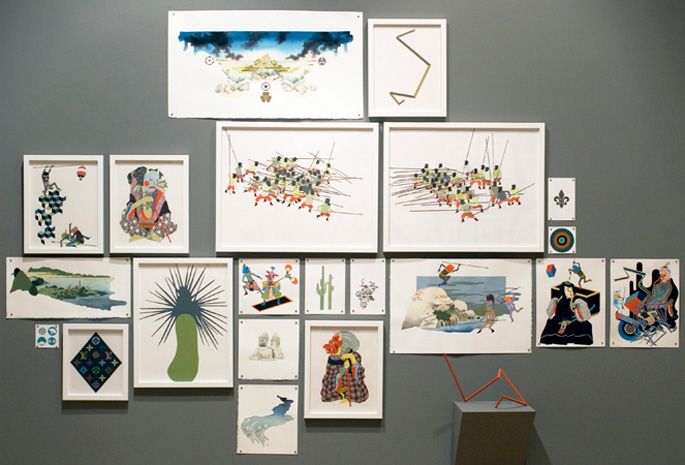
Installation at Haines Gallery
"Studies for La Destitution de la Jeune Fille"
2010
Gouache on paper and wood
Dimensions Variable
French artist Katya Bonnenfant has adopted the moniker The Old Boys' Club. TOBC's current exhibition at Haines Gallery - a scaled-down version of the recent wallpaper and sculptural installation at the Yerba Buena Center for the Arts - is titled "La Destitution de al Jeune Fille (The Deposition of the Young Girl)." According to the gallery's press release, the title references a "post-Situationist theory [...] initially put forth by the anonymous collective, Tiqqun." Apparently, Tiqqun "advances the notion of the young girl as embodiment of the capitalist machine and the meaninglessness of modern life." Further research reveals that the preponderance of content published in Tiqqun's now defunct journal is jejune and impotent pseudo-philosophy, the sort of tripe that too many artists mistake for genuine thoughtfulness. Happily, despite her meager inspiration, TOBC puts on a good show.
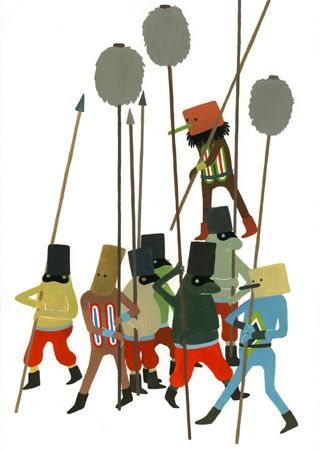
"Study for La Destitution de la Jeune Fille #41"
2010
Gouache on paper
12 x 9 inches
The back gallery at Haines is pleasantly crowded with TOBC's colorful and riotous gouache drawings and sculptures. Bonnenfant's cast of cartoon characters is diverse; celebrities like Darth Vader and Waldo appear, but most of the artist's spear-wielding insurgents are humble and unfamiliar. What treasure or ideology are they fighting over, exactly? Narrative particulars are few and no critical players or turning points are obviously apparent; it's a ceaseless and meaningless melee (like Tiqqun's conception of modern life!).
The opaque, vivid colors of TOBC's gouaches call to mind the advertising industry's heraldry and, in combination with the masks and costumes of Bonnenfant's characters, emphasize the combatants' ethnic or cultural differences. The effect is gestalt; Bonnenfant's oddball cast of warrior mascots is a manifestation of the physical and economic violence of globalization. That's also what Tiqqun aimed to communicate but, where they failed, TOBC succeeds artfully and without pretension.

Installation at Haines Gallery
"Studies for La Destitution de la Jeune Fille"
2010
Gouache on paper and wood
Dimensions Variable
Image credits: all images from the artist's website and Haines Gallery website
Wednesday, September 22, 2010
The RSA's "21st Century Enlightenment"
Sure, the video is 11 minutes long, well over the too-long-to-watch mark for readers casually trolling the blogosphere, but it's worth bookmarking and saving for later. (In fact, I encourage you to watch it on YouTube or the RSA website, as the resolution is better than that of the above embed.)
The ideas articulated are vital and might provide some solace for those of you who, like so many of my friends, suffer from political apocalypse syndrome! Moreover, the animation is terrific and the narrator, like the Royal Society for the Encouragement of the Arts (RSA), is British, satisfying the Anglophile in all of us.
Enjoy.
(Thanks to Michael McDevitt for turning me on to this RSA video.)
Friday, June 11, 2010
Rescuing Hokget and Everybody Else

Several months ago, I read "The Problem With Human Compassion," an excerpt from Shankar Vedantam's book The Hidden Brain, printed in the February 19th issue of The Week. I include a lengthy selection here.
"On March 13, 2002, a fire broke out in the engine room of an oil tanker about 800 miles south of Hawaii. The fire moved so fast that the Taiwanese crew did not have time to radio for help. Eleven survivors and the captain’s dog, a terrier named Hokget, retreated to the tanker’s forward quarters with supplies of food and water.Vedantam and Singer are correct; we humans act more compassionately when we are able to put a face to a cause, yet too many faces dull our response.
[...] Drawn by wind and currents, the Insiko got within 220 miles of Hawaii. It was spotted by a cruise ship, which rescued the crew. But as the cruise ship pulled away, a few passengers heard the sound of barking.
The captain’s dog had been left behind on the tanker. A passenger who heard the barking dog called the Hawaiian Humane Society in Honolulu. [...] The Society alerted fishing boats about the lost tanker and soon media reports began appearing about Hokget.
[...] Money poured in to fund a rescue. Donations eventually arrived from 39 states and four foreign countries. One check was for $5,000. 'It was just about a dog,' Pamela Burns, president of the Hawaiian Humane Society, told me. 'This was an opportunity for people to feel good about rescuing a dog. People poured out their support. A handful of people were incensed. These people said, ‘You should be giving money to the homeless.’' But Burns thought the great thing about America was that people were free to give money to whatever cause they cared about, and people cared about Hokget.
The problem with a rescue was that no one knew where the Insiko was. The U.S. Coast Guard estimated it could be anywhere in an area measuring 360,000 square miles. Two Humane Society officers set off into the Pacific on a tugboat. The Society paid $48,000 to a private company called American Marine to look for the ship.
[...] The U.S. Coast Guard had said it could not use taxpayer money to save the dog, but under the guise of training exercises, the called the U.S. Navy began quietly hunting for the Insiko.
[...] Human beings from around the world came together to try to save a dog. The vast majority of people who sent in money would never personally see Hokget. It was, as Pamela Burns suggested to me, an act of pure altruism and a marker of the remarkable capacity human beings have to empathize with the plight of others.
There are a series of disturbing questions, however: Eight years before the Hokget saga began, the same world that showed extraordinary compassion for a dog sat on its hands as hundreds of thousands of human beings were killed in the Rwandan genocide.
The philosopher Peter Singer once devised a dilemma that highlights a central contradiction in our moral reasoning. If you see a child drowning in a pond—and you would ruin a fine pair of shoes worth $200 if you jumped into the water—would you save the child or save your shoes? Most people react incredulously to the question; obviously, a child’s life is worth more than a pair of shoes. But if this is the case, Singer asked, why do large numbers of people hesitate to write checks for $200 to a reputable charity that could save the life of a child halfway around the world—when there are millions of children who need our help?
The answer is that our moral responsibilities feel different in these situations; one situation feels visceral, the other abstract. We feel personally responsible for one child, whereas the other is one of millions who need help - there are many people who could write that check.
[...] The brain is simply not very good at grasping the implications of mass suffering. Americans would be far more likely to step forward if only a few people were suffering or a single person were in pain. Hokget did not draw our sympathies because we care more about dogs than people; she drew our sympathies because she was a single dog lost on the biggest ocean in the world. [...] We are best able to respond when we are focused on a single victim."
I've noticed such a benumbing in myself recently, an unexpected consequence of my transitioning from New York City to San Francisco. Both cities have substantial homeless populations, but panhandling in San Francisco is far more common. My street charity policy, modeled on the approach of a rabbi I heard lecture, is simple enough: I give change to any panhandler who says that he or she will use the money for food (or cites hunger as their reason for begging). I don't give change to those individuals requesting money for any other reason. In New York City, confronted with a few beggars each day, I typically gave change two or three times every week. In San Francisco, however, beggars ask for handouts on every other block, and a good number of them say that they're hungry. If I hold to my standard, I'll give change two or three times a day, if not more often! Shamefully, I've noticed that I've almost ceased giving during my visits to San Francisco.
This is a personal failure that I must address. Each of those many faces is an individual, a single person in need, despite the fact that their larger numbers and concentration counter-intuitively make them relatively anonymous or invisible. The rabbi's rule should be no less applicable in San Francisco than it is in New York. I'm confronted, then, with more need, and I must respond in kind; a hungry person is a hungry person.
But what about a hungry dog? Is Vedantam right to suggest that the thousands of people who contributed money to the Hokget search did not "care more about dogs than people"? Not exactly.
Our species' evolved, inborn behaviors haven't made our adaptation to the globalized world easy. In fact, it seems that contemporary humans are increasingly suspicious of other humans, especially of those outside our respective tribe, whereas animals (and perhaps especially dogs) are seen as uncomprehending innocents. I don't mean to suggest that no one cares about miners trapped in a coal mine, but it's clear that the little girl trapped in a well sells more newspapers, and that the little dog trapped on an abandoned tanker not only sells newpapers, but also inspires a flood of unsolicited donations and generates public outcry.
"Facing intense public pressure to save Hokget, government officials concluded that asking the Navy to sink the tanker—750 miles from Hawaii and drifting away from the distant U.S. mainland—posed unacceptable environmental risks. The Coast Guard finally agreed to access $250,000 in U.S. taxpayer funds to recover the Insiko. It wasn’t officially called an animal-rescue effort. Instead it was authorized under the Oil Spill Liability Trust Fund, based on the argument that if the aimless Insiko managed to drift westward for 250 straight miles, it might run aground on Johnston Atoll and harm marine life.What a marvelously strange species we are!? I applaud our ability to extend compassion to other animals (we're one of handful of species that have demonstrated such empathic ability), but I wonder at our brains' curious moral calculus.
[...] On April 26, nearly a month and a half after the dog’s ordeal began, the tugboat’s crew found the Insiko and boarded the tanker. Hokget was still alive, hiding in a pile of tires. [...] Hokget arrived in Honolulu on May 2 and was greeted by crowds of spectators, a news conference, banners welcoming her to America, and a red Hawaiian lei."
I suppose all I can do is begin with myself, and humbly pledge to keep my pockets filled with coins.
Image credit: ripped from Corbis Images
Wednesday, February 03, 2010
"Inherited Purpose and Pattern"

Still from "History of the Main Complaint"
Animation
1996
I enjoyed reading Calvin Tomkins' recent profile of William Kentridge ("Lines of Resistance," The New Yorker, January 18, 2010). Tomkins includes some fascinating details about Kentridge's background and family, and I especially appreciated some of the remarks made by the artist. The following quotation was particularly resonant.
"[Working in South Africa,] I was aware of Joseph Beuys - Beuys and his honey pump, which was supposed to be political art. But politics is not spreading honey around the main building at the Documenta art exhibition. It's putting electrodes on people's testicles, locking them up, putting them in fear of their lives."Kentridge acknowledges his South African perspective (the artist was born into a state of apartheid and is today living through its often grim aftermath), but his observation also speaks to the general disconnect between so much 20th century fine art and "the real world."
Both modernism and postmodernism prioritize iconoclasm and individual achievement over "a system of inherited purpose and patterns."(1) It's thoughtless to dismiss the sibling -isms (both offer valuable insights and fundamentally inform our contemporary world), but the march of globalization is revealing the societal impotence of the philosophies. Absent "inherited purpose" and narrative, postmodern community is soulless, a mere facade. One of many casualties, the artist is but a mote in a vast and turbulent sea of competing sentiments and ideologies. Graphic design and advertising occupy the popular position once given to fine art, but, excellent though some of both may be, these are commodity driven disciplines; as such, they can make no genuine claim to political or moral coherence.
Still, I don't believe that we should bemoan our station as the end of the line. Globalization is in its infancy, and the 21st century will likely see a new concept of cosmopolitan citizen emerge, one that could usher in an era of shared mythos. Back to the future, so to speak.
(1) This definition of pre-modern art is drawn from Adam Gopnik's fantastic essay, "Van Gogh's Ear." (The New Yorker, January 4, 2010)
Saturday, January 09, 2010
The Art Community and Common Sense
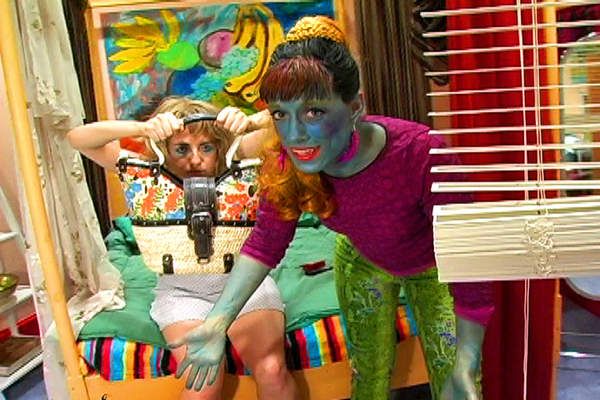
"I-BE AREA"
2007
"Everybody gets so much information all day long that they lose their common sense."We're a week-and-a-half into 2010, and I'm hoping that the din produced by so much fin-de-decade media will soon die down. It's no secret that we citizens of the United States (and all other essentially "Americanized" peoples) are principally defined by our consumption. What's more, after decades of adaptation to the consumer role, we've become so fond of the talk surrounding our consumer products that the consumer reviews themselves have become another kind of consumable. Regrettably, this is no less true in the arts.
- Gertrude Stein
I've made a contrarian effort this year to avoid most of the "Top" lists and their Op-Ed equivalents, but I've not been totally chaste. The diviners of social, political, or cultural trends have been working furiously to meet their deadlines, and the surplus of art-related stock-taking is in large part responsible for the dearth of new HH content. Anything that I write here will only add to the pervasive and stupefying hubbub; it is further distraction from the business of life well-lived.
And yet, here I sit, writing this post. Like all the other commentators, I'm guilty of editorializing and contextualizing that which is better meditated upon individually or mulled over with our loved ones. And I'm guilty of adding one more perspective to the countless millions already vocalized, furthering the unfortunate and wrong-headed belief that subjectivity reigns. What I'm engaging in, then, is dangerous. While post-modern notions of relativism are valid and philosophically valuable, our globalized culture must strive to sort, such that we can, the wheat from the chaff. That is to say, in a time of increasing cross-cultural interaction, the need for some consensus, some agreed upon hierarchy of moral, ethical, and aesthetic value, is acute. It is a dangerous and exciting era; as such, it is a good time to be a artist.
I agree with Roberta Smith's contention that "the years 2000 to 2009 saw the emergence of a tremendous number of really good, interesting, promising artists." My list of "really good" artists, however, is very different from hers, and Ryan Trecartin, one of the artists that the New York Times' critic celebrates in her recent article, "Make Room for Video, Performance and Paint," is definitely not on it. I don't know Trecartin personally, and he may be a well-meaning, pleasant enough person, but his artwork is poisonously self-absorbed. In this respect, at least, Smith is right to assert that he is an important representative of the decade past. The art world, and especially that of New York City, the community to which I'm most attached, has seen an explosion of navel gazing.
To be fair, most artists engage in some level of narcissism. At the end of the 1990s, when I was in my early twenties, I had puerile aspirations to produce "art videos" of my ejaculating penis (paging Sterling Ruby), and my paintings were dominated by angst-ridden self-portraits and hyper-sexualized imagery. The few paintings of that period that survive are today stacked in my parents' Virginia garage, partly covered by a plastic tarpaulin and years of accumulated mouse shit and winter-killed wasp corpses. Such is the fate of personal history. Serpent-like, we periodically shed our skins and move on, hopefully a little more wise. Some of us, however, put our sheddings and bruises on display, mistaking personal exposure for bravery. Indeed, in some contexts it is brave, but when the sharing is marshalled in service of a cult of personality, it is a celebration of individual dysfunction. And when such exhibitionism is mistaken for art, it is an indication of critical and cultural dysfunction.
Believing that art is fundamental to humanity, and that it is transformative and sacred, I don't accept Freud's famous contention that the artist is a neurotic who seeks to attenuate or postpone confrontation of his or her mature psyche. In fact, for most of our species' tenure, the role of the artist was precisely the opposite; we were called upon to ground our brethren is real experience, be it material or metaphysical. Yet Freud's categorization accurately describes much of the juvenalia that passes for contemporary art. Certainly, we artists should be embarrassed by this trend, but you can't kill the messenger, as the saying has it; Trecartin and others creating hysterical or megalomaniacal artworks are reflections of the dominant (and apparently yet ascendant) iCulture. It is instead the critics and the gallerists, the purveyors of taste, that should be most ashamed of themselves.
Essayist, critic, and philosopher George Steiner is far more intelligent and incisive than I, so I include a pastiche of pertinent excerpts from his 1989 book, Real Presences.
"The usages and values predominant in the consumer societies of the West today [are] the secondary and the parasitic[...]. Literate humanity is solicited daily by millions of words, printed, broadcast, screened, about books which it will never open, music it will not hear, works of art it will never set eyes on. A perpetual hum of aesthetic commentary, of on-the-minute judgments, of pre-packaged pontifications, crowds the air. Presumably, the greater part of art-talk or literary reportage, of music reviews or ballet criticism, is skimmed rather than read, heard but not listened to. None the less, the effect is antithetical to that visceral, personal encounter[...]. There is little 'ingestion'; it is the 'digest' that prevails.Steiner, I presume, frowns on the Top Ten lists and "best of the decade" summaries as much as I do. I also believe that he would dismiss as "derivative or [of] passing interest" most (though not all) of the artists that Smith praises in her article. The cultural longevity of most on Smith's list is questionable, certainly alongside the likes of Alec Soth, Bill Viola, Matthew Day Jackson, Omer Fast, or Tom Uttech, all contemporary artists crafting intelligent and soulful artworks.
[...]
The journalistic vision sharpens to the point of maximum impact every event, every individual and social configuration; but the honing is uniform. Political enormity and the circus, the leaps of science and those of the athlete, apocalypse and indigestion, are given the same edge. Paradoxically, this monotone of graphic urgency anaesthetizes. The utmost beauty or terror are shredded at close of day. We are made whole again, and expectant, in time for the morning edition.
[...]
Two principal impulses energize the American spirit: immanence and egalitarianism. The crux of American time is now. The past matters in direct reference to its usability in and by the present. [...] No other culture has so dignified the immanent. [...] Poets, novelists, choreographers, painters of the most derivative or passing interest, are made the object of seminars and dissertations, of undergraduate lectures and post-doctoral research. The axioms of the transcendent in the arts of understanding and of judgment [...] are invested in the overnight."
Smith writes, at the article's close, "In all, we are confronted with the distinct possibility that quantity and quality may not be so mutually exclusive after all. More means more better." That's very true. But more also means more bad, of course, which is why we today have an urgent need for critics, curators, and gallerists who, like Steiner and Donald Kuspit, are willing to reside outside the community, to avoid political entanglements, and to judge, sometimes harshly. To those critics, artists, and gallerists already plugged in, let's begin this decade, this arbitrary but useful marker in our human journey, with a renewed commitment (a resolution, if you prefer) to be more rigorous, contemplative, and socially committed. The art world, like the world at large, needs fixing, and responsible action is the only thing for it.
Happy Twenty-Ten. Here's hoping that it's healthy and auspicious.
Image credit: Ryan Trecartin, 2007
Thursday, October 22, 2009
Acting Out (Peacefully) Against the Culture of Competition
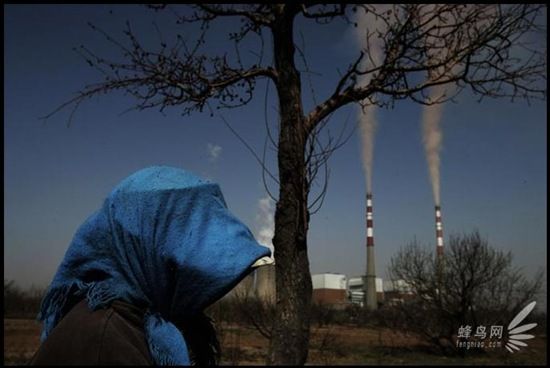
April 22, 2006
This Saturday, October 24th, I'll join a mob of peaceful activists and march across the Brooklyn Bridge, from Manhattan to Brooklyn, in hopes of further raising public awareness about the reality of climate change and the need for a comprehensive international climate treaty. The march is associated with 350.org's Day of Action.
"350.org is an international campaign dedicated to building a movement to unite the world around solutions to the climate crisis--the solutions that science and justice demand. Our mission is to inspire the world to rise to the challenge of the climate crisis—to create a new sense of urgency and of possibility for our planet. Our focus is on the number 350--as in parts per million, the level scientists have identified as the safe upper limit for CO2 in our atmosphere. But 350 is more than a number--it's a symbol of where we need to head as a planet. [...] This December, world leaders will meet in Copenhagen, Denmark to craft a new global treaty on cutting emissions. The problem is, the treaty currently on the table doesn't meet the severity of the climate crisis—it doesn't pass the 350 test. In order to unite the public, media, and our political leaders behind the 350 goal, we're harnessing the power of the internet to coordinate a planetary day of action on October 24, 2009. We hope to have actions at hundreds of iconic places around the world - from the Taj Mahal to the Great Barrier Reef to your community - and clear message to world leaders: the solutions to climate change must be equitable, they must be grounded in science, and they must meet the scale of the crisis."350.org was founded by author and environmentalist Bill McKibben and, although some legitimate philosophical criticisms of the project have been raised, I feel strongly that the organization's mission is vital.

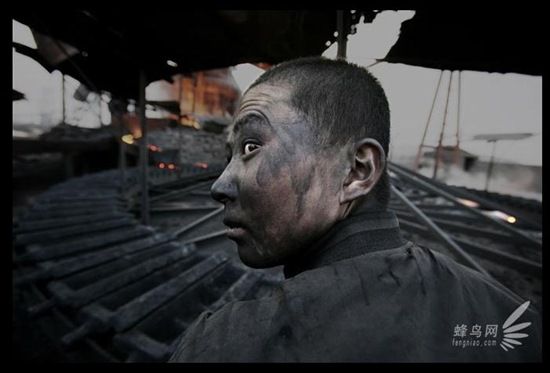
64-year-old Wang Baosheng has fester wounds all over his body, and must sleep sitting, face down on the edge of the bed each day.
July 10, 2005
Should you doubt the urgent need for an international climate treaty that demands accountability and systemic change, or should you remain skeptical of the human influence on atmospheric carbon levels, I encourage you to take a look at the distressing pictures that ChinaHush recently published. Photographer Lu Guang's series "Pollution in China" is a testament to the cruel realities of the international, industrial market.
In his book-length essay Life Is A Miracle, the author, poet, essayist, and critic Wendell Berry describes the global, capitalist world view as,
"one culture of division and dislocation, opposition and competition, which is to say the culture of colonialism and industrialism. This culture has steadily increased the dependence of individuals, regions, and nations upon larger and larger collective economies at the same time that is has thrown individuals, regions, and nations into a competitiveness with one another that is limitlessly destructive and demeaning."The "collateral damage" caused by this monstrous steam engine is not limited to elevated carbon levels, and its poisons don't just affect the dispossessed or the politically and economically powerless.
Nicholas Kristoff reminds us, in a recent New York Times OpEd piece, that the staggering number of "deformed frogs and intersex fish [found in or near United States' waters] — not to mention the growing number of deformities in newborn boys — should jolt us."
"In the Potomac watershed near Washington, male smallmouth bass have rapidly transformed into 'intersex fish' that display female characteristics. This was discovered only in 2003, but the latest survey found that more than 80 percent of the male smallmouth bass in the Potomac are producing eggs. Now scientists are connecting the dots with evidence of increasing abnormalities among humans, particularly large increases in numbers of genital deformities among newborn boys. [...] Apprehension is growing among many scientists that the cause of all this may be a class of chemicals called endocrine disruptors. They are very widely used in agriculture, industry and consumer products. Some also enter the water supply when estrogens in human urine — compounded when a woman is on the pill — pass through sewage systems and then through water treatment plants."Herpetologists have been sounding the alarm for years, but the policy makers are warm in the pockets of the immoral corporations and the populace, by and large, prefers to escape in celebrity pregnancy updates and corporate-owned sporting events. Amphibians were the ignored canary in the coal mine. Now many animal families (ours included) are paying a terrible price, one that we can not yet fully appreciate.

Still, it's not too late to stand up to the "culture of colonialism and industrialism." Visit 350.org. Find out how to get involved in the effort. If global warming isn't appealing to your still, small voice, get involved with political activism, volunteer at your local homeless shelter, pledge financial support to non-profit activist organizations working for causes that you feel strongly about; it doesn't matter what you do, but it does matter that you do something. Turn off the television, put down the tabloid. I beg this of you.
April 10, 2005
Photo credits: all photographs, Lu Guang; ripped from ChinaHush
Thursday, May 14, 2009
A Thursday in the Holocene

Over dinner this Tuesday evening, a friend and I discussed our species' more homogeneous future. I suggested that miscegenation and intercultural activity will lead to future generations comprised of individuals that look and act more alike. In turn, violent conflict between human groups will decrease; in this world of mutts, superficial differences such as race and custom will be less visible and therefore less contentious.
My friend shares my hopeful outlook, but expressed skepticism. Citing the Rwandan genocide and the fractious political situation within Israel, he contended that greater physiological and sociological similarity are just as likely to increase conflict. Humans will always find some reason to fight, he believes, and superficial similarity will lead not to a peaceable kingdom, but instead to the exacerbation of subtle differences or the outright invention of philosophical or genetic justifications for the vilification of "the other." I can't dismiss his forecast, but if Homo sapiens sapiens survives long enough to witness that homogeneous era, our species will have learned a great deal more about cooperation. This, I feel, bodes well for the less violent prospect.
But what-if suppositions about the far distant future are of little practical value to the here-and-now. I have faith in teleological eudaimonia, but the lot of Earth's inhabitants won't gradually improve unless our policies and actions are informed principally by consideration of a more immediate future...say, one or two generations. And, although it will be a thousand years, at least, before miscegenation makes all humans mocha, our planet's ecology is right now undergoing drastic changes.
Burkhard Bilger's "Swamp Things" (The New Yorker, April 20, 2009) highlights the explosion of "invasive" species in Florida. Bilger focuses particularly on the success of the Burmese python (Python molurus bivittatus) in the Florida Everglades, but notes that a great variety of exotic species have gained toeholds in the state.
"Florida now has more exotic lizard species than there are natives in the entire [American] Southeast. On a single tree you could conceivably find plants and animals from six continents, including parrots from South America, mynah birds and Old World climbing ferns from Asia, vervet monkeys from Africa, ladybird beetles from Australia, and feral cats from Europe, via Africa and Asia. In some cases, the recent immigrants would be more genetically diverse than their cousins back home. The state's ecology is a kind of urban legend come true -- the old alligator-flushed-down-the-toilet story repeated a thousand times with a thousand species.Indeed, the Homogecene may soon overtake the Holocene.
Some find all this thrilling. Florida has become an open-air zoo, richer in species than ever before. To others, it's the harbinger of a new and depressingly undifferentiated age, when the old biological borders begin to fade and every place starts to look like every other. Ecologists have even given it a name: the Homogecene."
Note: The post's title is a nod to Christopher Cokinos's terrific essay, "The Consolations of Extinction" (Orion Magazine, May/June 2007). In it, Cokinos
"[suggests] that our PalmPilots and DayMinders and Nature Conservancy calendars show not only year, month, date, and day of the week but also geologic epoch. It’s a Tuesday in the Holocene."Photo credit: Burmese python and American alligator, copyright 2008, Lori Oberhofer, National Park Service
Tuesday, October 16, 2007
Ethical food choices...for cars

Each fall the Major League Baseball postseason reintroduces me to alcohol and automobile advertising. Advertising is our most popular art form and, as a result, every American is comfortable critiquing commercials (even those who remain reluctant to discuss paintings, novels, or films). As a stubborn idealist, I'd rather opt out of the conversation altogether, but I'm compelled to comment on Chevrolet's recent alternative fuel vehicles television spots.
Like the other major motor companies, Chevy is ramping up alternative fuel advertising in an effort to earn "green" stripes, but (no surprise here) they fudge the facts. For example, in the commercial for Chevy's e85 ethanol line, a user-friendly spokesman tells a group of children that the biofuel vehicle is "vegetarian." That label is disingenuous. No matter what the captains of industry claim, biofuel is not an environmentally sensitive option. George Monbiot, a vigilant activist and journalist, has been crying foul on this front for years, even when most environmental groups were still touting biofuel as a promising alternative.
But, among environmentalists, consensus is slow in coming and, having been reached, even slower to result in an about-face. Because Americans and Europeans are at last embracing gasoline alternatives, environmental activists are nervous about backtracking, even as news from the lands of palm and sugarcane grows more dire. Consider this recent piece from the Manchester Guardian.
"Until now palm oil - of which 83% is produced in Indonesia and Malaysia - was produced for food. But the European Union's aim of cutting greenhouse gas emissions by 20% by 2020, partly by demanding that 10% of vehicles be fuelled by biofuels, will see a fresh surge in palm oil demand that could doom the rainforests.I stopped eating meat - i.e., became a vegetarian - because of the wasteful, unethical way meat comes to the plate in our time. Given the equally destructive reality of biofuel production, I wince as I watch the Chevy commercials, worried that most well-meaning people associate the vehicles with positive change rather than, among other sins, the slaughter of orangutans by hungry have-nots.
That is likely to kill off the 'flagship species' of wildlife such as the Asian elephant, the Sumatran tiger and the orang-utan of Borneo which are already under enormous pressure from habitat loss. Plantation owners regard the orang-utan as pests because it eats the young palm oil plants and hunt them down ruthlessly."
Sure, the car is vegetarian. Industrialized capitalism, however, is anything but.
Photo credit: ripped from ABC Australia
Thursday, June 21, 2007
Colonies collapsing
"But I think we’re the ones suffering from Colony Collapse Disorder. Because although nobody really knows for sure what’s killing the bees, it’s not al-Qaeda, and it’s not God doing some of his Old Testament shtick, and it’s not Winnie the Pooh. It’s us. It could be from pesticides, or genetically modified food, or global warming, or the high-fructose corn syrup we started to feed them. Recently it was discovered that bees won’t fly near cell phones — the electromagnetic signals they emit might screw up the bees navigation system, knocking them out of the sky. So thanks guy in line at Starbucks, you just killed us. It’s nature’s way of saying, 'Can you hear me now?'"Many readers will be at least a little familiar with news of the global collapse of European honeybee (Apis mellifera) populations. I've talked with friends and acquaintances who take this development very seriously, while others who dismiss it offhand. Whatever their attitude, however, most people possess only a superficial understanding of colony collapse disorder (CCD). As with most "natural" declines, the science of the situation is more complex than our major media outlets report.
-Bill Maher
Consider the following wrinkle. The European honeybee, the species in question, is not native to the United States. While many areas of agricultural production will be adversely affected by their collapse, some entomologists have pointed out that populations of native bee species may rebound as the niche they originally filled (as pollinators) opens up again. On the other hand, those native bee species are not domesticated, and therefore will not pollinate crops as efficiently as European honeybees do. No surprise there; what's good for biodiversity is rarely good for industrialized agriculture.
I'm very curious to learn what (or what confluence of causes) is responsible for the collapse. While I’m pleased to see celebrities like Bill Maher making a popular fuss about an environmental dilemma, the media only chose to issue a red alert regarding this particular environmental issue because it could lead to diminishing economic returns. Given this agrinomics bias, the science side of the news story is generally glossed over or grossly simplified.
Fortunately, there are folks offering more comprehensive summations. Link over to Bioephemera for an excellent roundup of the situation (and one of Cicada's lovely paintings, to boot).
Thursday, May 17, 2007
Economics and equity revisited

Chris Jordan
"Container yard #1, Seattle"
2003
C-print
44 x 59 inches
Edward Winkleman's blog is host to an interesting conversation this week (or, rather, several related conversations). Over the course of four or five recent posts Winkleman and his readers, some of whom are very articulate and opinionated, have weighed in on a number of topics. Principal among them are art and commerce, "high" art versus populist aesthetics/inspiration, and the boundaries of the avant garde. The dialogue is pervaded by market concerns and, as I read through the comments, I found myself considering not only the art market, but also broad cultural attitudes toward commerce, creative responsibility, and the social role of the contemporary artist. Regarding this last point, there seems to be much confusion, even among artists themselves...and perhaps especially among artists. Eleanor Heartney's reaction to P.S.1's "Greater New York, 2005" exhibition came to mind.
“The show suggests that artists are connected to events in the outside world but have little sense of what to do about them, other than to create artworks that incorporate their frustration, rage, apprehension or sense of the absurdity of contemporary life.”The industry we've built up around contemporary "fine" art may be more thoroughly intellectualized than that of Hollywood or hip-hop (often without good reason), but it is, essentially, the same beast. It is difficult, if not impossible, to make a living in any of these industries without becoming bogged down in a muddy mix of networking, posturing, and promotion. I'm terrible at all of these (hence my choosing words with negative connotations, such as "bogged" and "muddy") and at times I wish for nothing so much as a full-time spin doctor. Most of the successful emerging and mid-career artists that I know excel at navigating the swamp of promotion (they either enjoy it or reconcile themselves to its necessity). The amount of time and energy they commit to such endeavor makes them jealous of our independently wealthy counterparts, artists benefited not only by abundant studio time, but by greater freedom from the system. Certainly some monied artists pursue the nominal celebrity offered by art world success, but because they don't need to sell their work, they can, in effect, choose to work away from the noise and the distraction of "the scene."
While reading through the comments at Winkleman, I begin to feel that the dialogue, interesting though it may be, is just an echo of that scenester noise. Most, if not all, of the conversation taking place is grounded on the assumption that when creativity meets money, competition results, which leads to even greater creativity. That assumption is the bedrock of neoclassical economics and, in turn, free market philosophy, but not every economist embraces it. I recall John Stuart Mill's assertion that a balanced, sustainable economy (as opposed to one that is "growing," "strengthening," or, in the words of President Bush, "getting going") is "more conducive to long term political, ethical and spiritual improvements." I was first introduced to Mill's writing a few years ago, when I began pondering the concept of the Steady State Economy. This economic philosophy received a fair amount of attention on HH in 2005, when I was initially digesting the idea, but I haven't written much about it since; you needn't ruminate so often on that which you wholeheartedly believe, and the benefits offered by economies of scale and measured population dynamics are clear.

As I wrote in "Ecological Economics 101,"
"...[Brian] Czech, [author of "Shoveling Fuel for a Runaway Train" and president of the Center for the Advancement of the Steady State Economy (CASSE)], offers advice for building a healthy alternative to unrestrained, free-market capitalism. In the steady state economic paradigm, growth (or, as Czech calls it, bloating) is discouraged; a balance is sought instead. This balance requires a more simplistic lifestyle, one driven by the quest for 'self-actualization,' a term Czech borrows from Abraham Maslow's "Hierarchy of Needs," rather than self-esteem, which, in today's culture of celebrity and distraction, is tied to bling-bling displays of real estate, clothing, vehicles, expensive dining, and so on."

Chris Jordan
"Crushed cars #2, Tacoma"
2004
C-print
44 x 62 inches
If you feel that the contemporary art world mirrors the prevailing culture of distraction, you're not alone. Innumerable bloggers, several prominent art critics, and theorists have echoed the sentiment in recent months. Counter points have been made, of course, arguing that art and commerce/power have always been bedmates, but that very answer begs the question, why, then, is the volume of dissent so very loud today? I believe it is because more people (both in sheer number and portion) are dissatisfied with the current paradigm. The scope of the problem is far greater than the art world, however, so let me shelve art for now, and elaborate on some of Czech's core ideas, as I promised to do in August of 2005.
Czech's prescription for a Steady State Economy is not original. He is merely playing the role of popularizer and spokesperson. Unfortunately, I don't imagine that "Shoveling Fuel for a Runaway Train" is reaching the audience it so desperately needs to, the American lower and middle classes. My other grievance is Czech's rabid focus on the liquidating class, or top 1% of consumers. He insists that they should be "castigated" whereas the members of the "steady-state class," the lower 80% of consumers, should be thanked. His critique of the liquidating mentality is warranted, but Czech goes too easy on the American majority. Most Americans make $30,000 a year (or less), yet boast of purchasing the latest cellphone, car, or designer shirt. It's no secret that success is measured by consumption. Frugality is no longer considered a virtue and, to my way of thinking, people with such unhealthy consuming patterns - the lion's share of us - are not members of what Czech calls the steady-state class, though members of the middle class undoubtedly have a less dramatic impact than the multi-billionaire, with his or her car fleets, mansion, yacht, and extravagant lifestyle.
Describing the typical "steady-stater," Czech writes,
"...[they] have small houses and lots, taking up less space and leaving more for others. Their small house and lots require less infrastructure and less commuting. Because they drive small cars that get good gas mileage, they leave a greater stock of petroleum to be tapped while scientists grope for a sustainable energy source. They also pollute less. Many of them ride bikes or use public transit. Because they don't have a different warddrobe for every occasion, they require less production of fiber, leather, and fur, which means that they leave more land for wildlife and for the grandkids. They don't accumulate large, wasteful items, thus saving storage space and tempering the traffic in trivial pursuits..."This doesn't sound like a fair description of the lower 80% of American consumers! With the rare, off-the-grid exception, Americans exhibit r-selected, boom-and-bust tendencies, as did the citizens of the expansive colonial empires that preceded our own. The solution to the bloating and destructive habits must start with individuals and local legislation, eventually leading to critical mass and a paradigm shift that sees us abandon the fictions of neoclassical economics. (To many readers, this may sound idealistic, revolutionary, or just plain naive, but Homo sapiens are a young species and, taking the long view, we can surely arrive at a more equitable system; the troubling question is, will we be around long enough to get there?)
In his critique of neoclassical economic myths, Czech shines. He begins by pointing out popular misconceptions. Among his many examples is Robert Samuelson's article, "Stupid students, smart economy?," in which Samuelson "entertained an argument that despite the education crisis...the fact that economic growth continues is a sure sign of an intelligent, well-educated society." As Czech asks in response, "does a perpetual increase in American consumption of goods and services really mean that its citizens are smarter?"

Chris Jordan
"Scrap metal, Seattle"
2003
C-print
44 x 57 inches
It isn't just economic journalists that associate economic growth with universally good tidings, though. Our government makes the same mistakes. Over a decade ago, the Republican Secretary of Commerce, Barbara Hackman Franklin wrote, "Recognizing that commerce has supplanted military and security issues as the main concern among nations, the 14 diverse agencies that make up the Commerce Department rallied...to advance a seven point agenda for fostering economic growth." What all this growth oriented talk ignores is the most basic principal of economics; all goods and services require input of land, labor, and capital. Actually, neoclassical economics doesn't so much ignore this truth as creatively amend it; its tenants are colonial in nature. Should a wealthy country fail to produce a particular commodity, due to a lack of land, labor, or capital, they can expand their reach, using trade or old-fashioned pillaging to acquire the commodity or the resources required to produce it. Today's celebrated globalization is another manifestation of colonial conquest. Because neoclassical economists observed this expansion (more accurately termed a displacement), they created the concept of substitutability. As Czech explains,
"...the factors of economic production could be substituted among themselves. For example, if land became scarce, more production could be squeezed from it if only more labor was applied, or more capital utilized, or both. The substitutability concept was extended to assert that a resource could not be depleted, because as it was extracted and the pickings got slim, another resource could be substituted for it."Because supply is finite, however, the end result of such substitution is inevitably importation. When a population exhausts the local wood supply, they might substitute aluminum, but when that supply, too, is exhausted, one or both resources must be imported. There's no way around it...or is there?
This question brings us to the next fallacy of neoclassical economics. Resources are not limited, free market advocates tell us, because substitutability should include what lies over the horizon, new discoveries and technologies. For example, a neoclassical economist might advance the argument that the globe's fresh water supply is not dwindling, as many environmentalists and some (too few) policy makers fear, because new technologies will be developed that allow us to desalinate or otherwise produce potable H2O. Therefore, they argue, we should continue to promote economic growth and forgo any legislation regulating access and use of the existing fresh water supply. Czech says,
"We can reply that these labor- and capital- intensive operations consume their own resources and cause their own pollution, but they will reply that once we get the right technology developed, the problem will be solved. Despite the ludicrousness with which we view such 'solutions,' we can't really win the argument. Not in theory, because until we prove that these solutions are untenable, the theory stands. That is how science proceeds."But neoclassical economics is not a scientific theory; there has been no rigorous application of scientific methodology. The free market is an experiment itself, one in which all of us are participants, whether we signed up or not.

Chris Jordan
"Pallets #1, Seattle"
2003
C-print
32 x 40 inches
Another neoclassical argument related to the promise of technology suggests that we needn't worry about depleting resources because we are always increasing efficiency. Furthermore, the economists point out, most first-world countries are transitioning into service-based economies, which require less land and raw resources. Czech responds that efficiency, while certainly a good thing, is largely a myth. Most increases in efficiency are a result of new tools, many of which use more energy and require more fuel. In the end, the more efficient production methods save on labor, but use more capital and land, making them ultimately less efficient. If short-term economic growth is the goal, this model is sufficient, but, over time, so-called "efficient production" leads to a breakdown.
Though it remains popular even among the general public, the service-based economy argument hasn't a leg to stand on. A former co-worker of mine sometimes rhapsodized about humanity's "leaving behind the agricultural" economy in favor of a "white collar world where we will all be intellectuals." When I challenged her incomplete Wellsian fantasy, asking what she makes of the millions of blue-collar Americans, the outsourced jobs, and the staggering increase in imported resources, she dismissed my concerns as irrelevant. Overall, she countered, outsourcing and increased trade is better for the world economy, lowering the unemployment rates in other countries and giving "first-world" citizens more time to develop their intellectual capacity. The evident dearth of contemporary American intellectual capacity, our struggling public school systems, and the supremacist ambition of her arguments aside, she ignores the root equation: land + labor + capital = produce/goods. We aren't just the United States of America anymore; although I resist the label generally, we are a "global village." Turning again to Czech,
"The butcher and the candlestick maker depended on the farmer who raised cattle and pigs, while the baker depended on the farmer who grew wheat and oats. To 'produce' more T-bones or candles required more cattle and pigs. To 'produce' more bread required more wheat and oats. It is easy to see why Francois Quesnay and the so-called physiocrats (predecessors of the classical economists, prominent in France in the 1760s) argued that agriculture was the sole source of economic production and growth. That is how Thomas Jefferson saw it, too."Some of you may have played Sid Meier's computer game, "Civilization." In this game you achieve victory either by a) developing your technology to such a degree that you are able to colonize Mars, b) total conquest of all the other civilizations or c) playing until a set date while keeping all your citizens relatively happy and your culture successful. One of the most effective ways to keep citizens of different cities and towns happy involves "changing" farmers into artists/entertainers. This is a neoclassical concept if ever there was one! In fact, it can be used by economists to "prove" my co-worker's argument regarding the benefits of a service and substitution based economy. In the game, as in neoclassical theory, each painter, dancer, singer, or writer requires notably less resources than does a single farmer. "The conversion of one farmer, whose existence is based on using hundreds of acres of land, makes way for a great many painters, the existence of each being based on a studio and tiny bits of product from the land." In fact, neoclassical economists suggest we can remove one farmer and add many entertainers to obtain a net gain in available resources. This is patently absurd, particularly given the ugly consumption patterns of today's celebrities, but even if we assume that every entertainer will be a steady-state saint, the resource use has only been displaced. The laws of thermodynamics, the theory of relativity, and, well, common sense, all dictate as much. That farmland is reduced on our soil mean broad swaths of Amazon forest will be cleared to make way for arable land in South America. Or, as Czech writes, "Getting back to the services sector, then, we see that only a limited number of farmers are available for conversion to services. The rest will have to stick to farming, or those of us not trained to survive in the wild - assuming there is any wild left - will starve."

Chris Jordan
"E-waste, New Orleans"
2005
C-print
44 x 57 inches
Conservation and humanitarian efforts do not begin and end with the construction of highway underpasses or overseas rice shipments (or sending money to organizations which undertake/fund such enterprises), though these are vital components. They begin, rather, with personal practice, particularly in regards to consumption habits. I'm still not living up (or, more accurately, down) to my target footprint, but I do try to defeat my consumerist impulses. All the same, I just replaced my dying computer - which was purchased in 2001; planned obsolescence, anyone? - with a speedy (for now) laptop and, worse still, after selling a number of paintings and drawings a few months ago, I purchased a wide-screen HDTV to heighten the pleasure of my NetFlix compulsion. The truth is, I'm only marginally less guilty than the consumer who flaunts such acquisitions. Granted, I do a great deal that is considered eco-conscious: paying a premium for "green" power from ConEd, paying carbon offset fees for airline travel, recycling and composting, using canvas totes instead of plastic/paper shopping bags, using energy efficient light bulbs, relying on public transportation, contributing to many environmental policy groups, and so on. But so what?
As Edward Hoagland recently wrote in his essay, "Endgame," published in the June 2007 issue of Harper's Magazine, "People want mobility, yet a hideaway 'off the grid,' and to have the heart muscles of a hunter-gatherer, attained in a gym, though practically living in cyberspace, but still touch the earthly verities through yoga. Meanwhile, the pace and enormity of destruction is paralyzing, as is our general indifference." In this high-speed market world it isn't just creativity and creative dialogue that have been hijacked by the headlong plunge of Czech's runaway train; wise mans' social and biological imperatives are being forgotten.
Photo credits: all images from photographer Chris Jordan
Thursday, January 26, 2006
CO2 Carnivores and My Semen

I recommend the following Guardian Weekly article. I'm tempted to write a longer response to Jonathon Porritt's "Hard facts to swallow," but I've made clear my perspectives regarding the ecological value of a vegetarian or vegan diet before. Porritt, the Programme Director of Forum for the Future and Chairman of the UK Sustainable Development Commission, doesn't tell readers anything new, but he highlights new studies and research which confirm that a shift to a global "meat-lite" diet will do more to reduce carbon emissions than strict mileage standards and the like.
"'Stop eating meat' is unlikely to be the favourite slogan of the new Stop Climate Chaos coalition. Even 'eat less meat' might not go down too well, even though Compassion in World Farming has produced an utterly compelling explanation - in their report, Global Benefits of Eating Less Meat - of why this really is the way forward.Being a country boy at heart, and having grown up surrounded by neighbors who made, and still make, their living from the land and the ocean, I champion the push for sustainable, local economies. The sustainability movement, for lack of a better label, is gaining much public support in the U.K. and throughout northern Europe, but these progressive attitudes often conflict with the development schemes and aspirations of so-called "Third World" countries; furthermore, carbon cutbacks and vegetarian diets certainly won't find favor in the great, red dragon that is China's burgeoning economy. That said, I believe significant in-roads can be made in the United States and Canada, particularly in New England and the Pacific Northwest, where the foundations for sustainable, local economies are already in place.
[...] Food isn't 'just another commodity', it is the foundation of personal wellbeing and is inextricably interwoven into a nation's culture, character and land use. In that regard, farming and food production embody a set of skills and capabilities on which the long-term security of any nation still ultimately depends.
[...] Modelling [the food production] variables is a policy-maker's worst nightmare, but they absolutely cannot be ignored. Unfortunately, they barely [figure in most government plans], which seek to persuade...readers that there is no alternative but to accelerate the globalisation of the food economy. 'Complete self-sufficiency' is summarily dismissed, as if anyone is out there arguing for complete self-sufficiency anyway. What [ecologists] are arguing for might be termed 'cost-effective self-reliance', as a hedge against the growing threat of widespread ecological and social disruption - food security seen in terms of land use, quality, sustainability and food safety, not just temporary availability and access...And that means policies that do not leave our farmers gratuitously disadvantaged by overseas producers who care little for the state of the environment or animal welfare; policies that actively promote local sourcing, obliging our retailers to be as smart and creative about local supply chains as they are about global supply chains; policies that set out systematically to reduce carbon intensity in food production and distribution; policies that build on the excellent work already achieved through the public sector food procurement initiative, and the development of new agri-environment measures. It also means a rather different vision, acknowledging up front that a sustainable future for the UK depends on securing a thriving rural economy, and that this, in turn, depends on keeping sustainable food production absolutely at the heart of the rural economy."
+++++
On another note, a bit of uber awkward hilarity. As his father did for him, my dad regularly sends me newspaper or science journal clippings he thinks I may find of interest. Occasionally, he'll annotate the articles. As I read through a recent package of these clippings this morning, I came across an article on sperm donors and their progeny. Across the top of the page, my father had written the following.
"Your mom wants you to start selling your semen. A) You're too bright and handsome to let your semen go to waste. B) Mom can now use the Internet to find out who her grandchildren are. Grandchildren at last!"Uumm....okay. I don't embarrass easily, but I'm sure I blushed. I know why my parents feel this way, but still...
Beginning in my early twenties, I made it known that I don't want children of my own and that I don't plan to marry. When pressed about this choice, I allowed that if I were to blindly stumble into a long-term, settled relationship, adoption would be my ticket to the parenting roller coaster. Mind you, I don't condemn procreation off hand. As I see it, one child per couple is fine - even two, if you want to push it - and I am genuinely happy for those friends and acquaintances who are proud parents, but I'm something of an extremist when it comes to my own actions.
This note from my pops suggests that my parents, after years of dismissing my stance on such matters as a temporary one, a product of misguided, youthful idealism, have accepted that I really do feel this way...and they are not happy about it. And so they tell me now that my semen (I know it's accurate, dad, but c'mon....I really don't want to think about my mom discussing 'Christopher's semen'!) must not go to waste! Every time I think about the note, I start laughing. Life is absurd.
Photo credit: www.equine-reproduction.com
Tuesday, December 13, 2005
Border (Bio)diversity (of opinion)

The Robert Smithson in me is bemused by international borders, particularly those boundaries that are not physically demarcated, lines that exist only in cartography and our collective political imagination. Last night, I contemplated a striking black-and-white photograph of the Mexico-U.S. border. The image was dominated by a rural "vehicle barrier" fence (similar to the one shown above), far removed from an official border checkpoint or crossing. In the desert of the American Southwest, this fence draws an arbitrary line in wire and steel.
It struck me as an emblem of humanity's absurdly tenuous existence, a reminder that our species is an insignificant mote in an incomprehensibly tremendous weave. As the artist Carl Buell wrote in the comments section of a recent HH post,
"With every change in sea level and shoreline, with the raising or eroding of every mountain range, with every changing weather pattern, life spreads out as it can and comes into contact with new environments, opportunities and hazards...As I get older (than dirt), I find myself starting to think like the hills themselves. Some day after eroding and washing out to sea, I’ll be a hill again."Indeed, each of us (and, eventually, our species) will be reconstituted, and our arbitrary borders, those lines in the mud of space-time, will be erased. In this respect, the border fence is a healthy reminder of our existential folly, but it also reveals humanity's darker inclinations. We build fences, after all, to divide "us" from "them," the demonized "other."
The photograph that inspired this post was printed in the most recent issue of Wildlands Connection, the Wildlands Project newsletter. It accompanied an article about wildlife bottlenecks at the Mexico-U.S. border. The Wildlands Project's mission is to create vast, uninterrupted linkages, known as wildlife corridors, that will extend from Canada into Mexico (on the Rockies spine) and from Canada into Florida (on the Appalachian spine). The U.S.-Mexico border fence is a major obstacle to the organization's first goal.
Yet physical barricades are but one of the obstacles that ambitious conservationists face. Consider wildlife trade legislation that protects species in one country, but not another, adjacent nation. If strict laws prohibit the trapping or hunting of a species in China, for example, but not in neighboring Mongolia, is the Chinese legislation effectively addressing species welfare (particularly when Chinese citizens are paying top dollar to have the killed contraband imported)? Similar issues haunt conservation efforts the world over.
The humanitarian and social concerns that ethically-minded conservationists must take into account present a more nuanced hurdle. Environmental groups in the European Union are warring with one another about how best to create the legislative and physical infrastructure necessary for sustainable energy development. How can you raise thousands of wind turbines without hindering bird migration, ruining aesthetics, or plopping towers in the backyards of folks too poor and disenfranchised to protest?
If the various interest groups in the EU, one of the most environmentally progressive governing bodies in the world, are at odds, is it realistic to expect conservation to become a truly supra-national affair? After all, the EU's concerns are petty alongside those of the southern hemisphere. Whereas Europe is a sprawl of cultivated landscape relatively lacking in biodiversity, the "Third World" represents the usually disastrous meeting of remarkable biodiversity and an exploding human population. Impressed by our terrible example, the citizens of these nations emulate the unsustainable behavior of the "First World." In order to counter the detrimental environmental effects of Third World industrialization, international legislation will face increasingly substantial challenges. The supra-national bodies can create laws, but can we enforce these laws without wielding the colonial sceptre? More critically, can we conserve biodiversity and healthy ecosystems without subjugating the rights of the humans that call the Third World home?
These questions bring me to "Climate of Fear," a recent book by the eloquent Nigerian poet, essayist and Nobel Laureate, Wole Soyinka. Though Soyinka is writing about humanity's attempt to cope with terrorism, his political thrust is applicable to all realms, and his message is clarion.
"The gray zones of moral definitions where relativity reigns and remote cause are evoked to justify the abhorrent will continue to haunt certain casts of mind. The rest will insist on the primacy of an ethical will, one that dictates that some deeds demand to be judged within an identifiable and shared moral universe, however restricted...The ethical will is the redeeming assertion that, even when all other considerations of social conduct are subjected to the fortuitous, one, an ethical core, remains inviolate."All of our fences fail. Perhaps we should recognize in that certainty both an entropic truth and an implicit morality. Within the context of this "shared moral universe," we are impelled to remove artificial barriers, whether they are constructed to stem the natural tide of human migrations or to protect us from our enemies. No matter the justification for the boundaries we draw, they are immoral inventions. And man, it is said, is the moral animal.
Photo credit: ripped from Kris Eggle's website
Tuesday, August 16, 2005
Pardon Me...Spare An Indulgence?

Last week, Organic Matter highlighted a few "carbon mitigation tools" previously unknown to me. For those unfamiliar with the concept of Renewable Energy Certificates (RECs), the PV USA Solar site provides an excellent introduction.
An arm of Renewable Ventures, LLC, a San Francisco based company which finances and operates renewable energy power plants, PV USA Solar offers a comprehensive list of RECs. Their website "allows you to calculate the amount of CO2 produced by your home, your business, your commute, or your travel, and then purchase renewable energy certificates to offset those emissions." Over the last year, similar programs have been adopted by foreign governments. Official air travel by United Kingdom civil servants, for example, is tracked by a government agency that calculates "the amount of globe-warming carbon dioxide emitted during each flight." The agency then "offsets a commensurate amount of CO2 by investing money in clean-energy projects in developing countries."
I'm not content to wait for the United States government to act on my behalf. In less than three weeks, I depart New York City for Japan. After months of price comparisons and phone calls to booking agencies, I secured a relatively inexpensive, round-trip flight on American Airlines. The total cost, including gas surcharges and all taxes, is $850.00. But wait. A quick visit to PV USA Solar informs me of the following.
"Your travel will generate an estimated 5713.6 pounds of CO2. By purchasing 7142.0 kilowatt-hours of Renewable Energy Certificates, you will offset an equivalent amount of pollution generated by California power plants. Your cost for these RECs will be $214.26."$1,064.26 no longer seems like such a "steal," but I will rationalize the extra expense by reminding myself that, had I purchased the ticket a month or two earlier, I would have paid over $1,000.00 before the REC fee.
Still, $214.26 isn't peanuts. Why do I feel compelled to pay the surcharge? I could, of course, choose not to. I mean, RECs are really for more "settled" people, right?
Wrong. No matter what the cost, cosmopolitan individuals - "citizens of the world" - are obligated to buy RECs for any traveling they do. To be aware of a problem and still choose to ignore it is, simply put, selfish. Ignorance is inexpensive bliss, but buying the REC is a pro-active gesture; my absolution will result in funding for alternative energy development, something I can ultimately be proud of.
But hold on! Did I just write "absolution?"
At fourteen, I hadn't yet to hear the romance of history's song. As a result, much of what my Western Civ professor taught remained unlearned. I do, however, remember discussing Martin Luther, the 16th Century theologian. Luther stuck in my mind for two reasons. 1) His name is shared by a 20th Century American hero. 2) He led the crusade against the sale of indulgences, also known as the Protestant Reformation.
As defined by the Roman Catholic Church, an indulgence is "The remission of temporal punishment still due for a sin that has been sacramentally absolved." In other words, you can buy your way out of purgatory by paying the church a repentance fee.
It is one thing to sin and later claim to have repented, but medieval citizens felt obliged to demonstrate their sincerity via external actions. (After all, it isn't God that frightens most people, but the possibility of being held in contempt by your peers.) While these public displays began as charitable acts - helping to feed the poor, for example - mercantilism allowed the church to generate revenue by banking on guilt. Because a medieval peasant didn't always have time to pursue charitable acts, opting to atone for misdeeds by paying the local church representative was an attractive alternative.
But it wasn't long before Rome realized how lucrative indulgences were. Already the most powerful governing body in Europe, the Catholic church now stood to become the most wealthy. Martin Luther crusaded against such corruption, but he also worried that "his parishoners were beginning to rely upon indulgences for their salvation more than repentance and satisfaction."
The first time I read about RECs, I recalled Luther's watchdog mission. An REC, after all, is an indulgence. Indulgences became popular only once the Catholic church embraced mercantilism and RECs are becoming popular at a time when market-based environmentalism is on the rise.
Philosophically speaking, RECs might be considered equally problematic as medieval indulgences. Many a well-intentioned citizen will purchase TerraPass, for example, and feel they have "done their part" for the environment, stopping short of a real contribution. More troubling still is the flagellation granted by RECs; realizing that most Americans couldn't care less about offsetting emissions, those of us who do purchase them will act as martyrs for the cause and little good can come of such a complex.
Fortunately, those of us who buy RECs know how the money is being used - at least, each of us should be responsible enough to check out these groups before cutting a check - and the more conscientious among us will recognize RECs as but one responsibility among many.
Photo credit: Copyright © 1997-1998 Concordia Historical Institute
Wednesday, June 08, 2005
Of Fairy Tales and Flights of Fancy

“The show suggests that artists are connected to events in the outside world but have little sense of what to do about them, other than to create artworks that incorporate their frustration, rage, apprehension or sense of the absurdity of contemporary life.”Who would condemn a child for having an active imagination? In contemporary western culture, most parents celebrate the fantasy lives of their children (or at least tolerate them), no matter how consuming they may be. This is for the good; a rich, imagined world often leads to greater curiosity about the world we inhabit. There are, however, some legitimate concerns for those children who appear to withdraw into fantasy too much, those who exhibit a tendency for escapism. These kids can be spotted at an early age. I should know.
- Eleanor Heartney, Art in America, review of “Greater New York, 2005”
As an only child who grew up in a rural farming village, my interaction with other children was limited to the school day and the rare overnight visit to a friend's house. My father, an unabashed workaholic, kept me occupied with field chores and wildlife conservation projects on most weekends. Our house had no television, the upshot of which was that I won most every reading competition until I reached 6th grade (the year -- holy of holies! -- a television arrived). I turned to books and invention for entertainment. The fields and forests were places of extraordinary mystique, vast plains teeming with bison and Indians or thick, dangerous woods with thieves and bizarre creatures lurking behind every tree. The pond shoreline represented a potential aquatic dinosaur attack, forcing me to walk just so to avoid detection.
But the fun didn’t stop at nightfall. No, if anything, the level of “make-believe” only increased once I was forced indoors. I would stage plays in my bedroom, becoming the voice of a stuffed animal perched on the windowsill and that of the angry, invisible dinosaur, the evil step-mother, the diminutive Lego man on the shelf, and so on and so on. (For some reason, many of these epic plays resulted in a raccoon puppet ripping open my throat. Of course, I was then re-animated as a rabid monster that would stalk the room’s perimeter, hunting imagined company.)
Despite my protests, it wasn’t at all inappropriate then that some kids called me Christopher Robin. I was tremendously uncomfortable in most social situations and I really didn’t trust any of my peers. During recess, I was the kid who retreated to a corner of the playground and talked to myself or played with blades of grass, imagining I don’t know what. It was also not surprising that cartoons, comic books, and drawing soon dominated my life outside of chores and schoolwork. I was every elementary school teachers’ dream, the quiet kid who scores well and gets placed in all the advanced classes, but shows no sign of ego or contempt. In fact, I was just oblivious to most of what was happening around me. I had no idea what interested most of my classmates. I didn’t listen to popular music until the sixth grade and most of my pop culture understanding was garnered from the pages of MAD Magazine. I knew what a phenomenon Michael Jackson was, but I'd never heard his music.
None of this mattered to me, however. I remained an essentially happy kid. I just shut out everything except my drawing, reading, and my fantasies. I'd learned how to tune out without ever having tuned in. Fortunately, the years have been kind to me and, rather than go the way of the Unabomber, I’ve become a reasonably well-adjusted member of society, if still something of a loner who likes to draw, read, and write.
It is with increasing urgency, though, that I view so much art produced by my contemporaries, artists in their twenties and thirties. An uncredited New Yorker writer describes this work as, “gloomy, craft-spun, fairy-tale escapism endemic among young East Coast artists.” A visit to Greater New York, 2005, a survey of artists living or working in New York City at P.S.1, will illustrate just how prevalent this mode has become. Fully 40% of the work on display fits the bill, and while the majority of these are paintings or drawings, a number of videos and installations belong to the same impetus. We are a generation uncertain and intimidated. Rather than engage and participate, we have opted to wear the escapist smile, retreating into the worlds of Alice and the Little Prince. Is it enough to express ourselves in this way? Do these cryptic fairy-tales or self-abusive efforts communicate anything more than immediate frustration? After all, it was largely my social incompetence which drove me to chase monsters around dark living rooms. How much different is this display?
These currents aren't isolated to the eastern seaboard of the United States, though. Admittedly, the majority of young West Coast artists still seem to be preoccupied with abstraction and pretty pictures, but the dystopian fairy-tales are being createed by artists not just from across the United States, but also via imports from Japan, Europe, Iceland, and elsewhere. Peter Schjeldahl recently wrote of Takashi Murakami’s curatorial effort, “Little Boy: The Arts of Japan’s Exploding Subculture,”
“[The included work] suggests a certain pathology: rapturous defeatism, perhaps, that justifies youths who don’t grow up.”It seems as though an entire generation -- global, not just Japanese -- has been forced into perpetual adolescence by the atom bomb that is our modern condition?
At the turn of the century, very few people knew anything about Henry Darger, the reclusive painter/janitor from Chicago who spent the bulk of his solitary life working on a series of collage-like, narrative drawings depicting the history of the Vivian Girls. The currents of the art world, circa the late 1990s, were such that Darger was considered an “outsider” when this term still meant, “Hold him at arm’s length, please.” By 2002, the year I graduated from art school, “outsider” was no longer a bad word. Books on Henry Darger could be found in the window of any Barnes & Noble in town and my own fantasical paintings were receiving admiring attention from curators and dealers. In fact, in 2004, two of my paintings were included in a group show with works by Henry Darger and a number of other contemporary painters who can readily be lumped into the "fairy-tale escapism" camp, including Inka Essenhigh or the currently red-hot Dana Schutz.
This shift in art world tastes had little to do with curatorial sensibility. There were simply too many young artists working in this vein for the movers and shakers to ignore the trend. The compulsive, “outsider” approach of Darger had become, long after his obscure death, standard issue gallery fare. Whether or not one would call it a “movement,” as I have heard some people discuss, is irrelevant. It happened and is continuing to gain momentum. The meaning and the value are for time, the critics, and the public, if they ever come back to contemporary art, to determine.
One has to wonder, though, what sort of work we are dealing with. Darger, as I mentioned above, was almost completely solitary. He attended church daily, made his income as a janitor, and returned to a cramped, disaster of an apartment to continue work on his epic Vivian Girls saga and the associated paintings. He never received any artistic training to speak of. This stands in stark contrast to most of the artists on hand at P.S.1. Not only are we dealing with a return to youthful escapism, but the return is a conscious decision, one being made by folks who have Master’s degrees, iPods, and Friendster accounts. Would Darger have been eager to discuss the latest EP or hit up the late night bar scene? The main difference between those lost souls like Darger and the average art world fantasist of today is a conscious decision. I decided to work as though I were an advanced child, turning inward and looking for my own little haven via the painting process. Darger just did it; for him there was no asking "What happens if I do it this way?"
Despite my enjoying much of the work I see at P.S.1 and throughout Chelsea, I have moved on from such preoccupations in my own studio. Perhaps I felt the room was too crowded with escapists, but most of the decision is a result of my tiring of helplessness. Sure, shit sucks right now, but I don’t feel I can just turn on the rock n’ roll and drift away. I'm excited about my current body of work, even though it has thus far received only lukewarm response; everyone points to the work of two years ago and says, “Now that was really something.” Yes, it was “something” and I still enjoy the paintings, but it ain’t what I’m making now and there are over three thousand other artists, if not many more, weaving similarly self-absorbed fairy-tales out there. Every week, I learn of another terrific young artist working in this vein; I’m rooting for all of them. For my part, though, I’ll head off to my studio and make paintings about the relationship between man and beast, or as some academics call it, anthrozoology. There aren’t as many rocket ships, dinosaurs, or indians populating these works, but I’m still smiling, even if no longer blonde.
Photo credit: Painting by Henry Darger, circa 1960s
Subscribe to:
Posts (Atom)