Showing posts with label nature. Show all posts

Thursday, October 03, 2013

Knowing the Way To Your Heart

Elizabeth Alexander
"Song Sparrow"
2012
I was curiously heartened when I read the below blurb in the "Field Notes" section of the September/October 2013 issue of Audubon Magazine.
Silly Love Songs: Singing longer doesn't always mean you get the girl.

Among song sparrows, the most tuneful males often win over the females -- but their vocal expertise may come at a cost. Biologists at Duke University counted up songs in male song sparrows' repertoires and then tested the birds' memories. Every day for eight days the researchers hid a mealworm in one of several shallow wells, some of which had lids. The mealworms' location remained the same, so the scientists could observe how deftly the sparrows remembered where to find their treat. Over time all of the birds improved, but the males that sang the fewest songs learned the quickest, while the birds with more expansive repertoires struggled. Kendra Sewall, now at Virginia Polytechnic Institute and State University, explains that the difference could reflect a trade-off during mental development -- the birds develop one ability or the other. The finding also suggests that females may be able to detect a potential mate's weaknesses in his songs. Although many pick males that sing lots of songs, Sewall notes that every male in their study found a mate. It's possible, she says, that certain females are aware of the trade-off and prefer a partner with spatial smarts to pass on to their young. -- Daisy Yuhas
Maybe I was cheered by the report because I a) have a terrible singing voice, b) struggle to remember song lyrics (even simple tunes), c) am fond of poring over maps, and d) have an innately good sense of direction? Like the song sparrow test subjects, it seems I was afforded one ability and not the other.

Image credit: Elizabeth Alexander's mixed media song sparrow artwork found online at the Scholastic Alliance for Young Artists & Writers Blog

Sunday, September 08, 2013

Bad Ideas For "America's Best Idea"

"In a soul-searching, head-scratching journey of its own, the agency that manages some of the most awe-inspiring public places is scrambling to rethink and redefine itself to the growing number of Americans who do not use the parks in the way that previous — mostly white — generations did. Only about one in five visitors to a national park site is nonwhite, according to a 2011 University of Wyoming report commissioned by the Park Service, and only about 1 in 10 is Hispanic — a particularly lackluster embrace by the nation’s fastest-growing demographic group.

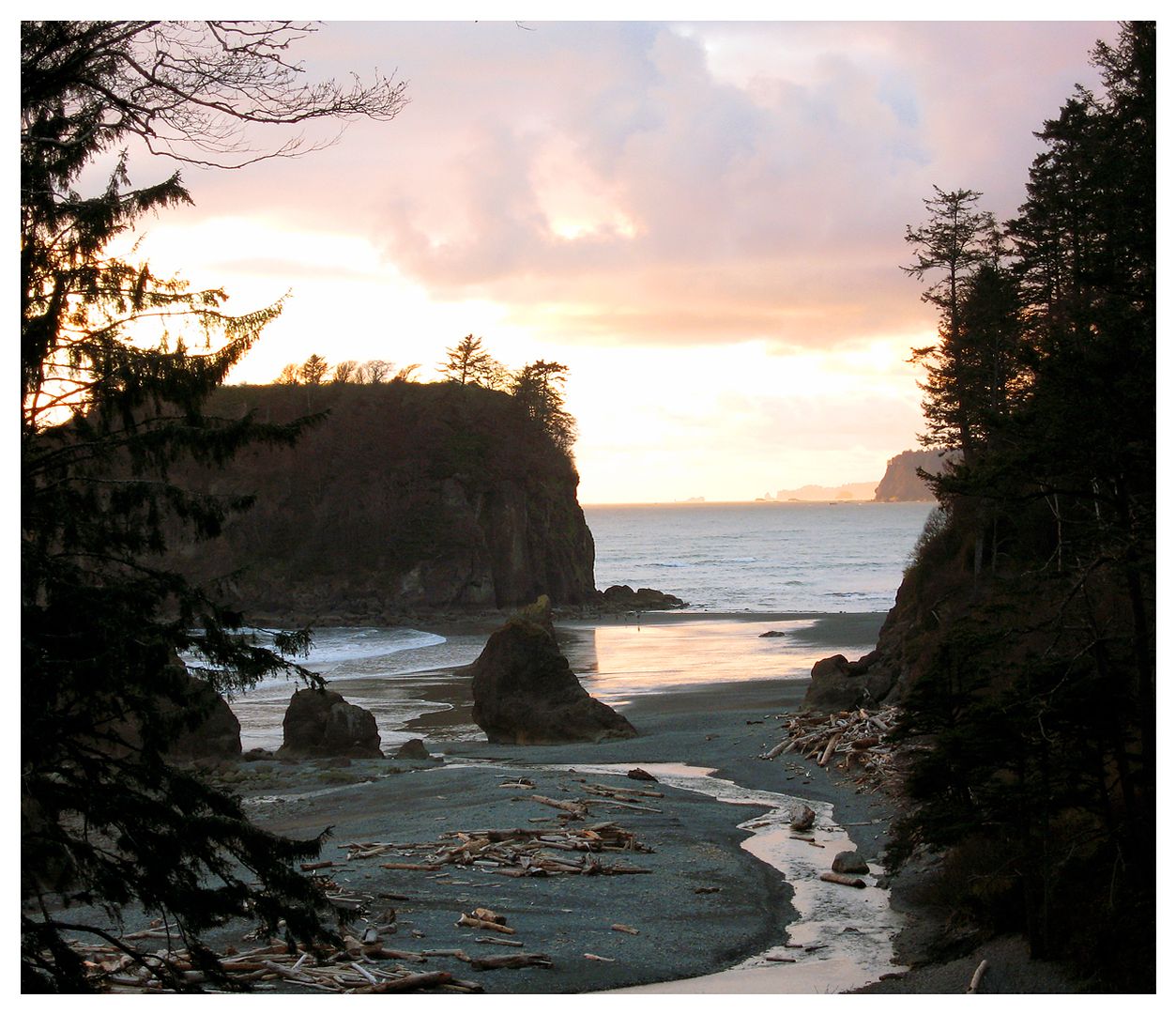
View of Ruby Beach, Olympic National Park
April 2008
[…] But the new effort goes further, to the question of how, and how much, the parks themselves must change to attract a fundamentally different audience. Wireless access, for example — still nonexistent in much of the Park Service universe — could divide older park visitors from minorities and young people, the so-called millennial generation, who want to share the experience live in social media with their peers.

'Boomers maybe want to get away, and millennials want to be connected; that changes how you use the space,' said Laura Swapp, REI’s director of diversity and inclusion. Music events could be another potential generational dividing line — peace and quiet versus entertainment — but would also draw the demographic the Park Service is after, Ms. Swapp said."

Here's hoping Jay-Z and Lady Gaga never perform on stages in Yellowstone or Yosemite.

Although I, too, would like to see more cultural and racial variety on our parks' trails, further developing the parks with WiFi towers and concert venues would be a myopic and ultimately fruitless move. Few areas of the American landscape afford us with the opportunity to "tune in" by tuning out, and the National Park Service should not fundamentally alter its mission in an effort to appeal to younger and more diverse demographics.

Instead, the NPS needs to celebrate the conservation heroes of color -- Majora Carter and Van Jones, for example, as well as the growing number of African American and Latino NPS rangers -- thereby providing role models for today's youth. Most importantly, we need more programs that get urban kids into our parks, encouraging them to recognize that these tracts belong to them. It's possible that their time afield without phone calls, Facebook, and Reddit will stay with them, appreciated, even if they're less than enthusiastic about the mosquito bites.

Photo credit: Christopher Reiger, 2008

Sunday, July 28, 2013

Interview with Jaime Lakatos

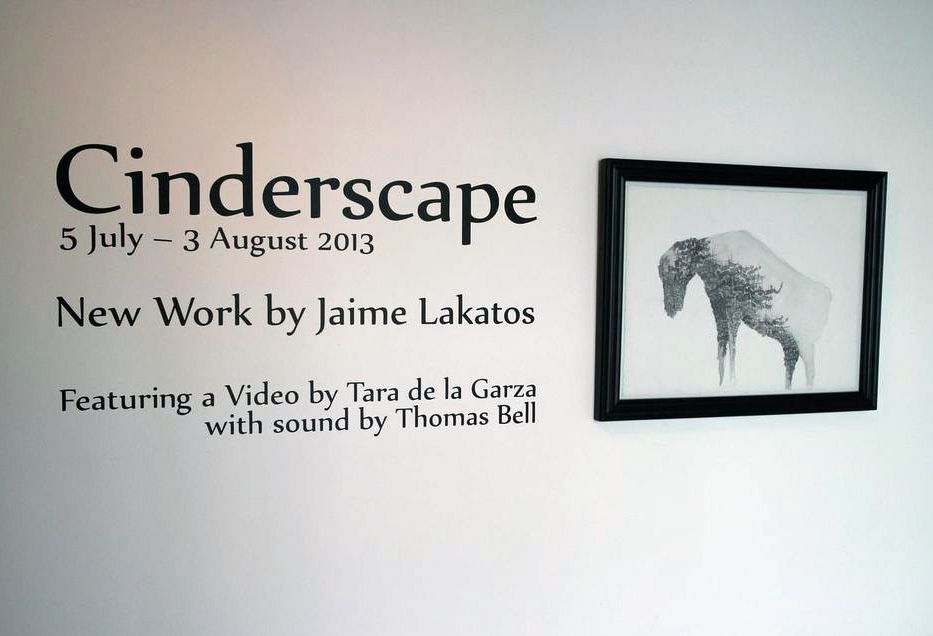
I had the pleasure of meeting artist Jaime Lakatos in Aggregate Space last week to chat with her about "Cinderscape," her solo show there. I encourage readers to visit Aggregate Space while "Cinderscape" is still on view (through Saturday, August 3). It's a very strong show by an artist I expect to see a lot more from in the coming years.

Jaime Lakatos
Installation view of "Chronic Remorse"
Watercolor and graphite on paper
14 x 18 inches
2013
Christopher Reiger: Are you from the Bay Area originally?

Jaime Lakatos: I grew up in New York, about an hour from the city, on Long Island.

Where on Long Island?

Port Jefferson, right where the ferry goes to Bridgeport.

So, you’re obviously interested in natural history. Where did that interest come from?

Well, you know, going to the Natural History Museum in New York. That was home base. I had an internship there before I started working in museums thirteen years ago, just making all the architectural models for the new Hall of Ocean Life. Also, when I was in school at RISD, I did a 6-month stint with Kiki Smith. My work was a lot more human body based at the time, and its gradually evolved. It was about parasites in the human body, then animals and humans, and now it’s just animals!

Tuesday, November 27, 2012

Heide Hatry's Provocative Flowers

Heide Hatry is not a household name, but the New York-based German artist's reputation is blossoming. She has smartly positioned herself at the intersection of the art world and popular culture and, as a result, is of particular interest to me, convinced as I am that the fine arts need mass reach (if not necessarily mass appeal -- see Thomas Kinkade) in order to play the vital cultural role they're intended to.

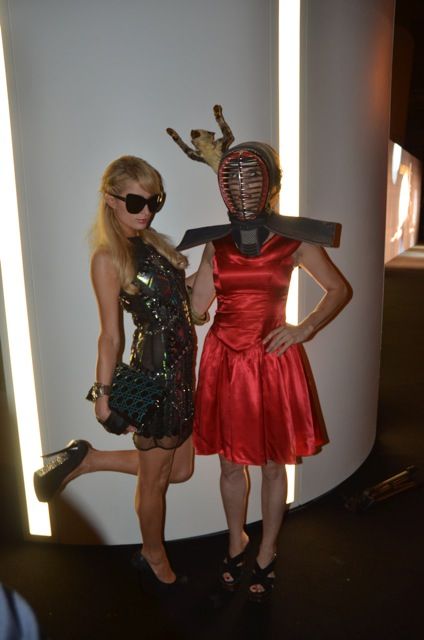
Heide Hatry, right, with Paris Hilton at the Guggenheim Museum
In September, Hatry performed "Schrodinger's Cat" at Lady Gaga's Guggenheim Museum perfume launch. Although Gaga's arty public appearances and carefully cultivated persona evidence how readily pop culture co-opts and/or draws inspiration from the fine arts, most people view Gaga as a pop star, not an artist. Hatry, on the other hand, is always identified as the latter, so when she is photographed rubbing shoulders with the likes of Paris Hilton or her work is written about by the scientist and popular writer Steven Pinker, I'm heartened. The art world isn't usually so accessible.

Naysayers might dismiss Hatry as the art world equivalent of a shock jock, insisting the popular attention she has received is only the result of her pushing our buttons. Certainly provocation plays a part, but Hatry has so far managed to balance titillation with thoughtful questions. (Arguably, Damien Hirst managed to do the same for a time...before he jumped the preserved shark.)

Wednesday, October 17, 2012

David Tomb's "Grand Birds"

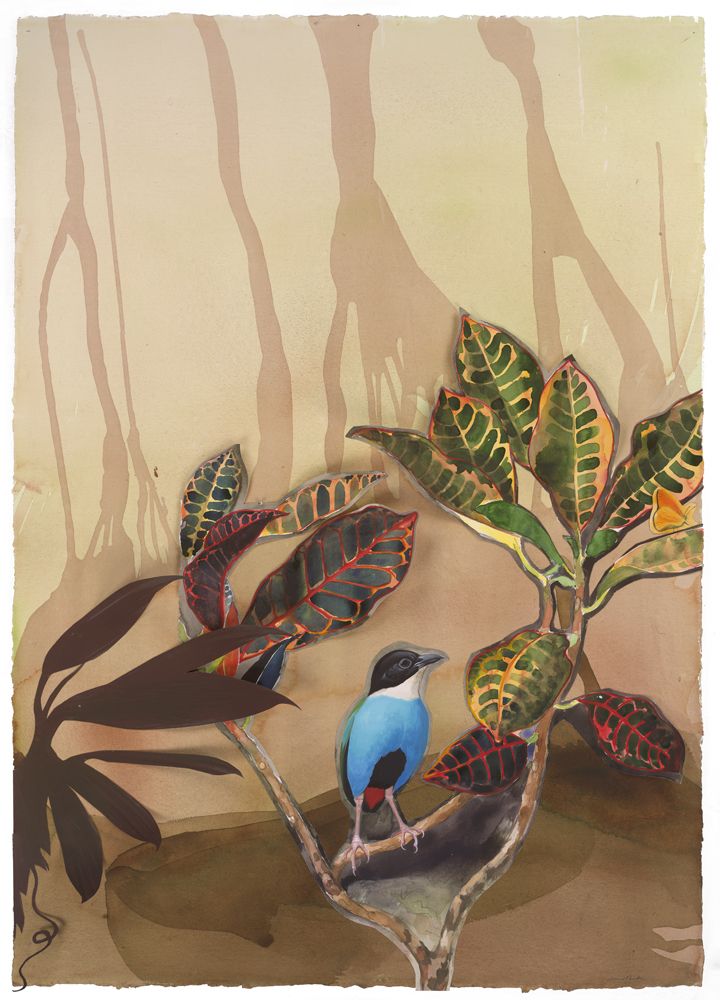
David Tomb
"Azure-breasted Pitta"
2012
Painted papers with mixed media and partially pasted and or completely pasted on paper with mixed media
42 x 30 inches
"Grand Birds of the Philippines," David Tomb's current solo show at Electric Works, is deserving of a thoughtful review. Disappointingly, my writing time is limited this month and I can provide only a few observations.

Wednesday, September 12, 2012

Platte Clove Residency: Encounter On Devil's Path

Devil's Path Trail; Catskills; NY; July 2012
I value solitude, but prefer not to hike alone. In the event of an injury, it's always better to have a companion. Moreover, since moving west, I've learned that even an ambitious mountain lion is unlikely to consider two or more humans fair game. Simply put, a duo or small group is afforded greater peace of mind. Sometimes, though, in order to take advantage of a window of opportunity, hiking solo is the only option.

Frankly, as I set out from the Platte Clove cabin on my first morning in the Catskills, safety concerns were far from my mind. I'm a confident hiker and I was excited to explore the 7.5-mile route I'd plotted the night before. My planning, though, had been cursory. I didn't realize that Wikipedia describesthe longest segment of my loop as "the toughest hiking trail in the Eastern United States." (In retrospect, I should have been clued in to the trail's difficulty by its name, Devil's Path.) I also shrugged off wildlife precautions. Though they may be the region's namesake, mountain lions were extirpated from the Catskills by the early 20th century; American black bears, however, are plentiful, and regional trail guides encourage hikers to wear bells and to talk at a normal volume so as to alert the animals of their presence. That's good advice, but amateur naturalists like myself shun bells and, when on trails, frown upon extended conversation. We don't go into the woods or up mountains for a constitutional. We go to see other animals, be they birds, porcupines, snakes, squirrels, or bears, and the less noise we make, the more creatures we're privileged to see.

Thursday, August 16, 2012

Platte Clove Residency: Coastal Differences

View of Devil's Path Trail; Catskills; NY; July 2012
Five years ago, while traveling in South America, I met a young woman from the West Coast of the United States. After the trip, we corresponded for a while, and she related news of her move from southern California to New England. An outdoorsy sort, she prioritized exploration of the parks in her new neck of the woods, but she wrote that the eastern forests unnerved her. During the summer months especially, they seemed dense and suffocating, a patchwork of green that closed in around her.

At the time, her observation amused me. Having grown up on the East Coast, I was at home in the mixed deciduous and pine forests of eastern North America. By contrast, the Endor-like redwood and sequoia forests of the Pacific coast and the mixed coniferous forests of the continental divide and the American Southwest, environments in which I'd had little or no experience but with which my friend was very familiar, seemed otherworldly to me.

Friday, August 10, 2012

Platte Clove Residency: John Muir and the View From the Precipice

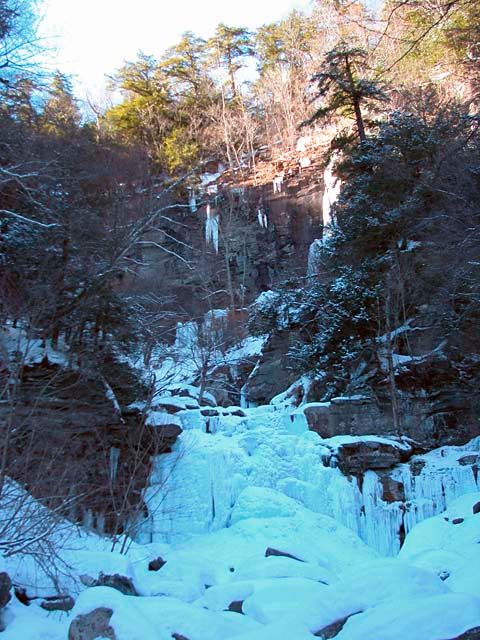
Winter view of Platte Clove's Bridal Veil Falls;
Catskills; NY
“Many people have been killed after falling and sliding off the edge. Especially in areas where there are pine needles. Dangerous conditions exist in many locations. The number of deaths over the years is staggering. Be overly cautious when in this region, and do not take un-necessary risk.”

- “Upper Platte Clove” page of Catskill Mountaineer website
I hesitated before deciding to investigate the unmarked spur of the Platte Clove Nature Preserve's Plattekill Falls Trail. Having recently read a bit about the geology and topography of the Catskill Escarpment, I knew that the preserve is located near the top of a deep ravine that tumbles suddenly down and eastward to meet the Hudson Valley (clove is the Dutch word for a mountain gorge). I’d also learned that each year a handful of foolhardy or unlucky hikers fall to their deaths on Platte Clove area trails. An online trail guide I’d browsed prior to the residency urged hikers to be “overly cautious.” Nevertheless, once I’d stepped off the main path and advanced a few steps down the spur, I was self-assured; I wouldn’t be one of 2012’s casualties. Prudent types like me don’t fall off cliffs.

Wednesday, July 25, 2012

Platte Clove Residency: Some Remove

Plattekill Falls; Platte Clove Nature Preserve;
Catskills; NY; July 2012
On the first afternoon of my residency at Platte Clove, after settling into the cabin and familiarizing myself with local trail maps, I decided to explore a short path that begins a few steps from the cabin's porch and winds its way down one of the valley's uppermost gorges to Plattekill Falls. It was a lovely reintroduction to the Catskills. Late afternoon sunlight filtered through the mixed forest's overstory, unevenly illuminating a floor decorated with eastern hemlock cones. Hidden from view in the canopy above, red-eyed vireos ceaselessly repeated their lilting questions.

Tuesday, May 01, 2012

"Giving Witness"

Common Snapping Turtle; Main Road; Everglades National Park; October 2011
I originally posted the above photograph of a common snapping turtle at the edge of the main road in Everglades National Park in October 2011, while I was an AIRIE program participant.

I thought of the turtle portrait when I read Ted Levin's informative and compelling "The Staying Power of Snapping Turtles," published in the March/April 2012 issue of Audubon Magazine.

The selection below emphasizes the fact that Chelydra serpentina is an elder member of our extended fauna family.
"The snapping turtle family, Chelydridae, evolved in North America and has haunted our wetlands almost unchanged for nearly 90 million years. Ancestors spread to Eurasia about 40 million years ago and then disappeared from that continent in the late Pliocene, about two million years ago. Chelydrids have been sequestered in the Western Hemisphere ever since, which makes them among our truest and oldest turtles. They were present when dinosaurs lived and died, and had been laying round, white, leathery eggs in sandy loam and glacial till for millions of years when the first Amerindians wandered over the Bering Land Bridge. Snapping turtles have witnessed the drift of continents, the birth of islands, the drowning of coastlines, the rise and fall of mountain ranges, the spread of prairies and deserts, the comings and goings of glaciers."
When I think in terms of the life of a species (rather than that of an individual representative), my pulse slows and I'm suddenly calm....and deeply appreciative to be a part of so grand an experience.

Photo credit: Hungry Hyaena (Christopher Reiger), 2011

Thursday, February 23, 2012

A "Murky, Mushy Squishyness"

Allison Gildersleeve
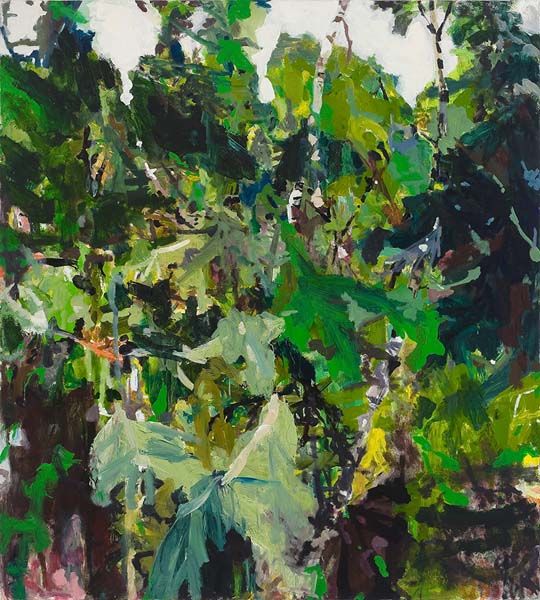
"Giants"
2011
Oil and alkyd on canvas
60 x 54 inches

Last week, I observed that Kota Ezawa's animated video, "City of Nature," "mov[es] from pastoral visions [...] to more abstract, riotous scenes of muted colors and shapes -- piles of leaves and tangles of branches that aren't at once recognizable."

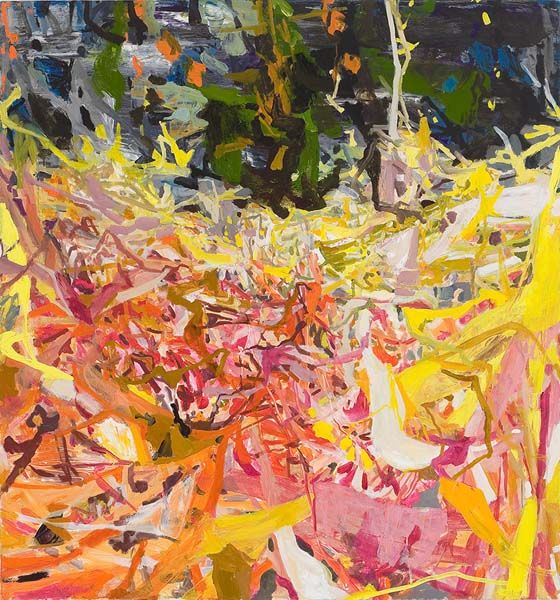
Allison Gildersleeve is currently exhibiting similarly "riotous" visions of nature in "Let Me Show It To You Unfixed," at Asya Geisburg Gallery, in New York. From the press release:
"Gildersleeve starts with the ubiquitous and the known, and ends with the deliriously unfixed. All we are left with are discrete moments of seeming understanding and placement, and open-ended wandering. Instead of fixity, paint's murky mushy squishyness reigns victorious."
Some of Gildersleeve's paintings are too murky and squishy -- these lose the dynamic tension between subject and rendition -- but her best paintings crackle with energy, vigorous hybrids of paintings by (the undersung) Amy Talluto and Cecily Brown. Plus, Gildersleeve has one of the coolest surnames in contemporary art (and that's fact, not opinion!).

Based on the gallery reproductions, I've included images of the show's two strongest paintings here.

Allison Gildersleeve
"Candyland"
2012
Oil and alkyd on canvas
58 x 54 inches
Image credits: Allison Gildersleeve images "borrowed" from Asya Geisberg Gallery website

Tuesday, February 14, 2012

Review In Brief: Kota Ezawa at Haines Gallery

Kota Ezawa
Still from "City of Nature"
2011
DVD, 4 minutes
Edition of 10
Kota Ezawa's rotoscoped animations of the O.J. Simpson verdict (2002), John F. Kennedy's assassination (2005), and the 2004 NBA "Malice at the Palace" brawl (2008) garnered the artist critical accolades, and deservedly so. Still, I'd wondered how effective Ezawa's stylish technique would be were he to reference less dramatic or famous footage. "City of Nature," originally commissioned for outdoor installation in New York City's Madison Square Park but currently on view at Haines Gallery, provided me with an answer.

Tuesday, January 24, 2012

Oh, Starlings!


A few months ago, a friend shared the above video with me. You might have seen or read about it before; it went "viral" late last year. The two friends who appear in the clip are treated to an intimate encounter with a large murmuration, or flock of European starlings. Murmurations of such substantial size are natural phenomena that, no matter how familiar, retain their capacity to inspire wonder, even awe. As one, the birds sweep and dance in an astonishing and fluid choreography; the rush of their wingbeats and many bodies pushing through the air produces a sound that accounts for the name. Because the audible component of a murmuration is impressive in its own right, I wish a version of the video were available without the hokey music, but the giddy joy that the canoeing friends experience is palpable, especially near the short film's end, when one of the women looks at the camera with marveling, wide eyes, and they both begin to laugh.

Friday, January 13, 2012

Big Sky Country

Christopher Saunders
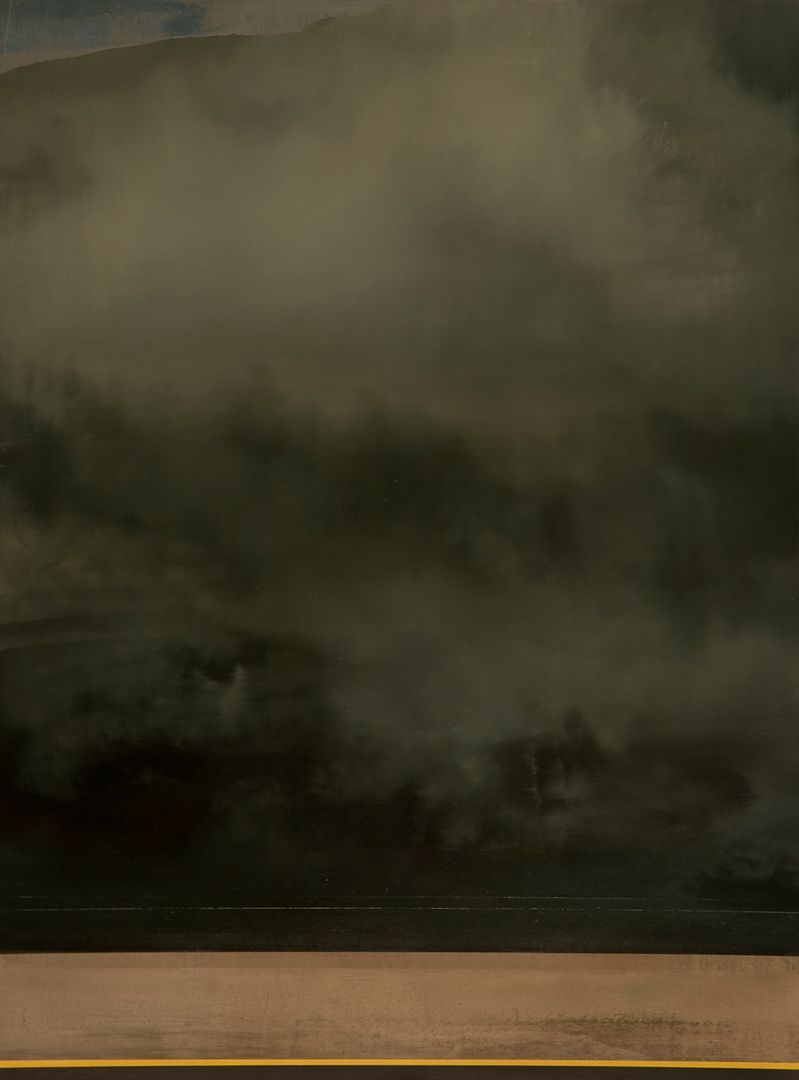
"Whitenoise no. 1"
2008
Oil on linen
24 x 18 inches

In a 2009 post about painter Christopher Saunders' "Whitenoise" series, I recounted philosopher Arthur Schopenhauer's hierarchy of aesthetic experience and connected it to Saunders' work.
"In his volume The World As Will and Representation (1818), Schopenhauer elucidated a scale of aesthetic experience. At one end of this spectrum, he described the 'Feeling of Beauty' as 'Light...reflected off a flower. (Pleasure from a mere perception of an object that cannot hurt [the] observer.)' At the other end of the spectrum, the philosopher positioned the 'Full Feeling of Sublime' and the 'Fullest Feeling of Sublime.' These categories are described, respectively, as 'Overpowering turbulent Nature. (Pleasure from beholding very violent, destructive objects.),' and 'Immensity of Universe's extent or duration. (Pleasure from knowledge of observer's nothingness and oneness with Nature.)'

Sunday, November 27, 2011

Elisheva Biernoff's "Inheritance"


Elisheva Biernoff
"Inheritance"
2010
80 slides of endangered wilderness areas projected onto mist from a humidifier housed in a plywood and fabric enclosure

Environmental historian William Cronon argues that "only people whose relation to the land was already so alienated could hold up wilderness as a model for human life in nature, for the romantic ideology of wilderness leaves precisely nowhere for human beings actually to make their living from the land." I recalled Cronon's incisive critique of wilderness ideology as I pondered artist Elisheva Biernoff's "Inheritance," a compelling installation included in Eli Ridgway Gallery's recent group show, "Better A Live Ass Than A Dead Lion."

"Inheritance" was installed in a dark side gallery on Ridgway's lower level. A wall-mounted, carousel slide projector cast images of "endangered wilderness areas [...] onto mist from a humidifier housed in a plywood and fabric enclosure." The humidifier's fog billowed out of a television-sized opening cut into the plywood, and the projected photographs reflected by the haze were sometimes -- for an instant, when the mist was just so -- recognizable as landscapes, but rarely as specific environments or locations. Without the artist's accompanying list of "disappearing places," viewers couldn't know they were looking at Alaska's Tongass National Forest, Florida's Everglades, Brazil's Pantanal, China's Gobi Desert, or another of nearly 80 imperiled landscapes.


Elisheva Biernoff
"Inheritance"
2010
80 slides of endangered wilderness areas projected onto mist from a humidifier housed in a plywood and fabric enclosure

Biernoff's installation, which was also included in ProArts Gallery's 2010 "2 X 2 Solos" exhibition program (and, by virtue of its strength, will likely be a part of future exhibitions), is luminous and its effect almost ethereal, but unlike the meditative Light and Space works of James Turrell or Doug Wheeler, Biernoff's installation doesn't provide opportunity for reverie. The transitions between the images are abrupt, and marked by the noisy, mechanical advance of the slide carousel. Ka-jenk, Ka-jenk. Just as we begin to discern the vision roiling in the mist -- 'Is that a jungle? Perhaps a swamp?' -- we're jarred from our musing. Ka-jenk, Ka-jenk. Again, we endeavor to interpret the play of light and color in the vapor, and again: Ka-jenk, Ka-jenk! A contemplative inclination is foiled by the machine's relentless progress, and there's sly humor in Biernoff's frustration of our stubborn need to identify and classify; viewers can see the specters in the mist, but can't make much (if any) sense of them. Even so, we'll continue to plumb the rolling fog for clues.

Our ancestors assigned supernatural qualities to fluid media. They scried smoke to portend future events and viewed it as a vehicle of conveyance, capable of carrying the essence of a sacrifice to the god or spirits of a people. In "The Wizard of Oz," the face of the eponymous wizard appears to the protagonists in a cloud of reddish smoke, causing them to tremble in awe. Seeking a similar experience of wonder, many of the people who visit wilderness areas do so to behold nature's majesty. Their language is often reverent; they speak of the sublime and the transcendent. But what is a wilderness area, exactly? According to the United States Wilderness Act of 1964, wilderness is land that "generally appears to have been affected primarily by the forces of nature, with the imprint of man's work substantially unnoticeable [...that is] designated for preservation and protection in [its] natural condition." Unfortunately, the "imprint of man" is not always readily observable (consider the nuanced affects of climate change or the irradiated, if picturesque Red Forest that surrounds the decommissioned Chernobyl Nuclear Power Plant). More problematically, as Cronon makes clear, the Wilderness Act definition sets man apart from "the forces of nature." This latter move is a Romantic, naive impulse. All habitats are interconnected; even protected landscapes are affected by activities outside their boundaries. Moreover, because many refuges, parks, and wilderness areas are disconnected from other undeveloped lands, the flora and fauna living in these protected areas risk genetic isolation and face an increased risk of local extinction (e.g., the Florida panther and many other critically endangered species). Outside of the Wilderness Act and our collective imagination, then, there is no "original" or "virgin" landscape.

The dreamlike quality of Biernoff's installation is therefore appropriate. The notion of "wilderness" is as indefinite as the mirages the artist creates for us with light and vapor. Some fictions, though, are useful. If the dream of Eden compels us to be better stewards, it's all for the good. Yet Biernoff reminds us that we're more likely to avoid the pitfalls of ideology if we recognize wilderness is an illusion, that the specter before us is manufactured using a humidifier and an outmoded piece of technology. The artist presents us with the wizard's face, but also reminds us of the man behind the curtain.

Elisheva Biernoff's "Inheritance" was on view October 8 - November 5, 2011, at Eli Ridgway Gallery (172 Minna Street, San Francisco).


Elisheva Biernoff
"Inheritance"
2010
80 slides of endangered wilderness areas projected onto mist from a humidifier housed in a plywood and fabric enclosure

Image credits: "Inheritance" installation photographs, courtesy Eli Ridgway Gallery

Note: Due to carelessness, this write-up was originally published as a "Review In Brief." It's longer than the pieces in that series, however, and is no longer associated with it.

Wednesday, October 05, 2011

The Bike Tree


After being featured in the September/October 2011 issue of Sierra, the Sierra Club's magazine, the above photograph of a pine tree that has grown around a child's bicycle has been making Internet rounds.

Berkeley Breathed, a one-time hero of mine, apparently created a children's book about this very "bike tree." I'll have to pick up a copy of Red Ranger Came Calling.

Image credit: Photo by Ethan Welty/Tandem

Saturday, September 24, 2011

Acknowledging Exceptionality

"As glass office and condominium towers have proliferated in the last decade, so, too, have calls to make them less deadly to birds. The San Francisco Planning Commission adopted bird-safety standards for new buildings in July, and this month that city’s Board of Supervisors will vote on making it law. Legislation is pending in Washington that would require many federal buildings to incorporate bird-friendly designs. The United States Green Building Council, a nonprofit industry group that encourages the creation of environmentally conscious buildings, will introduce a bird-safety credit this fall as part of its environmental certification process, called LEED."
- "A City of Glass Towers, and a Hazard for Migratory Birds," New York Times, September 14, 2011
I enjoyed reading "A City of Glass Towers, and a Hazard for Migratory Birds," a recent New York Times article about bird-building collision mortality. Lisa Foderaro's piece is a hopeful account of how a confluence of activism, technology, and regulation can improve the lot of animals, especially in cases where a particular species has been adversely affected by human development.

The comments that follow the article, however, are predominated by doom-and-gloom attitudes. A representative survey follows:
All that matters are people and every little whim. We're a doomed species.
-Karma Every Moment, NY, NY

The people who tell us that evolution and climate change are just unproved theories have no idea how life formed this planet since its inception and no understanding whatsoever of the role of extinction in maintaining the climate within habitable bounds when any one plant or animal breaks the equilibrium. They convinced me long ago that there is no future for my own children.
-Steve Bolger, NY, NY

Yet another example of the consequences of man's selfish and destructive behavior. So sad.
-agetibi, Carrboro, NC
No wonder over 50% of Americans polled by The Nature Conservancy caricatured environmentalists as preachy reactionaries. In the words of the Conservancy's Chief Scientist, Peter Kareiva, most people see members of the environmental movement as "misanthropic, anti-technology, anti-growth, dogmatic, purist, zealous, exclusive pastoralists." Unsurprisingly, this negative stereotype has led to a dwindling of the movement's ranks.

I consider myself an environmentalist, but I distinguish between preservation and conservation (placing myself in the latter camp) and, more critically, I believe that environmentalism needs to embrace a "can do" attitude. If the majority of my fellow Times readers identify as environmentalists, their comments suggest that they're a well-intentioned pox. Wholesale condemnation of our species is as wrongheaded and malignant as exclusive glorification. In order to decry humanity as a "selfish and destructive" brute, one must stubbornly overlook all the evidence to the contrary. I wrote about such oversight in an essay included in the catalog for "A Live Animal," a group show that Selene Foster and I co-curated at Root Division.
"Although 'deep ecologists' and animal rights activists bemoan conservation approaches that prioritize human interests, the fact remains that human beings are exceptional animals. Skeptics and naysayers need only consider our species' biological and imaginative success to find evidence of our unprecedented faculty. But of all our remarkable features and feats, among the most notable examples of humanity's anomalous nature is our interest in and empathy for other species. Although there is growing scientific agreement that some other species possess self-awareness and even a capacity for empathy -- whales, dolphins, elephants, and our ape relatives are especially interesting in this regard -- humans are the only animal striving to learn about and better the lot of other creatures and environments. It's true that we often prioritize short-term, anthropocentric interests and it's also clear that reckless human activity has contributed to dramatic climate change and the ongoing Holocene extinction (our geological epoch's staggering loss of biodiversity), but conservation efforts and legislation, as well as our burgeoning interest in sustainability, speak to another, more hopeful human impulse; we possess an innate ability to see ourselves in other animals and, in turn, to recognize our capability as their stewards and representatives."
In short, we're not all bad. If you believe that we are, then you're guilty of sapping our species' potential. Christopher Cokinos is excellent on this point. I've quoted his terrific "Consolations of Extinction" essay before; I'll do it again.
"Too much grief for the world means less energy to help it along. [When] you find yourself free of the poisons that too much angst can cultivate, then something marvelous happens. You can sense how very old the planet is, how very old life and death are, and you can keep going on, you can keep doing the work you do in this universe, feeling despair when you feel despair, feeling - amazing - joy when you feel joy."

Sunday, September 04, 2011

"Secret Garden"


Christopher Reiger
"living, moving, in the space between"
2009
Gouache, watercolor, and marker on Arches paper
15 x 14 7/8 inches

Four paintings and drawings of mine from 2010 and 2009 are included in "Secret Garden," a group exhibition opening later this week at Denise Bibro Gallery, in New York City.

From the exhibition's press release:
"Nature plays the perpetual muse for the six contemporary artists in this exhibition. Featuring work by Roberley Bell, Peter Bynum, Sara Crisp, Erica-Lynn Huberty, Ysabel Le May, and Christopher Reiger, each artist offers their own innovative, distinctive response to the sublime wonder of the landscape, flora, and fauna, inviting the viewer into their own secret garden. [...] Contemplating man's mutable conception of nature and our place in it, Christopher Reiger's works on paper incorporate scientific and mathematical symbols, hieroglyphs, animals, and plant life. Mysterious equations are drawn, creatures peer out from unlikely vegetation, and the garden becomes curiouser and curiouser."
I won't be in NYC for the exhibition, unfortunately, but if you're in that neck of the woods, please visit the show.

Denise Bibro Fine Art
529 West 20th Street, #4W
New York, NY 10011

Exhibition dates: September 8 - October 8, 2011
Opening reception: September 15, 2011; 6-8pm

Monday, June 27, 2011

Announcing "A Live Animal" Exhibition, Catalog, and Program

It's a thrill to announce that "A Live Animal," a large group exhibition that artist Selene Foster and I are co-curating, will be on view at San Francisco's Root Division in July 2011.

In addition to the opening reception for the exhibition (July 9), we will host an Evening of Presentation and Performance (July 19) in the new ODC Theater space, located just next door to Root Division. The EoPP features presentations relevant to the theme of "A Live Animal" by some of the participating artists, as well as scientists, dancers, and others.

I'm biased, of course, but "A.L.A." is a very strong show, and the sort of cross-disciplinary fare that I believe the art world needs more of. If you're in the Bay Area, please visit!
+++++


Detail of "Sharks," by Maria Lux

"A Live Animal" explores the relationship(s) between contemporary man and other animals, with a particular focus on the different lenses, be they mystical, scientific, or philosophical, through which we view other species.

ARTISTS:
Brandon Ballengee, Jeremiah Barber*, Joianne Bittle, Bethany Carlson, Karl Cronin, Donald Farnsworth, Todd Forsgren, Dana Harel, Nicole Jean Hill, Michael Kerbow, Anne Klint, Maria Lux, Jon Rappleye, Shelley Reed, Steven Rubin, Susan Silas, Deborah Simon, Sarah A. Smith, Kate Stirr*, Youngsuk Suh, Ryan Thompson, James Wendell, Gail Wight, and work from the Endangered Species Print Project
*Root Division Resident Artist

Opening Reception: Saturday, July 9, 7 to 10 pm
Exhibition Dates: July 7 - 30, 2011
Gallery Hours: Wednesdays - Saturdays, 2-6 pm (or by appointment)

AN EVENING OF PRESENTATION AND PERFORMANCE:
July 19, 2011, 7:30-9:30PM
ODC Theater, 3153 17th Street, SF, CA

EoPP PRESENTERS:
Chris Black: "Extinction Burst (last dance, last chance): A reanimation of lost movement"
Karl Cronin: "Kinetic Empathy"
Jeremiah Jenkins: "The Hunt"
Brian Null, Ph.D., "Examination of Animals, Examination of Self"
Georgeann O'Brien, Ph.D.: "Direct observation of sensory neuron regeneration in live zebrafish"
Christopher Reiger: "Introducing the Endangered Spcies Print Project"
Philip Ross: "Eating Bugs for Fun and For Profit"
Jon Sack, Ph.D.: "Bioelectric Venom"
Gail Wight: "Animal Animosity"

For more information about the "A Live Animal" EoPP, click here.

We're also producing a full-color exhibition catalog that includes original essays by Selene, me, and artist/writer Michael McDevitt.

Monday, January 03, 2011

Karl Cronin's Experiencing Forms


Karl Cronin
"Populus tremuloides (Aspen)"
2009

In late November, I visited "Ecoarchive: Meditations on Time and Nature," a group show on view at Intersection for the Arts 5M, in San Francisco. All of the work included in the exhibition (on view through January 22, 2011) is intelligent and commendable, but I most appreciated Matthew Moore's video, "Lifecycles," Sam Easterson's video, "The Museum of Animal Perspectives," and Karl Cronin's video sampler of his "Somatic Natural History Archive."

I spent most of my time with Cronin's project. For his "Somatic Natural History Archive," Cronin aims to "document with his own body representational expressions of 10,000 U.S. plants and animals," an undertaking that the artist estimates will take 50 years to complete. To date, Cronin has made "expeditions" to Nashville (TN), Santa Fe (NM), Yosemite (CA), Raleigh (NC), Plainfield (MA), and the Grand Canyon, and he's earned the well-deserved support of the Santa Fe Art Institute, Movement Research, and the Puffin Foundation. The documents of his "representational expressions" are archived in the SNHA Catalogue, each labeled with the observed species' Latin name and common name (e.g., "Populus tremuloides (Aspen)").


Karl Cronin
"Awaiting identification"
2009

With so very many plants and animals to imitate (only 66 of the 10,000 have so far been cataloged online), it's not surprising that Cronin's earnest attempts are uneven; generally, I find his embodiment of plants more intriguing and successful than his animals, but even the less-realized "expressions" made me smile, giddily impressed by the artist's wonderfully quixotic efforts.

Importantly, however, Cronin's endeavor is not mere whimsy. The project may seem simple enough, but I'm certain that it provides the artist with a fundamentally new understanding of (and relationship with) the creatures he studies. Cronin first observes the plant or animal subject, then he perceives it physically, with his body. Watching the artist sway and lean with the breeze in a stand of a grass (an as yet unidentified species, perhaps related to switchgrass), it occurred to me that Cronin is something of a latter-day shaman. "Shaman" is a term abused by new-age prophets and their ranks of well-intentioned, but ill-informed followers, but the philosopher and cultural ecologist David Abram is one of a handful of writers who have given shamanism the thoughtful consideration that it deserves. As I watched Cronin channel a heron, Abram's definition of magic came to mind.
"We are human only in contact, and conviviality, with what is not human. [..] Magic is participating in a world of multiple intelligences with the intuition that every form one perceives - from the swallow swooping overhead to the fly on a blade of grass, and indeed the blade of grass itself - is an experiencing form, an entity with its own predilections and sensations that are very different from our own."
In essence, magic is empathy with other "experiencing forms"; it's communion with other facets of the animate world. Happily, by documenting his work with video, Cronin allows the viewer to participate in the magic. I'm grateful for that.


Karl Cronin
"Caelifera sp. (Grasshopper)"
2009

Note: As a proud natural history geek, I was disappointed that Cronin titled the last of the three videos above "Caelifera sp. (Grasshopper)." In fact, the insect that Cronin imitates in this video is actually a katydid, a species more closely related to crickets than to grasshoppers. Still, while I presume Cronin will make the correction when he adds this video to the SNHA Catalogue, I don't envy him the task of trying to secure a definitive ID on many of the species he works with. Without the help of a entomology expert, he'll be hard pressed to determine the species of katydid in the video above.)

Image/artwork credit: all videos, courtesy Karl Cronin