Showing posts with label animal rights. Show all posts

Tuesday, March 03, 2009

Trusting Our Gut


"Sunday Cockfight at Madrid"
Wood engraving, originally published in Harper's Weekly
September 1873

Nature teaches beasts to know their friends.
-"Coriolanus" (Act II, Scene I), William Shakespeare
Human beings are exceptional among the social beasts in that our moral and ethical values are forever evolving. Educated, progressive individuals today consider all humans inherently equal, irrespective of race, sex, religion or nationality. Unfortunately, prejudice doesn't die easy, and bitter conflict remains a fact of life. Still, cultural anthropologists note that humanity has with time extended its ethical embrace from family to tribe, tribe to region, region to nation, nation to race, and race to species. In other words, bigoted outliers excepted, humanity is becoming ever more compassionate. It is notable and lamentable, however, that our animal brethren remain largely ignored. Nevertheless, I remain hopeful that humanity will transcend anthropocentrism.

My optimism is muddied, however, by articles like "Exhibition with Disturbing Videos of Animals Leads to Protests in Italy." This NY Times report deals with a controversial video installation by the French-Algerian artist Adel Abdessemed. In a matter of days, an Italian judge will determine whether or not the installation can be legally displayed in Turin. Abdessemed included two shocking videos in the installation: "Don't Trust Me," a loop documenting the sledgehammer slaughter of six Mexican farm animals; and "Usine," a video of scorpions, snakes, spiders, roosters and dogs fighting for human entertainment. Both videos were filmed in Mexico, where bludgeoning of "meat animals" is standard practice and animal fights are still legal.

Because Italian law prohibits animal fighting, the courts might fairly rule that "Usine" should not be shown to the public because it encourages illegal activity. But what of the bludgeoning in "Don't Trust Me"? Can a court rule that video documentation and display of a common practice violates the law?

In many countries, sledgehammers are still the primary method of stunning and killing an animal before it is butchered. The cow, horse, goat or other "meat animal" is roundly struck with the heavy hammer on the cranium. If the initial blow is misplaced, the animal will be struck again. In the United States, the Humane Slaughter Act stipulates that a captive bolt pistol is used to drive a pressurized bolt into the animal's brain. The pistol is more consistent than a sledgehammer, but the intended effect is the same.

Abdessemed's videos merely document a brutal step in the omnivore's food cycle. He is not, then, as so many activists assert, "someone who mistreats animals." Rather, he is someone who documents socially sanctioned mistreatment of animals.

Last year, vociferous protest from animal rights groups shut down a showing of "Don't Trust Me" at the San Francisco Art Institute. According to the San Francisco Chronicle, the "Art Institute canceled the panel discussion and the exhibition...[due to] unnumbered threats of violence from animal rights activists and possibly from others." Many of these outraged, threat-making individuals did not have all the facts; some of them even insisted that the artist killed the animals himself, in the name of art. But a comment by a reader of Ingrid's San Francisco Blog makes clear what most upset San Franciscans.
"I don’t want to see it (I prefer my meat in nice little packages in the store freezer), and if it is too disturbing or shocking to the sensibilities of the community, then the community should ask that the exhibit be removed."
It comes as no surprise that people don't like to be disturbed or shocked, but the commenter's preference for "meat in nice little packages" is irrelevant; that nicely presented meat comes from a living animal that was killed for human consumption. By buying the packaged meat, the consumer is implicated in the "processing" of the animal. Moreover, if she denies her connection to the animal's life and death, the meat-eater engages in irrational and immoral thinking. Were the omnivores that called for the closing of Abdessemed's SFAI exhibition compelled by shame?

And what of the threat-making animal rights activists? Excluding the individuals that erroneously believed Abdessemed was "killing the animals for art," I don't see the sense in their wanting to close the SFAI exhibition. Shouldn't they want to promote it, instead? After all, "Don't Trust Me" is cousin to videos produced by People for the Ethical Treatment of Animals (PETA) and other animal rights groups that document inhumane slaughterhouse practices. PETA hopes that these videos will inspire outrage against the meat industry and encourage vegetarianism. Why should Abdessemed's videos upset this interest group?

My reaction to Abdessemed's work is like my response to Marco Evaristti's provocative installations and performances. I agree with their detractors: the work is generally "little more than a publicity stunt to generate buzz." But if buzz gets people talking about our contemporary moral dilemmas, is that cause enough to embrace the provocateur?

Image credit: ripped from Wikipedia

Wednesday, January 21, 2009

Sensation


The Chilean-born artist Marco Evaristti is best known for his 2000 work, "Helena." Inside Denmark's Trapholt Art Museum, Evaristti installed ten electric blenders, their power cords visibly connected to electrical outlets. He filled the blenders with fresh water and placed a live goldfish in each. Foolish, disturbed or sickly curious museum visitors might choose to turn on a blender, thereby taking the life of a goldfish. Two people did just that. Public outcry followed and law suits were brought against the artist and the museum.

When I first read about "Helena," I thought it a puerile stunt. Most artists, critics and viewers reacted similarly, but these condemnations and dismissals were perhaps what Evaristti sought. Because the piece attracted so much derision, "Helena" transformed a little known sensationalist into an international art circuit commodity.

In time, however, I forgot Evaristti's name...but I didn't forget about "Helena." Despite my initial censure of the work, the disdainful tone of those who condemned Evaristti forced me to revisit the controversy. After all, what had the artist or the museum director done wrong, really? Evaristti presented a scenario in which another person might harm the goldfish. He provided museum goers with the necessary tools to kill a fish, but he didn't encourage them to do so. Still, he was smeared by animal rights groups, religious organizations and artist collectives.

I believe that the outcry over "Helena" was so vitriolic because Evaristti positioned himself as a public moralist. The mirror was turned to face art viewers in a difficult moment, and we didn't like what we saw there. While I may not hold Evaristti's risky installation in high regard, it is the art world's angry response that worries me. Indeed, the protests and the criminal charges suggest that many people (perhaps the majority) lack faith in the moral fiber of their fellow man.

Do most people believe that ours is an innately murderous species? Do most of us feel that moral calculus is irrelevant when another person or power has pointed you to a certain, dark end? I can not (and do not) accept such pessimistic attitudes. If I were to hand you a frog and a bat, would you think it okay to play frog baseball? I doubt it. And what are we to make of the vast majority of automobile drivers, those of us that don't opt to direct our vehicle into pedestrians, bicyclists or road-crossing chickens?

As Evaristti put it, he aimed to create "a dilemma" in which people might "do battle with their conscience." Because the artist included no signs or other directives instructing museum visitors to turn on a blender or blenders, I do not believe that the fish killers could fall back on the Stanley Milgram defense; visitors were not "good Germans," recklessly obedient to some unseen authority. (Indeed, only two visitors have ever "flipped the switch," a nearly negligible minority of the work's many viewers/subjects.)

A more convincing criticism posits that the museum setting is one of institutionalized safety; visitors therefore feel that their turning on a blender will not, in fact, bring a goldfish to an untimely, gruesome end. This is a valid supposition, but I maintain that only visitors with a sick curiosity would cross that final threshold, committing to the loaded "What if I do this?" (Again, it is instructive that just two visitors went so far.)

Whatever you think of "Helena," Evaristti's most recent project ups the ante. The work is sure to generate plenty of negative publicity in the coming months...and, of course, that's exactly what the Denmark-based shock artist wants.

Thursday, December 07, 2006

The Whiteness of the Whale

"Is it that by its indefiniteness it shadows forth the heartless voids and immensities of the universe, and thus stabs us from behind with the thought of annihilation, when beholding the white depths of the milky way? Or is it, that as in essence whiteness is not so much a color as the visible absence of color; and at the same time the concrete of all colors; is it for these reasons that there is such a dumb blankness, full of meaning, in a wide landscape of snows- a colorless, all-color of atheism from which we shrink?...And of all these things the Albino whale was the symbol. Wonder ye then at the fiery hunt?

- Herman Melville, Moby-Dick
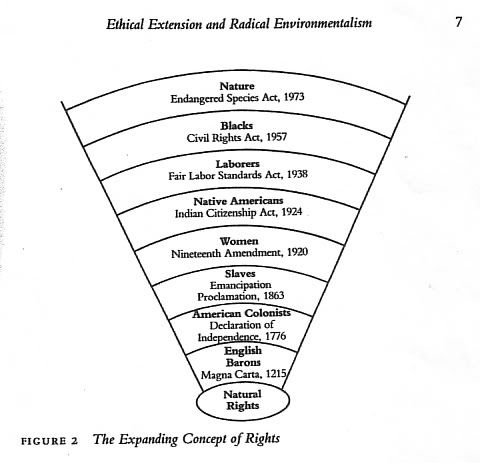
In a post entitled, "The Expanding Ethical Embrace" (March 2005), I expressed skepticism regarding Peter Joost's argument that humanity will adopt a moral code that grants other mammals, birds, reptiles, and even, eventually, bacteria, the same natural rights that we now reserve for ourselves (supposedly irrespective of race, sex, sexuality, or religion). I did not doubt the plausibility of Joost's prediction, but rather his assertion that this ethical evolution portended only happy returns. I wondered, if humans were to transcend the cruel machinations of biological determinism, wouldn't we, in effect, be killing ourselves with kindness? In Joost's neo-Eden, the human population would explode; the increased resource demands would inevitably lead to collapse (that is, if we didn't first find it in our reptilian spines to loathe "the other" as passionately as we have for time immemorial). Attractive though Joost's notion was, I remained ambivalent about the prospect.


Joost's prediction was recently called to mind when, reading Grist, an online environmental news journal, I stumbled upon a provocatively titled Gristmill thread initiated by Jason Scorse.  Many challenging questions are advanced in the dialogue generated by Scorse's "So, environmentalists support whaling?" Notable among them are:
- Is an environmentalist morally obligated to support animal rights?

- Are regulated, luxury hunts that fund conservation projects ethically or morally defensible?

- Are free enterprise and sustainable development mutually exclusive?

- Should the conservation and preservation camps be distinct from one another, promoting different agendas, or should they work together toward a compromised, common goal?
Scorse's answers to the above questions are 'Yes,' 'No,' 'Yes,' and 'Yes/No,' respectively. Yet any approximation of a complete answer to these questions requires some degree of ambiguity, and even contradiction.  Normally I find contradiction and ambivalence agreeable, because they edge closer to objective "truth" than any ideology might; in matters of environmental policy, however, the grey areas trouble me. Apparently, they trouble Scorse, too, as he jettisons nuance in favor of ideological certainty. Prompted to choose between ideology and reasonable pragmatism, I'm tempted to follow Scorse up the moral high road; the ideological path appears straight and true. But while moral certitude, the black hat/white hat conception of life and thought, is the path favored by activists and fundamentalists, I am made uncomfortable by it, particularly when it informs legislation.

Reasonable pragmatism, the preferred approach of post-Enlightenment thought, has its own problems, however. As Benjamin Franklin wrote of his vegetarian experiment(1), "so convenient a thing it is to be a reasonable creature, since it enables one to find or make a reason for everything one has a mind to do." Franklin's observation at once celebrates and skewers reason, revealing it to be a wholly relative enterprise. This chink in reason's armor is worrisome.

So what will it be? Are the complications and sacrifices of reasoned compromise better or more effective than ideology? Or do we have clearly defined "good guys" and "bad guys"?

Craig Nelson's recent biography of Thomas Paine serves as my subway reading these days, and I find the following observation relevant.
"Beginning with Franklin and Washington, every successful American leader would balance the pragmatic with the Utopian.  Where Franklin the master politician would be almost entirely pragmatic, Paine would be too fervidly Utopian in ways that would not just damage him financially, but imperil him physically... Paine would...always be too ardent with his religion of the lights, a Savonarola of reason and liberty, and as inept a political operator as any fervid Christian saint...The success or failure of any leader in U.S. history can be judged through his of her successes or failures at reaching the pragmatic Utopian paradox that remains at the heart of the American experiment."
Nelson's words ring true.  "The pragmatic Utopian paradox" is not uniquely American, but it is central to the American experience.  For confirmation, we need look no further than the glut of contemporary, progressive American politicians striving to develop a decidedly centrist track record, even as they contradict themselves (and their conscience) in doing so.  By contrast, it's easy to discard compromise and contradiction if you are a committed revolutionary, an individual willing to die for your cause, or a monkish loner operating in an intellectual/philosophical vacuum, as did Theodore Kaczynski.  Outside the D.C. beltway, ideologues are a dime a dozen, but exceptionally gifted ideological rhetoricians like Paine or King, Jr. make a sociopolitical impact only rarely.

Not surprisingly, many environmental activists are ideologues, Jason Scorse included.  To be fair, Scorse, a professor of environmental economics at the Monterey Institute, is not so much making a stump speech as he is asking a provocative question. From his "So, environmentalists support whaling?" post:
"I have tried to make what is essentially a straightforward case that environmentalism at its core is about respecting life and that separating this from our behavior towards individual living beings doesn't make much sense. Since many environmentalists reject this notion and insist that environmentalism only includes preserving biodiversity and promoting resource sustainability, this suggests that one of the defining elements of environmentalism no longer holds: an opposition to whaling...So are those who argue for the minimalist view of environmentalism willing to go on record in support of whaling and the killing of other advanced mammals?"
Money can do a lot in the way of protecting individual species and imperiled ecosystems.  Regulated hunting operations and animal farms, worldwide, generate substantial revenue, a healthy percentage of which is used to fund conservation measures.  For example, a buyer pays a tiger rancher (yes, they exist) an impressive sum - $40,000, say, sometimes much more - to obtain tiger parts for use in traditional Chinese medicines.  A substantial percentage of that price is then used for habitat preservation, conservation education, and tiger breeding programs.  It's a simple ethical equation; one animal's death results in improved species survival rates in the long-term (assuming that the habitat can be protected from the trespasses of our burgeoning human population). My short answer to Scorse's question, then, is 'Yes.' The more complete and complicated answer, though, leads down a rabbit hole of uncertainty.

To begin with, I find Scorse's moral framework - do unto your neighboring species as you would have done unto yourself - fundamentally agreeable. I'm troubled by the scalae naturae and other moral or physiological hierarchies. Because human life is, in my estimation, no more or less valuable than that of an earthworm (and, lest you mistake that statement for hyperbole, my inner ideologue assures you otherwise), the farming and killing of a tiger, no matter the result, is immoral. So, too, is the farming and killing for food of any animal species. In a truly enlightened world, then, we would witness a continued shift toward vegetarianism, sustainable consumption, and the extension of natural rights to other species. But the rate at which such values are adopted is of critical importance, and I feel Scorse is not at all pragmatic in his consideration of the real-world application of his moral imperative.  I fretted about this in the earlier post:
"From a strictly pragmatic perspective, morality is a denial of our existential [and by this I meant all species, not just human] sameness; like all other species, our principal drive is one of survival and propagation. Even our human urge to classify, as seen in the periodic table, clothing labels, and taxonomy, is a violent instinct, evolved to make us better able to ward off 'the other' and to flourish as hunter-gatherers, a lifestyle no longer suitable for our global, industrial species. [Therefore], it could be argued that [the] extension of human rights to all races, cultures, and creeds was but one more victory in our campaign to deny human nature.

But an inclusive, caring society, even if inconsistent, results in a population explosion and exaggerated life expectancies. Moreover, as our species’ requirements are increased, so are our demands on the environment. By embracing one another, we in fact make it more difficult for future generations to survive. When even more populations (in this case, other species) enter our moral and ethical peripheral vision, we will find ourselves facing a very interesting philosophical and pragmatic dilemma. Are we overloading of the circuitry?"
It seems clear that we would be "overloading of the circuitry," but there is a more immediate concern, one that does not bode well for Joost's expanding ethics: we have proven incompetent in our attempts to achieve parity among humans.

In the course of the Gristmill conversation, Scorse writes, "Thank goodness...humans aren't treated with the same level of abstract notions about 'sustainability' that you advocate that we subject every other living thing to."  Oh, but how we are! One need look no further than the morass of muddled litigation generated by today's vitriolic debates over abortion, civil rights, or assisted suicide to comprehend just how reluctant we are to treat fellow humans with the respect we reserve for ourselves and for our loved ones. As I wrote in March 2005, "one can barely imagine the ensuing cacophony when considering similar issues for sharks, birds, and turtles."

Ever since Homo sapiens adopted an agrarian lifestyle, we've been a top-down animal, a pyramid ladder of the very few haves and the countless have-nots.  I'm not altogether opposed to the felling of this pyramid in the name of populism and moral ideology (although, let's not kid ourselves punkers, anarchy ain't Utopia), but when similar tinkering and protest is extended to Nature, an entity of which we, as a species and complex-compound social beast, are but an insignificant part, we're not only risking collapse on a Mayan or Roman scale.  We're also gambling with the fate of the human species at large and, importantly, that of the many hundreds of thousands of species inextricably attached to us.  Those who herald the imminent expansion of our ethical embrace would do well to think on this.


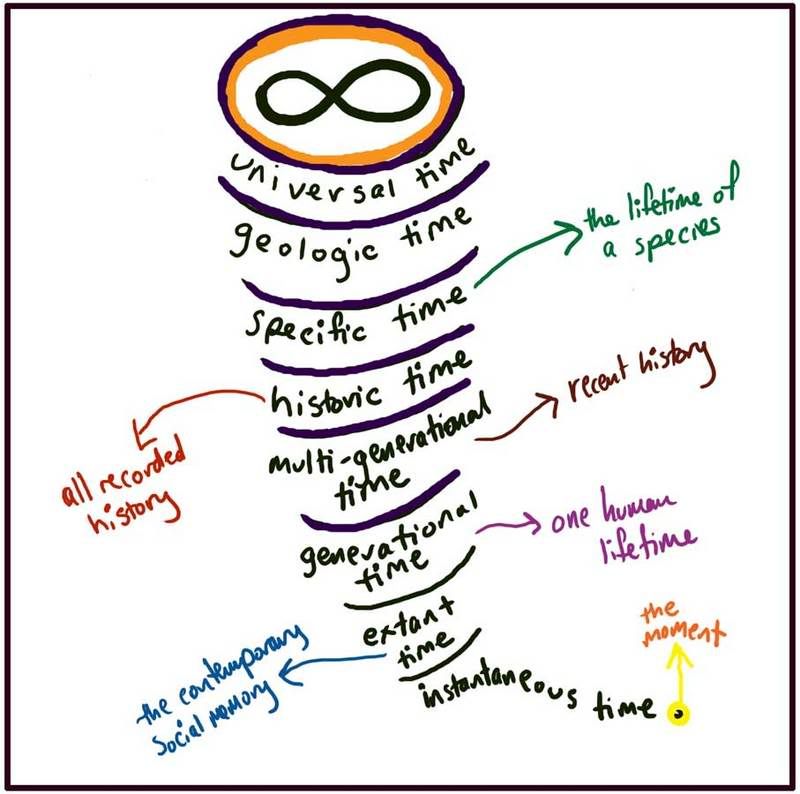
The natural algebra can not evolve apace with our ethical code. Believing this to be true, I suppose I'm something of a determinist. I don't doubt that Earth's carrying capacity will increase as we adopt more sustainable lifestyles, but such a change occurs in geologic time, not generational or historic time. E.O. Wilson, the celebrated Harvard entomologist, makes a similar, if distinct case in his landmark book, On Human Nature.
"Can the cultural evolution of higher ethical values gain a direction and momentum of its own and completely replace genetic evolution? I think not. The genes hold culture on a leash. The leash is very long, but inevitably values will be constrained in accordance with their effects on the human gene pool. The brain is a product of evolution. Human behavior - like the deepest capacities for emotional response which drive and guide it - is the circuitous technique by which human genetic material has been and will be kept intact. Morality has no other demonstrable ultimate function."
I'm inclined to agree...to a point. But what hand really holds the leash? Wilson assigns control to genes, our evolutionary chaperones. Genetics is indeed powerful, but the brain is as much a product of cultural evolution as it is physiological evolution. Therefore, I believe nurture can outpace nature at the societal level. In other words, genes have less control over moral and ethical evolution than Wilson would have us accept. In fact, it is the "eco," the greater whole - the Everything and the No-thing, from which we are inseparable - that grasps the leash. I trend toward the mystical here, but the skeptical scientists in the room can call this leashing by holistic natural law (as opposed to Wilson's evolutionary imperative).


Despite my attraction to the moralistic, and my belief that our ethical purview will inevitably expand, I must conclude that is necessary to distinguish between long-term aspiration and present policy. The American Civil Rights Movement may be portrayed as a historical artifact in high school text books, but racial prejudice and bigotry are no more history than is the Cold War. Our aims are ahead of our practice, and we should take care not to neglect incomplete cultural "mutations." Today being the anniversary of his death, take another listen to John Lennon's "Imagine." The words and images of artists are vital. Without them, our shared cultural imagination (or our memes) would be starved, but we shouldn't ride the moral high horse if it means we won't reach our destination. This is the critical distinction between morality and ethics.

Progress - if loosely defined as our stumbling effort toward the betterment of humanity and the world we belong to - is best served by pragmatic rationalism and a conservative code of ethics. As my father stressed to me from a young age, good economics - literally translated, "management of the household" - begins with good ecology - "study of the household." A promising future awaits humanity if we are imaginative enough to forge our ethics from the moral, the aesthetic, the ecological, and the pragmatic.

Turning to Bill Cronon's writing, as I so often do, and did when considering these ideas before:
"The choice we face is not to leave no marks – that is impossible – but rather to decide what kinds of marks we wish to leave."
So to Jason Scorse, and all ideologues: my heart is with you, but things simply aren't so clear as might like them to be.

Image credits: Ahab illustration by Sam Weber; ethics diagrams from Peter Joost's March 2005 New York Historical Society lecture; timeline diagram by Hungry Hyaena

(1) Franklin abandoned the diet eventually, as the smell of cooked seafoods, particularly fish, proved too much for his dietary resolve. No problem, though, as he was able to use reason to account for why fish were a viable exception!

Wednesday, December 07, 2005

Banging My Head Against The Wall

This Sphere post provides yet another example of animal rights proponents getting their science wrong and, in doing so, giving their legitimate concerns a bad name.

Monk parakeets (Myiopsitta monachus) are not native to Long Island and, though I have some reservations about our war on alien/introduced animal species, any respectable wildlife biologist will tell you that the birds represent a threat to Long Island's biodiversity. Apparently, Friends of Animals doesn't care about the other species that may be adversely affected.

But even if you excuse the wrong-headed scientific stance of the group, their leader's absurd claim of "victory" is a classic example of dumb-dumb under-achievement.

Just click on over to be baffled.

Friday, July 15, 2005

Virtual misdeeds and nonvirtual deaths


I meant to comment on this Los Angeles Times article weeks ago, when Organic Matter first brought it to my attention. In March, when I first learned of John Lockwood's online business venture, I wrote "Hunting JFK." Fortunately, LA Times journalist Nancy Vogel wrote an informative piece entitled, "Online Hunting Firm Is Now The Quarry."

Lockwood's ingenuity, if you want to call it that, allows, say, an obese, potato-chip eating kid in New York City to "virtually hunt" online. With a click of his mouse, this sedentary urbanite can kill a real animal in Texas. This assumes that the kid in question is a responsible individual. He or she could just as easily opt to "kneecap" the deer, much as an adolescent gamer might "jack" a cop car or beat a prostitute to death in "Grand Theft Auto." After all, there are no consequences in the "real world" when you flaunt Mosaic Law in the virtual world.

But Lockwood has created something far more sinister than "Grand Theft Auto." "GTA" is merely a video game that encourages licentious behavior. Lockwood's "game," on the other hand, is real life-and-death. The knowledge that the "virtual hunter" is remotely firing an actual bullet at a living creature might actually increase the twisted delight some gamers feel when doing something terrible in the virtual world.

I used to love video games and, in virtual worlds, my avatars regularly engaged in unethical behavior. Playing the "Ultima" series, for example, I often resorted to thievery to keep my bag o' gold full and my armor strong. In the "Civilization" series I frequently made international treaties only to buy time enough to position my navy and army units. Once ready, I would stage simultaneous attacks on allied cities, wiping out their culture, burning down their churches and stealing all their science advancements. Most recently, playing "Fable," my character preyed on innocents who seemed (to me) corrupt in some way, not unlike Kevin Spacey's serial killer in the movie "Seven."

All of these virtual misdeeds do have a negative effect on the "real world" me, whether I like to admit it or not. "Oh, it's only fun and games," gamers say with a smile, but such immoral role-playing is more "real" than we realize. Part of the appeal of creating a "bad" character in a video or role-playing game is the knowledge that such actions are unacceptable in this world. You are acting out, but doing so via 1s and 0s rather than glocks and nuclear launches. What happens, then, when you combine the two worlds?

In "Hunting JFK," I wrote:
"Murder, even for our soldiers in Iraq, is becoming an abstraction. From fist to blade, blade to spear, spear to arrow, arrow to bullet, bullet to...what? How can you describe a system whereby the man-boy assassinating JFK on the computer screen might as well be gunning down Iraqis with a SWORDS [unit] or knocking off a big buck on a Texas game farm? For that matter, is not the murder of the pixel proxy similar to the pricking of a voodoo doll? A clear association is made by the gamer; the digitized image on the screen - your quarry - represents a flesh-and-blood human. When you pull the plastic trigger and assassinate JFK, that's that. You can turn off the gaming console and hit the sack. No police will show up at your door. No posttraumatic stress disorder will accompany your return to civilian life. No bang. Just a click.

The disconnect between animal and meat on the plate is but part of the problem; with every passing month, the disconnect between hand and killing becomes more ingrained in our culture and, as I see it, such a trend does not bode well for empathy. With less empathy in the world, abstraction of the 'other,' already a natural inclination, becomes that much more easy. This leads, of course, to more violence."
The concerns I described in that post are deserving of rumination, but there is a more immediate problem with Lockwood's scheme, though it can easily be extended to all "ranch hunt" scenarios, virtual or otherwise. Lockwood tells Vogel that, "The only difference between an Internet customer and one who visits the ranch to hunt...is that the electronic customers can't walk the land and their view is limited to a narrow camera viewfinder." As I see it, this ignores the most essential difference; the individual is "hunting" for thrill rather than food. Of course, I am giving too much credit to any yahoo who would opt to hunt on a "real world" Texas "game farm," but as I see it, hunting is about the relationship between the animal, the killer and the exchange of energy that comes from eating a creature you took the life of. Predation should be a humbling experience for humans, not a cause for high fives or triumphant photo shoots.

Lockwood is quick to defend his arrangement, pointing out that "meat processing" is available. Theoretically, you can use your mouse to kill an animal and have the meat shipped to you in clean, plastic-wrapped containers. In fact, Lockwood says "he has received inquiries from soldiers in Iraq and Spain, including one who said he was less interested in hunting than in getting meat to his family." Oh, really? Unless this soldier shares my dietary restrictions, I don't see why he couldn't use the money he would spend on the "virtual hunt" to buy his family some dinner.

Anyway, rather than my rambling on about this infuriating subject, I recommend linking over to the Vogel piece and reading about Dale Hagberg's experience. Lockwood uses Hagberg's case to justify the business. For me, Hagberg's ecxperience is absurd and sad. In fact, the picture painted is a thorough condemnation of our base desires. Hell, if Hagberg and Lockwood were characters in "Fable," I'd behead them and steal their money.


Photo credit: screenshot from "Fable" courtesy Gamespot.com; John Lockwood photograph, Jack Plunkett /AFP/Getty Image

Tuesday, July 05, 2005

Perpetually Lost

I feel a twinge of shame when reacting negatively to an animal rights mailing. After all, I generally find the perspective agreeable and think that some of the movement’s voices are exceptionally articulate and sensible. The fact remains, however, that most animal rights activists and environmental extremists are young, confused idealists. There is nothing wrong with youth or idealism, but when one combines such naive energy with an ignorance of reality, the result is senseless noise. The “manifestos” written by kids who count themselves among the movement’s disciples are often troubling documents.

Recently, an animal rights advocate, who is also a member of a conservation group I support, sent out a group email detailing the plight of Chris McIntosh, a twenty-two year old activist who set fire to a McDonald’s restaurant in Seattle. The action was jointly “claimed by” the Animal Liberation Front and the Earth Liberation Front. The email sent to me included a note written by McIntosh, excerpted below.
“I am a Green Anarchist who believes in freedom for all life, by any means necessary, and a return to the "old way". There should be no compromise with a system that has no respect for nature, that worships shiny metal and green paper instead of the mother from whose womb we are sustained. I no longer see the use or satisfying results of petitions and demonstrations. The truth is the crunch has come, and it's time for a feral rampage in everyone's heart! Whether its wreaking drunken havoc upon the civilized pillars of society or some other way that gets you off, we are the barbarian hordes. Let's sack Rome!

When I was 16, I dropped out of and took off into the unknown to discover a life of freedom (until the pigs interfered). It had its hardships, but the good outweighed the bad. I have been educating myself with real knowledge since then.”

“What I'm into reading is anti-civilization theory, stuff about early european pagan beliefs. Anything along those lines or a simple letter goes a long way too.

Thank you and no compromise in the fight for the earth and animals!”
Reading this pedestrian rhetoric, I recall “Notes From Underground: Among the radicals of the Pacific Northwest,” an article by David Samuels, published in the May 2000 issue of Harper’s Magazine. Samuels addresses the surreal combination of energetic commitment, disillusionment and boredom endemic in extremist groups. How can we take seriously the well-intentioned kids dressed in Adidas track suits and Nike sneakers as they pry off the sign at Seattle’s Niketown to protest capitalism's cruel dominion?
“What the pictures from Seattle captured was an anger whose true sources had less to do with Nike’s treatment of its labor force or other objectionable practices than with a broader, more unreasoning sense of being trapped in a net…the more general principle that someone should be held responsible for the feelings of absence and compulsion that overwhelm us all at some point or another in our lives and that are not our fault, or even the fault of our parents, but are rather the products of the addictive vacuum that has manifested itself through the combined karmic energies of millions of cathode-ray tubes and digital cables.”
The “objectionable practices” do provoke anger, but I think that what separates the quiet activists – those that concentrate on changing their own lifestyles to lessen impact – from the Chris McIntosh variety is the ability to consider one’s actions thoughtfully, recognizing that personal choices do matter and that arson attacks, for example, only further misunderstanding and backlash.

Friday, June 24, 2005

I've Got Some Explaining To Do

“Conservation is also about choices in our daily lives. It’s not only about how we commute to work but whether we choose to commute at all. It’s about what kind of fabrics we wear and what kind of beverage containers we buy. It’s even about the kind of heating we have in our homes.”

-George Reiger, “Heron Hill Chronicles”
My recent “Where’s the Beef?” post inspired a reader to send me an email that, using unnecessarily harsh language, made explicitly clear his opinion that my diet is nonsensical and unethical. Each to his or her own; I suppose I should turn the other cheek, so to speak, but the reader's invective makes me think that I should better elucidate my choices.

My diet's principal motivation is environmental and rational. I prohibit meat consumption unless I have hunted or fished the creature myself. The water and land use problems associated with industrial meat farming can not be ignored. More strict federal regulation of grazing, feeding and watering practices would no doubt ameliorate their negative impact, but such legislative salves can not eliminate the fundamental environmental challenges posed by large-scale, commercial meat production. According to the USDA, growing crops for farm animals requires nearly half of the U.S. water supply and 80% of its agricultural land! Those are astounding (and very troubling) numbers. The steep decline in offshore fish populations makes poorly regulated commercial fishing ecologically untenable, as well. Surf and turf consumption is therefore unethical. There's no other way to put it.

The ethical call may sound Sisyphean to many of us, but every individual should be compelled (by his or her conscience) to do what they can to mitigate our negative impact. Certainly, as my angry reader points out, plastics (made from oil) are ubiquitous, industrial dairy farms are responsible for environmental problems, and cotton, the base ingredient of my wardrobe, is the among the world's most environmentally destructive crops. While it is difficult for me to avoid consuming plastic products, cotton clothing and milk, I can (and do) take simple steps to avoid these items as much as possible. An increasing percentage of my wardrobe is now hemp or synthetic (also problematic, but not as bad as cotton) and I buy only soy or organic dairy products. If, however, I’m dining at a restaurant that doesn’t offer such alternatives, I won’t refuse the cheese that I'm served. Without retreating to ascetic life, each of us must pick our battles after considering the facts, and I believe that industrialized meat production is among the most serious threats to the world’s environment and to human rights.

Peter Singer, the Australian philosopher, ethicist, and author of “Animal Liberation,” sums up my dietary habits well.
The Peter Singer suggested diet:

- replace animal flesh with plant foods
- replace factory farm eggs with free-range eggs if you can get them; otherwise avoid eggs
- replace the milk and cheese you buy with soymilk, tofu, or other plant foods, but do not feel obliged to go to great lengths to avoid all food containing milk products
It may seem surprising that Singer, a father of the contemporary animal rights movement, should serve as a guideline for a hunter and fisherman. Though animal rights concerns wasn't the principal motivation for my shift to vegetarianism, I do consider such moral considerations integral to my mongrel philosophy.

A moral hunter aims to make every kill as humane as he (and, increasingly, she) possibly can. Unfortunately, even the best hunters will sometimes make a poor shot, and I am deeply disturbed by the long minutes spent tracking a wounded deer or the quiet, slow-motion gasps of a mourning dove as I squeeze the last breaths from its small breast.

Like humans, critically wounded animals go into shock. The endorphin rush associated with serious physical trauma prevents neurons from communicating normally and, as a result, one feels little, if any, pain. The dying animal enters a trance-like state in the final moments. This accounts for the military medical field practice of treating screaming soldiers before the wounded fighters that quietly stare off into space; if a wounded soldier is quiet, he or she has suffered only minor injury or is beyond medicine.

Crippled animals, like screaming, wounded soldiers, are often suffering a great deal. Their body is programmed for survival; the neurons let the pain “scream” to make sure that the animal knows where the source is. I used to believe that wounded non-human animals felt the same amount of pain as wounded humans, but I now fear they may feel more. Unable to reason what has happened to them, the stress of the experience must be that much greater. That I have been responsible for such awful moments in the life of another creature is a terrible reality, but I do feel better about facing such realities myself, rather than entrusting them to underpaid laborers half a continent away.

Even anti-hunters (many of whom continue to eat meat, a ludicrous fact!) sometimes find themselves in similarly distressing situations. A motorist that strikes an animal while driving is morally obligated to put the injured animal out of its misery or attempt to assist it.(1) Those drivers that opt to drive away, shirking responsibility and doing their best to evict the incident from their mind, are acting in a morally weak fashion. As I see it, it's no less irresponsible than a human "hit-and-run," for which convicted individuals often go to jail.

Simply put, it is immoral to allow a suffering animal a slow, perhaps agonizing death after having caused it direct harm. Increasingly, people I talk to claim that their benevolence prevents them from extinguishing the pained creature's life. In fact, they're often horrified by the suggestion that they kill it. My thinking that they should is, in their eyes, barbaric. These individuals are victims of their own good intentions, lies designed to make their little world more comfortable. I have no patience for such people; I disdain them as I do the “trophy hunter” or the violent environmental activist.

As Rien Poortvliet, the Dutch author and painter, wrote in his excellent picture book, “Dogs,”
“Some people would rather see you fool around with an animal than put it out of its misery…a little artificial leg here, a plastic duck bill there, and if necessary, wheels attached to it – anything is better than dead. ‘No, I couldn’t do that!’ Well, what good is that to a cat in pain, run over by a car? It is sometimes such an ‘animal lover with clean hands’ who drives on. I know those types who say, ‘How can you possibly shoot a roebuck?’ But where does that fur coat, that snakeskin bag, come from? She doesn’t care. You also mustn’t bother her with stories of where real cutlets and chicken breasts come from. She has never struck one animal.”
No matter how bloody and miserable the driver's responsibility to brain a raccoon with a tire iron, wringing the neck of bluebird, or snapping the spine of a house cat is, it must be done.

Doing so has left me shaken up for days. I once came upon an eastern box turtle (Terrapene carolina carolina) that someone had run over. The shell was cracked and internal organs had been forced out of the gaps, but the turtle struggled on, attempting to make it to the other side of the road. Familiar with basic turtle anatomy, I realized that this reptile was doomed. I did what had to be done. I cried while doing it. If that makes me less of a man, I could care less.

It may seem illogical to some readers that I can be a compassionate, ethical person and a hunter. Indeed, there is some conflict. As a result, I hunt less with each passing year (maybe seven times in the last two years) and I've become more interested in pursuing only those quarry I know that I am likely to kill cleanly. Deer and other ungulates, for example, are animals that I am comfortable continuing to hunt, as my rifle marksmanship is good. As my shotgun ability continues to decline (the less often you do it, the worse you become), bird hunting becomes less tenable. I loathe knowing that I may “knock down” a bird and be forced to chase the terrified duck, dove, quail, pheasant or goose to end its life in a brutal fashion. Yet I also realize that death via disease, starvation or “natural” predation is equally awful. Such is Nature’s way, but few of Nature’s actions contribute to real degradation of the environment, even if they can sometimes pose a threat to biodiversity.

(1) If the animal seems as though it is not seriously injured, please take it to your local veterinarian. Having worked in a veterinary clinic, I know that most good vets are excited to have curious patients brought to them. During my short time at the clinic, we received a hawk and an owl that had been struck by cars. Both recovered and were eventually released.

Photo credit: a.sanpal.co.jp; no credit given on site

Friday, April 29, 2005

Elephants Targeted


African elephant populations are booming in southern Africa, largely due to the restrictions placed on elephant hunting in the 1990s. As a result, some park managers have been forced to begin culling Loxodonta africana. Apparently, their take is not enough. As a recent article in South Africa’s Sunday Independent makes clear, the elephants are placing undue pressure on the parks they inhabit. In Kruger National Park (South Africa) the ideal population is 7,000 animals; presently 13,000 elephants reside within park borders.

Culling is not popular with animal rights groups; these groups promote other options such as relocation or sterilization. These expensive and challenging alternatives are familiar to those of us who follow the white-tailed deer (Odocoileus virginianus) population debate here in the United States.

The best option, as I see it, is the creation of wildlife corridors that will allow the animals to move freely from park to park without coming into contact with extensive human settlement. Barring the necessary legislation and land acquisition, however, culling will remain an unfortunate reality, animal rights be damned. It is also important to note that humans are one of the only natural predators for African elephants and, even with successful wildlife corridors and improved migration, a flourishing elephant population will probably demand some attrition via bullet.

Photo credit: George Reiger, Botswana, Africa, 1997 (image of Seba, a yearling African elephant, inspecting my camera bag in the Okavango Delta)

Thursday, April 28, 2005

Pam v. J-Lo


I have mixed feelings about people wearing animal fur. I have a beautiful red fox (Vulpes vulpes) skin displayed in my apartment. The skin belonged to a fox culled at Heron Hill during a time when the predator population had exploded, resulting in a decline in duck, quail, and rabbit populations. A number of foxes were trapped and a balance was again achieved.

Yet, despite my acceptance of predator control as a pragmatic conservation technique, I am generally turned off by trapping. I am not anti-trapping per se, and I appreciate the fact that its practitioners learn a great deal about the natural world, but a bullet represents a more humane death. I also find it troubling that urbanites, most of whom have only a vague, Disney-fied appreciation of wildlife, account for the majority of fur buyers. Excepting the far north, where the climate demands extra layers, it is not the trappers who don dead animals. Like diamonds, fur is but one more luxury in a world already too freighted with frivolous commodities that have hidden moral and environmental costs. (Though, lest we forget, cotton, the principal material in clothing worldwide, is far more destructive to animal species than the fur trade. If animal rights groups really want to help the rest of creation, they should consider targeting the cotton industry to demand more sustainable practices.)

But, while I find myself in the grey zone on the fur issue, Pamela Anderson does not. Everyone’s favorite "Baywatch" babe and rock-star sex toy is currently campaigning against Jennifer Lopez and other celebrities who wear fur. Anderson called Lopez an “idiot” in the press and asked People for the Ethical Treatment of Animals to “step up” its anti-fur campaigning by targeting J-Lo in particular. I hope Lopez likes paint.

Lopez has repeatedly demonstrated that she has no understanding of the natural world and little to no respect for animals, but Anderson knows only what "Bambi" and "The Bear" have taught her. A precious, willfully ignorant understanding of Nature is only marginally preferable to having none at all. Most troubling, though, is the sense that neither celebrity could be educated about wildlife because its reality is deemed boring by people like J-Lo or cruel by precious types like Anderson.

Photo credit: j-lo.net

Wednesday, April 13, 2005

i taut i taw a putty tat


This Duluth News Tribune article was published in early March, but was only recently brought to my attention. Apparently a Wisconsin fire-fighter and hunter, Mark Smith, proposed that the state classify free-roaming domestic cats (also called “feral” cats) as an “unprotected” species. If the state were to do so, Felis catus could be legally killed by any hunter in possession of a small-game license.

Smith states, “I get up in the morning and if there’s new snow, there’s cat tracks under my bird feeder…I look at them as an invasive species, plain and simple.”

He's correct. In the United States alone, domestic cats are responsible for the death of hundreds of millions of birds, billions of small mammals and millions of reptiles and amphibians each year. Many wildlife biologists contend that cats are responsible for more extinctions worldwide than any other cause, with the exception of habitat destruction.

Yet my cat-loving friends contest these facts, pointing out that the numbers are “just estimates.” Or they will highlight my willingness to damn the domestic cat when I don’t condemn other superb predators such as mountain lions (Puma concolor) or red foxes (Vulpes vulpes). Estimates are often useful tools but, more importantly, there is a substantial difference between a native predator and the introduced variety. (Conservation-minded Puerto Ricans do not appreciate the mongoose (Herpestes javanicus) presence and few folks on Guam find the brown tree snake (Boiga irregularis) praiseworthy. Other than our association with house cats as just that, there is no difference between it and other feral, introduced species.)

Compounding matters is the protection and attention offered Felis catus. What other predator species has access to a dependable source of food and protection from disease? Also, unlike many other predators, the domestic cat does not demonstrate a marked decrease in hunting desire when already sated. Felis catus is a killer that enjoys the killing.

I grew up on a farm where any cat spotted without a collar fell victim to a .22 rifle. Most of these animals were large, filthy tomcats that had been living feral for months or years, but a few were groomed and well-fed. No matter. On a 300-acre farm designed to attract and protect wildlife, the appearance of an “unattached” cat meant dead or threatened wildlife.

The concept of predator control troubles many people, myself included. The balance is delicate; not every raccoon (Procyon lotor) or fox that a land owner or refuge manager spots should be killed, especially if the animal will not be utilized - eaten, worn - in a respectful manner. But when discussing an “invasive” species, the choice becomes more clear-cut. Why then, does Mark Smith’s Wisconsin proposal engender such an angry response all over the United States, especially when Minnesota and South Dakota already allow such kitty culling?

When I Google the topic, I find a link to this hateful blog. The author writes,
“So Mr. Mike Smith lets make a deal, we will allow open cat season just for you as long as you allow us to have an open season to hunt your ass down."
He also points out, astutely, that "birds can fly away from a bird" (one assumes he meant to write 'cat') whereas a cat has no chance against a 12-gauge shotgun. The writer clearly knows nothing about firearms or the hunting prowess of a cat. No individual seriously trying to kill a feral cat would use a shotgun unless they were confident in their ability to stalk within range, a difficult feat for even seasoned scouts. And, even outfited with a collar bell, a cat will learn to stalk so as not to let the bell ring, until the pounce...and bye-bye, birdy.

On another website discussing the issue, post after post bemoans Mark Smith’s proposal, suggesting we pursue “more humane” ways of controlling the cat population. The most often proposed alternative is a three-step process: live trapping, neutering, and release. Proponents of this approach argue that, within several generations, the feral cat population would plummet as a result. While true, what may be more humane for the cat does not afford other animal species much help – with an estimated 12% of the world’s bird species in danger of extinction this century, such measures do little to help sustain biodiversity – but, more pragmatically, tax payers aren’t very willing to foot the hefty bill for such birth control programs. As a result, The Humane Society of the United States and PETA have been encouraging cat owners to spay/neuter their pets and keep them indoors for years now, but many, if not most, cat owners continue to ignore this advice. On the one hand, then, pet owners are unwilling to take responsiblity for their pets and, on the other, they are unwilling to pay taxes which will help alleviate the problems their negligence contributes to. That's the attitude, America!

The only sound alternative to legalized hunting of cats, as I see it, involves trapping the cats, offering them up for adoption at a shelter (to be spayed/neutered at the client’s expense) and euthanizing them if they are not claimed within a given time. This method is undoubtedly more humane than shooting, as the needle will less often “miss its mark,” and it doesn't put the "murderers back out on the streets," but again we are faced with an intimidating price tag. I'm willing to add a few hundred dollars to my yearly tax burden to help alleviate Felis catus pressure. Are you? (Based on my informal poll at the office today, most people aren't. In fact, my much beloved co-worker tells me her parents' cats, which only come into the house at night, don't kill other animals but more than once every two years. Unfortunately, living in denial doesn't help biodiversity.)

In an ideal world, the hunters interested in shooting the cats would be steady marksman and the country’s biodiversity could be done a great service in a relatively humane fashion – a bullet through the brain or heart is only marginally less humane than a lethal injection. On the other hand, in a truly ideal world, pet owners would take responsibility for the creatures they choose to purchase or adopt, keeping cats indoors and dogs closely monitored while taking care to spay or neuter the animals. In this ideal scenario, we would also learn how to take better care of our own fellow man and approach human population, land use, and economic growth with some degree of thoughtfulness. Oh, wait...those continue to seem like unrealistic short-term goals? Well, then, lock-and-load, because the cat problem is far more pressing than the more socially acceptable white-tailed deer (Odocoileus virginianus) "scourge."

Do not misunderstand. I adore house cats and cherish the good times I have spent with my own (pictured above). Discovered on the side of the road as a kitten, Mr. Misi had not yet opened his eyes when I adopted him. He had to be fed warm milk from a baby bottle and, for those first months, he slept on my pillow, curled in the crook of my neck and shoulder. Would I weep were Misi shot by a hunter? Of course. Would I understand why? Yes. For that reason, Misi is not allowed outside and he was neutered years ago. When he visits a rural area, I put a collar around his neck, making him easily identifiable as a “pet” if he should manage to slip outside.

Note: As of this afternoon, I learn that the Wisconsin public has given the go-ahead for the cat hunting. It will be taken to the state legislature next.

Photo credit: Hungry Hyaena, 2004

Sunday, April 03, 2005

In Brief: Taxonomy, Natural Selection, "Pets"

Chris, at Organic Matter, offers this thoughtful post about taxonomy, one of my favorite messes. The current debate over species organization is concerned with two possible modes of classification. The Biological Species Concept (BSC) is based on breeding potential (that is, if duck A can make a duckling with Duck B, the two birds are the same species). The BSC results in fewer distinct species, but some biologists insist that it is overly simplified. The Phenetic and Phylogenetic Species Concept (PSC) are based on distinct characteristics, both genetic or physiological; it makes for many more distinct species, but requires an extensive overhaul of the current arrangement. Still other biologists call for a unitary, web-based alternative, a kind of Wiki-taxa open to all users, but designed and funded by an international committee of serious taxonomists. Whatever system biology opts for, confusion is likely to remain constant for a long while. What will such biological debates mean for conservation biology at large? Politicians love simple answers to complex questions; taxonomy, like most sciences, has few simple answers...unless, of course, we fudge the science. (See also Dave Roberts' post at Gristmill.)

+++++

Observable instances of natural selection don't get much better than this. In the November 29, 2004 issue of PNAS (Proceeding of the National Academy of Sciences), Ben Phillips and Richard Shine published this study (unfortunately, you can only read the abstract) on the effect of cane toads (Bufo marinus), an introduced species, on native Australian snake populations. Because the toads are large and toxic when full grown, snakes capable of swallowing the adult cane toad are more likely to be poisoned. Since the introduction of the cane toad in 1935, snake head sizes have been gradually shrinking relative to body size. You gotta love this stuff! Those folks dunderheaded enough to still decry evolutionary theory are also missing out on the fun!

+++++

Are you into exotic pets? If so, you're not alone. With nearly 7,000 tigers kept as pets and only 2,500 remaining in the wild, it's clear that more and more people are bringing wild animals into their homes. As a keeper of multiple pythons and, at various times throughout my life, Northern flying squirrels, European starlings, Eastern box turtles, snapping turtles, and several species of snake, frog, and toad, I understand the desire to keep wild animals in captivity. One can learn a lot about animal behavior and develop a life long love of other species. But I think it cruel in all but the most exceptional cases and, although I'd like to keep a starling or crow again, I view these animals less as pets than as creatures in my care. (Reptiles and amphibians, if reasonably sized, do fairly well in captivity, but I get very upset when I see a reptile owner being careless with temperature/humidity control or mishandling the animal.) Their needs are often specific and unusual and I fear most people purchasing a caracal or kinkajou don't think about long-term commitment; these animals are impulse buys.

I'm reminded of the "Mr. Show" "Sulu the Iguana" skit in which David Cross gets angry at his "pet" iguana for knocking over his bong, beats it to death with an encyclopedia, and then sobs over the reptile's body. Undaunted in his quest to be the most "original" pet owner, however, David buys a "real, live albino boy" to replace the iguana. Funny though it may be, it accurately depicts the selfish impetus of many exotic pet owners.

Thursday, March 24, 2005

The Expanding Ethical Embrace


In conjunction with the New York Historical Society’s exhibition, "Audubon's Aviary," the NYHS, Nurture New York's Nature, and the NYC Audubon Society partnered to present a series of Audubon-related talks. During the second evening of presentations, entitled “The Fall and Resurrection of Nature in New York,” NYC Audubon Society member Peter Joost spoke of our evolving ethical paradigm. Over the last several hundred years, he argued, humans have become progressively more enlightened. Joost cited the political developments of 20th century America to prove his point: today, we consider every human equal, irrespective of race, sex or religion. (True, but our American “melting pot” is yet pervaded by racism, xenophobia and religious intolerance; I agree with the general thrust of Joost's thesis, but recognize that we must be vigilant if we are to preserve our liberal ethics.)

Mr. Joost also pointed out that, as humans continue to expand our ethical embrace, we are beginning to consider other species, especially our ape relatives, as equals or near equals. He foresees a societal shift towards vegetarianism and the adoption of a moral code which includes an increasing number of species. Presumably this shift won’t guarantee voting rights for horses, but the meat industry, hunting and animal research would all end. Perhaps a future Mosaic code will include the commandment, 'Do unto your neighboring species as you would have done unto you.'

All well and good...sort of. If our ethic/moral code expands to include animals, plants, and eventually bacteria, what role will conservation play? Some degree of manipulation is required to maintain the ecological status quo. Wildlife management works, in part, because we perceive ourselves as stewards of the land, a species situated slightly above the fray. If a US Fish & Wildlife biologist elects to burn a section of forest in order to encourage future growth and habitat restoration, he isn’t condemned. But his actions killed many insects and displaced other species! If every species’ rights are to be considered, management that today is laudable will be controversial; conservation biology would be further burdened by litigation.

But I am a realist, and so don't fret about the possibility of an over-extended ethical embrace. Morality is not born of humanity's existential sameness or some essential, animating goodness. Like all other animal species, humans evolved to survive and propagate; that is, we evolved to be winners. Even our predilection for classification - as seen in the periodic table, clothing labels and taxonomy - is innate, an evolved trait that better equips us to ward off “the other,” to proactively eliminate potential competition. But this us-and-them trait is no longer tenable in our interconnected world. It seems to me that the quickening of our ethical expansion in recent centuries corresponds to a wider worldview. Whereas once we were many, now we are one economy. If this is the case, isn't our extension of human rights to all races, cultures and creeds a victory in our campaign to deny human nature, a requisite improvement to the foundation of global socio-politics?

If this is so, our increasing capacity for compassion creates new problems. An inclusive, caring society, even if inconsistent, is attended by a population boom and longer life expectancy. By embracing one another, then, we also increase our species’ demands on the environment. When even more populations - in Joost's argument, other species - enter our moral peripheral vision, we will find ourselves facing a philosophical and pragmatic dilemma. Will our compassion overload the circuitry?

The idealist in me believes that our concept of conservation will be replaced by one more reconcilable with a Joost's inclusive ethical paradigm. After all, why should we strive to “manage” when we are but part of the environment ourselves? But the realistic answer to that question doesn't jive with Joost's ethics. We are part of the environment; as such, we are creatures adapted to live within a given range of environmental conditions. Sustainable conservation should not reject human needs. To the contrary, it must incorporate them.

Dr. William Cronon, a very intelligent writer and environmental historian writes,
“The nature we carry in our heads is as important as the nature that is all around us, because in fact the nature inside our heads is often the engine which drives our interactions with physical nature, transforming both ourselves and nature in the process….Non-use is not an option: to live in nature is to use and change it by our presence. The choice we face is not to leave no marks – that is impossible – but rather to decide what kinds of marks we wish to leave.”
I look forward to an age when humanity has extended its moral code to the other animals, but where does such a shift take us? The question is hypothetical and abstract. I am content to view it as an imponderable and this, I suppose, is why I am an artist rather than a philosopher or lawyer.

I scribbled notes as I listened to Joost, and I thought of Aldo Leopold. A hunter and conservationist, on the one hand, and a moralist and preservationist, on the other, Leopold embodied the contradiction at the heart of this question. Returning again to Cronon,
“Having spent his entire life as a manager of land and wildlife, [Leopold] knew all too well that wild nature will not long remain in the modern world without an active commitment on the part of human beings to manage it responsibly...and he knew that this task was far from easy….Knowing that he himself was manipulating wildness in the very act of protecting it gave him a powerful sense of the paradoxes such work entailed, and he was clear-eyed and unblinking in acknowledging these paradoxes. ‘All conservation of wildness,’ he wrote, ‘is self-defeating, for to cherish we must see and fondle, and when enough have seen and fondled, there is no wilderness left to cherish.’...His dream was for a world where large tracts of wilderness would be protected, but where wild things would thrive and be honored in many other places as well: in rural wood lots, in humble wetlands, in restored prairies, even in urban parks. Only so would people be reminded, regularly and in the most ordinary ways, of the larger community to which they belonged and on which their own lives depended.”
Will an expanding ethical embrace make Leopold’s dream more possible or will it serve instead to complicate matters, making our search for a sustainable, moral society a more Herculean task?

Thursday, March 17, 2005

Canada Culling, Paris Protesting


Many environmentalists and animal rights activists are up in arms over the Canadian government's decision to allow for the culling of up to 350,000 harp seals (Pagophilus groenlandicus). From a conservationist's perspective, I'm not sure how to feel about the decision. Some biologists claim that harp seals are over-populated and, as a result, are adversely affecting regional cod populations. Others suggest that the seal population isn't any larger than it should be, and that the commercial fishing industry is the primary culprit in the cod population plummet. Both sides of the debate cite contrary data while pointing to apparently valid studies. As a result, outside observers intent on gathering the facts before making up their minds face a challenge.

So, I suppose I have to go with my gut reaction. Death by clubbing and sticking is not an attractive option. Line me up in your sights and put one through my heart or between my eyes, but, please, if you must shoot me, don't be on a moving platform or boat when you pull the trigger. I'd prefer not to have my lung punctured or my jaw torn asunder because of the rolling action under your feet. If, even on steady ground, you still make a bad shot, crippling instead of killing me, please do not skin me while I'm conscious. Instead, approach and put a bullet through my brain. Then wait until I've ceased struggling (even if it's just my nerves firing) before you begin to cut my flesh away from fat and muscle. While you're at it, I'd appreciate it if you take a few moments to say a prayer of gratitude for my flesh.

According to animal rights groups and activist environmental groups like Greenpeace, many of the seals are harvested in the tortuous way described above. "Harvest," when applied to an animal, is a term I do not care for. While it may be accurate, it has the effect of turning the animal population or species in question into a crop, allowing us more psychological distance from the killing involved. I do not consider the single, doe deer that I hunt to be a crop. She is a white-tailed deer (Odocoileus virginianus), beautiful and alert (high-strung, even, by our human standards). For that matter, I do not consider the tomatoes or the squash grown in one's backyard a crop. I associate the term with industrial agriculture, the great, wasteful, polluting machine that so many of us today depend on.

Because of the manner in which most of the harp seals will be killed, and because of the misuse (disrespect) of the slaughtered animal, I am opposed to the authorized market hunting of harp seals.

Yet, I'm still irritated when I read that Paris Hilton has signed on to protest with the millions of urbanites around the world who are banding together to make their dissatisfaction known. At first, I believe my reaction has more to do with my rural roots, but this is the easy answer. In fact, the reaction has more to do with my fear that the majority of these protestors, Paris included, are involved for selfish reasons. They want to feel good about "saving cute animals." Rarely do these kind of casual activists demonstrate real curiosity about and or grasp of "their cause." Would Paris Hilton ever think to sit down with a harp seal biologist and learn about the species? While I can not say with any certainty, my Magic 8 Ball says, "All Signs Point To 'No.'"


Photo credit: Associated Press, 2004

Tuesday, March 15, 2005

Another State Audubon Society Calls For Deer Hunting

Today, the New York Times highlights the call made by the New Jersey Audubon Society for more deer hunting to "prevent deforestation leading to the extinction...of birds." While I find their interest in birds decidedly specific (overly dense white-tailed (Odocoileus virginianus) populations, like overly dense human populations, harm entire ecosystems) they are taking a step in the right direction by following the lead of the Connecticut Audubon Society.

Two notes on the New York Times piece, though:
1) The NJ Audubon Society also advocates "costly fencing and deer relocation programs" to manage the size of the deer herd. Fencing, in particular, worries me, as it divides otherwise connected habitat as surely as does a road. A road might result in numerous road-kill deaths, but a fence is a solid genetic barrier, one which will have a corrosive effect over the years.

2) Nancy Bowman, director of the Mercer County Deer Coalition, a group which fights for deer protection, claims that "Killing the deer isn't the answer. In fact, when you kill deer, you simply increase their birth rates because they produce faster than you can kill them." The second statement is ignorant (or a knowing lie). Surely Ms. Bowman recognizes that, if you kill the majority of any population, they won't be able to reproduce at an accelerated rate. Though I'm by no means advocating such overkill, the 19th century slaughter of the American bison (Bison bison) population disproves Ms. Bowman’s argument.

That said, because most hunters want "trophy animals," they prefer to kill bucks. That is not sound management. Hunters should be given incentives to shoot only does without fawns. Doing so greatly reduces the population replacement rate, whereas shooting bucks does little to curtail birthrate. Sadly, shooting a doe remains taboo in some circles; it's seen as analogous to hitting a woman. Such attitudes regarding deer hunting are out-dated and ecologically, counter productive. Both hunters and preservationists need to be educated by conservationists.

Tuesday, March 08, 2005

Hunting JFK


I occasionally irritate friends by highlighting their environmental transgressions. It's only fair, then, that they should return the favor by challenging me to defend hunting.

I consider myself a conscientious hunter. I eat no meat, including fish, unless I catch it or kill it myself. I kill only a few animals a year and catch fewer than ten fish. Otherwise, I live on a vegetarian diet, aiming to minimize my contribution to the environmental degradation wrought by the meat industry. Moreover, I hunt only species biologists deem to have "surplus" populations, such as white-tailed deer (and, then, only does), mallard ducks (only drakes), cottontail rabbits, and some species of squirrel.

Unfortunately, there are also surplus "trash hunters," and I will defend neither their ignorance nor their abuse of the hunter's ethical contract (see my post on the New Jersey black bear season). For me, hunting is a reasonable and thoughtful activity, not at all at odds with being "green."

Laughing, drinking beer, telling dirty jokes and tall tales - all of these things are associated with the "hunting tradition," but I wince when I witness such self-consciously masculine behavior in the field. The dealing of death is no laughing matter. I will gladly share "good times" over the resulting meat meal, but the activity of hunting is, for me, a time of inner quiet and outer awareness. The camaraderie should take place before or after the hunt; save the stories for the grill or a winter evening football broadcast, but do not offend the sanctity (and gravity) of the hunt with such boorish behavior.

I'm therefore disturbed by the word "sport" when it is applied to hunting or fishing. "An active pastime or endeavor" is one of the given definitions of "sport" and, in this application, it accurately describes a range of activities, including hunting, fishing, rock climbing, or basketball. But "sport" is more closely associated with balls and strikes than with bag limits. In my own (undistinguished) athletic career, more than one coach told me to "have fun out there" and reminded me that "to excel at the game, you gotta enjoy it." But the killing of an animal is no "game" and, though the hunt can be considered enjoyable, "fun" isn't the word I would use. In fact, the experience is often deeply emotional and distressing.

But let's be honest, I could give up meat altogether and never again have to convince anti-hunters that white-tailed deer hunting benefits the environment or that I honor and admire the creatures that I kill. Why do I continue to do it, then? I must admit that a significant part of the appeal of hunting is existential. Those first difficult moments after you execute a large ungulate are transfiguring; your own mortality is highlighted and a sense of oneness with the natural world preoccupies you. Your intimate connection to the brutal deed, and to the slain animal, reduces the ego, opening you to a more universal experience of the universe. To use Dr. Morris Berman's analogy, the experience removes the respectful hunter from the vertical worldview and allows him to reside as part of the horizontal stretch, if only for a few hours. My love and respect for the natural world is rooted in the time I have spent outdoors, but particularly in the time that I've spent hunting. Birdwatching, a pastime I enjoy a great deal, might afford me an encounter with wonder, but hunting always seizes and wraps me in the beautiful, ambivalent mess that is the Everything. It is hunting, above all, that humbles my spirit, and makes me profoundly grateful for life, in every sense.

Three news items have me thinking about hunting and death today. SWORDS, robotic killing machines, have made headlines recently. The United States military will begin using these death toys in Iraq later this year. Last week, reading an issue of Outdoor Life Magazine, I came across this article on remote-control hunting. This morning, on my subway ride to work, I read that the makers of the videogame, "JFK Reloaded", are offering a $100,000 prize to the gamer that can most convincingly re-create the 1963 Dallas assassination of President John Kennedy.

There is a common thread. "JFK Reloaded" allows us to kill a digital Kennedy as often as we like, trying to make that "perfect shot." To enjoy such a game, where the target is not a faceless "enemy" but instead a well-known person who was assassinated relatively recently, the gamer must abstract (or even debase) his or her sense of morality. Our culture, as any religious zealot will tell you, is experiencing a moral schism. Murder, even for our soldiers in Iraq, is becoming an abstraction. From fist to blade, blade to spear, spear to arrow, arrow to bullet, bullet to...what? How can you describe a system whereby the man-boy assassinating a digital JFK on the computer screen might as well be gunning down Iraqis with a SWORD or slaughtering a big buck on a Texas game farm? For that matter, is not the murder of the pixel proxy similar to the pricking of a Voodoo doll? A clear association is made by the gamer; the digitized image on the screen - your quarry - represents a flesh-and-blood human. But when you pull the plastic trigger and assassinate JFK, that's that. You can turn off the gaming console and hit the sack. No police will show up at your door. No posttraumatic stress disorder will accompany your return to civilian life. No bang. Just a click.

The disconnect between animal and meat on the plate is but part of the problem; with every passing month, the disconnect between hand and killing becomes more ingrained in our culture and, as I see it, such a trend does not bode well for empathy. With less empathy and compassion in the world, abstraction of the "other," already a natural inclination, becomes that much more easy. Terribly, this leads to more violence.

Photo credit: Titled Forum Project