Showing posts with label natural history. Show all posts

Thursday, January 30, 2014

"Dancing By the Marsh," an excerpt from "Presidio Sites"

Christopher Reiger
"View of Crissy Field from near "Presidio Sites" Site #4; The Presidio, San Francisco, CA; November 2013"

An adapted excerpt from my "Presidio Sites" project is featured at The Center For Humans & Nature blog, City Creatures. Click here to read it.

Photo credit: © Christopher Reiger, 2013

Tuesday, January 14, 2014

Announcing BAASICS.4: Watershed

The next evening program produced by BAASICS, the non-profit I co-founded in 2010, is just under two weeks away. Please save the date and reserve your tickets (sliding scale, $0-20) soon; they're going fast!

Those of you who are not in the San Francisco Bay Area can still view most BAASICS content in our online archive.

+++++
BAASICS (Bay Area Art & Science Interdisciplinary Collaborative Sessions) PRESENTS:
BAASICS.4: Watershed

Saturday, January 18, 7:00 – 9:00 pm (doors @ 6:30pm)
ODC Theater | 3153 17th Street, SF CA 94110
(Reception to follow @ Root Division | 3175 17th Street, SF CA 94110)
This event is FREE/SLIDING SCALE, but seating is limited, so reserve your tickets early.
Event website: http://www.baasics.com/baasics-4-watershed/
Tickets available at http://www.odcdance.org/performance.php?param=176

Sunday, January 05, 2014

"Presidio Sites"

Laurie Halsey Brown (senseofplaceLAB)
"Christopher Reiger at Quadrat Site #1;  Presidio, San Francisco, CA; October 2013"
In December 2013, I led a walking tour to three of the four sites in the Presidio that were the focus of Nomadic Nature In Situ, a collaborative art project curated by senseofplaceLAB. At each stop, I read a short reflection on some aspect of the site, and the walking tour concluded with a reception where recent photographs of mine were on view. In the course of 2014, I'll lead more of these walks as part of my “Presidio Sites” project.

See photos from the December outing and read about the “Presidio Sites” project here.

Monday, October 14, 2013

Rock Dove On A Rock

Christopher Reiger
"Pigeon (Rock dove); Mountain Lake; Presidio, San Francisco, CA; August 2013"
Because so many people think of pigeons as "sky rats," I like to emphasis their more "proper" common name, rock dove (Columba livia). They're fascinating birds and, although ubiquitous in urban landscapes, shouldn't be viewed with such disgust.

Photo credit: © Christopher Reiger, 2013

Thursday, October 10, 2013

A Different Kind Of Tree

Christopher Reiger
"Telephone Pole; 'Presidio Sites' Quadrat Project Site #1; Presidio of San Francisco, San Francisco, CA; August 2013"
A photo from my ongoing "Presidio Sites" project, about which I'll share more in the coming months.

Photo credit: © Christopher Reiger, 2013

Friday, October 04, 2013

Grounded Golden

Christopher Reiger
"Golden Eagle mount; Lucy Evans Baylands Nature Interpretive Center; Palo Alto, CA; September 2013"

Photo credit: © Christopher Reiger, 2013

Thursday, October 03, 2013

Knowing the Way To Your Heart

Elizabeth Alexander
"Song Sparrow"
2012
I was curiously heartened when I read the below blurb in the "Field Notes" section of the September/October 2013 issue of Audubon Magazine.
Silly Love Songs: Singing longer doesn't always mean you get the girl.

Among song sparrows, the most tuneful males often win over the females -- but their vocal expertise may come at a cost. Biologists at Duke University counted up songs in male song sparrows' repertoires and then tested the birds' memories. Every day for eight days the researchers hid a mealworm in one of several shallow wells, some of which had lids. The mealworms' location remained the same, so the scientists could observe how deftly the sparrows remembered where to find their treat. Over time all of the birds improved, but the males that sang the fewest songs learned the quickest, while the birds with more expansive repertoires struggled. Kendra Sewall, now at Virginia Polytechnic Institute and State University, explains that the difference could reflect a trade-off during mental development -- the birds develop one ability or the other. The finding also suggests that females may be able to detect a potential mate's weaknesses in his songs. Although many pick males that sing lots of songs, Sewall notes that every male in their study found a mate. It's possible, she says, that certain females are aware of the trade-off and prefer a partner with spatial smarts to pass on to their young. -- Daisy Yuhas
Maybe I was cheered by the report because I a) have a terrible singing voice, b) struggle to remember song lyrics (even simple tunes), c) am fond of poring over maps, and d) have an innately good sense of direction? Like the song sparrow test subjects, it seems I was afforded one ability and not the other.

Image credit: Elizabeth Alexander's mixed media song sparrow artwork found online at the Scholastic Alliance for Young Artists & Writers Blog

Tuesday, September 24, 2013

Photographs From Tonto National Forest, AZ

As promised, I'm posting a sampling of the many photographs I took during my August trip to Tonto National Forest. If you'd like to read more about the various animal species encountered on the trip, click here.
Christopher Reiger
"Barrel cactus species; Fire Road 1170; Tonto National Forest; Arizona; August 2013"

Monday, August 19, 2013

A Tonto Inventory

During the summer of 2003, I spent a week rafting on the Colorado River. Our flotilla bounced, rolled, and cheered its way down the river's major rapids, but there was also ample time for floating on the current and letting the Grand Canyon's magnificence wash over us. At night, we cooked and camped on the river's beaches. A few memories of the trip are especially clear: I recall encouraging the youngest members of our party to avoid harming the spiny lizards they chased around camp; rejoicing when I encountered rattlesnakes and scorpions during side hikes; and, on the last night of the trip, listening to a passionate talk by one of our guides about the Colorado's dwindling water flow. Above all, though, I remember the sublime beauty of the landscape.
Christopher Reiger
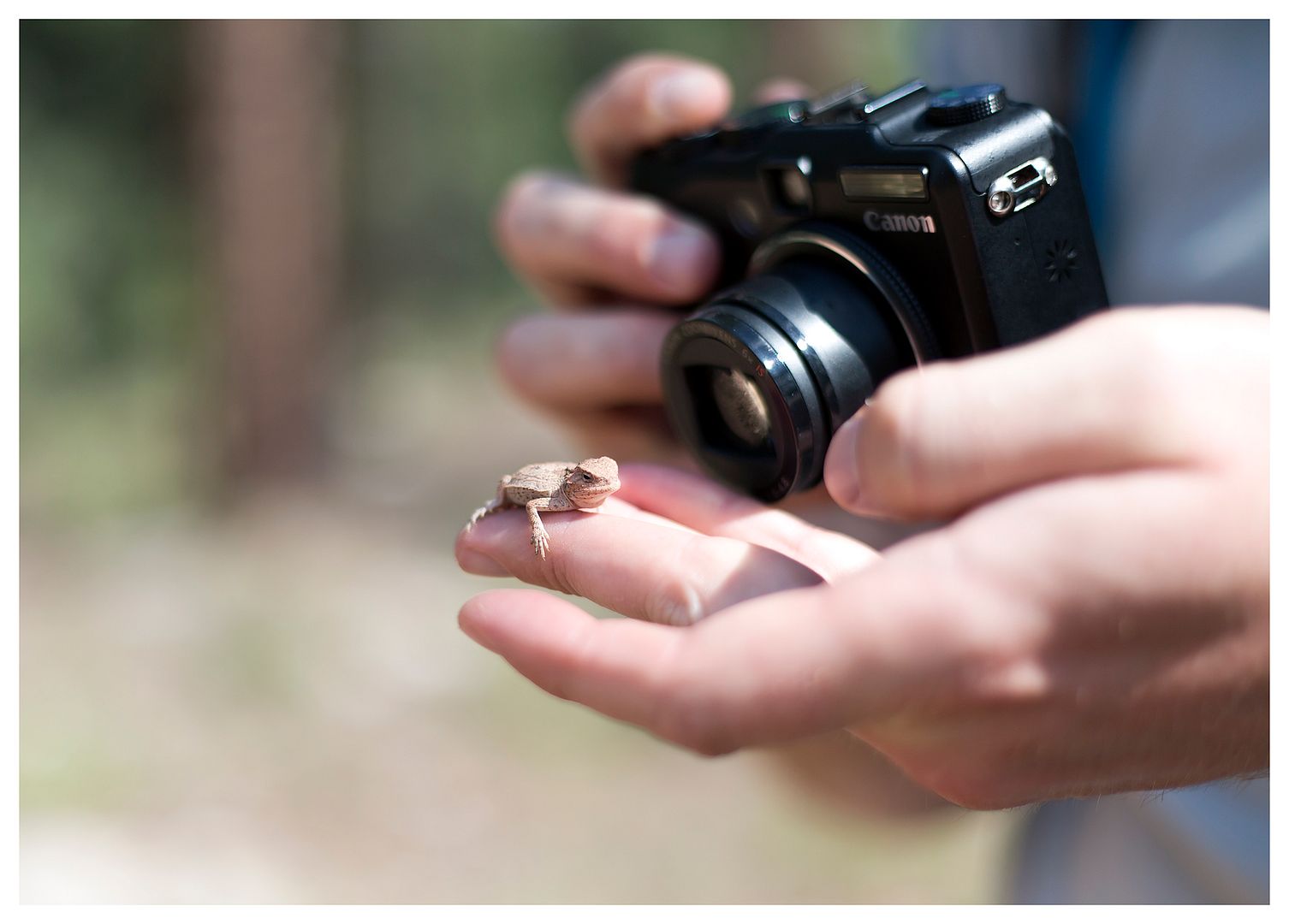
"Greater short-horned lizard; Fire Road 1170;
Tonto National Forest, AZ; August 2013"

Until this summer, ten years after that unforgettable trip, the river week was my only experience of the American Southwest, and I've wanted to return to the region for some time. When a good friend (and fellow natural history nerd) called me earlier this year and suggested we carve out some time to visit Arizona's Tonto National Forest, I was easily persuaded.

We spent most of our weeklong visit exploring the high desert trails and fire roads of Tonto's north central tract, but we also had an opportunity to spend a little time in the National Forest's southern reach, at the edge of the Sonoran Desert. It was a treat to meet so many species new to me and to have intimate encounters with other animals, like elk, that I'd previously seen in habitats very different from that of the high desert.

Sunday, July 28, 2013

Interview with Jaime Lakatos

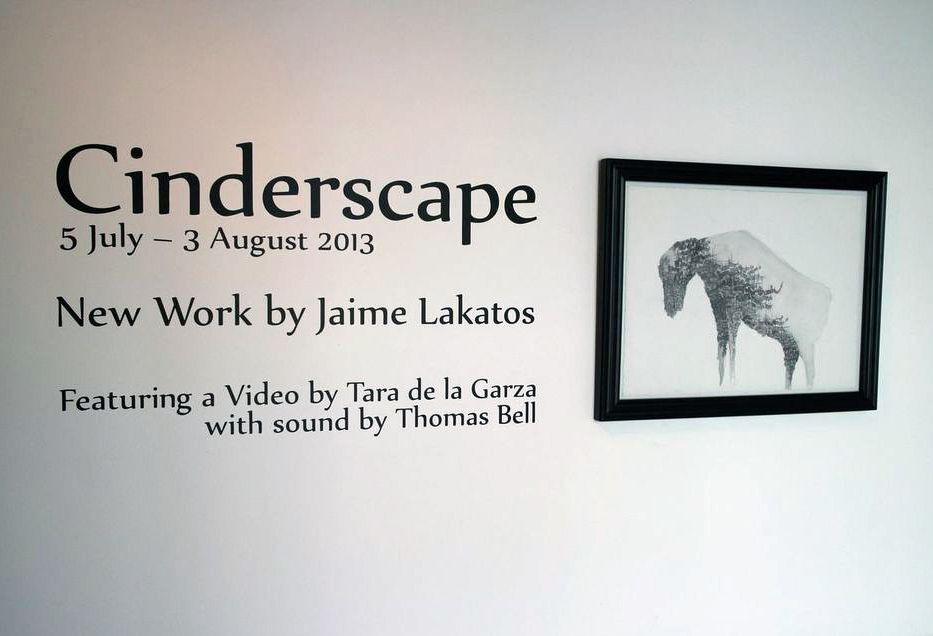
I had the pleasure of meeting artist Jaime Lakatos in Aggregate Space last week to chat with her about "Cinderscape," her solo show there. I encourage readers to visit Aggregate Space while "Cinderscape" is still on view (through Saturday, August 3). It's a very strong show by an artist I expect to see a lot more from in the coming years.

Jaime Lakatos
Installation view of "Chronic Remorse"
Watercolor and graphite on paper
14 x 18 inches
2013
Christopher Reiger: Are you from the Bay Area originally?

Jaime Lakatos: I grew up in New York, about an hour from the city, on Long Island.

Where on Long Island?

Port Jefferson, right where the ferry goes to Bridgeport.

So, you’re obviously interested in natural history. Where did that interest come from?

Well, you know, going to the Natural History Museum in New York. That was home base. I had an internship there before I started working in museums thirteen years ago, just making all the architectural models for the new Hall of Ocean Life. Also, when I was in school at RISD, I did a 6-month stint with Kiki Smith. My work was a lot more human body based at the time, and its gradually evolved. It was about parasites in the human body, then animals and humans, and now it’s just animals!

Tuesday, April 23, 2013

When It All Comes Together

Christopher Reiger
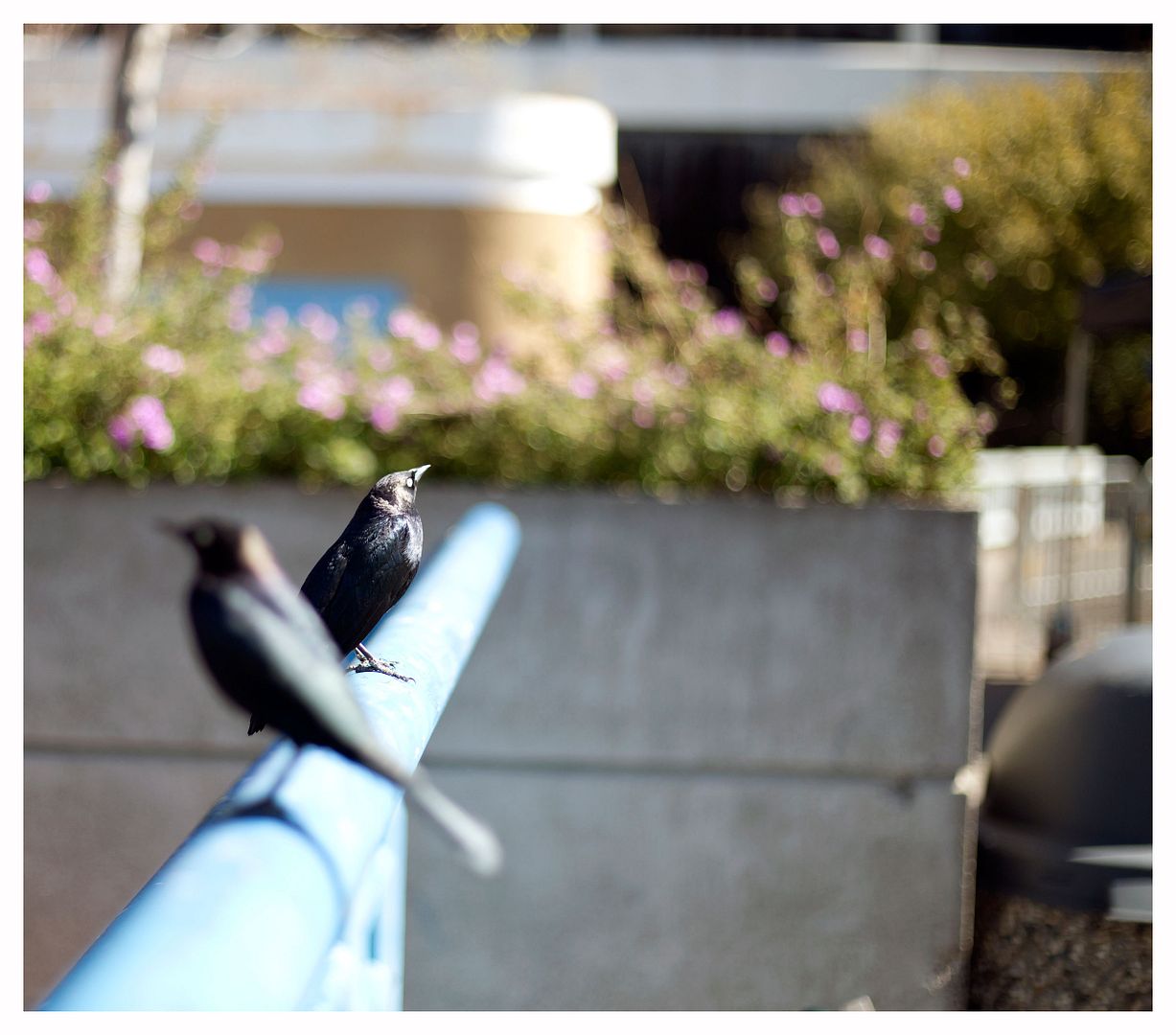
"Brewer's blackbirds"
2013
I recently promised this blog's monthly email digest subscribers that I would begin sharing updates about BAASICS (Bay Area Art & Science Interdisciplinary Collaborative Sessions), the non-profit organization that I co-founded and co-direct. Indeed, most of April's Hungry Hyaena posts are synopses of conversations had with some of the artists and scientists participating in BAASICS.3: The Deep End, our upcoming program on neurodiversities, mental illness, and creativity. (Readers can expect more of these vignettes in advance of the Monday, May 6 event.)

I've come to regard BAASICS as an important arm of my creative endeavor; it's a long-term project that provides me with a platform to help make contemporary art and science relevant and exciting to a broad audience. In many respects, BAASICS is a descendant of Synoddity, the cross-disciplinary organization I co-founded with my friend Michael McDevitt during our undergraduate years at The College of William & Mary. Synoddity made a case for conversation and interaction across professional boundaries and was, like BAASICS, animated by curiosity and wonder, something both Michael and Selene Foster, my BAASICS collaborator and co-founder, have in spades. Working on a project you're passionate about is invariably a good thing, but it's a particular pleasure when you team up with fantastic people.

Tuesday, November 27, 2012

Heide Hatry's Provocative Flowers

Heide Hatry is not a household name, but the New York-based German artist's reputation is blossoming. She has smartly positioned herself at the intersection of the art world and popular culture and, as a result, is of particular interest to me, convinced as I am that the fine arts need mass reach (if not necessarily mass appeal -- see Thomas Kinkade) in order to play the vital cultural role they're intended to.

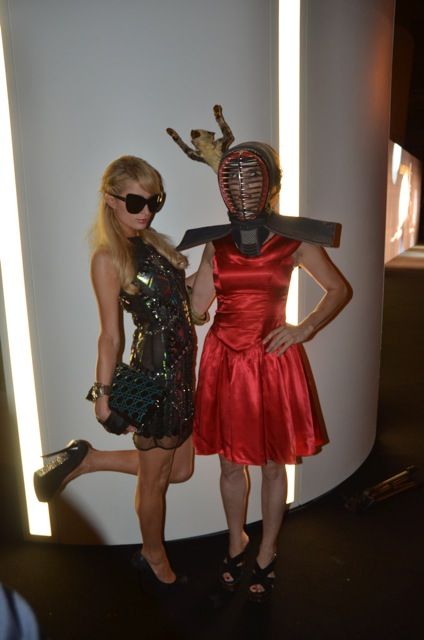
Heide Hatry, right, with Paris Hilton at the Guggenheim Museum
In September, Hatry performed "Schrodinger's Cat" at Lady Gaga's Guggenheim Museum perfume launch. Although Gaga's arty public appearances and carefully cultivated persona evidence how readily pop culture co-opts and/or draws inspiration from the fine arts, most people view Gaga as a pop star, not an artist. Hatry, on the other hand, is always identified as the latter, so when she is photographed rubbing shoulders with the likes of Paris Hilton or her work is written about by the scientist and popular writer Steven Pinker, I'm heartened. The art world isn't usually so accessible.

Naysayers might dismiss Hatry as the art world equivalent of a shock jock, insisting the popular attention she has received is only the result of her pushing our buttons. Certainly provocation plays a part, but Hatry has so far managed to balance titillation with thoughtful questions. (Arguably, Damien Hirst managed to do the same for a time...before he jumped the preserved shark.)

Thursday, October 25, 2012

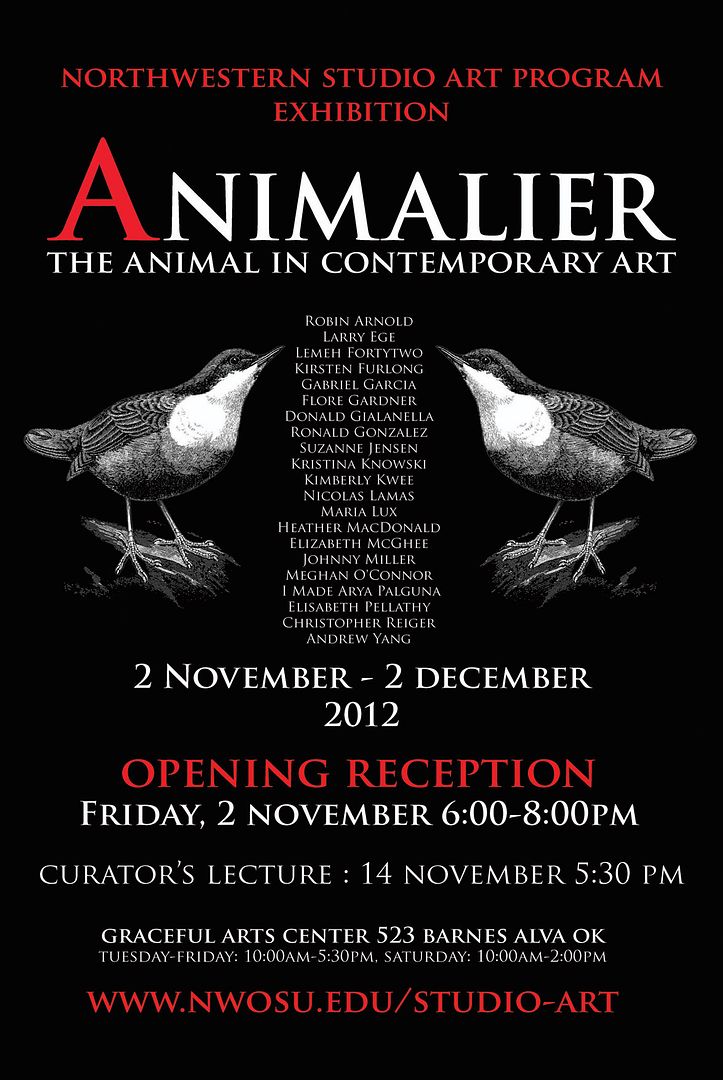
Announcing "Animalier" Exhibition

I'm pleased to announce that two of my watercolor drawings are included in "Animalier: The Animal in Contemporary Art," an exhibition put on by Northwestern Oklahoma State University.

While I know most of Hungry Hyaena's readership resides on the US coasts, if you happen to find yourself near Alva, Oklahoma, in November, please check out the exhibition!

Wednesday, October 17, 2012

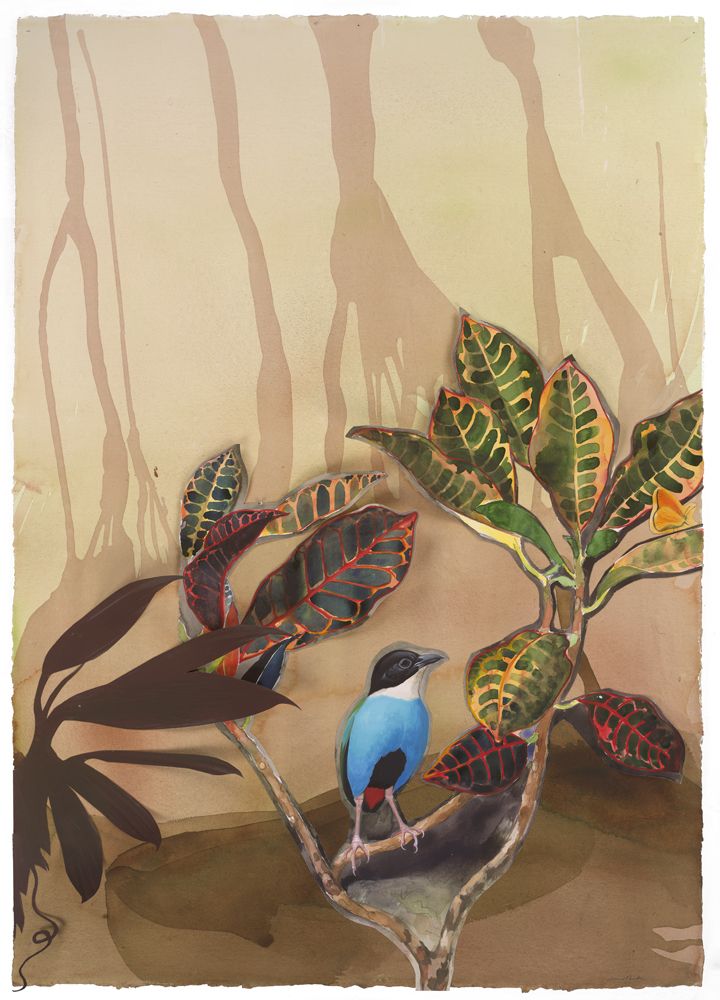
David Tomb's "Grand Birds"

David Tomb
"Azure-breasted Pitta"
2012
Painted papers with mixed media and partially pasted and or completely pasted on paper with mixed media
42 x 30 inches
"Grand Birds of the Philippines," David Tomb's current solo show at Electric Works, is deserving of a thoughtful review. Disappointingly, my writing time is limited this month and I can provide only a few observations.

Friday, September 07, 2012

WAH Center's "Wildlife in the Post-Natural Age"

Kimberly Witham
"Orange Glove"

Several of my 2008 and 2009 works are included in the Williamsburg Art & Historical Center's "Wildlife in the Post-Natural Age," a group exhibition curated by artist-curator Cara DeAngelis that features work by 20 artists.

From the exhibition press release:
"The show focuses on work that addresses the interplay between wildlife and our domesticated selves and spaces. It probes the persistence of wildlife in American culture and individual imagination through the work of a diverse group of city-based artists. The varied works evoke a reconsideration of the term ‘wild’ in what Gary Snyder has called a Post-Natural Age, and the role that artists are playing in exploring these issues."
"Wildlife in the Post-Natural Age" runs from September 7-28, 2012. More information can be found here.

Image credit: copyright, Kimberly Witham

Thursday, August 16, 2012

Platte Clove Residency: Coastal Differences

View of Devil's Path Trail; Catskills; NY; July 2012
Five years ago, while traveling in South America, I met a young woman from the West Coast of the United States. After the trip, we corresponded for a while, and she related news of her move from southern California to New England. An outdoorsy sort, she prioritized exploration of the parks in her new neck of the woods, but she wrote that the eastern forests unnerved her. During the summer months especially, they seemed dense and suffocating, a patchwork of green that closed in around her.

At the time, her observation amused me. Having grown up on the East Coast, I was at home in the mixed deciduous and pine forests of eastern North America. By contrast, the Endor-like redwood and sequoia forests of the Pacific coast and the mixed coniferous forests of the continental divide and the American Southwest, environments in which I'd had little or no experience but with which my friend was very familiar, seemed otherworldly to me.

Friday, August 10, 2012

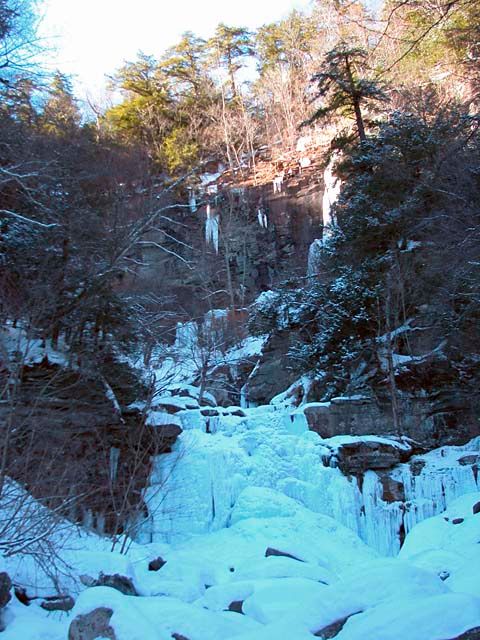
Platte Clove Residency: John Muir and the View From the Precipice

Winter view of Platte Clove's Bridal Veil Falls;
Catskills; NY
“Many people have been killed after falling and sliding off the edge. Especially in areas where there are pine needles. Dangerous conditions exist in many locations. The number of deaths over the years is staggering. Be overly cautious when in this region, and do not take un-necessary risk.”

- “Upper Platte Clove” page of Catskill Mountaineer website
I hesitated before deciding to investigate the unmarked spur of the Platte Clove Nature Preserve's Plattekill Falls Trail. Having recently read a bit about the geology and topography of the Catskill Escarpment, I knew that the preserve is located near the top of a deep ravine that tumbles suddenly down and eastward to meet the Hudson Valley (clove is the Dutch word for a mountain gorge). I’d also learned that each year a handful of foolhardy or unlucky hikers fall to their deaths on Platte Clove area trails. An online trail guide I’d browsed prior to the residency urged hikers to be “overly cautious.” Nevertheless, once I’d stepped off the main path and advanced a few steps down the spur, I was self-assured; I wouldn’t be one of 2012’s casualties. Prudent types like me don’t fall off cliffs.

Wednesday, July 25, 2012

Platte Clove Residency: Some Remove

Plattekill Falls; Platte Clove Nature Preserve;
Catskills; NY; July 2012
On the first afternoon of my residency at Platte Clove, after settling into the cabin and familiarizing myself with local trail maps, I decided to explore a short path that begins a few steps from the cabin's porch and winds its way down one of the valley's uppermost gorges to Plattekill Falls. It was a lovely reintroduction to the Catskills. Late afternoon sunlight filtered through the mixed forest's overstory, unevenly illuminating a floor decorated with eastern hemlock cones. Hidden from view in the canopy above, red-eyed vireos ceaselessly repeated their lilting questions.

Sunday, July 15, 2012

Platte Clove Residency: Prologue

Platte Clove residency cabin, Catskills Mountains

Early this coming Wednesday morning, I'll land at New York City's JFK airport, borrow a car from friends, and drive north to an attractive cabin located in Platte Clove, a valley at the eastern edge of the Catskill Mountains that was etched by glacial meltwater at the end of the last Ice Age. Each summer, the mountain side cabin is home to a revolving door of visual artists, writers, composers, and ecologists selected by the Catskill Center for Conservation and Development's Platte Clove Residency team. I'm honored to be one of the Platte Clove 2012 Artists-In-Residence.

Tuesday, May 01, 2012

"Giving Witness"

Common Snapping Turtle; Main Road; Everglades National Park; October 2011
I originally posted the above photograph of a common snapping turtle at the edge of the main road in Everglades National Park in October 2011, while I was an AIRIE program participant.

I thought of the turtle portrait when I read Ted Levin's informative and compelling "The Staying Power of Snapping Turtles," published in the March/April 2012 issue of Audubon Magazine.

The selection below emphasizes the fact that Chelydra serpentina is an elder member of our extended fauna family.
"The snapping turtle family, Chelydridae, evolved in North America and has haunted our wetlands almost unchanged for nearly 90 million years. Ancestors spread to Eurasia about 40 million years ago and then disappeared from that continent in the late Pliocene, about two million years ago. Chelydrids have been sequestered in the Western Hemisphere ever since, which makes them among our truest and oldest turtles. They were present when dinosaurs lived and died, and had been laying round, white, leathery eggs in sandy loam and glacial till for millions of years when the first Amerindians wandered over the Bering Land Bridge. Snapping turtles have witnessed the drift of continents, the birth of islands, the drowning of coastlines, the rise and fall of mountain ranges, the spread of prairies and deserts, the comings and goings of glaciers."
When I think in terms of the life of a species (rather than that of an individual representative), my pulse slows and I'm suddenly calm....and deeply appreciative to be a part of so grand an experience.

Photo credit: Hungry Hyaena (Christopher Reiger), 2011