Showing posts with label travel. Show all posts

Sunday, October 06, 2013

Sign Fail

During my August trip to Arizona's Tonto National Forest, I encountered the sign pictured below near a trailhead. I found it notable for two reasons.

First, while Tonto visitors should certainly be informed of the simple precautions they can take to avoid antagonistic American black bear encounters, the sign seems to play up the threat posed, an approach better reserved for regions that are home to grizzly or brown bears.

I also tripped over the sign's closing quip, "A Fed bear is a dead bear." Is the Forest Service threatening stout, hirsute homosexual men employed by the federal government? Careless copyediting strikes again!

Forest Service sign; East Verde River; Tonto National Forest; Arizona
August 2013

Image credit: sign snapshot, Christopher Reiger, 2013

Tuesday, September 24, 2013

Photographs From Tonto National Forest, AZ

As promised, I'm posting a sampling of the many photographs I took during my August trip to Tonto National Forest. If you'd like to read more about the various animal species encountered on the trip, click here.
Christopher Reiger
"Barrel cactus species; Fire Road 1170; Tonto National Forest; Arizona; August 2013"

Monday, August 19, 2013

A Tonto Inventory

During the summer of 2003, I spent a week rafting on the Colorado River. Our flotilla bounced, rolled, and cheered its way down the river's major rapids, but there was also ample time for floating on the current and letting the Grand Canyon's magnificence wash over us. At night, we cooked and camped on the river's beaches. A few memories of the trip are especially clear: I recall encouraging the youngest members of our party to avoid harming the spiny lizards they chased around camp; rejoicing when I encountered rattlesnakes and scorpions during side hikes; and, on the last night of the trip, listening to a passionate talk by one of our guides about the Colorado's dwindling water flow. Above all, though, I remember the sublime beauty of the landscape.
Christopher Reiger
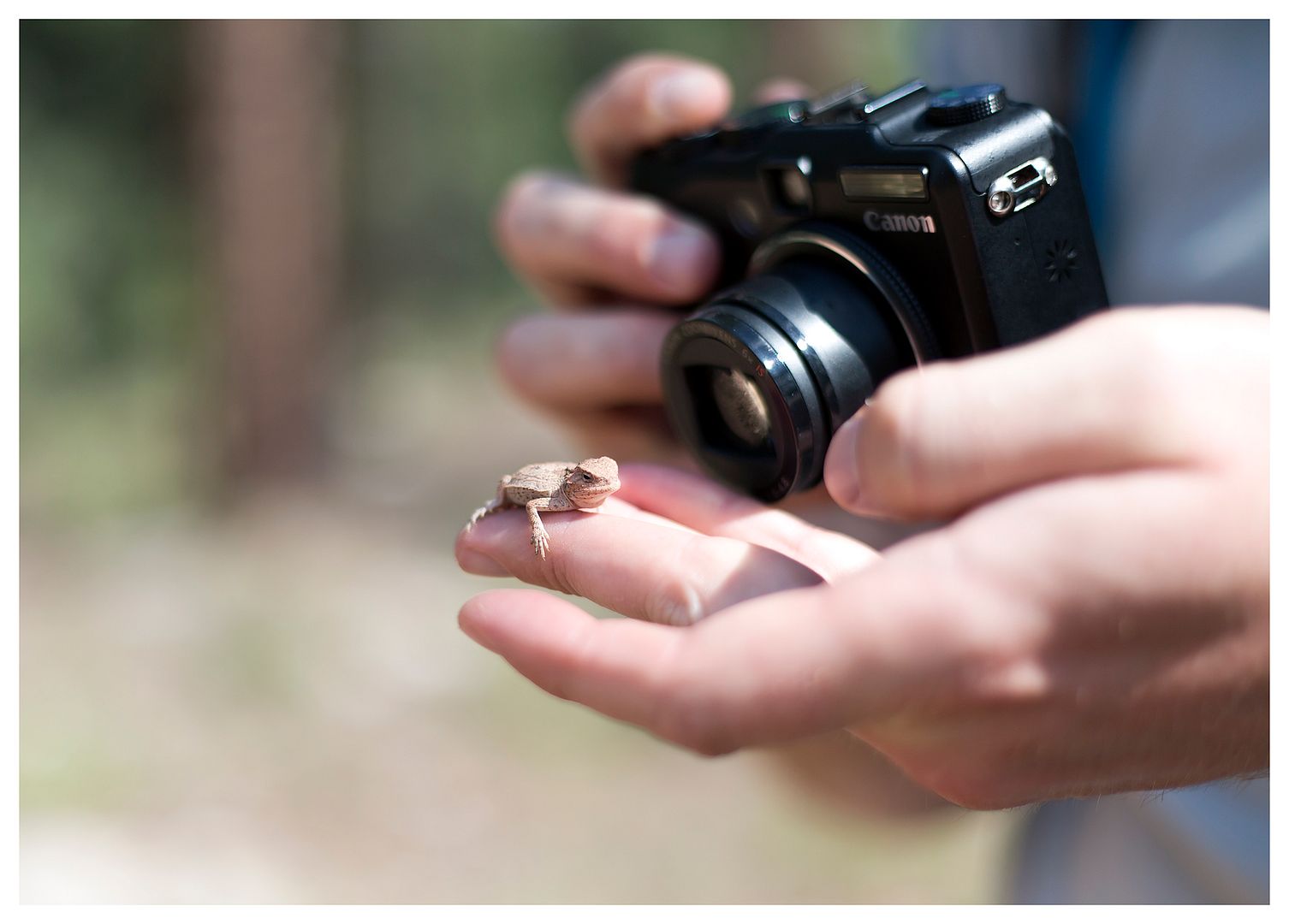
"Greater short-horned lizard; Fire Road 1170;
Tonto National Forest, AZ; August 2013"

Until this summer, ten years after that unforgettable trip, the river week was my only experience of the American Southwest, and I've wanted to return to the region for some time. When a good friend (and fellow natural history nerd) called me earlier this year and suggested we carve out some time to visit Arizona's Tonto National Forest, I was easily persuaded.

We spent most of our weeklong visit exploring the high desert trails and fire roads of Tonto's north central tract, but we also had an opportunity to spend a little time in the National Forest's southern reach, at the edge of the Sonoran Desert. It was a treat to meet so many species new to me and to have intimate encounters with other animals, like elk, that I'd previously seen in habitats very different from that of the high desert.

Sunday, June 20, 2010

Moving Notice


HH will be quiet for a couple of weeks. In a few days, Elizabeth and I begin the drive west; as of July, I'll be a Californian resident.

I haven't known so heightened a degree of nervous anticipation since I sat on my hands in the passenger seat of my dad's Ford F-150 and, wide-eyed and gape-mouthed, emerged from the Holland Tunnel into Manhattan.

That New York City birth occurred more than ten years ago, but I recalled it earlier this week, as I bounced a four-and-a-half month old baby on my lap. Whenever the two of us made eye contact, the baby would smile toothless at me and drool on the chest of his Snagglesaurus onesie. Each time, though, his eyes would soon drift away from mine, his smile would open into an imperfect "O," and he'd stare, head lolling, at some other object of wonder.

I've got thirty-two years on the little guy, but I don't believe that my appreciation of the world is altogether dissimilar. Certainly, I slip into self-conscious, myopic modes (say, when I'm packing for a major move!), but much of each day is spent squinty-eyed happy or struck dumb by wonder. I don't drool as much as I used to, but the stupidly sublime fact of being wows and humbles me no less than it did way back when.

Despite the long hours and the relative monotony of Interstate driving, I look forward to crossing this spectacular land. Along with books on tape and downloaded lectures, Elizabeth and I will have a road trip playlist to listen to. I added Liz Phair's "Go West" to the tracks last night.
"Safe on the interstate
New York is 3,000 miles away [...]
I've closed my eyes and my bank account
And gone west, young man

Take off the parking brake
Go coasting into a different state
And I'm not looking forward to missing you."
And I'm not looking forward to missing you New York, but life rolls on and I keep on smiling.

Image credit: State flag of California, ripped from Wikipedia

Tuesday, September 08, 2009

Kimmel Harding Nelson Residency: Day 2


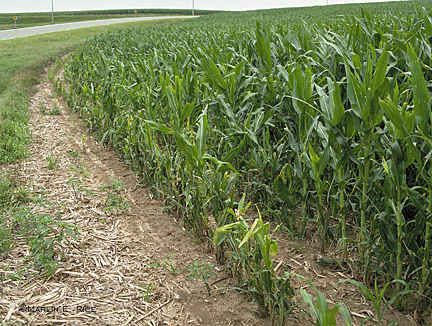
Iowa corn field

The Flying Nun

As our plane approached Omaha, Nebraska, I surveyed the irregular grid of rectangles and squares formed by western Iowa's country roads. Cumulus clouds cast dark shadows of punctuation over the vibrant greens, yellows, and siennas of the state's corn and soybean harvest.

I tend to think of our nation's industrialized monoculture as a rigid corporation of hundreds of thousands of acres of symmetrical fields, but, in practice, even agribusiness can only bend the land so much. At an altitude, one sees that our fields are as shaped by the extant topography as they are by human manipulation. Indeed, some of Iowa's fields, with their rounded edges and calligraphic plow lines, could, from the air, be mistaken for southeast Asian rice paddies.


Aerial view of western Iowa agriculture

My neighbor on the plane was a pleasant Benedictine sister. Dressed in full habit, she was en route to Norfolk, Nebraska, for an assembly of the world's Benedictine Monastic Missionaries. She works and resides in Namibia, Africa, assisting with education and HIV/AIDS prevention. I deeply appreciate the charitable activity and lifelong devotion of such missionaries, but I remain wary of the proselytizing component.

At several points in my conversation with the sister, I felt as though she was soft-selling her faith. She commended me on my given name, Christopher, explaining that I was named after the Catholic saint that supposedly carried the young Yeshua of Nazareth across a river. (Of course, that isn't quite right. The saint, if the man in fact existed, was named for his deed; the Greek word Christophoros translates as "bearer of Christ.") She was also happy to learn that my vocation, my calling, was art, and encouraged me to use my artwork to "usher in Christ's love everlasting." I replied with a noncommital "um hmm," and left it at that.

Perhaps because my response was ambiguous, she persisted. Inspired by my affinity for art, she recollected a visit she made to the Norman Rockwell Museum, where she viewed a sculpture by Rockwell's son, Peter. According to the nun, the sculpture featured a crucifix crowned by devil horns. The piece sounds wholly adolescent, but it evidently upset one of the nun's companions, who couldn't understand why the "symbol of all that is good" would be paired with "the symbol of all that is evil." The nun reassured her friend by pointing out that "at least Peter Rockwell isn't an atheist." She weighted the last word, and shook her head as she pronounced it. I'm not sure what element of the sculpture informed her confident conclusion about Rockwell's metaphysics, but her story made clear her negative feelings for those who doubt or deny her particular faith.

Some minutes after the Rockwell anecdote, she expressed pleasure at Pope Benedict XVI's decision to expand contemporary Catholic use of the Tridentine Mass, a Latin text that vilifies Jews. Considering the nun's clear dislike of atheists and her implied disapproval of non-Christian religious beliefs, I'm happy that I dodged any questions that, squarely answered, would have revealed something of my personal path from a Christian baptism, to agnosticism, to atheism, to my current exploration of and identification with panentheistic or panendeistic Judaism. Part of me was disappointed in myself for not confronting her ecumenical failure, but, frankly, I was more interested in looking out of the plane's window.


Auto repair yard on Central Avenue; Nebraska City

First Impressions of Nebraska City

If you define "city" as a settlement with a large population, Nebraska City is a misnomer. Compared to New York City, my home for almost a decade, Nebraska City is a population blip. New York City's population, estimated at 8.5 million, is 1,200 times Nebraska City's roughly 7,000 residents.

Shortly after we loaded the minivan with our bags and left the Omaha airport, Ron, the owner (and sole employee) of Tree City Taxi Service, said that most Kimmel Harding Nelson Center residents that come to Nebraska City from big cities experience some degree of culture shock. But, although I now live in New York City, I originally hail from Locustville, Virginia. Locustville's population was just 99 when I lived there, and I don't believe that the number has significantly increased or decreased in the years since. Compared to my hometown, Nebraska City is, as its name suggests, a veritable metropolis!


Closed store on Central Avenue; Nebraska City

In conversation with Ron, I gathered that the largest employer in Nebraska City, the American Meter Company, has recently laid off a significant number of its employees. Two other companies that the townspeople depend upon, Cargill Meat Solutions and Diversified Foods & Seasonings, are also facing cutbacks. As a result, many of Nebraska City's citizens are struggling to make ends meet. The economic woes are apparent on the town's main street; it seems as though every block on Central Avenue is home to at least one vacant storefront.

Ron also confirmed my assumption that white-tailed deer, turkey, carp, and channel catfish are major focal points of the region's outdoor recreation. He proudly told me that two of his granddaughters, decked out head-to-toe in camouflage gear, already accompany their dad deer hunting. The image of the camouflaged little girls made me smile, perhaps because I fondly recall the too-big camouflage outfits of my childhood.

Along with hunting and fishing, the major pastimes in eastern Nebraska are high school and college football. This afternoon, from the kitchen window of my residency apartment, I watched the middle school football team practice. I wondered if, compared to their coastal peers, a greater percentage of Nebraska's teenage athletes bank on athletic scholarships and dream of going pro. Many of the players' parents arrived early and watched them from the edge of the practice field.


View on 6th Street; Nebraska City

Photo credits: image of Iowa corn field, ripped from Iowa State website; image of western Iowa fields, ripped from Legacy By Design blog; all photographs of Nebraska City, Hungry Hyaena, 2009

Monday, September 07, 2009

Kimmel Harding Nelson Residency: Day 1


Historical Map of Nebraska City, Nebraska


I subscribe to the Whitmanesque belief that place is presence, that our individual minds are shaped and informed by the ecology, the rhythms, and the atmosphere of our environment. But what can you learn of a place, any place, in just two weeks?

My stay in Nebraska City amounts to a prolonged layover. During this short time, what might I intuit from the town's style and voice, or from the steady push of the great, brown river that draws the town's eastern edge? Certainly, I can look thoughtfully at the people I meet and the birds I encounter; I can listen, as I do now, to the calling of crickets underneath my window; I can contemplate the regional topography and the land's history; I can ask lots of questions and take lots of notes; still, I will not know Nebraska City.

As David Abram writes in "The Air Aware," an essay published in the September/October 2009 issue of Orion,
"Only by living for many moons in one place, my peripheral senses tracking seasonal changes in the local plants while the scents of the soil steadily seep in through my pores, only over time can the intelligence of a place lay claim upon my person."
And what does this notion of place as state-of-mind intimate about my current choice of home? I'm fond of New York City, but how strange that a boy shaped by the salt marshes and fields of the Virginia's coastal plain, and informed by the fishing and farming communities that hold on there, should, as an adult, call home a metropolis with a dominant culture that is almost entirely detached from seasonal turnings of the soil!

Even if I am unable to locate the quintessence of Nebraska City in these two weeks, or to locate myself in it, I look forward to the time away from New York City. I'm eager to look, to listen, and, as David Abram would put it, to breathe in what I can.

Image credit: image ripped, appropriately enough, from Epodunk: The Power of Place website

Tuesday, July 07, 2009

Rootedness


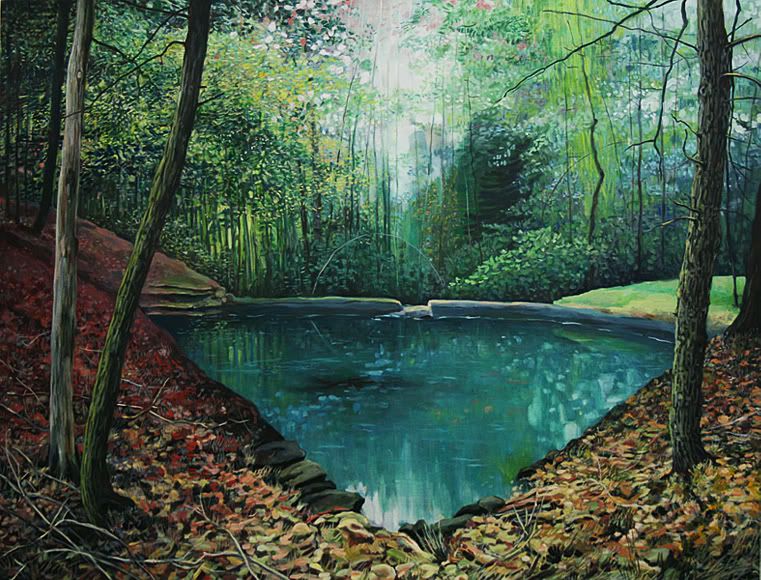
Amy Talluto
"Blue Pool"
2009
Oil on canvas
40 x 52 inches


Reading Mary Duenwald's recent New York Times article "The Land and Words of Mary Oliver, the Bard of Provincetown," I was particularly charmed by the following passage.
From time to time over what she has called her '40-year conversation' with Ms. Cook, [Ms. Oliver] or the couple together would go off to places like Sweet Briar, Va., and Bennington, Vt., where Ms. Oliver would teach poetry writing. But their home base was always Provincetown.

'People say to me: wouldn’t you like to see Yosemite? The Bay of Fundy? The Brooks Range?' she wrote in Long Life, a book of essays. 'I smile and answer, ‘Oh yes — sometime,’ and go off to my woods, my ponds, my sun-filled harbor, no more than a blue comma on the map of the world but, to me, the emblem of everything.'"
I'd like to accurately claim, as Oliver does, a deep familiarity with one landscape and ecology. Although I'm romantically rooted in the sulfurous soil of Virginia's coastal salt marshes, like many Americans, I've lived a relatively transient life, so far calling three states (and more houses or apartments than I can count on both hands) home. Still, the ascetic aspect of my temperament is moved by the notion of staying put, of refraining from travel in order to better cultivate continuity, peace of mind, and sense of place. The terms "provincial" and "parochial" have pejorative associations, but I believe there is a lot to be said for those individuals who appreciate their home ground as only a true local can.

If Oliver is right, rootedness is especially significant for artists. Reading some of Oliver's poetry last night, I rediscovered this early work, from 1963.

No Voyage

I wake earlier, now that the birds have come
And sing in the unfailing trees.
On a cot by an open window
I lie like land used up, while spring unfolds.

Now of all voyagers I remember, who among them
Did not board ship with grief among their maps?--
Till it seemed men never go somewhere, they only leave
Wherever they are, when the dying begins.

For myself, I find my wanting life
Implores no novelty and no disguise of distance;
Where, in what country, might I put down these thoughts,
Who still am citizen of this fallen city?

On a cot by an open window, I lie and remember
While the birds in the trees sing of the circle of time.
Let the dying go on, and let me, if I can,
Inherit from disaster before I move.

O, I go to see the great ships ride from harbor,
And my wounds leap with impatience; yet I turn back
To sort the weeping ruins of my house:
Here or nowhere I will make peace with the fact.

-Mary Oliver

Image credit: courtesy, the artist

Sunday, June 28, 2009

Back from Florida


Alexander Springs, Ocala National Forest, Florida


My trip to central Florida was terrific. Two friends and I spent our days exploring some wonderful state parks and preserves around the city of Gainesville, in the Ocala National Forest, and around the town of Lake Placid. Disposed toward more temperate or even cool climates, I'm certain that I sweat off a few pounds in the damp Florida swelter, but the abundant tropical wildlife made up for the mild discomfort.


Exploring Lake June-In-Winter Scrub State Park; Lake Placid, Florida


Among the trip's wildlife highlights were two gopher tortoises (Gopherus polyphemus), one Florida cottonmouth (Agkistrodon piscivorus conanti), one yellow rat snake (Elaphe obsoleta quadrivittata), a Great crested flycatcher (Myiarchus crinitus), a Mississippi kite (Ictinia mississippiensis), a Northern parula (Parula americana), a number of Black-bellied whistling ducks (Dendrocygna autumnalis), two Summer tanagers (Piranga rubra), and a pair of Florida scrub jays (Aphelocoma coerulescens).

I've included four "critter" photographs below. More pictures from the trip can be viewed in my Florida 2009 Flickr set.


Yellow Rat Snake (Elaphe obsoleta quadrivittata); Devils Millhopper State Park; Gainesville, Florida


Zebra Swallowtail (Eurytides marcellus); San Felasco Hammock; Alachua, Florida


American Alligator (Alligator mississippiensis); Paynes Prairie Preserve; Gainesville, Florida


Florida cottonmouth (Agkistrodon piscivorus conanti); Paynes Prairie Preserve; Gainesville, Florida


Photo credit: Hungry Hyaena, 2009

Tuesday, June 16, 2009

Vacation Notice


As of Wednesday, June 17th, Hungry Hyaena will be "out of the office" for a little over a week. I'm heading to central Florida, that "open-air zoo," to visit two good friends.

Our home base will be Gainesville, but I'm hoping that we'll spend most of our time in Paynes Prairie Preserve and the Ocala National Forest, where we will be birding, herping and taking plenty of photographs.

I also hope to find some time to catch up on a little editing, reading and writing.

Until I return, I wish all of you all well!

Photo credit: Florida Green Water Snake (Nerodia floridana) in Paynes Prairie Preserve, image ripped from TomSpinker's Flickr photostream

Thursday, January 15, 2009

Coasts


Steep Ravine Trail, Mount Tamalpais, December 29th, 2009
"The deepest level of communication is not communication, but communion."
Elizabeth and I devoted the afternoon of my thirty-first birthday to striding down (and then huffing back up) the aptly named Steep Ravine Trail in Mount Tamalpais State Park. During our descent, we paused for a few minutes on a stocky wood footbridge spanning a shallow gully stream. I leaned against the bridge's handrail and appreciated the subtle play of sunlight on the forest's understory, then tilted my head far back to admire the towering canopy. A bird call punctuated the stream's casual susurration.

The impressive montane forest brought to mind a quotation I copied into one of my commonplace books some years ago. In his account of an interview with a Venezuelan native, the celebrated 19th century German naturalist Alexander von Humboldt claims that the Indian critiqued the Christian God of the European explorers and conquerors, observing, "Your god keeps himself shut up in a house as if he were old and infirm. Ours is in the forest and in the fields and on the mountains when the rain comes." Although no rain graced Mount Tamalpais this December 29th, the Indian's god was also mine.


Steep Ravine Trail, Mount Tamalpais, December 29th, 2009


Mount Tamalpais is located in southern Marin County, California, just north of San Francisco. The lush Douglas fir and redwood forests of the region are magical places. They served as inspiration for George Lucas's forested moon Endor and they call to mind the epic majesty of J.R.R. Tolkien's Middle-earth. (In fact, some "Star Wars" fans reasonably suggest that Lucas named his verdant moon in homage to Tolkien. Tolkien, a celebrated linguist and scholar, invented languages for his fantasy fiction and in the Quenya tongue, one of the elvish languages he created, the word for Middle-earth is Endor.)

Of all Tolkien's creatures, the elegant and noble elves of Lothlorien especially appealed to me when I first read "The Hobbit" and "The Lord of the Rings." The elves are wise, fair and gracious beings, but also wild, intimately attached to the world of the hunter and to Nature's ambivalent magic. Twenty years after my first reading of Tolkien's fantasy epic, I still proudly characterize myself as a Nature worshiper.

The economist and sociologist Max Weber famously said that the secularization of society and increasing specialization of methodological inquiry had led to a "disenchantment of the world." Indeed, they have, but Baruch Spinoza's brand of naturalistic pantheism allows for a happy marriage of the material and metaphysical worlds. The two spheres, like the taijitu's yin and yang, are complementary parts of a whole. Necessarily, then, exclusion or disparagement of one of these two realms is limiting.

Although the Enlightenment's separation of reason and imagination, and of science and religion, has yielded exemplary human achievements, it also alienates us from the integrated aggregate. We no longer conceive of the universe (or our experience of it) as coherent or unified; since at least the 17th century, the prevailing philosophical current is Cartesian, depicting the universe as a random assemblage of disparate parts. As a result, those individuals who, like the brilliant 19th century critic John Ruskin, strive to reconcile "the broken harmonies of fact and fancy, thought and feeling, and truth and faith" are considered naive or fey. Even Gershom Scholem, the renowned historian of Jewish mysticism, described his philosopher friend Walter Benjamin's work as "an often puzzling juxtaposition of the two modes of thought, the metaphysical-theological and the materialistic." I align myself with the philosophical dissidents because, like Ruskin and Benjamin, I feel that the material and metaphysical realms are locked in a harmonious, reciprocal relationship. Framed another way, I believe that the mundane is the sacred; I deny the divisive "and."
"My dear brothers and sisters, we are already one. But we imagine that we are not. So what we have to recover is our original unity."

Steep Ravine Trail, Mount Tamalpais, December 29th, 2009


That December evening, Elizabeth and I motored along Grizzly Peak's ridge line and, as the Pacific horizon took the sun, we admired the colorful strata deposited over San Francisco's hills, city lights and bay. Later, after a lovely dinner in Berkeley, we returned to Elizabeth's home and relaxed with her parents and brothers. It was a superlative day. Yet because I'm accustomed to spending my birthday in brooding solitude, it was also an exceptional one, and therefore I wasn't surprised when, driving to Grizzly Peak, I felt a twinge of regret.

To be sure, the day was nearly perfect, but I had to ignore the call issued by the deep blues and purples of twilight, an invitation to submerge myself in the gathering darkness. I remarked to Elizabeth that it felt very strange to observe my birthday without making space for rumination. We turned onto Grizzly Peak Boulevard. I watched the car's headlights rake across a stand of trees, frightening back the dark.


View of Berkeley and San Francisco Bay, December 29th, 2009


The Trappist monk Thomas Merton described his contemplative practice as "death for the sake of life." Merton may be guilty of rhetorical flourish, but one of contemplation's principal goals is the erasure of self or the death, if you will, of the self-conscious individual. I consider myself lucky; I once experienced release from the first-person, a rare gift in our culture of consumption and distraction. I consider those exceptional moments an ecstatic opening to The All, a glimpse of the integrated, infinite universe.

The word ecstasy is derived from the Greek word for "to stand out of place." On the dike at Heron's Foot, my conscious being was literally outside (or at least without) the self. For a time, the atoms, molecules, cells and organs that comprise "me" were undifferentiated from the greater web. Religious mystics usually refer to this variety of fundamental experience as "seeing God." That name bothers me less than it did in my militantly atheistic adolescence, but I prefer The All (or an apophatic counterpart, The Nothing) because the name possesses majesty and mystery but none of the unfortunate authoritarian baggage. Furthermore, the rituals of institutionalized religion and its "under God" subjects are no more or less valuable than the rituals of the heathen mystic. John Dewey's "live animal" might just as easily be awakened in the gropings of sex as in penitential prayer, and God is just as easily found in the forests of Mount Tamalpais as in the acolyte's cathedral. After all, there is nothing supernatural about ecstasy; it is only a mode of hyper awareness, a more immediate connection to the universe, or at least as much of one as our limited vessels can perceive.

Now, January already half gone, I sit at my day-job desk and look out on Manhattan's East River. The late afternoon sun's angled glow paints the 59th Street Bridge in peach-yellow and refracts off the west face of Citibank's glass obelisk in Queens. A herring gull flaps over Roosevelt Island and the river runs slack as it awaits the pull of outgoing tide. In "Rewriting Nature," an essay published in The New Yorker, Adam Gopnik wrote "[Charles] Darwin disenchanted believers in Heaven, but he reenchanted lovers of Earth."

I concur.
"What we have to be is what we are."

Office window view; East River, Roosevelt Island and Queens, January 2008


Note: all indented quotations, Thomas Merton

Photo credits: all images, Hungry Hyaena, 2008

Tuesday, May 06, 2008

A Trip West

PART II: OLYMPIC UPHEAVAL


Puget Sound (with Olympic Mountains beyond); Washington


As admirable a city as Seattle is, I am most charmed by the region's topography and ecology. From the sea stacks and eroding bluffs of the Pacific coast to the alpine forests and lakes of the Olympic and Cascade ranges, this corner of the country is an aesthetic and geologic marvel.


Hurricane Ridge; Olympic Range, Olympic Peninsula, Washington


Jocelyn explained that the tectonics of the area are among the most complex and dynamic on Earth, a result of three-way action by the North American, Pacific and Juan de Fuca plates. The Olympic range, for example, tops out at approximately 8,000 feet, a relatively low elevation when compared to the mighty Cascades, just 90 miles to the east. This is because the Olympics are what geologists term an accretionary wedge, a section of the ocean floor pushed to the surface as one plate - in this case, the Juan de Fuca - is subducted under another - here, the North American continent. By contrast, the Cascades, like most mountain ranges, are the product of volcanism, and the elevation of Mount Ranier is almost twice that of any Olympic cousin.

Were I more geologically inclined, I'd dig deeper, but I nearly failed the "Rocks for Jocks" course I took in undergrad, and my enthusiasm for the field is superficial, though genuine.


Highway 101; Olympic Peninsula, Washington


On my third day in Washington, Michael and I ferried across Puget Sound, picked up Highway 101 and drove around the top of the Olympic Peninsula to the western, rainy side of the mountains, where I was reacquainted with the peninsula's stunning beaches and the marvelous Hoh Rainforest. On the way, we drove through the town of Sequim (pronouced "squim"), where my paternal grandmother is buried, and passed not far south of Neah Bay, where, twenty years ago, my father and I boarded a head boat to catch my first Pacific halibut (Hippoglossus stenolepis).

About halfway between Sequim and the Highway 112 junction for Neah Bay, 101 jags south to trace the shore of Lake Crescent. Like many glacial lakes, Crescent glows turquoise, as though dyed. Fine sediment, or rock flour, generated by glacial erosion and carried to the lake by meltwater streams, is responsible for the striking coloration. Now suspended in the water, these particles absorb all light wavelengths except blue. Unlike most of its glacial relatives, however, Crescent's water is exceptionally clear. (This trait is attributable to its low nitrogen levels, which prevent or discourage algae growth.)


Lake Crescent; Olympic Peninsula, Washington


A shadow-green wall of Douglas firs (Pseudotsuga menziesii), western hemlocks (Tsuga heterophylla), western red cedars (Thuja plicata), and whitebark pines (Pinus albicaulis) rises abrupt from Lake Crescent's waterline and from 101's shoulder. The Olympic Peninsula is home to one of the largest areas of intact old-growth forest in the United States. Much of the territory is heavily logged, however, and 101's scenic drive offers as many scarred landscapes as it does breath-taking vistas.

My choice of words, though, reveals a liberal, urban bias. The work of loggers, after all, is itself "breath-taking." Certainly, it was more heroic when a team of men and oxen felled and transported a Titan of the forest using only axes, two-man saws, falling wedges and greased skids, but giant tree harvest remains impressive in our mechanized age, and the inhabitants of Forks, Washington, are proud of their historic livelihood. Indeed, the town's nickname is "Logging Capital of the World."


Forks, Washington sign


Although timber extraction on the peninsula didn't begin in earnest until the mid- to late 1800s, it was then the principal economic impetus and it remained so throughout the 20th century. Today, however, Forks residents are forced into defensive postures as their way of life is condemned by progressive politics and federal regulation (even if population growth and rampant consumerism ensure that the timber industry will remain active for some time to come). As with most issues of environmental sustainability, an objective, thoughtful consideration of timber harvesting should generate nuanced discussion - for example, short-rotation forestry and windrowing are undeniably destructive practices, but not all harvesting measures are ecologically unsound - but the passionate parties on either side of the picket line prefer to simplify and shout.


Clear cut area off Route 101; Olympic Peninsula, Washington


In the early 1990s, this shouting reached a fever pitch when the Northern spotted owl (Strix occidentalis caurina), a species in decline and dependent on old-growth forest for its habitat, became nationally famous (or infamous, depending on your perspective). The polarizing emblem of a conservation crusade, the owl was, for a time, a victim of its unsolicited celebrity. Although automation of the timber industry, and not any bird species, led to a sharp decline in jobs, Forks loggers (and those sympathetic to their cause) nailed owls to the doors of local environmentalists and displayed bumper stickers reading "Kill a Spotted Owl - Save a Logger" or "Are You an Environmentalist or Do You Work for a Living?" Predictably, the logging camp pointed accusatory fingers at Seattle's condo-enviro types, and the rural-urban cultural rift widened. Almost twenty years later, this animus remains and Forks, a blue state town on the bluer coast, is decidedly red.

This narrative is familiar to the coal miners of rural West Virginia and Kentucky. Like the northwestern loggers, they fight to protect their jobs amidst increased scrutiny and the condemnation of their employers' methods. In 2005, Erik Reece, a contributing editor to Harper's Magazine, wrote "Death of a Mountain," an essay about the desperate, ugly war of words and litigation in that region. Reece recounted the bitter minutes of a public hearing held at the Hal Rogers Center, in Hazard, Kentucky. "The wife of a miner pleaded for her husband's job, then asked, 'What use are the mountains to us other than coal?'" A elderly miner "hinted at the conspiracy afoot by the rest of the state to keep eastern Kentucky poor. He wanted the federal government and the Army Corps of Engineers and the Environmental Protection Agency to leave this region and its people alone to mine as they saw fit."

Although I cringe when I read such sentiments, it's understandable that miners and loggers feel this way. The suburban or urban environmentalist does little to endear himself to those rural residents, farmers included, who work with natural resources. In his book, "Heron Hill Chronicle," my father writes of the intellectual divide between rural conservationists and urban preservationists.

"Sadly, in drawing up their list of enemies, preservationists have alienated most of their strongest potential allies: people who also care about endangered species and rain forests but who understand that perpetuating nature is - first and foremost - hard physical labor far removed from the feel-good realm of petition signing....Real conservation is about planting filter strips along erodible stream margins and riprapping the banks to prevent swollen currents from undercutting them. It's not about save-the-whale rallies. Real conservation is about constructing and annually maintaining waterfowl nesting boxes. It's not about sending money to organizations that make the impossible promise to restore all the waterfowl populations of North America. Real conservation is hands-on, net-gain, local habitat manipulation and species management. It's not about letting nature take its course."


As unattractive as his position is to both the urban environmentalist and the rural logger (who rarely, if ever, thinks about installing nesting boxes or riprapping stream banks), it is a realist's perspective. Man is part of nature; we can not extract ourselves, no matter how stubbornly we insist on our exceptionality. The life of our species, like that of the individual, is finite, and just as each of us chooses to avoid reckless behavior (most of the time), so too should humanity. Reasonable decision making, however, requires that we avoid binary arguments and, in the case of old-growth forest conservation, that foresters, logging companies and environmentalists gather at the same table to achieve some practical compromise.


Logging a clearcut (with windrows); Olympic Peninsula, Washington


Unfortunately, in our capitalist system, state and federal incentives are needed to bring those parties together. A "green future" is tenable only if the necessary changes in technology and lifestyle generate an altogether different kind of green: cash money. Until alternative energy cheerleaders and their allies assuage the concerns of those citizens dependent on income provided by logging and mining companies, the hard-working, blue-collar folks will remain united in opposition to the relatively privileged mouthpieces of environmentalism.

Photo credits: Puget Sound, Picturehell; Hurricane Ridge view, Ryan Hadley; Highway 101, MorleyRoarly; Lake Crescent, Harry Hunt; Forks sign, Idrose; 101 clearcut, Hungry Hyaena; Logging with windrows, Brewbrooks

(More pictures of my trip can be found here. And, again, a big thank you to the photographers who I've ripped from for this post. More posts about the trip will follow.)

Tuesday, April 29, 2008

A Trip West

PART I : SEATTLE, THE CITY PROPER


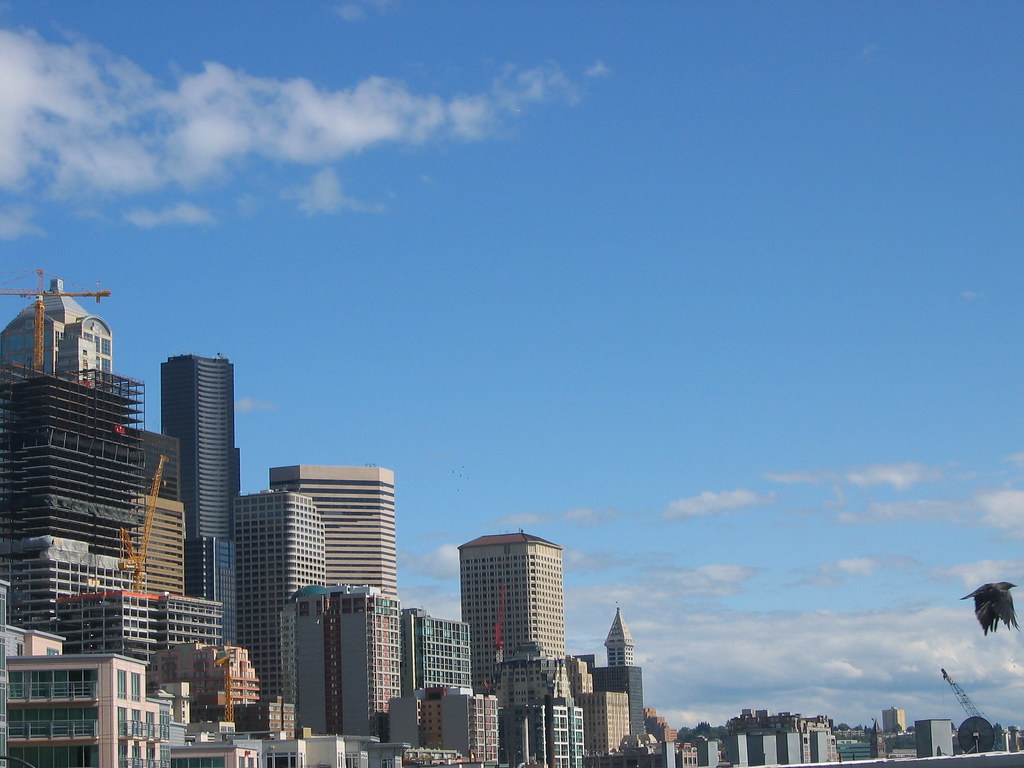
Growing downtown Seattle, Washington (with American crow)


The first thing I noticed about Seattle was the crows. The region has not yet been ravaged by West Nile virus, and the American crow (Corvus brachyrhynchos) population remains robust. The birds flapped heavily over Interstate 5 as Michael, Jocelyn and I headed north from Sea-Tac Airport. A lover of all things Corvidae, I interpreted the birds' greeting as a good omen.


Approaching Seattle on Interstate 5


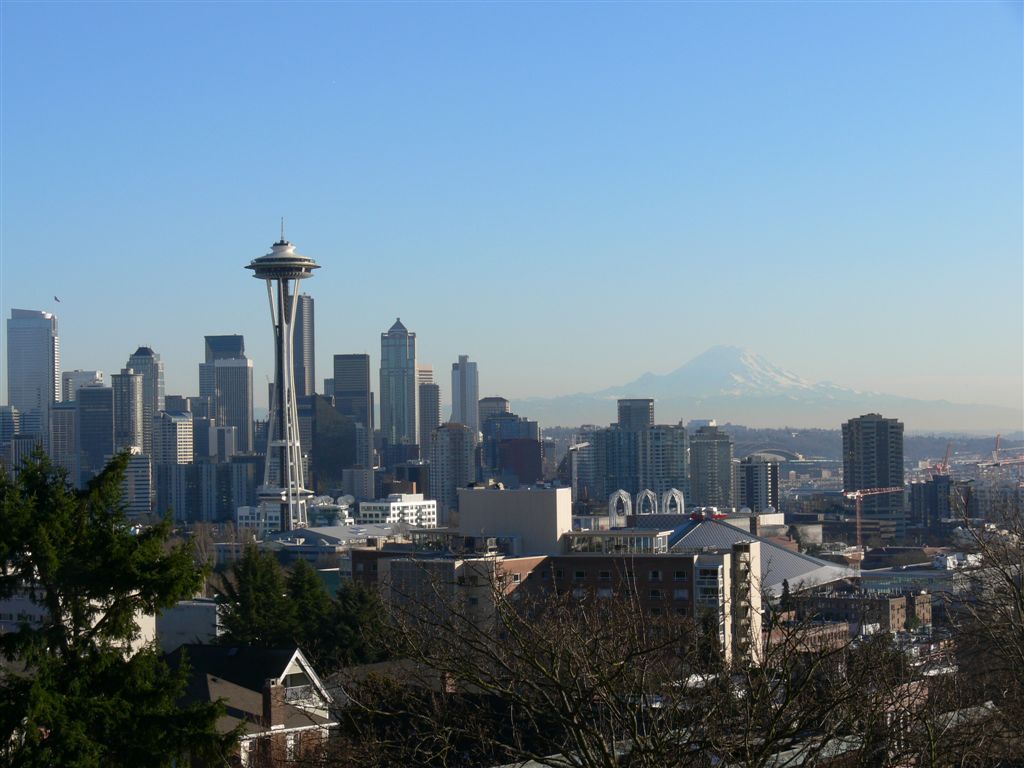
The red gods also granted me exceptional weather. The morning that I arrived in Washington, the low ceiling characteristic of Seattle's seven-month wet season dissipated. Even Mount Ranier, 54 miles southeast of the city, was visible from downtown. Clear skies, sunshine and mild temperatures are not uncommon during the summer months, but they are rare in early April, and the balmy conditions were the subject of much happy conversation among Seattlites.


View of downtown Seattle and Mt. Ranier


Another oft-raised topic was the supposedly passive-aggressive disposition of the Emerald City's residents. I don't doubt that it exists - few stereotypes are baseless - but either I happened upon a rare breed of Seattlite or the rumors of poor behavior are greatly exaggerated.

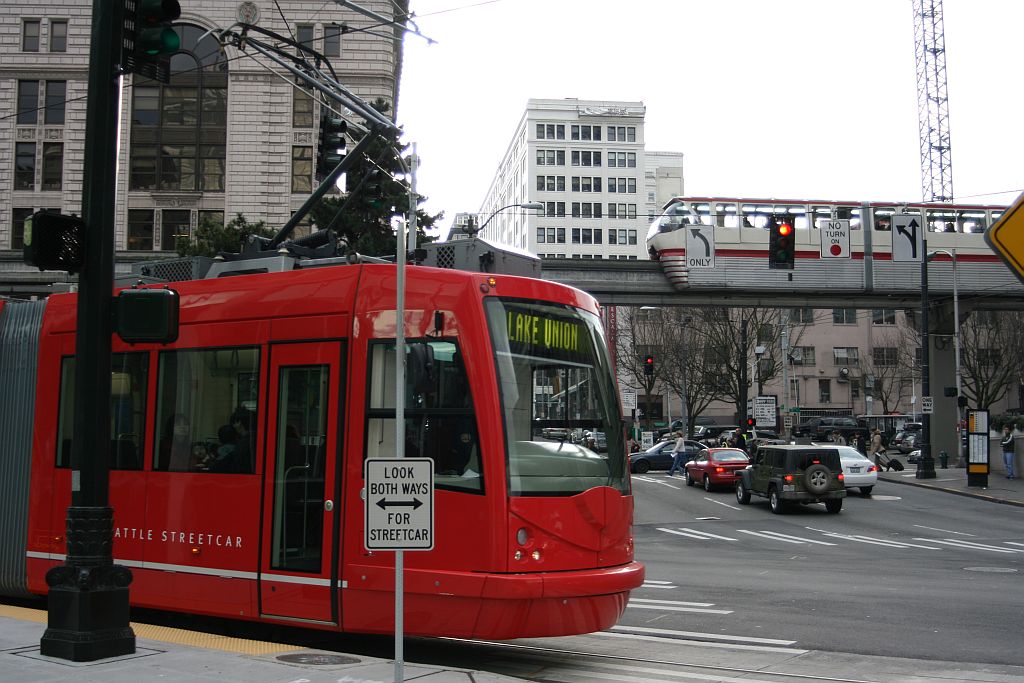
In fact, I found very little about Seattle unfavorable. The only notable drawback is a relative one; Metro Transit, Seattle's public transportation network, leaves much to be desired. (I've been spoiled by New York's first-rate transit options.) Seattle's bus routes are comprehensive enough, so the principal grievance regarding Metro Transit service is one of infrequency. Bus stops are visited at 30-minute intervals, on average, and a missed bus can mean a missed appointment. On the other hand, it's hard not to love the city's proposed streetcar system, especially since the completed, functioning section is called the South Lake Union Trolley, or S.L.U.T.. ("Ride the SLUT" t-shirts are a popular novelty item.)


S.L.U.T. line in foreground, with (little used) Seattle monorail behind


Generally, Seattle strikes me as a terrific place to live, and it now ranks at the top of my post-NYC shortlist. Not surprisingly, the viability of the local art community is an important criterion for any city on that ballot. Though I've heard some negative things Seattle's art scene - it isn't New York or Los Angeles, after all - I was generally impressed by what I saw. Gallery hopping during the First Thursday Art Walk, I visited several decent shows but, more importantly, observed ample (and good-natured) enthusiasm, a variety of work and a number of familiar names. The galleries that Michael, Jocelyn and I visited were all within easy walking distance of one another, and several were housed in Seattle's more interesting (because older) buildings, located in Pioneer Square. (The dominant architectural modes in the neighborhood are Victorian and Romanesque Revival, a result of the latter's popularity in the late 19th-century; the city was rebuilt following 1889's Great Seattle Fire.)


Pioneer Square, Seattle


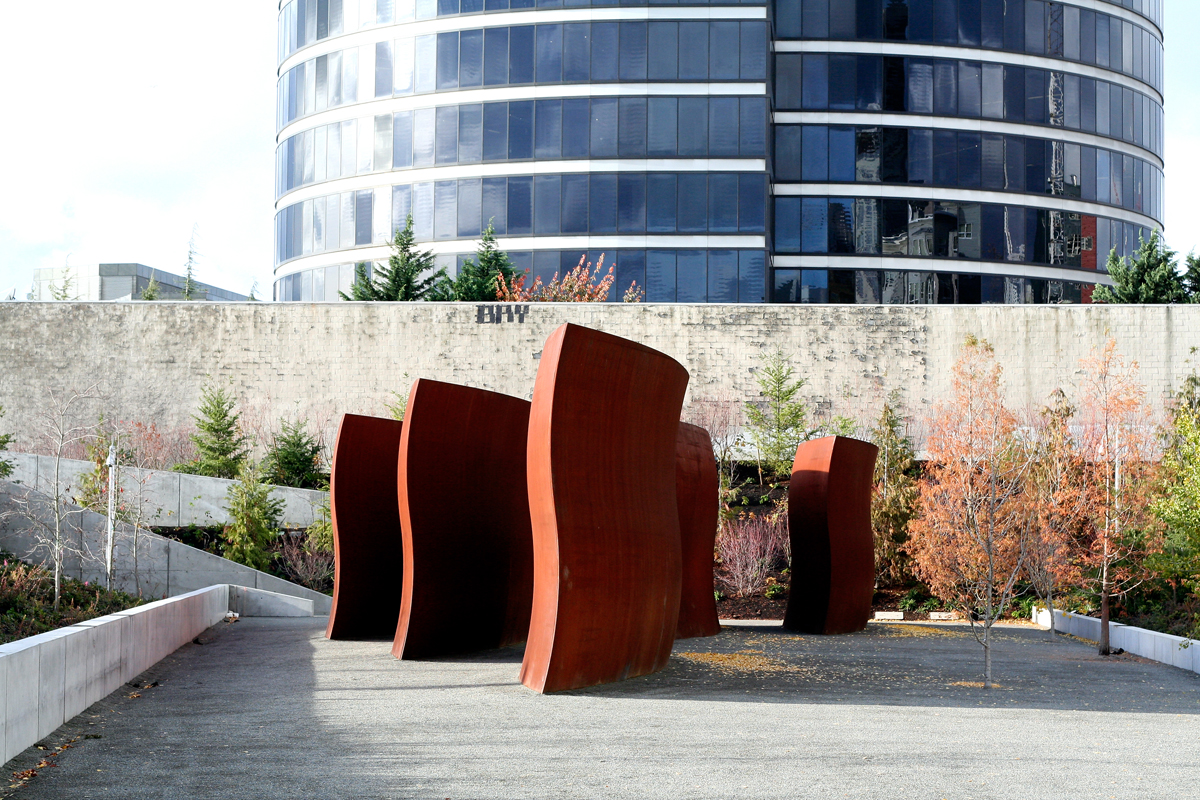
The city itself, like the Sea-Tac Airport, suffers no shortage of public art. I saw more such work during my three days in Seattle proper than I've noticed in almost a decade of NYC living. Mind you, I'm not usually excited by public sculpture. Most of it is insipid, but the "right" setting allows some works to thrive. It was a treat to see Richard Serra's "Wake" at the Olympic Sculpture Park, with the Space Needle rising to the east, Mount Ranier to the south, and Puget Sound behind me, to the west. (By contrast, Claes Oldenburg's "Typewriter Eraser, Scale X" looked as ridiculous in this context as his works do anywhere else.)


Serra's "Wake," at the Olympic Sculpture Park


(An art blogging aside: I finally met artist Amy Ross, after having corresponded with her for months and having a 3-person show, "Animus Botanica" - Amy, Boyce Cummings and myself - slated for this coming September, at Denise Bibro Gallery. She was participating in a 2-person show, "Animal Spell," with Justin Gibbens, at Punch Gallery. I'm happy to report that her collages and paintings looked fantastic.)

Photo credits: Seattle crow, PDX503; Interstate 5, Hungry Hyaena; Skyline with Ranier, Bill Rose; S.L.U.T., Brian Bundridge; Pioneer Square, Vincos; "Wake," Cascadeguy

(More pictures of my trip can be found here. Also, although none of the photographer's work was included in this post, Seattle Daily Photo is an excellent resource for terrific photos of the city. Finally, a thank you to the photographers who I've ripped from for this post. More posts about the trip will follow.)

Sunday, April 13, 2008

And back again.


Ruby Beach at sunset; Olympic Peninsula, Washington


Despite American Airlines' recent woes, I returned only four hours late (to the wrong airport, but I can't be too picky) from my trip to Seattle, Washington's Olympic Peninsula, and San Francisco.


Hoh Rainforest; Olympic Peninsula, Washington


It was a fantastic ten days, and the time spent there renewed my deep affection for the landscape, flora and fauna of the Pacific Northwest. In the coming week (or, unfortunately, weeks), expect further rambling about the trip, as well as more photographs. (Or, if you want pictures now, you can check out the Flickr photo set here.)

Generally, though, posting will continue to be sporadic; more group shows cropped up while I was traveling...and that means even more work must be made. It's a good kinda pressure.


Point Reyes; Marin County, California


I hope that all the regular readers have been well, and a heartfelt thanks to those of you that treated me so right on the left coast, especially those of you with floors and beds for me. The trip wouldn't have been possible without you.

Photo credit: all pictures, Hungry Hyaena, 2008

Thursday, November 01, 2007

A Belated Sermon


A few days before I flew south to Brazil, an acquaintance asked me why I would choose to use my limited vacation time volunteering for manual labor. I was distracted by last minute travel preparations, and my answer was inadequate and perfunctory, but I recalled her question this week and decided that I should address it.

We live, as we're so often reminded, in an age of global interconnectivity. Every year, millions of people (of a certain means) visit far flung places. Recreation and relaxation are their priorities. Excluding work-related trips, contemporary travel is less about the destination than it is escape; we flee our mundane existence. Although this attitude is an indication of pervasive ennui, there's nothing wrong with taking a break from the hectic schedules and frivolous intrigues of contemporary living. Indeed, it's essential that we find time to enjoy life, but we needn't travel to do so; we can center our lives without leaving home. This approach is sometimes called a "stay-cation."

Furthermore, although most people think of a vacation as an opportunity to take stock and de-stress, it's usually anything but. We travel to places where the local "recreation" feeds our consumer impulses, and "relaxation" is centered around food and drink. After all, we associate the word "vacation" with overfull shopping bags on the Champs-Elysees or mojitos on the beach. The vacation is, above all else, a recess from guilt. We sleep too much, eat too much, spend too much...and revel in the excess. Away from our community, we discard our moral compass. What happens in Costa Rica stays in Costa Rica.

Yet some of us insist, sincerely, that we don't travel for escapist reasons and, furthermore, that it is irresponsible to do so. We cite as our impetus the geography and culture of the chosen destination. The trouble is, you don't "know" a place by sight-seeing. A guided stroll away from the cruise ship or a double-decker bus tour only superficially acquaint the tourist with the place they visit. To be fair, you don't really know a place until you live there, and for some years at that.

Unfortunately, none of us has enough years to live in all the places we'd like to "know," so visits have to suffice. The best way to make the visit (and the place) memorable is to participate more fully in local life. And what better way to participate than to work alongside people who do live there?

Consider, too, that the infrastructure international travel requires - the true price, if you will - necessitates that the conscientious traveler give something back to the destination community. In other words, travel isn't just about your having fun or relaxing (again, you can do this at home), but about being exposed to a new place, new people, and new ideas.

Groups like the Sierra Club, Earthwatch, Global Volunteers, and others(1) offer travel/work opportunities. More people should take advantage of these trips. Volunteers interact directly with the local culture and assist with valuable work. As a result, the trip is more meaningful (and, as an added bonus, it costs less than conventional tourism).

(1) Visit the travel page at idealist.org for an impressive list of volunteer travel opportunities.

Photo credit: Hungry Hyaena, 2007

Thursday, July 19, 2007

Pantanal Posting Notice


Posts won't appear for at least two and a half weeks.

I'm heading to the Pantanal, the world's largest wetland, to assist Earthwatch researchers with the collection of data on reptiles, amphibians, and some bird species. I fly into Sao Paolo, Brazil, and then west to Campo Grande, in the state of Mato Grosso do Sol (which translates as "Southern thick forest"), before taking a little fixed wing to a spot not too far from the Paraguay border. The area is known for having one of greatest concentrations - if not the greatest concentration - of wildlife in South America. During the summer months (December to May), the Pantanal floods, but in winter (especially in August) the region experiences drought, conducive to wildlife viewing as the animals move close to the remaining water (rivers and standing water).

Much of my time will be spent slogging through mud looking for snakes and frogs, but caiman and bird censuses are also on the agenda. Spectacled caiman are closely related to the American alligator, and are more easy-going, in my estimation, than their snaggle-toothed, thin snouted relatives, the crocodiles. In fact, I've been told that swimming or wading with caiman is not particularly dangerous. The same is true of the piranha (unless you've an open wound, and I don't plan to). I believe there are several species of piranha in the Pantanal, but I'm sure to learn more about the fish while I'm there.

In fact, the many needles that I've had stuck in my arms over the last couple months - inoculations for every conceivable virus or bacterial infection - are likely to be the sketchiest things I'll encounter in conjunction with the trip.

But there is one species in the Pantanal I'd happily avoid altogether: the candiru. I've mentioned this little fish on HH in the past, but never having traveled to the region before, I haven't contended with this parasitic species. Rest assured, I'll be wearing a very tight bathing suit when I'm in the water. (For an explanation, see here.)

Anyway, while I hope not to see a candiru up close and (way too) personal, I will be thrilled if I encounter a giant anteater, maned wolf, or yellow anaconda, just to name a few of the many species I'm especially excited about. I also plan to do a little piranha fishing; given my dietary restrictions, I'm sure to savor the flavor.

No posts until I return. Be well.

Photo credit: Map graphic ripped from Innovations Report site

Tuesday, July 11, 2006

Thinking Like A Mountain?


Erik Reece's eloquent essay, "Death Of A Mountain: Radical Strip Mining and the Leveling of Appalachia," was included in the April 2005 issue of Harper's Magazine. The piece examines and responds to environmentally devastating coal mining practices in eastern Kentucky. Appropriately enough, I read the work while standing in an abominably long line at the World Expo, in Aichi, Japan, the first World's Fair dedicated to "green" thinking or, as the Japanese organizers dubbed it, "Nature's Wisdom."

Every pavilion in the Aichi Expo was sponsored by either a nation or a corporation (a sign o' the times), and they all forecast a happy, healthy, and sustainable future for humanity and for the planet. Reece's melancholy report provided a sobering counterpoint. A "green future" is tenable only if the necessary changes in technology and lifestyle generate an altogether different kind of green: cash money. As the wife of a Kentucky coal miner asks Reece, "What use are the mountains to us other than coal? When are you going to start thinking about us instead of the environment?" Until alternative energy cheerleaders assuage the concerns of those citizens dependent on income provided by companies like Leslie Resources Inc., one of the mining outfits indicted in Reece's article, America's hard-working, blue-collar folks will remain united in opposition to the relatively privileged mouthpieces of environmentalism.

In "Death of a Mountain," Reece describes the minutes of a Kentucky hearing addressing an Environmental Impact Statement on mountaintop removal, the principal method of tapping into buried coal seams. The local coalfield citizens in attendance, many of them employed by the region's energy companies, reacted against "outsiders" telling them what was best for them and for their land. They even hinted "at a conspiracy afoot by the rest of the state to keep eastern Kentucky poor." Not surprisingly, such vehement antagonism to "greening" measures were not highlighted at the Aichi Expo. Likewise, they receive scant attention in environmental publications, even those produced by more thoughtful organizations,including The Sierra Club, Natural Resources Defense Council and EarthJustice. It's clear that most environmentalists don't consider the lives of those people displaced by expanding parkland or laid off by companies under siege from environmental legislation. It's little wonder that "Third World" countries and blue-collar workers like the Kentucky miners or the fishermen of the Galapagos islands object to what they consider do-gooder meddling.

In Aichi, I looked up from the magazine and noticed a Japanese teenager in line not far behind me. He was wilting under a sun umbrella, wearing a t-shirt emblazoned with a picture of the popular American hip-hop duo, Outkast. Fond of connecting seemingly unrelated strands, I thought of the Outkast song, "Return of the G." The lyrics of the song begin, "Every time I try to get peace of mind, niggas try to get a piece of mine, so I gotta grab my piece." The song concisely describes an ugly, myopic cycle, but how much easier for me to characterize it as such when I can afford a plane ticket to Japan and enough over-priced, organic vegetables to fill my canvas grocery sacks?

As a proponent of conservation and environmental protection, I'm necessarily guilty of prioritizing the sustainable long-view over the millions of people vying to put food on their plate. I considered this distressing reality as I entered the air-conditioned Hitachi Pavilion in Aichi to watch an animated feature about the catastrophic - nay, apocalyptic - events brought on by humanity's cavalier approach to natural resource consumption.


A mushroom cap raises a mossy roof

Similar considerations were on my mind this past week, when I traveled to the Monongahela National Forest, in eastern West Virginia, for some camping, hiking, and herping. I know very little about West Virginia, despite having spent several summers at Camp Greenbrier, situated just outside Alderson, in the southern part of the state. During those summers I learned about kayaking, archery, riflery, rock climbing, and the cruel conduct of boys left unsupervised, but I was too young - just nine or ten years of age - to absorb much about the region save the scenic beauty.

Following those camp years, John Denver's song "Country Roads," a particular favorite of my mother, acquired new significance for me. "West Virginia, mountain momma...take me home," Denver sings. Having appreciated the lush splendor of the Appalachian range for myself, Denver's lyrics imparted an aesthetic association as well as the allusion to a mother's buxom embrace. But Denver's paean doesn't only acknowledge West Virginia's awesome landscape. He refers to the state as the "miner's lady...dark and dusty." Even the state's coat of arms, central on the state flag, pictures a miner, pickaxe slung over his shoulder, standing alongside a farmer. But modern miners have largely abandoned the pickaxe in favor of cranes and bulldozers, and evidence of mountain top removal can be seen from the state's highways. Treeless plateaus neighbor intact peaks and, although geologic time will see these scars support trees and other vegetation anew, one can not help but wonder what has become of the once healthy water supply fed by the decapitated mountain streams.

Happily - some might even say selfishly - I was able to avoid despair during my time in Monongahela. Unlike so much of the state, the mountains of the National Forest have been spared extensive surgery. All the same, the park map is peppered with mine sites, demarcated by a pick and shovel. The stream water I drank - after an iodine pill dosing - seemed safe enough (I didn't get sick), but I couldn't quite shake worries about mercury or heavy metal content. Encouragingly, we found plenty of amphibians in the streams, and this suggests that the water is clean.


Salamander hunting near Cheat Mountain Camp

* * * * *

Amphibians: We identified four species of salamander; one example of each is pictured below.


Mountain Dusky Salamander (Desmognathus ochrophaeus)

The Mountain Dusky Salamander (Desmognathus ochrophaeus) was the most common, at least according to our crude census. They seemed to flourish alongside streams, under partially submerged rocks, and on the mountain's face, under woodland detritus - bits of rotten limbs or clumps of moss. The coloration of this species is wide-ranging. Some of the individuals we came upon could have passed for the unrelated redback (Plethodon cinereus), while others appeared more yellow, tan, or even chocolate. Fortunately, one of my companions is an avid herper and he was readily able to distinguish the two species by examining the head and nostrils. When in doubt, I defer to his expertise.


Redback Salamander (Plethodon cinereus)

Comparatively scarce was the redback salamander and, if I'm recalling accurately, we only discovered this species near woodland vernal ponds. Unfortunately, all my photographs of the species turned out poorly. The models, this one included, didn't much take to posing, forcing me to hurry the shots.


Spotted Dusky Salamander (Desmognathus fuscus conanti)

The most unusual discovery of the trip was a Spotted Dusky Salamander (Desmognathus fuscus conanti). The species is not known to live in the region - according to field guide range maps, anyway - but, nevertheless, we encountered this individual under a flat rock in an insignificant stream and spent some time confirming the ID. Proof, once again, that nature is always throwing curve balls, particularly in this time of accelerating climate change. The patterned salamander was strikingly colored and appeared almost translucent, it's distinctive markings discernible beneath a superficial layer of clear skin.


Red-spotted Newt (Notophthalmus viridescens viridescens)

Just up the hill from the Spotted Dusky discovery, we noticed a Red-spotted Newt (Notophthalmus viridescens viridescens) in a puddle of standing water. I was thrilled to see one up close, as it had been the better part of a decade since I last admired this species in person. As it turned out, almost anywhere water pooled in Monongahela, the newts were present. By the time we departed, we'd seen close to a hundred.

Before transitioning into its principally aquatic adulthood, however, the newt spends time on land, as the terrestrial red eft. These attractive little amphibians are perhaps the most charismatic of salamanders. Their stunning outfit is complimented by their not being as retiring as other species. If you find yourself in prime habitat, a keen eye will spot the efts crawling on logs or over leaves, seemingly unperturbed by exposure.


Red-spotted Newt in Red Eft stage (Notophthalmus viridescens viridescens)

Tadpoles, like the newts, could be found in almost every pond or puddle. Although we could not ID the species with certainty, we believe most to be the aquatic larvae of the wood frog (Rana sylvatica), though we did notice a few American bullfrog (Rana catesbeiana) tadpoles. The bullfrog is something of a bully, infamous for out-competing other amphibians and adapting to a wide range of habitats. Biologists designate such a species a trophic generalist. Despite the potential threat to biodiversity, a piece of me admires the pluck of the bullfrog, just as I grudgingly take my hat off to the European starling (Sturnis vulgaris) and the raccoon (Procyon lotor).

Although we saw countless tadpoles, we saw only three adult frogs. One bullfrog, one wood frog, and one upland chorus frog (Pseudacris triseriata feriarum). The upland chorus frog is closely related to, but distinct from, the eastern (or New Jersey) chorus frog (Pseudacris ferairum kalmi), with which I am familiar from my childhood on the Eastern Shore of Virginia.


A Monongahela stream

Reptiles: Our snake hunting forays proved less successful. We shined flashlights into crevices and carefully examined sun-lit leaf litter in hopes of revealing a timber rattlesnake (Crotalus horridus) or a northern copperhead (Agkistrodon contortrix), but neither species graced us with an appearance. I was discouraged, but not surprised. Snake hunting is usually a kettle watching exercise and the animals seem to materialize only once you cease searching.

We found two snakes in Monongahela. Sadly, one of these was a DOR (dead on road) eastern garter snake (Thamnophis sirtalis sirtalis), a victim of the automobile. Given the infrequent use of this remote forest road, I decided the unfortunate snake must have accrued some very shitty karma. At least an unidentified land snail was feeding on the dead snake, a welcome reminder of our shared mortality and interdependence.

The identity of the other snake we observed remains in question, but I'm almost certain it was a juvenile eastern milk snake (Lampropeltis triangulum triangulum). It was a very slender snake, not even pencil-thick, wearing alternating bands of red and white. We noticed the snake on the bottom of a shallow, water-filled ditch. It was attempting to feed on small tadpoles. When we clumsily hurried over for a closer look, it retreated into submerged grasses lining the ditch. After a wait of about fifteen minutes, it emerged from hiding and I attempted to ID it as it zigged and zagged across the bottom. I failed, unfortunately, and we did not see the little reptile again. According to field guides, eastern milk snakes are no stranger to stream bottoms. This knowledge, combined with the distinctive markings, leaves me with little doubt of the species, but, as I say, the verdict it still out.


Snake hunting on the southern exposure

Mammals: I hoped to see a black bear (Ursus americanus) or two, but I had to settle for a smattering of tracks. Because we arrived in Monongahela at the tail end of a long wet spell, the trails and back country were muddy and soft. Although the rain made the first night miserable - we rigged a tarp and pitched the tents after dark, in hard rain - the saturation made spotting animal tracks easy, although in some cases the ground was so wet that fresh prints were already partially obscured. White-tailed deer (Odocoileus virgianus) tracks were plentiful, but we saw more deer in the backyards of the houses fringing the National Forest than we did in Monongahela proper. This isn't surprising, as deer are harder to spot in dense forest and, what's more, they thrive in and around human settlement, as so many suburbanites know. Also abundant was the bouncy eastern chipmunk (Tamias striatus).

Birds: We were ill-prepared for bird watching. Although we were careful to pack everything needed for a camping trip - right down to the campfire utensil sets - we somehow neglected to include binoculars. I'm not sure how this oversight occurred, but none of us had a pair in hand, making anything beyond guessing difficult, especially since most of Monongahela's bird species are relatively small. In the shadowed forests, identification is all but hopeless without ocular assistance. Fortunately, one of my friends has a competent ear and some species were identified by their call.

Slate-colored juncos (Junco hyemalis) were innumerable. It seems spring comes late to the upper elevations, as the rhododendrons had yet to bloom and, on the final afternoon, we were scolded by two adult juncos as we hustled past a fledgling perched on a low-hanging branch. The prize for Most Handsome Bird goes to the Blackburnian warbler (Dendroica fusca), a fire-headed fellow with a striking voice. We thought we heard this bird's song in the woods, and our supposition was verified when an individual landed just above us, in the branches of a spruce tree.

Most exciting for me, however, was the family of American woodcock (Philohela minor) that we startled into awkward flight. I'm used to the jump, flutter, and glide behavior of the woodcock in the open, flat fields of coastal Virginia, but in the mountain woods of Monongahela, the woodcocks' comical eruption from among the leaves and ferns betrayed the provenance of the species nickname, the timber doodle. The first bird to take off flapped and jerked and reared and leaned as it moved all of twenty feet in the air, before pitching hard and vanishing into a mess of fallen limbs. Realizing we had disturbed a family group, we made our way downhill at a good clip, so as to allow the birds to regroup.

Plenty of common ravens (Corvus corvax) and cedar waxwings (Bombycilla cedrorum) were about, but we saw only one American blue jay (Cyanocitta cristata) and one turkey vulture (Cathartes aura), species I certainly expected to see more of. Had we been properly equipped (read: not forgotten the $@*&%!! binoculars), I would have more to report, but I was all too happy to concentrate on reptiles and amphibians, as they are particularly exciting to me.

* * * * *

Rising with dawn's birdsong on the final morning, we quickly packed our gear, lowered the bear bag, and began the five hour drive to Washington, D.C., where I was to catch the Chinatown Bus back to New York City. As we headed east, I slouched in the cramped back seat and admired the mountains of West Virginia, even as I again noted signs of resource extraction. My thoughts returned to Reece's "Death of a Mountain" and I made a mental note to reread it upon returning to New York.

Near the end of the article, Reece quotes Aldo Leopold, the famous American ecologist and conservationist. Leopold bemoaned the fact that "one of the penalties of an ecological education is that one lives alone in a world of wounds." I'm not sure that this is still the case. Those of us who are environmentally conscious do not live alone, even if we do remain surrounded by wounds. More than ever before, "green" sentiments are also popular sentiments; many folks share a penchant for preservation. Leopold would argue, however, that most contemporary environmentalists remain blissfully ignorant of ecological pragmatism. He was a conservationist, not a preservationist, and he understood that protectionism alone rarely leads to long-term sustainability.

Keeping this conservation/preservation dynamic in mind, I think it noteworthy that my companions in the forests of Monongahela were a biology professor and a writer. For our purposes here, the biologist might be characterized as a biological determinist and the writer, as a moral idealist. Though these two characterizations are by no means mutually exclusive, it makes for an interesting contrast in perspective, even though both appreciate the outdoors equally. Rereading "Death of a Mountain," I was surprised to find this divide touched on in the closing paragraphs.
"If our species is to make it through [the 21st] century, the forces of science and technology must be tempered by two other forces - ethics and aesthetics. All ethical philosophies, from Aristotle on down, are based on this ecological principle as stated by Leopold: 'The individual is a member of a community of interdependent parts.' And as the cave art at Lascaux makes brilliantly clear, we are a species that has evolved to find beauty in the natural world. This trait serves - or should serve - an evolutionary purpose: we love what we find beautiful, and we do not destroy what we love. A strip job is more than a moral failure; it is a failure of the imagination. It is time we stopped thinking like those who conquer a mountain and started thinking like the mountain itself."
A strip job, as Reece writes, is a moral and imaginative failure, but what does it mean to think like a mountain? It would seem to me that to think like a mountain requires us to abandon morality and imagination, both exceptional human virtues. Is my ambivalence concerning invasive species control an example of mountainous thinking? Moral ambivalence - that is, amorality - is Nature's way. But isn't ambivalence, too, problematic? Is it not cousin to apathy? Humans, at their best, are moral animals; morality necessitates choice and action. Strict environmental controls, then, are moral, pragmatic, and rational, flailing efforts in our human time scale not at all like the geologic contemplation of a mountain. We humans consider a skewed equation and strive to balance it. This calculus comes at some cost. For the sensitive aesthete, slavishly devoted to what Reece calls beauty, the dualistic thinking of a moral pragmatist - right or wrong, good or evil - can seem an ugly, even unnecessary evolutionary holdover. Where, then, can the conscientious among us stand? It's an impossible question, really, more of a koan than a query, but it nags nonetheless.

Something approaching an answer is wrapped up in the lyrics of Denver's "Country Roads," in the fight bruised arms of young boys, in the remarkable persistence of trophic generalists, in the determined antagonism of the coal miner's wife, in the scarred plateaus, and in the slurried bear tracks. Thankfully, when I'm painting, or when I'm appreciating back country settings like Monongahela, I'm reminded that contentment, for me, requires acceptance of a messy, mongrel truth. For my part, it's both necessary and natural to be both an idealistic aesthete and a moralistic number cruncher.


Fungi thrive in the moist, dense forests

Photo credit: all photos, Hungry Hyaena, 2006